The photography duo Inez & Vinoodh switched gears to guest edit an issue of Aperture magazine. Not only did they submit work, they mined their own creative influences and inspirations to produce what they refer to as “what it’s like to get in their head.” Derek Blasberg spoke to Inez about the process of their work, as well as the process of editing the magazine.
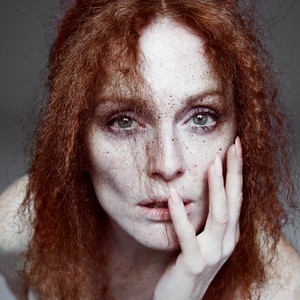
Inez van Lamsweerde and Vinoodh Matadin, Julianne Moore–T Magazine, 2013
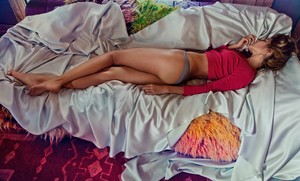
Inez van Lamsweerde and Vinoodh Matadin, Julianne Moore–T Magazine, 2013
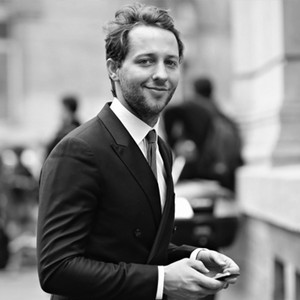
Derek C. Blasberg is a writer, fashion editor, and New York Times best-selling author. He has been with Gagosian since 2014, and is currently the executive editor of Gagosian Quarterly.
Derek BlasbergInez, I’m looking at your issue of Aperture, and I love it! How did you and Vinoodh become guest editors?
INEZ VAN LAMSWEERDEWe’ve known the magazine for years, it’s one of the most respected photo magazines out there. Initially we thought it was a more technical photography publication. Then they hired a new editor, Michael Famighetti, and redesigned the publication. We met with Michael and started talking with him about what a fashion issue by us might look like. We didn’t want it filled with only our work, nor did we want to simply give them one single fashion shoot from us. We wanted a discussion of the relevance and importance of fashion photography, and those who have inspired us.
DBThe title of the magazine is ‘Fashion’ (in quotes). Does that mean something?
IVLThe issue is based on the idea of reference-making, which is what the fashion industry is made of. We’ve been taking pictures for twenty-seven years, and we’ve seen how the inspiration for creating images has changed. To shoot a campaign, we used to look at the collection and discuss what sort of woman had inspired the designs. What is she like? What does she do? How is her life? And then we would work on a storyboard and create an imaginary life for this woman. But now, clients want the advertising campaign literally spelled out for them in a reference board.
DBWhat’s on the reference board?
IVLEverything. It could be pictures we’ve taken in the past, or pictures someone else has taken, iconic images or new images. In the old days, an advertising agency would sketch up the concept—nowadays, with technology, we mock it up in Photoshop. Smart clients want something that has been done before, but with their spin on it. We live in a world of references now.
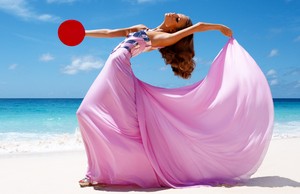
Inez van Lamsweerde and Vinoodh Matadin, Gisele Bündchen–Porter Magazine, 2014
DBIs that frustrating for you?
IVL The people in this book are our inspiration: Ed van der Elsken, Richard Hamilton, Guy Bourdin, Bruce Weber, Richard Avedon. Their images are the starting point, but we create something new out of each reference—not just duplicate a Helmut Newton picture. I think people come to us because they know that there is more to us than simply making a reference.
DBWhat else has changed?
IVLThe amount of productivity! Today, we sometimes shoot twelve different images in a single day for an advertising campaign. In the old days, we would do three. But with the technology and the ability to construct and compose the pictures before you’re even on set, you are expected to bang them out.
DBThis issue contains a celebration of the photographers that came before you. It’s educational.
IVLWe are always inspired by the work of other people, whether it’s film or painting or photographs, as well as by our peers, like Bruce Weber and David Sims. Inspiration comes from everywhere. This is a fashion issue, and there are traces of everyone we worship, and everything that we looked at since we started shooting. Much of it we have been looking at since we were in art school.
We live in a world of references now.
Inez van Lamsweerde
DBDefine the role of fashion photography in fine art.
IVLI see it as the ultimate Pop art. That’s how I view fashion photography.
We’re used to working in series, in stories, in magazines. A single image is like taking one film still from a movie. I think that once an image shows you something about life and a certain underlying tension, it translates very well into a piece of art. Our work is not explicitly categorized into art, fashion, and portraiture. We view our work as photographs that come from the two of us, and they can end up on the wall or in a magazine. The context dictates the reaction. So, in a magazine you’re telling a story as you fill the pages. But when we construct our shows, like the one at the Gagosian Gallery in Los Angeles, how one image reacts to another, and what happens when you place things in new contexts, is what tells the story.
DBWhat are you thinking about when taking a picture?
IVLThe question, “Do I want to be that girl?” is a starting point. And I wonder about what is the most remarkable part of the subject we are shooting, and how to highlight that in the photograph. How can I make this person more heroic, more iconic? In some cases you think about what this person’s life is about, and where the mystery is. Where is the secret that you can’t put your finger on? There are many different thoughts depending on who it is and what it is. There’s always a “subvert” moment in there, the heightening of someone’s physiognomy or physique. That’s what I like about photography. You’re dealing with a surface, and that’s what we have to play with to get the message across.
Inez van Lamsweerde and Vinoodh Matadin, Natasha Poly–Vogue Paris, 2007
I see it as the ultimate Pop art. That’s how I view fashion photography.
Inez van Lamsweerde
DBHow did you edit the magazine? Was there a part that you liked?
IVLIt was incredibly exciting. It had been a long time since we’d researched so intensively into all the people that we love. In the end, we had so many people and so many images and so many stories to tell. It was hard to cut that down—we had to, or the magazine would have weighed a ton.
DBWhat was it like to return to all the people and things that originally inspired you?
IVLIt filled us with adrenaline. There was one issue of i-D magazine, with Nick Knight’s photographs, that was hard to find, but when we found it we were ecstatic. Jill magazine was the reason I started taking pictures in the first place, so returning to that reminded me of what started me on this journey.
DBThree decades ago, when you started taking pictures, you didn’t have the Internet to help you research. How was that this time around?
IVLSo much easier. I would be the in the back of a car in traffic and taking screen shots! Today, there’s not as much time for research. That’s the biggest difference between how I work now and how I worked twenty years ago.
DBI guess this was a glimpse into what it’s like to be a magazine editor.
IVLEditing down was hard. Even editing the text. There is so much work that goes into it, and now I understand the frustration of something not being right. I never think about that, and I would always be upset when an editor would suggest to us that we cut down a picture. I would think, “Absolutely not.” But now I get why that needs to happen.
DBAre you worried this magazine will give away all your secrets?
IVLHah! No. It’s a peek into our brains. Now, when anyone asks, ‘Where do you get your inspiration?’ I can tell them to just go buy this magazine.
Derek C. Blasberg is a writer, fashion editor, and New York Times best-selling author. He has been with Gagosian since 2014, and is currently the executive editor of Gagosian Quarterly.