Ahead of Persephone, an exhibition of new paintings by Mary Weatherford inside Hong Kong’s historic Pedder Building, the Quarterly’s Wyatt Allgeier met with Weatherford and the architect Mark Lee to talk about their collaboration. Here, they discuss how custom architectural interventions—from mirrored columns to strategic light play—transform the gallery, evoking Persephone’s mythic journey through the underworld and back into the light of spring.
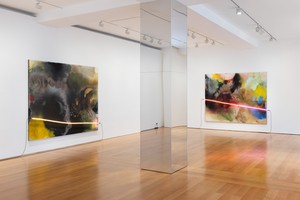
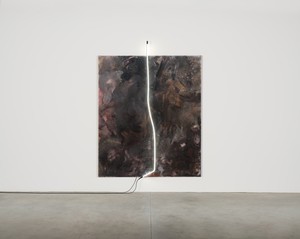
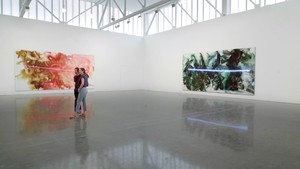
Installation view, Mary Weatherford: Persephone, Gagosian, Hong Kong, March 24–May 2, 2026. Photo: Ringo Cheung
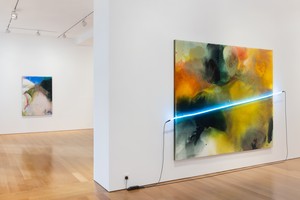
Installation view, Mary Weatherford: Persephone, Gagosian, Hong Kong, March 24–May 2, 2026. Photo: Ringo Cheung
Wyatt Allgeier is a writer and an editor for Gagosian Quarterly. He lives and works in New York City.
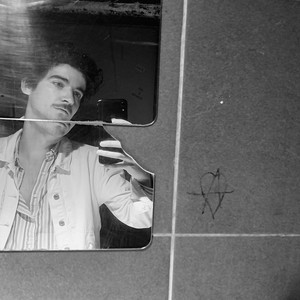
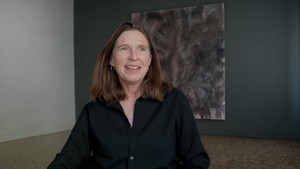
Mark Lee is a principal and founding partner of the Los Angeles–based architecture firm Johnston Marklee. Since its establishment in 1998, Johnston Marklee has been recognized nationally and internationally with over 50 major awards. Mark served as chair of the Architecture Department at Harvard Graduate School of Design (GSD) from 2018 to 2023. He has taught at the GSD; the University of California, Los Angeles; the Technical University of Berlin; and ETH Zurich. He has held the Cullinan Chair at Rice University and the Frank Gehry International Chair at the University of Toronto. Together with partner Sharon Johnston, Mark Lee was the artistic director for the 2017 Chicago Architecture Biennial. Photo: Eric Staudenmaier
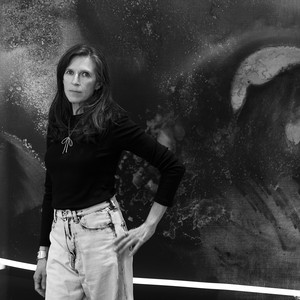
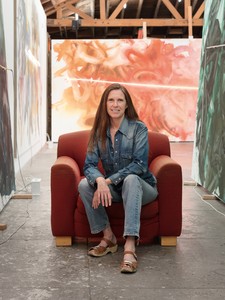
Mary Weatherford makes paintings comprising grounds of spontaneously sponged paint on heavy linen canvases, often surmounted by one or more carefully shaped and placed colored neon tubes. The surface of the paint ranges from matte and velvety to transparent and translucent. The canvas is at times densely filled, reading as a painterly continuum; at others, it shifts in color from edge to edge; and at yet others it contains clusters of marks set in relatively bare surroundings. Photo: Antony Hoffman
Wyatt AllgeierMary, could we start off by talking about the title of the exhibition, Persephone?
Mary WeatherfordThe initial paintings were dark and mysterious. They appeared to me as scenes from the underworld. I take my cues from the paintings; I don’t compose a title, then paint to meet it. Quite the opposite. These works were definitely a journey underground, and who else makes that journey but Persephone? It’s such a rich myth that I was subsequently able to pursue it in many ways: a slippage, an earthquake, a falling through the earth, life in darkness, and a reemergence in spring. These became the images of the show, and I wanted to make sure it felt like a nervous journey for the viewer. I had met Mark and Sharon [Johnston, cofounder with Mark Lee of the architecture firm Johnston Marklee] this past year, and they’d been so fun to talk to that when this project came up, I called them and asked, “Do you want to work on something with me?” They said yes right away. It was exciting to parse their variations to land on what we have now. It fits the story.
WAWhat were some of the architectural negotiations that emerged from your collaboration on this vision?
MWThere are three main rooms to the show, and there may be an additional painting when you first enter the gallery. The Pedder Building is beautiful. I visited some years ago when a big typhoon hit Japan and there were no flights back to the States for about a week. I’d never been to Hong Kong, so I decided to go. I’d wanted to visit my whole life. It reminded me, in photographs, of San Francisco—those beautiful slopes of houses descending down to the bay. On that trip, I saw the gallery. Its space facilitates walking—one enters, walks the length, then circles back along a wall of windows to depart. Its eight windows make it not the easiest space. The art competes with a view of the city.
WAMark, when Mary first approached you, what were some of your initial questions and considerations?
Mark LeeSharon and I have been great admirers of Mary’s work for so long, and we’re delighted that she asked us to work on this show. Our practice has always been centered in the arts, from working with Robert Irwin in Marfa to working on some spaces for Sterling Ruby. And this show has extra meaning for me because I was born and raised in Hong Kong, so I know the Pedder Building well.
When we started, our first considerations were the northern windows and the columns. These features had to be navigated. Shall we have many different walls? Zigzag walls? What are the consequences of looking at things at a diagonal versus straight on? We looked at some of Mary’s previous installations, like the one at the Palazzo Grimani in Venice, and it was interesting to see how her work contrasted with a domestic setting with colored walls and floors.
Initially, we aimed to subdivide the gallery more—hide all the columns and create a series of rooms, like a kind of palazzo enfilade design. But in the end, what we’ve designed consists of two smaller rooms and then a larger central room with one column exposed. There are three columns in the space. We are enveloping two of them with very thick freestanding walls. They don’t touch the main wall that runs the length of the gallery—there’s about a seventeen-centimeter gap. And then the larger middle room has one exposed column that will be clad in mirrored stainless steel.
Installation view, Mary Weatherford: Persephone, Gagosian, Hong Kong, March 24–May 2, 2026. Photo: Ringo Cheung
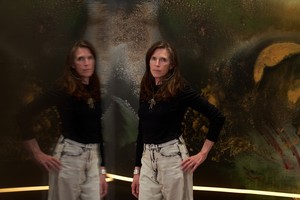
Mary Weatherford, Hong Kong, 2026. Photo: Marco Chow
MWWhat Mark and Sharon have created ties in nicely with the ideas of the show. I want the viewer to experience the exhibition like a labyrinth, where you can see from one room to the next, glimpsing into the future. Moving the dividing walls slightly away from the long back wall creates a passageway so narrow, a person cannot squeeze through. It brings me back to a long-standing influence: Robert Smithson’s Dante paintings made in Rome [c. 1961–63]. Persephone has a different course to travel than the protagonist in the Inferno, but the images of Dante’s journey resonated. Entering the room with the reflective column, the painting behind you is mirrored and the space breaks up—one painting almost superimposes itself onto another. It’s not exactly a hall of mirrors, but it’s a hall with a mirror, a four-sided mirror. You have metaphors of the impenetrable and the unpassable, and then space that’s fractured by the mirrored column, which in this journey aligns with the loss of innocence, the entry into adulthood.
WAThe timing is perfect as well, as we’re right at that tipping point between winter and spring. Mark, does your approach to a temporary project differ from something with more permanence?
MLThe great thing about working on a temporary show is that it can be more customized for the artist. The space must serve the art. As Mary was describing to us the theme and the concepts of the paintings, we also noticed this idea of extremity—the notion of “underground” versus the fact that the space is on the top floor of the Pedder Building, where you get the most light. So I felt that the space had the opportunity to embrace a type of contradiction. The two new walls are very thick, visually quite heavy, but at the same time, they don’t touch the main wall. There’s a certain lightness there, in the same way that the mirror-clad column has a certain lightness. So there’s the whole notion of the underground emerging upward.
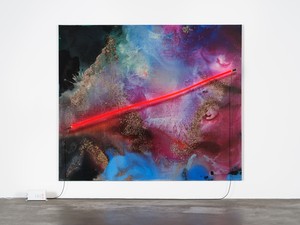
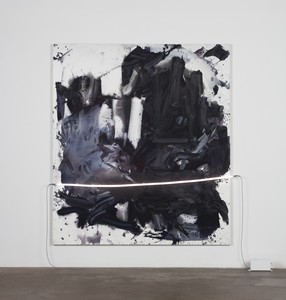
Mary Weatherford, Landslide, 2025, Flashe and neon on linen, 95 × 112 inches (241.3 × 284.5 cm). Photo: Fredrik Nilsen Studio
WAMary, could you tell us about some of the individual paintings in the exhibition?
MWFrom the larger set of paintings in this series, I excluded the darkest ones. Ultimately it felt better to feature those with more movement or action. The largest work in the show is called Landslide [2025]. It looks like a snowy mountain. The title references the 1975 song by Stevie Nicks, famously written sitting at her piano in Aspen, looking out on the snowy mountain and seeing her own face reflected in the window. It’s a beautiful song. The lyrics merge the image of the feminine with the landscape, like a Frida Kahlo painting. I thought it married well to the theme of Persephone.
The addition of neon was key for this show, too, due to its being in Hong Kong. I’ve been in love with neon since 2012, when I made the exhibition for Bakersfield [The Bakersfield Project, Todd Madigan Art Gallery, California State University, Bakersfield]. Hong Kong is one of the most famous places to see neon signs, along with Paris (where neon lighting debuted) and Las Vegas.
MLI totally get that connection. I always think about your neon work in relationship to California, and I never thought about that Hong Kong aspect. But of course, the Hong Kong I grew up with had many areas full of huge neon signs. Sadly, many of them don’t exist anymore, but an interesting distinction is that they couldn’t move or animate because the airport was in the harbor back then, so flashing lights were prohibited, as they might distract pilots from the airport’s flashing lights.
MWThat is unique. The classic neon signs move: A woman dives from a diving board and tumbles down into a splash; a cup of coffee is poured; a word is animated or changes, “ding ding, ding ding, ding.” Bruce Nauman uses that to great effect.
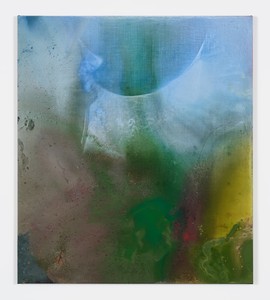
Mary Weatherford, Sunshower, 2025, Flashe on linen, 66 × 58 inches (167.6 × 147.3 cm). Photo: Fredrik Nilsen Studio
WAAre there particular resonances you’re trying to evoke through the combination of the artworks and the architectural details?
MLWe often distinguish our design work as being for either institutional spaces or domestic spaces. When Mary and I started our conversation, we acknowledged that the Pedder Building has aspects of a domestic space, since natural light comes in laterally as opposed to from above, which is more typical in institutional spaces. Lateral light tends to change a lot more from morning to night, leading to a more dynamic environment, and we’ve heightened this through the temporary walls, which create transverse axes for the light.
MWAs for the emotional tenor of the show, well—Persephone goes to the underworld as a child, undergoes a transformation into adulthood, and reappears above again in spring. I thought, I need to paint a happy painting. But what is a happy painting? Some paintings with dappled light are happy paintings. It comes up in poetry, too. Dappled light delights the eye and the mind. I was certainly thinking about that, but my paintings tend to do what they want to do because they’re made in one session, so there is the element of chance.
There is one painting in the show called Sunshower [2025] that really is about a special spring light; it’s like standing in a sunshower and seeing beyond the veil of rain. For the spring/summer paintings, I aspired to paint humidity and heat. Charles E. Burchfield is one of my favorite painters, and he is great at heat, using yellow and black to render deep summer shadows.
So, those were some of the things I tried to do to round out the cycle of the myth in the show, but my works always are a bit ominous. They’re rarely straight-up happy. In this show, I’m thinking about weather and temperature. Is there a breeze? Is it still? Is it stifling? As we mentioned, the landslide painting to me is snowy. So we have different climates.
A memory: When I was a young girl in San Diego, I had a Russian ballet teacher named Sonia Arova. And for some reason, this comment stuck with me: “When I was a young woman, I did chaînés on my knees at the Bolshoi and it brought down the house.” That extreme excellence of a voice or an action, that heroic young female, is what this show is about. Her journey, Persephone.
Mark Lee is a principal and founding partner of the Los Angeles–based architecture firm Johnston Marklee. Since its establishment in 1998, Johnston Marklee has been recognized nationally and internationally with over 50 major awards. Mark served as chair of the Architecture Department at Harvard Graduate School of Design (GSD) from 2018 to 2023. He has taught at the GSD; the University of California, Los Angeles; the Technical University of Berlin; and ETH Zurich. He has held the Cullinan Chair at Rice University and the Frank Gehry International Chair at the University of Toronto. Together with partner Sharon Johnston, Mark Lee was the artistic director for the 2017 Chicago Architecture Biennial. Photo: Eric Staudenmaier
Mary Weatherford makes paintings comprising grounds of spontaneously sponged paint on heavy linen canvases, often surmounted by one or more carefully shaped and placed colored neon tubes. The surface of the paint ranges from matte and velvety to transparent and translucent. The canvas is at times densely filled, reading as a painterly continuum; at others, it shifts in color from edge to edge; and at yet others it contains clusters of marks set in relatively bare surroundings. Photo: Antony Hoffman