Walton Ford: Assuming an Animal Form
Walton Ford narrates the histories and myths behind two of his newest paintings.
Spring 2025 Issue
Walton Ford’s exhibition Tutto opens on March 6, 2025, at Gagosian, New York. Here, the artist reflects on the life and passions of Marchesa Luisa Casati, the twentieth-century muse and patron of the arts.
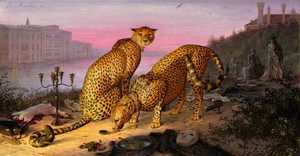
Walton Ford, La Marchesa, 2024, watercolor, gouache, and ink on paper, 60 ¼ × 115 ¼ inches (153 × 292.7 cm) © Walton Ford. Photo: Christopher Stach
Walton Ford, La Marchesa, 2024, watercolor, gouache, and ink on paper, 60 ¼ × 115 ¼ inches (153 × 292.7 cm) © Walton Ford. Photo: Christopher Stach
The marchesa lived partly as a slave to her dream world. She was a great artist, but not understood by the common people or even her own friends, who were jealous spectators of her artistic successes.
—Alberto Martini, in Infinite Variety: The Life and Legend of the Marchesa Casati, 1999
In 1900, the newly married Marchese and Marchesa Casati were photographed perched side by side on a smooth boulder next to a waterfall. Camillo Casati wears a three-piece suit and sits in a confident and jaunty spread-legged pose, a proud crooked smile slanting beneath his waxed mustache. Luisa Casati sits by him ramrod straight, unsmiling, her large, melancholy eyes meeting ours. She is tightly corseted, trussed into a dark Victorian outfit that completely covers her body save for her hands and face. She holds a riding crop and has donned a great floral hat. She does not steady herself by clasping her husband’s arm; instead she seems to be leaning on her unseen hand, touching the cool rock behind her back.
Thirteen years later, Luisa Casati was photographed in the center of a large crowd of costumed revelers, many in eighteenth-century dress. Now uncorseted, she wears an androgynous white harlequin costume, complete with loose high-waisted trousers and black mask, designed for her by Léon Bakst of the Ballets Russes. Again, her eyes look directly at the viewer. Her lipsticked mouth hints at a smile. One of her pet cheetahs sits calmly beside her and a large macaw rests on her hand. By that time she had left her husband and had begun throwing massive parties at her half-ruined palazzo in Venice.
Luisa made her palazzo into a kind of bohemian playground, hosting wild masquerades with live jazz, booze, opium, artists, writers, and socialites. She would dress outrageously and fearlessly, costumed as a fountain or as Catherine the Great, or covered with electric lights. She had lovers, both male and female, and ended up spending all of her vast wealth on clothes, jewels, artwork, parties, and exotic animals. The social events she created anticipated Andy Warhol’s Factory, artsy nightclubs, contemporary raves—in fact they propagated any idea we now have of a hot art scene.
In their book Infinite Variety: The Life and Legend of the Marchesa Casati (1999), Scot D. Ryersson and Michael Orlando Yaccarino write, “More than one report details Luisa’s unusual nocturnal promenades: her spectral form, totally nude within the folds of a voluminous fur cloak, leading her pet cheetahs by jeweled leashes about the Piazza San Marco.” Having discovered only three rather blurred photos of Casati with her cheetahs, I found myself trying to imagine the cats’ life with the marchesa. These creatures contributed to the ferocity of Casati’s public image. They were also wild African animals caught up in a strange, frenetic world of parties, palazzos, gondola rides, and excess. I wanted to paint pictures about the world’s fastest animals living a fast life with a wild woman in Venice. The cheetahs got me invited to the party. Show me more.
Walton Ford: Tutto, Gagosian, West 21st Street, New York, March 6–April 19, 2025
To learn about the Casati Archives and more, visit www.marchesacasati.com.
Infinite Variety: The Life and Legend of the Marchesa Casati (Ultimate Edition, 2017) is available through University of Minnesota Press.
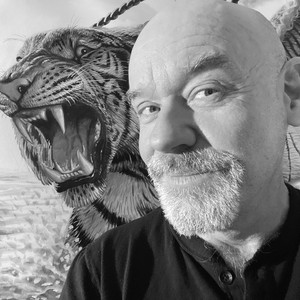
Walton Ford recasts, reverses, and rearranges the conventions of animal art. He is a devout researcher, responding to everything from Hollywood horror movies to Indian fables, medieval bestiaries, colonial hunting narratives, and zookeepers’ manuals. He grew up in the Hudson Valley, graduated from the Rhode Island School of Design, and currently lives and works in New York.
Walton Ford narrates the histories and myths behind two of his newest paintings.
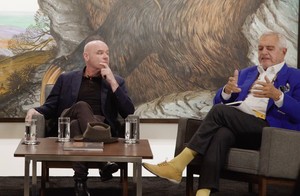
Walton Ford sat down with legendary art dealer Irving Blum at Gagosian Beverly Hills to discuss his latest exhibition, Calafia.
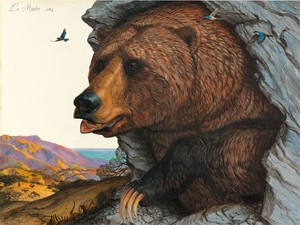
Walton Ford’s most recent paintings focus on the history of California through fantastical interpretations of humanity and its encounters with animal life.
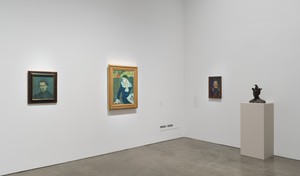
Join president of the Picasso Museum, Paris, Cécile Debray; curator, writer, biographer, and historian Annie Cohen-Solal; art historian Vérane Tasseau; and Gagosian director Serena Cattaneo Adorno as they discuss A Foreigner Called Picasso. Organized in association with the Musée national Picasso–Paris and the Palais de la Porte Dorée–Musée national de l’histoire de l’immigration, Paris, the exhibition reframes our perception of Picasso and focuses on his status as a permanent foreigner in France.
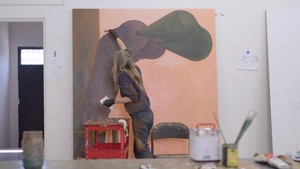
Join Louise Bonnet in her Los Angeles studio as she works on new paintings ahead of her exhibition Onslaught, at Gagosian, Hong Kong.
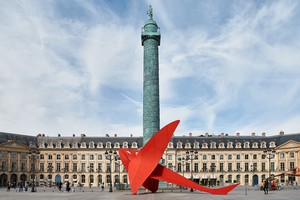
In this video, Gagosian director Serena Cattaneo Adorno celebrates the installation of Alexander Calder’s monumental sculpture Flying Dragon (1975) at Place Vendôme in Paris, detailing the process and importance of this ambitious project.
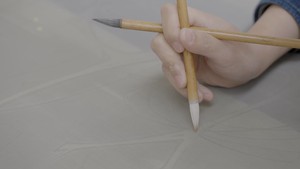
Join Hao Liang in his Beijing studio as he discusses the inspiration behind his latest series of paintings, rendered in ink and color on silk. Evoking the tradition of literati painting, the three works picture imagery conceived in response to passages of poetry by the ninth-century poet Li Shangyin.
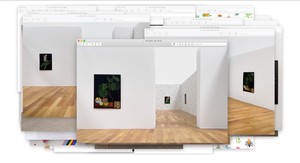
Join Jonas Wood on a virtual tour through the creation of his first solo exhibition in Hong Kong. Wood narrates the genesis and development of the new paintings, drawings, and wallpaper.
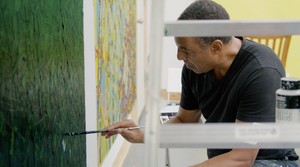
Join Rick Lowe in his Houston studio as he speaks about his recent paintings, describing their connections to his long engagement with the activity of dominoes and to his community-based projects created in the tradition of social sculpture.
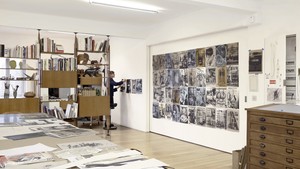
Join the artist in her studio as she speaks about her new series of drawings, From March to May. Trouvé describes the genesis of the project and the essential role its creation played in keeping her connected with the outside world during the difficult months of pandemic-related lockdown.
In an interview with Kay Pallister, the artist explains his relationship to drawing and the importance of time in his site-specific works.
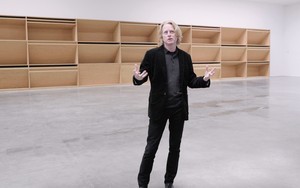
In this video, Flavin Judd, the artist’s son and artistic director of Judd Foundation, leads a walkthrough of the exhibition Donald Judd: Artwork: 1980 at Gagosian, West 21st Street, New York. Flavin connects the work to the concurrent retrospective at the Museum of Modern Art, New York, and the permanent installations in Marfa, Texas, highlighting how it fits within Judd’s oeuvre.