
Now available
Gagosian Quarterly Summer 2026
The Summer 2026 issue of Gagosian Quarterly is now available, featuring Ellen Gallagher’s Fast-Fish and Loose-Fish (2026) on the cover.
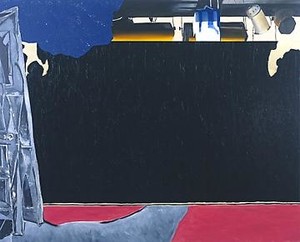
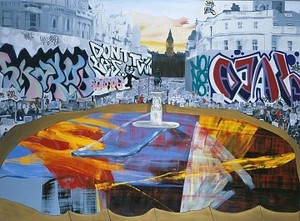
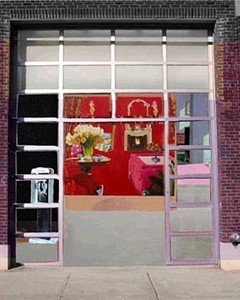
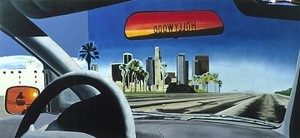
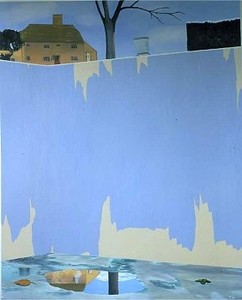
Dexter Dalwood was born in Bristol, England in 1960. He received a B.A. from Central St. Martins College of Art and Design, London in 1985, and an M.A. from the Royal College of Art, London in 1990. Dalwood’s first solo exhibition was held in 1992 at the Clove Building, London.
Dexter Dalwood's collages and paintings have been exhibited in numerous solo and group shows, building a strong reputation over the last two decades in the UK, Europe, and the United States. In 2010 Dexter Dalwood was shortlisted for the Turner Prize.
In 2013, Kunsthaus Centre d’art Centre PasquArt in Biel, Switzerland will host a solo survey exhibition “Dexter Dalwood.” Other solo exhibitions include “Dexter Dalwood,” a major survey of his work at Tate St Ives, which toured to FRAC Champagne-Ardenne, Reims, France and CAC Malaga, Spain; “Orientalism” at David Risley Gallery, Copenhagen (2012), “Dichter und Drogen” at Nolan Judin Gallery, Berlin (2011), "There is No Darkness But Ignorance," David Risley Gallery, Copenhagen (2009), as well as those at Gagosian Gallery: “Endless Night,” Beverly Hills (2009); "Recent History,” Britannia Street, London (2006–07); "Dexter Dalwood,” West 24th Street, New York (2004); “New Paintings,” Beverly Hills (2002); and “New Paintings,” Heddon Street, London (2000).
Dexter Dalwood's work is found in both the Tate and Saatchi collections, and has been integral to many highly innovative group exhibitions, including the Dublin Contemporary (2011); “Germany is Your America,” Broadway 1602, New York (2011); "Rank: Picturing the Social Order 1516–2009,” Leeds Art Gallery (2009); "Lights, Camera, Action: Artists' Films for the Cinema,” Whitney Museum of American Art, New York (2007); "Days Like These: Tate Triennial,” Tate Britain, London (2003); the Sydney Biennale (2002); "Remix: Contemporary Art and Pop,” Tate Liverpool (2002); "Twisted: Urban and Visionary Landscapes in Contemporary Painting,” Van Abbe Museum, Eindhoven (2000); "New Neurotic Realism Part II,” Saatchi Gallery, London (1999); and "Die Young Stay Pretty,” ICA, London (1999).
His work has been featured in a variety of significant books and catalogues. A selection of notable texts published on his work are: Dichter und Drogen (2011, Nolan Judin), Dexter Dalwood (2010, jrpringer/Tate); Dexter Dalwood: Recent History (2006, Gagosian Gallery); The Triumph of Painting (2005, Saatchi Gallery/Koenig Books); Other Times, Contemporary British Art (2004, British Council); This Much is Certain (2004, Royal College of Art,); Days Like These: Tate Triennial of British Art (2003, Tate Gallery); 100: The Work That Changed British Art (2003, Saatchi Gallery); Dexter Dalwood: New Paintings (2002, Gagosian Gallery); Twisted: Urban and Visionary Landscapes in Contemporary Painting (2000, Van Abbe Museum); Young British Art: The Saatchi Decade (1999, Booth Clibborn Editions); New Neurotic Realism (1998, Saatchi Gallery); and Die Young Stay Pretty (1998, ICA London).
Dexter Dalwood currently lives and works in London, England. The artist was shortlisted as one of the four nominees for the Turner Prize 2010.
Please visit the artist's website dexterdalwood.com
The Summer 2026 issue of Gagosian Quarterly is now available, featuring Ellen Gallagher’s Fast-Fish and Loose-Fish (2026) on the cover.

In this video, Jenny Saville sits down inside her first major exhibition in Venice to discuss how the great Venetian artists of the past and the city’s heritage influence her work. The show brings together more than thirty canvases and works on paper from the 1990s to the present, tracing the development of her practice, which is deeply rooted in the history of painting.
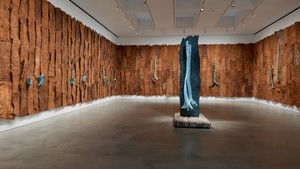
On the occasion of his exhibition The Reflection of Bronze at Gagosian, New York, Giuseppe Penone and curator Adam D. Weinberg sit down to discuss the genesis of, and their collaboration on, the show.
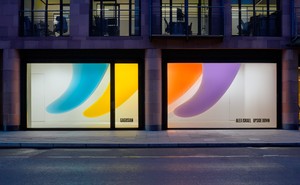
Ahead of Alex Israel’s exhibition of four new Fin sculptures at Gagosian, London, the artist spoke with Susan Casey, author of The Wave: In Pursuit of the Rogues, Freaks, and Giants of the Ocean (2010), about the ocean, surfing, and Los Angeles.
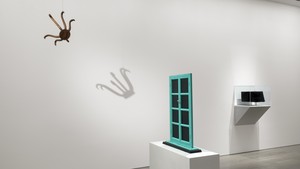
Marcel Duchamp is the inaugural exhibition of the gallery’s new ground-floor space in the historic building at 980 Madison Avenue. In this video, the Quarterly’s Alison McDonald discusses the artist’s most iconic readymades and their connection to New York City.
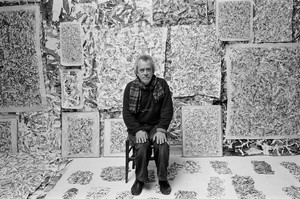
On July 9, Simon Hantaï: the last studio opens at Gagosian, Gstaad. Curated by Anne Baldassari, the show comprises sixteen of the artist’s dernier atelier (last studio) paintings of 1982–85. The exhibition is accompanied by an illustrated catalogue, copublished by Gagosian and Skira, which features an essay by Baldassari and an extensive portfolio of previously unpublished photographs by Édouard Boubat. Here, we share the introductory chapter from the publication.
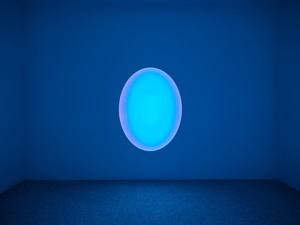
An exhibition at Gagosian, Hong Kong, brings together three of James Turrell’s Glasswork pieces along with site plans, photographs, and models of his Skyspaces and Roden Crater. Here, Alice Godwin explores the history of the Glassworks and their relationship to the artist’s wider practice.

On April 16, the Institute of Contemporary Art, Boston, opened the first midcareer survey of Derrick Adams’s multidisciplinary practice. Covering over twenty years of work, the exhibition, titled View Master, brings together the artist’s painting, sculpture, collage, performance, and video, as well as a vibrant new commission created for the museum’s façade. Ahead of the opening, Adams met with Tessa Bachi Haas, cocurator of the survey, to discuss his formative experiences with television, the impact of his work in arts education on his practice, and the importance of taking a more complex, more joyful, and more expansive approach to Black American life and culture.

Adam D. Weinberg has been working with Giuseppe Penone on an exhibition of the artist’s new sculptures, The Reflection of Bronze, that opens at Gagosian, New York, on April 22. The works explore the character and possibilities of bronze. Here, Weinberg considers Penone’s enduring engagement with the alloy and addresses the conceptual underpinnings of the exhibition’s three-room structure.

Jeff Koons tells Alison McDonald about his appreciation for the pioneering artist and thinker Marcel Duchamp.
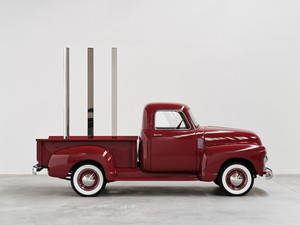
The Singular Experience at Gagosian’s Le Bourget gallery is the largest exhibition of Walter De Maria’s work in France in several decades. Organized by Donna De Salvo, senior adjunct curator at Dia Art Foundation, the exhibition marks the first time De Maria’s final sculpture, Truck Trilogy (2011–17), is being shown outside of the United States. Here, De Salvo speaks with artist Lucy Raven about her evolving kinship with De Maria and more.
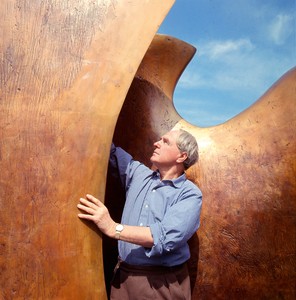
Laura Bruni writes about a major exhibition celebrating the work of the British sculptor Henry Moore at the Royal Botanic Gardens, Kew, London.