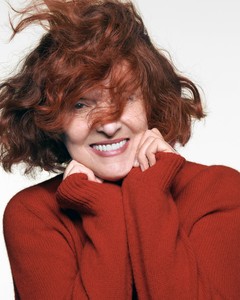
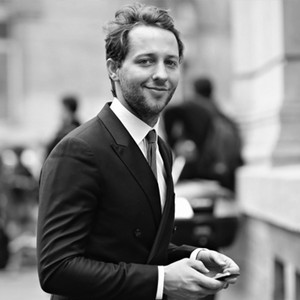
Grace Coddington, fashion editor and former creative-director-at-large for American Vogue, meets with the Quarterly’s Derek C. Blasberg to reminisce on some of her most iconic collaborations with photographers and artists.
Derek C. Blasberg is a writer, fashion editor, and New York Times best-selling author. He has been with Gagosian since 2014, and is currently the executive editor of Gagosian Quarterly.
DEREK C. BLASBERGYou became well-known outside the fashion world after the documentary The September Issue came out, in 2009. Did you think when you were making that movie that it would be so impactful?
GRACE CODDINGTONI did not! I was brought up to be behind the scenes and stay there. When I worked at British Vogue, you weren’t even given credit. Nothing.
DBThere wasn’t even a sitting editor credit?
GCNo, and I adored my editor, Beatrix Miller, by the way. She was a marvelous woman, funny and incredibly creative. She let talent go forward. I made a path through working there because she just gave you free rein to do what you wanted to do. But she never encouraged any kind of interview or anything. It wasn’t until Anna [Wintour] came along—she had a brief period at British Vogue before she came to American Vogue, and the first thing she did was put a byline on every story. At first we were all really against it, we felt, we just love to do this and we don’t want to be celebrities. I’ve always fought being a celebrity.
DBHow did the director of The September Issue, R. J. Cutler, get you to do it, then?
GCWhen they were filming, he kept coming to my office, and I’d say, “Go away. I’m not interested. You can do anything else at Vogue, just don’t include me.” But every time I came out of my office and went to see Anna to discuss something, I’d turn around and they were following me. I knew perfectly well I couldn’t have the kind of conversation I needed with Anna with a camera crew there. She was miked the whole time [they were filming], even at fashion shows! She was being recorded and I always sat next to her. So it was truly annoying. I hated them. But after nine months or so, a cameraman started coming to talk to me; he just popped in to talk about photography, which I love to talk about. I became quite friendly with him and slowly, very slowly, they broke it down, and ultimately Anna said, “I know you have a couple of shoots coming up in the September issue, and you’ve got to have them come to the studio.” I said [to the cameramen], “Listen guys, let’s all go out for lunch and talk about boundaries.” We went out for lunch and had a really drunken time and it was very nice. Eventually they said, “We want to come to your house and interview you,” and I said yes, but that was at the very end, and it wasn’t that long of a chat.
A year goes by while they’re editing and all that, and then finally there’s this screening. I didn’t see it with the executives, I watched it with the other folks from the magazines. So I’m watching and I keep seeing myself in the thing. I’m wondering, How come there’s so much of me? Afterward, Anna said, “What did you think?” And I said, “Well, I think it’s pretty funny, but they should edit a lot of my pieces out.” I think she knew better.
DBI’m glad they didn’t; and I can assure you I’m not the only one!
GCI was very keen that it didn’t come out looking like The Devil Wears Prada.
DBWhy is that?
GCTo me that movie was a farce. It was damaging to the industry. [Fashion people] are always thought to be a silly bunch of people loving stupid things; there’s a lot of that in The September Issue too. But fashion can be a serious thing. It’s a fun thing and it makes you happy, but I don’t know that it should be laughed at. That’s what I was concerned about.
GCWhen my first book came out, I did a Q+A at the New York Public Library with Jay Fielden and he said to me, “When the film comes out, you’re going to be a celebrity.” I said, “Jay, don’t be stupid. It’s about Vogue.” I didn’t believe him. Then the day after the movie came out, I walked out of my door—I live in Chelsea—and people were like, “Grace! Grace!” I could not believe it. I could not!
DBHonestly, I think that sounds fabulous!
GCI remember having dinner with [Louis Vuitton designer] Nicolas Ghesquière around this time, at Sant Ambroeus in the West Village, and he asked me if people were recognizing me. I said, “Come with me,” and after dinner we walked back to my house along Eighth Avenue, and they were coming out of the bars. It was overwhelming! They’d look at me and say, “It’s Grace!” And ask for a picture. And then they’d turn to give my friend the camera and say, “Oh, it’s Nicolas Ghesquière too!”
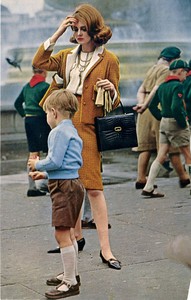
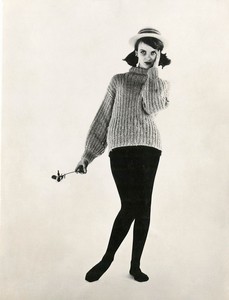
Grace Coddington, British Vogue, 1962. Photo: Frances McLaughlin-Gill
Grace Coddington, first model card, 1959
DBEven more fabulous!
GCDid I enjoy the moment? Yes. But I didn’t want to become a celebrity. I never have. I still don’t. That said, I will admit it worked in my favor because it opened so many doors that might not have opened for me otherwise. For example, it meant I could do my memoir. I began to give talks. I guess it’s lucky it happened when it happened, so that when I was kind of too old to be on the staff of Vogue, I had other opportunities.
DBI understood that your duties were scaled back at Vogue as a reflection of budgets, not age.
GCMaybe a bit of both. And I’m the first to understand that you need new blood. But the right new blood, of course. I still work with Vogue, but it’s important to have the right mix.
DBOne thing I respected about your performance—if we shall call it that—in the documentary is that it made clear that fashion was a real job, you were working with real artists, and it wasn’t all superficial.
GCSuperficial is the right word. I hate that.
DBOf course, you first started in this industry as a model—Jean Shrimpton was the Shrimp and you were the Cod—and then you became a stylist. Your whole life has been in the medium of fashion publishing. So, do you think fashion can be art? How do you respond to people who question the seriousness of this industry?
GCIt is serious. Certainly, fashion is something that brings in a ton of money and that everyone cares about. It’s undeniable.
DBBillions of dollars come through New York alone every year.
GCIt’s not to be dismissed! And then the idea of photography: I don’t know if you’d consider all of it art, but there’s a difference between fashion photography and just photography. I do think that fashion can be art. There are certainly moments when I want it to be.
DBWhat’s on the walls of your house?
GCA hell of a lot of photographs. A hell of a lot of drawings too!
DBDo you think of art as you’re creating pictures?
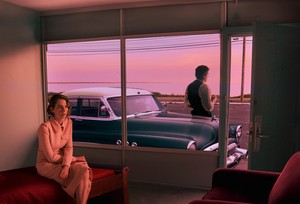
GCI think what Annie [Leibovitz] does can be extraordinary. I want to call it art. And some of the things I’ve done with her have been creating art with actual artists. In last year’s December issue we did a story inspired by the Edward Hopper exhibit at the Whitney Museum [of American Art, New York]. We had [the actress] Maya Hawke and the painter Harold Ancart, and they were fabulous.
DBI thought that was an incredible way to put a Vogue fashion spin on a show about an incredible painter.
GCYes, we loved that show.
DBI went to see that show a few times and one of my favorite aspects was the letters. Did you see the letters he wrote to Robert Moses in one of the vitrines? He was furious with Moses for adding all these highways to the city and threatening to mow down Washington Square Park, which is, of course, where he lived and worked.
GCYes, they were assertive letters. Very aggressive.
DBI sort of liked that we knew this artist as someone who did calm, idyllic, picturesque, beautifully still paintings. And then he’d write these vicious letters.
GCI think it follows—the anger over trying to ruin something he finds so beautiful. I like the idea that it takes hard work to have beauty.
DBMy mom used to say, “Nothing good is easy and nothing easy is good.”
GCThat’s the truest thing ever said! It really is. And that’s why when I’m going through the challenges of working with Annie, she knows I feel like that.
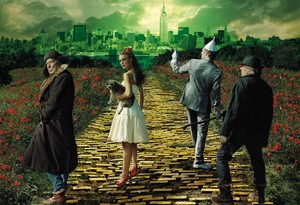
DBSpeaking of Annie and artists, one of your biggest collaborations with Annie was when you used some of the biggest artists in the world—Jasper Johns, Jeff Koons, Kiki Smith, John Currin, Brice Marden—to tell the story of Dorothy in The Wizard of Oz for Vogue.
GCWe had fun casting that one. John Currin we painted silver for the tin man. Jeff Koons loved being one of the flying monkeys who were carrying Dorothy off. We hoisted him on a crane and we painted him all the way over, too, stuck wings on him, he loved it. But he’s a crazy person so obviously he would. Brice Marden as a scarecrow was fabulous—the straw in his pockets and the straw in his boots. It’s really funny to look at now.
GCAll the talent is happy to be there because it’s Annie. That’s why it’s also so easy to cast these things: Who says no to Annie? For me it’s fun and interesting, but it can be very demanding too. I had a huge row with Annie in the middle of that story and at one point she said, “I don’t want to see you on set again!” And I said, “Fine, you won’t!” But of course I turned up. What am I going to do? Not finish something I’m in love with? The pictures are incredible, so they’re worth the pain.
DBI’ve heard Annie’s sets can be intense.
GCAnnie is an artist. She goes further than someone who just takes pictures. That’s why it’s such a painful pleasure to work with her.
DB“A painful pleasure” is a great way to describe parts of this business.
GCAnnie respects me because I argue, and Anna certainly does too. I argued with her all the time in the beginning. She really liked that.
DBThe other famous editorial you and Annie did was Alice in Wonderland, which starred Natalia Vodianova as the famous Lewis Carroll heroine and then all of the biggest fashion designers in the world, like Tom Ford and John Galliano and Donatella Versace and Karl Lagerfeld, as the other characters.
GCWow, the budget on that one.
DBDo I even want to know?
GCIt was unreal. I can’t even say it.
DBIt was worth it.
GCIt was a battle. Annie was in Paris for a week. She came to all the fashion shows with me. A lot of the dresses I’d had made especially for the shoot. Or I’d say, “Can you make one in blue in your collection?” And we’d see the whole collection and suddenly a blue dress would come out and we’d know it was for us. Annie was there for a week looking for locations, plus her team, which is not small, staying in hotels and eating and so on and so on.
DBTell me about the time you shot at Georgia O’Keeffe’s house in New Mexico.
GCThat was with Bruce [Weber], who I did a lot of stories with, especially when I was at British Vogue. We worked with a model called Sloane, who isn’t around anymore but she was beautiful, and the pictures were beautiful and sort of echoed O’Keeffe. He was shooting there a lot because Calvin Klein was very into Georgia O’Keeffe and did a campaign there in her house. And we went to her house.
DBDid you get in there?
GCFor a while we could not get in to photograph Georgia. But it was integral to our story because we were there, the girl was basically pretending to be Georgia, we even had a Chow Chow dog, which Georgia had too. There was a guy called Juan, an artist who sort of had control of her estate, and we couldn’t get through to him to get in at all. And then suddenly out of the blue, the old art director from British Vogue, Barney Wan, who was a wonderful guy, appeared and said, “I’m just going to go knock on her door.” I said, “Barney, you can’t do that. There’s a whole protocol to it.” And he said, “No, no, no, it’s fine. I’m just going to do it. She’s not going to be upset.” Off he goes, knocks on the door, and she opens it, and he goes in and sits down and has a long talk with her. Apparently he said, “I’m going to come tonight and I’m going to cook dinner for you. I’ll bring the food, everything, don’t worry. And we’ll have dinner and it’ll be kind of fabulous.” So he did that. During dinner, he said he really wanted a friend of mine, Bruce, to take a picture of you, so would you do it? She agreed. I dunno what happened to Juan. I don’t know if he was there at the time saying no. But Bruce got the most beautiful pictures.
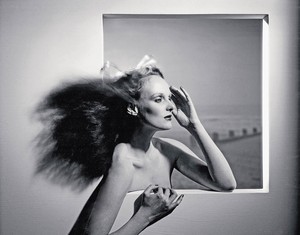
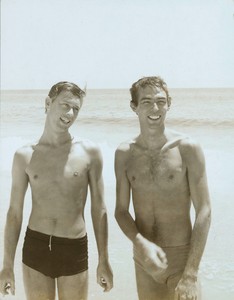
Grace Coddington, 1974. Photo: Willie Christie
DBHave any other artists inspired your pictures?
GCAndrew Wyeth. We went to his place too. And we photographed him and his son.
DBIn Maine?
GCYes, he was on Monhegan Island so we went there. Those were the days when you could go for two weeks and do a job, which was amazing. And we didn’t stay in the most expensive places or anything; we stayed in little inns, we were a whole troop, and it was fabulous eating lobsters every day. We spent a long time with Wyeth and his wife, Betsy. They had a lighthouse, which was really pretty, at the end of his garden, and we shot all around there. He was an amazing man. We did a closeup of blueberries in a box on a chair because he painted those kinds of things around there, and then blowing white curtains in a door frame. It was such a pleasure to do a job that was beyond just fashion. At the end of the shoot, he said, “I’d really like to paint you”—meaning me—“Can you stay on?” And I said, “Oh no, I have to go to work on Monday.” Bruce was like, “Are you fucking crazy?”
DBGrace, that’s crazy!
GCI know, I’m nuts. I would have loved it.
DBDid you really have to be at work? I think even Anna Wintour would have understood if you called in sick to be painted by Wyeth.
GCWell, I didn’t know how long it was going to take. Ha!
Derek C. Blasberg is a writer, fashion editor, and New York Times best-selling author. He has been with Gagosian since 2014, and is currently the executive editor of Gagosian Quarterly.