Negar Azimi speaks with the artist about his murals in Tehran, his preoccupation with slides, and his inspirations from Giorgio de Chirico to Alfred Hitchcock.
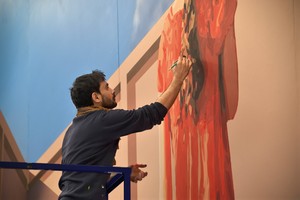
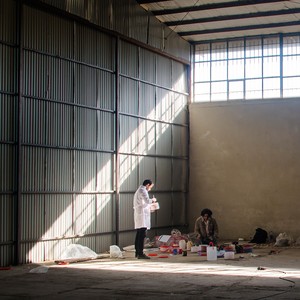
Mehdi Ghadyanloo working on Finding Hope (2019), a mural in the lobby of the Congress Centre for the Annual Meeting of the World Economic Forum, Davos, Switzerland, 2019. Photo: Jack Hardy
Mehdi Ghadyanloo working on Finding Hope (2019), a mural in the lobby of the Congress Centre for the Annual Meeting of the World Economic Forum, Davos, Switzerland, 2019. Photo: Jack Hardy
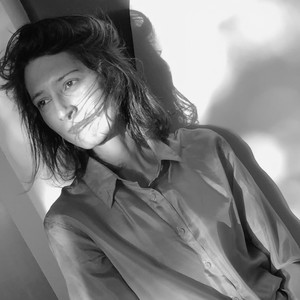
Negar Azimi is a writer and the senior editor of Bidoun, a publishing and curatorial project. With Klaus Biesenbach, Tiffany Malakooti, and Babak Radboy, she recently curated the first retrospective of the Iranian avant-garde theater director and filmmaker Reza Abdoh at MoMA PS1, New York. She is at work on a book about the 1960s and 1970s.
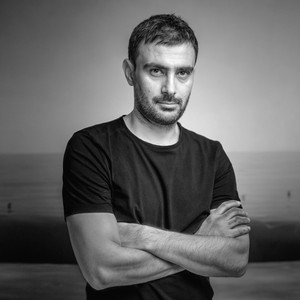
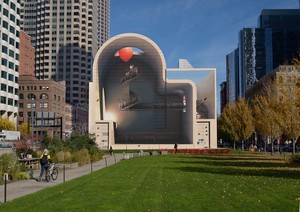
Mehdi Ghadyanloo established a public art practice in his native Iran by completing more than 100 expansive trompe l’oeil murals on buildings throughout Tehran between 2004 and 2011. In 2016, with the completion of his Spaces of Hope mural at the Rose Kennedy Greenway in Boston, he became the first artist since 1979 to receive official commissions in both Iran and the United States. Ghadyanloo’s works envision a fictive architecture of playground slides, tubes, and ladders situated in shallow walled spaces and lit from above by ocular skylights.
Negar AzimiMehdi, your recent body of work features extravagant, seductive, otherworldly playgrounds made up of slides and ladders and other talismans of childhood. Naturally I’m curious about the visual world you inhabited as a child—television, books, art, toys—what did you grow up looking at?
Mehdi GhadyanlooI grew up in a small suburb of Karaj, Iran, itself a satellite city outside the capital, Tehran. My father was a farmer and I was expected to become a farmer, too. Childhood games involved playing in alleys with small stones—very low fi! I had no contact with formal fine art. In retrospect, the artist in my life was my mother. She comes from an old nomadic tribe and only settled at the age of seven. Before that, she and her family had moved from place to place by camel. When I was a child, she and her mother—my grandmother—were constantly in the background weaving carpets, kilims and gabbeh, so our house was full of textiles decorated with animals and flowers and trees in beautiful symmetrical designs. Years later, when I became acquainted with the Western tradition of still lifes, I found similarities between those works and my mother’s visual world. But I had never thought of her work as art; to me, it had always been a form of labor.
NAOr craft. So over time, you began to undo these tired dichotomies and your idea of what art could be grew more expansive?
MGThe more I think about our way of life back then—children running along the rooftops that connected the mud-brick buildings in our small town, our mothers weaving methodically—it all seems like a form of performance art [laughs]. It was an incredibly rich visual environment.
Mehdi Ghadyanloo, We Didn’t Start the Game, 2015, installation view, Village Underground, 54 Holywell Lane, London
NAAnd your transition to painting? How did that come about?
MGOne day, when I must have been about seventeen and in high school, an aunt of mine asked me to draw her portrait. I had no concept of what drawing a portrait would involve. She asked me to draw her face. So I did, and to my surprise, she liked the result. From there she became my sponsor and sent me into Karaj, about an hour and a half ride by bus, to take art classes. At the time, we didn’t have many options when it came to painting classes, so I started with a course on Persian miniatures.
NAShe made this proposal out of nowhere? She must have sensed something. Was this the first time you understood that you had a gift?
MGTo be honest, I didn’t believe I had a gift. I’m not even sure if the portrait was any good [laughs]. But I loved the feeling of giving life to something with my hands.
NACan you tell me about your Persian-miniature classes? What kind of training did they offer?
MGOur master taught us how to paint flowers, horses, and birds, and how to use color in the traditional manner. More than anything, painting miniatures taught me the value of patience. My first, which was probably ten by ten centimeters [four by four inches] or so, took me something like sixty hours to paint. I suppose it was a form of meditation.
NAWhat happened next? What made you pursue painting further?
MGI got accepted into the University of Tehran to study painting. Right after getting that degree I began to study animation. But I was terrible at it. I had no gift for storytelling [laughter].
NATraditional narrative was not for you. I was fascinated to learn recently that you spent some years painting murals for the city of Tehran. For people who have seen the city, or even images of it, its enormous murals are iconic—synonymous with the city, especially with the immediate postrevolutionary period. I’m of course thinking of the often maudlin and dramatic depictions of revolutionary martyrs, the evils of imperial America, the beneficent Supreme Leader, et cetera. How did that mural work come about?
Mehdi Ghadyanloo, Spaces of Hope, 2016, installation view, Greenway Wall, Rose Kennedy Greenway, Boston
MGWhile I was studying animation, the Tehran municipality made a public call for artists to beautify the city. I didn’t take it seriously at first; I didn’t believe they’d actually give artists the freedom to paint what they wanted. But after a few months, I noticed some good murals here and there. They were different from the revolutionary murals we were used to. The mayor of Tehran at the time, Mr. [Mohammad Bagher] Ghalibaf, was hoping to run for president, and . . .
NAThis was almost an extension of his election campaign.
MGExactly. He presided over a golden age of public art in Tehran.
NATehran isn’t exactly a feast for the eyes; cities like Esfahan and Shiraz are appreciably more beautiful. Tehran is rather gray, architecturally a little humdrum.
MGIt’s gray. Successive Western urban planners had been invited to Tehran over the years—like Victor Gruen, the mall-maker who is known as the architect of the American dream—but a lot of their plans weren’t realized in the end, or were poorly executed. All of which is to say, Tehran isn’t a good city for cars and it isn’t a good city for pedestrians, either. It’s polluted and overcrowded. I thought of my murals as a sort of painkiller for the city. I knew I couldn’t change the city fundamentally but maybe I could ease the pain, you know?
NAI love that: art and its narcotic effects. Can you tell me a little about the first mural you painted? What was the subject?
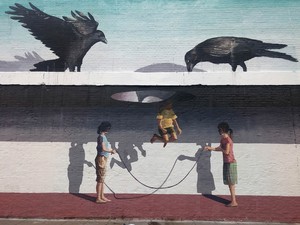
MGIt was in Vanak Square, which was meaningful because it’s one of the most important squares in Tehran—you probably know the histories of people celebrating and demonstrating in that square. I painted a garden and a vast sky—in fact two-thirds of the painting was this beautiful vast sky, set against one of the busiest intersections in Tehran. My mural replaced a famous image of Imam Khomeini, the gnomic figure at the center of the Iranian Revolution. Over time, I saw people taking selfies with my mural, saw it on blogs and on the Internet. It felt like public art could begin to change the face of the city.
NAAnd create a miniutopia, away from the legacies of the revolution, the war with Iraq, crushing sanctions . . .
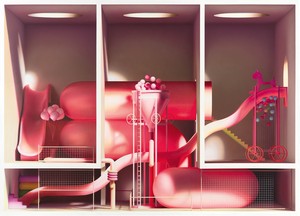
Mehdi Ghadyanloo, The Unreachable Beauties, 2022, acrylic on canvas, 70 ⅞ × 98 ½ inches (180 × 250 cm). Photo: Farzaneh Ghadyanloo
Mehdi Ghadyanloo, Finding Hope, 2019 (detail), mural for the lobby of the Congress Centre for the Annual Meeting of the World Economic Forum, Davos, Switzerland, 2019.
MGExactly, to distract people from their problems.
NAI’m now looking at a folder filled with images of your mural work. Some of the murals are incredibly surreal: flying cars, children on bicycles careening off walls, winged humans. There’s a distinct sense of wonder, of otherworldliness. Did you paint on canvas at all during this period?
MGNot at all. I spent the next eight or ten years making public art. Tehran has like 10,000 mural-ready walls. It was a fantasy in some ways; even if we knew that this golden age wouldn’t last forever, it was a dream for a while. But yes, at some point I went back to painting on canvas.
NAThinking about the series you presented at Gagosian, I’d like to talk to you about childhood, which occupies a unique place in Iranian culture. I mean, you see Iranian filmmakers like Abbas Kiarostami and other members of the Iranian New Wave explore childhood as a way of smuggling in weightier themes, to the point where it’s become something of a cliché. When and how did you begin to think about childhood, play, and playgrounds?
MGI’d had some small exhibitions in Europe, but I wasn’t entirely satisfied with my painting. I guess I was still searching, hoping to capture a form that more closely resembled life, with all its ups and downs. One day about six years ago I took my daughter to a playground in Tehran. The slides in particular were very colorful—much more colorful than any playground you might see in New York, where everything seems more design-centered, gray, black, and white, you know? But these playgrounds were imported, largely from China, and in a gray city, the bright colors created an incredible contrast.
NAIt’s funny, I remember that when I lived in Iran briefly, in my early twenties, there were some exuberant urban-planning elements, very ostentatious, very colorful: glow-in-the-dark palm trees, flashing lights strewn across city squares, that sort of thing. Almost camp. My friends and I used to joke that someone was having a lot of fun in the urban-planning meetings. Come to think of it, they were probably, at least in part, a reflection of the country’s political and economic ties to China.
MG[Laughs] I remember those lights.
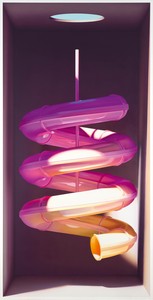
Mehdi Ghadyanloo, The Memory of the Future, 2022, acrylic and oil on canvas, 92 ½ × 47 ¼ inches (235 × 120 cm). Photo: Farzaneh Ghadyanloo
NASo tell me more about the slides. What specifically drew you in?
MGI found them very beautiful. I loved the way sunlight passed through these translucent plastics. I found them painterly, too. And of course, I was intrigued by how much children loved them, you know? My daughter could sleep in one of those slides! [laughs] She loved the pure yellow, the pure red. The colors reminded me of some of the colored tubes in my studio that I’d never touched—fresh, transparent reds and violets. Just like that, one day I began painting slides. I remember I was about to have a show in Norway at the time, and I told the gallery owner, who was expecting the waterscapes I’d been working on at the time, that I’d be presenting slides instead. He said, Okay, do whatever you want, but I don’t think I’ll sell even one! [laughs]
NAI love that.
MGMy aim was to add a poetic element to the slides, especially with light. In a way, I gave them a new life. They may seem like banal objects, but at some point I began to think about them the way I think about [Giorgio] Morandi and his bottles.
NAHow so?
MGIf an ordinary bottle can speak to you, then why can’t a red slide do the same? Over time, I began to redesign the slides I’d seen. I added more fun, more adventure, more meaning. And I feel like I’m just beginning.
NAI’d like to talk about darkness, even if that feels incongruous. Although these playgrounds are ostensibly sites of childhood innocence, there’s a darkness to them; at times, the frame is claustrophobic. The playgrounds feel imprisoned within indoor spaces, their spatial elements nonsensical. I can think of at least one painting in your recent body of work in which there’s no access point to the slide depicted; elsewhere, I see a ladder that leads nowhere. And the lighting—it’s a bit sinister, no? Finally, the absence of human bodies leaves me feeling like something has just happened, or is about to—a touch of the apocalypse. All of which is to say, these strike me as psychological spaces as much as physical ones.
Mehdi Ghadyanloo, Davos, Switzerland, 2019
MGI’m creating a kind of atmosphere, a space of ambiguity. I don’t want to tell a story that’s good or bad per se. I want to leave things open to interpretation.
NALet’s talk about the actual lighting?
MGI was always fascinated by the way masters like Vermeer and Velázquez play with light, the chiaroscuro and so on. And I was taken by how Surrealist painters like Giorgio de Chirico play with walls, with those sharp perspectives that are both scary and beautiful.
NADe Chirico’s abandoned plazas remind me of your paintings. There’s also something filmic about your work, or rather, I should say that some of them have the quality of a film still—that sense of encompassing worlds, a glimpse that leaves you wanting more. What has film taught you, if anything?
MGI suppose I learned a lot from Alfred Hitchcock, especially when it comes to manipulating small elements in my paintings and creating atmosphere.
NAI think more about what’s absent in Hitchcock’s films than about what’s present. And now I’m pondering the phantom children in your paintings.
MGExactly. We can’t see the children, but when I’m painting I can hear their laughing and playing. There are signs of their existence, but they remain signs only.
NAWhat else inspires you?
MGI get inspired by the Persian poets, especially in studying Rumi and the place of light in his poems. Sometimes you see a sudden shadow in my paintings that fights the light, that invades it. I love to explore these dualities.
NADualities are integral to Persian culture—the layers of meaning, the elaborate taarof—which is our national politesse, or even the way people tend to live double lives, especially today under the Islamic Republic. All of which is to say, your topographies of play are anything but straightforward.
MGYes, and yet over time I’ve come to think that these dualities are universal. The fear and existential anxiety that I associated with my homeland is everywhere.
NAIt’s true. The feeling of an uncertain future is increasingly our shared reality—one of the lessons of these last two years.
MGYou see it in Milan Kundera’s literature and in Andrei Tarkovsky’s cinema, among other places.
Negar Azimi is a writer and the senior editor of Bidoun, a publishing and curatorial project. With Klaus Biesenbach, Tiffany Malakooti, and Babak Radboy, she recently curated the first retrospective of the Iranian avant-garde theater director and filmmaker Reza Abdoh at MoMA PS1, New York. She is at work on a book about the 1960s and 1970s.
Mehdi Ghadyanloo established a public art practice in his native Iran by completing more than 100 expansive trompe l’oeil murals on buildings throughout Tehran between 2004 and 2011. In 2016, with the completion of his Spaces of Hope mural at the Rose Kennedy Greenway in Boston, he became the first artist since 1979 to receive official commissions in both Iran and the United States. Ghadyanloo’s works envision a fictive architecture of playground slides, tubes, and ladders situated in shallow walled spaces and lit from above by ocular skylights.