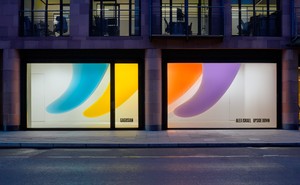
The Olympic and Paralympic Games arrive in Paris on July 26. Ahead of this momentous occasion, Yasmin Meichtry, associate director at the Olympic Foundation for Culture and Heritage, Lausanne, Switzerland, meets with Gagosian senior director Serena Cattaneo Adorno to discuss the Olympic Games’ long engagement with artists and culture, including the Olympic Museum, commissions, and the collaborative two-part exhibition, The Art of the Olympics, being staged this summer at Gagosian, Paris.
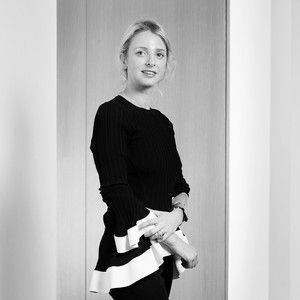
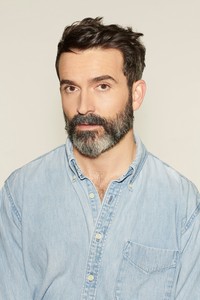
Founding director at Gagosian, Paris and Le Bourget, Serena Cattaneo Adorno has worked with the Fondation Giacometti, Christo Estate, and the Picasso family on several exhibitions, as well as with contemporary artists including Anselm Kiefer, Jean Nouvel, Sterling Ruby, Richard Serra, Rudolf Stingel, Tatiana Trouvé, and James Turrell. Photo: Léa Crespi
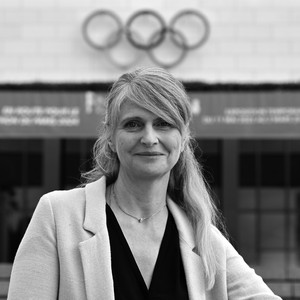
Yasmin Meichtry is the associate director of the Olympic Foundation for Culture and Heritage, based in Lausanne, Switzerland. Meichtry is responsible for all Olympic Museum and International Olympic Committee patrimonial collections, from acquisition to conservation and valorization. In addition to heading the heritage unit, she is also in charge of its Executive and Development & Innovation Services. Previously, she directed the Fondation Suisse/Pavillon Le Corbusier in Paris and served in the Swiss diplomatic services as Counsellor for Higher Education, Research and Innovation. She is also an experienced film publicist and production adviser.
Serena Cattaneo AdornoThe cultural division of the International Olympic Committee has engaged with artists throughout the years. Could you provide an overview of the Olympic Museum’s history, its mission, and its evolution over time?
Yasmin MeichtryIt started when Baron Pierre de Coubertin created, or renewed, the Olympic Games at the end of the nineteenth century. His plan was to create a sort of new Olympia, inspired by the ancient Greek city where the original Olympic Games took place. He lived in Lausanne, Switzerland, between 1929 and 1937, where he founded the headquarters of the IOC, which also became the first home of the Olympic Museum. It wasn’t until 1993 that IOC President Juan Antonio Samaranch created the Olympic Museum as we know it today, turning Pierre de Coubertin’s wish into reality. The present museum was designed by Pedro Ramírez Vázquez, a Mexican architect, and Jean-Pierre Cahen, a Swiss architect. The building was renovated in 2007 with a greater international audience in mind.
Today, the museum is a comprehensive site fully dedicated to the Olympic Games on the shores of Lake Geneva, with an expansive park featuring art installations related to sports, to the Olympic values of respect, friendship, and excellence across nations. The museum is a place where we welcome our visitors not only to learn about the Olympics and to visit our exhibitions, but also to have fun.
SCAWhat is physically presented in the museum?
YMWe have a permanent exhibition about the history of the Olympic Movement, the history of the Games, and the history of the athletes. It displays the equipment of many athletes, telling the great stories of the Olympians and inviting the visitor into the world of the Olympic Games.
The other part is a temporary exhibition, which shows not only that the institutionis a museum focused on sports, but that through the lens of Olympism, you can address various topics, from geopolitics and history to design and architecture. The next temporary exhibition after the Olympic Games will be about sports and fashion. It’s a traveling show from the Musée des Arts Décoratifs in Paris.
We also have a wonderful restaurant with a terrace and a large sculpture garden. The museum has many education activities and workshops for children. There’s the Olympic Studies Centre as well, with extensive resources on Olympic knowledge and history.
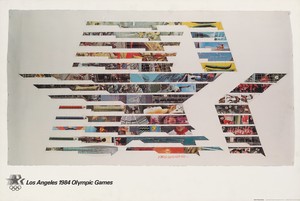
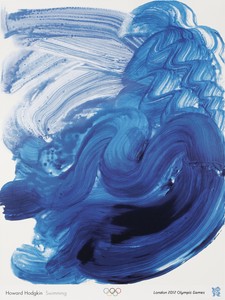
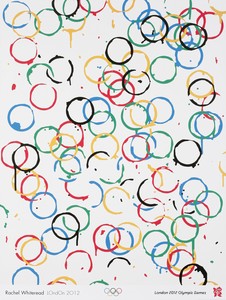
SCAOne of the things that has impressed us when we initially started discussing our collaboration was the quality and quantity of artists whom you’ve commissioned over the years to design posters. We realized there was aninteresting overlap between some of the artists you commissioned and those the gallery has been involved with for many years. We go from Cy Twombly to Rachel Whiteread to Andy Warhol to Christo. In some cases, the artists themselves have created new works for the posters; in other cases, preexisting works were adapted for the purpose. We are very excited to be able to show a small selection of those posters in our Paris gallery on Rue de Ponthieu, because it demonstrates the diversity of your cultural endeavors and strong engagement with artists and the art world. I don’t think an exhibition like this has ever been done before, so we’re excited to be showing this in Paris. Could you talk us through the process that the cultural department of the Olympics undergoes when selecting artists?
YMThe posters are a bit of a special category, because they are not directly commissioned by the IOC. They’re produced by the organizing committee with the support of the IOC. But then we collect them for the museum at every edition of the Games.
There are actually many ways we work with artists. For example, we acquire artwork for the collection. Some works in the museum’s collection were from art competitions. At the beginning of the modern Olympics, there were not only sports matches but also art competitions, between 1912 and 1948. There were medals in several disciplines, from writing to sculpture to painting. So these works, at least the ones we could retrieve, entered our collections.
Then there are artworks that are produced especially for the Games to decorate a stadium or an Olympic venue. Some have been offered to us by national Olympic committees or international federations. During President Samaranch’s era (1980–2001), we acquired many sculptures for our grounds.
SCAWhat strikes me the most about this Olympic Games—as we in Paris wait impatiently to see where the different sports are going to be played—is the frantic excitement. One could compare it to what surrounded the Exposition Universelle in 1900: the technical and urban preparation for the arrival of a lot of people to the city, and the important role that culture plays, and where history becomes a backdrop to some of the sporting events. Some of these monuments and sites are going to embody a very different role on the international stage. I know you’ve been thinking a lot about how you can integrate the strong cultural history of Paris within your program. Can you give us an insight about what you have planned in Paris for this Olympic Games?
YMThere’s what we at the Olympic Museum have organized, and then there’s what all of Paris 2024 and Paris-based cultural organizations have planned—which is called the Cultural Olympiad. To get back to the root of all this, in Coubertin’s vision of the Olympic Games, it was not only sports but also a global philosophy merging arts, sports, and education together. For him, human beings needed sports for their physical health but also arts for their mental well-being and development. So there’s a very strong link, and our mission as the museum’s cultural and heritage division is to further blend culture and sport. That is also the role of each organizing committee: to build the Cultural Olympiad around the sports Olympiad. For Paris, we are seeing incredible vitality in this effort.
I haven’t worked with the Olympics for that long, only since 2016, during the Rio Games. But I’ve discussed it with my colleagues, and it’s really the first time that we are seeing so many institutions involved, including performing arts establishments like the Opéra national de Paris, the Philharmonie, the Théâtre de la Ville, and museums like the Musée du Louvre, the Musée de la Monnaie, the Palais de la Porte Dorée–Musée national de l’histoire de l’immigration, the Centre Pompidou, and the Parc de la Villette. Many cultural institutions are doing something honoring the Olympics. For us, it’s an extraordinary opportunity to show that culture is really at the heart of this event.
We’ve been supporting the organizing committee to develop the artistic posters, with seven artists designing for the very first time a diptych including the Paralympics and the Olympics. Another of the programs we oversee is the Olympic sculpture, in which we commission artists to work during the Games around Olympic values and themes. We started this program in Rio with JR and his Giants, which were quite spectacular. We also worked in Buenos Aires for the IOC session and the Youth Olympic Games with Leandro Erlich creating this giant ball game, rolling balls fromdifferent sports throughout the city.
And then the program evolved a little bit. We decided to build something that would be more like passing the torch—the artistic torch—from one city to the other. That’s what we started in Tokyo. We commissioned Xavier Veilhan to create a sculpture that would stay in the city as a legacy of the Olympic Games. As Xavier is a French artist with his work in Tokyo, we decided for Paris to commission an American artist who would create that sculpture. Then in Los Angeles, which will be the next Summer Games location in 2028, to commission an artist from Australia,where the followingedition of the Games will happen, etcetera. The idea is to build a sort of legacy chain—to pass the torch between these hosts. For Paris, Alison Saar, an LA-based sculptor, was selected. This is the first time she’s working abroad.
We also commission artists for specific exhibitions. We have a current exhibition in Paris called SPOT24 on urban sports, and for that we commissioned several French artists to show the strong link between six of the newer Olympic disciplines—skateboarding, sport climbing, BMX freestyle, surfing, 3×3 basketball, and breaking—and the art and culture world. We’re presenting artists Léo Caillard and Stéphane Ashpool, among others.
We have another program called “Olympism Made Visible,” for which we’re commissioning internationally renowned photographers to work around sports and the Olympic values. Their work captures how the Olympics is alive every day of the year and how it can help communities in challenging situations to find hope, especially among younger generations. These photographers have been working in Brazil, in Dakar, in Cambodia, across five continents. We have commissioned twelve photographers so far. We’re showing a slideshow of these photographers at the Rencontres d’Arles this year. This will be in conjunction with an exhibition highlighting the museum’s collection in partnership with Photo Elysée.
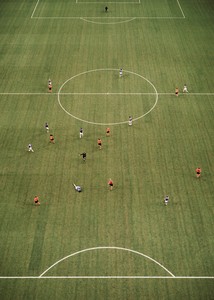
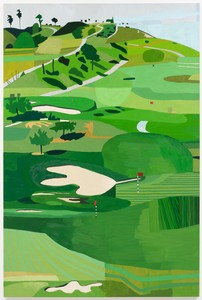
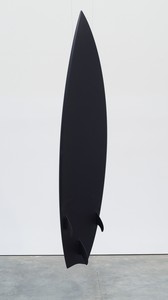
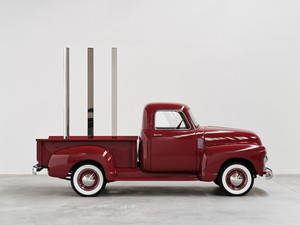
SCASpeaking of your collection, the exhibition we’re working on together is going to be in two parts. One is presenting a selection of the posters from your collection. The second part consists of preexisting works, and perhaps a couple of new works, from artists of international renown who are going to explore, directly and indirectly, the theme of sports. And it’s been extremely rewarding for us to look at the selection because you realize what an influence athletics has been on artists over the years, whether it is, for Andy Warhol, a famous boxer, or, for Marc Newson, transforming a surfboard into a sculpture.
We have very happily accepted, at your request, that a portion of the profits will be going to the Olympic Refuge Foundation, which is a nongovernmental organization founded by the IOC in 2017. The primary stated goals of the foundation are to support the protection, development, and thriving of displaced young people through sports worldwide. Can you tell us a little more about this organization?
YMOne of the major and the most visible actions of the Olympic Refuge Foundation is to set up the Refugee Olympic Team during the Games. The first team was created to compete in Rio. Now it’s become an established program, and an important one, given the evolution of the state of the world.
SCAYes, I think the intention of both Gagosian and the IOC is that we unite in a message of positivity, of hard work, and great solidarity.
YMThis is really at the core of everything we do, whether it’s with art or sports. We hope that through our exhibitions, through our commissions, and through collaborations with institutions like yours, we can convey that message of solidarity between the peoples of the world, of cross-cultural understanding and cooperation. The Olympic Refuge Foundation is fully engaged in this philosophy and objective.
The Art of the Olympics: In association with the Olympic Museum, Gagosian, rue de Castiglione, rue de Ponthieu, Paris, June 6–September 7, 2024
Founding director at Gagosian, Paris and Le Bourget, Serena Cattaneo Adorno has worked with the Fondation Giacometti, Christo Estate, and the Picasso family on several exhibitions, as well as with contemporary artists including Anselm Kiefer, Jean Nouvel, Sterling Ruby, Richard Serra, Rudolf Stingel, Tatiana Trouvé, and James Turrell. Photo: Léa Crespi
Yasmin Meichtry is the associate director of the Olympic Foundation for Culture and Heritage, based in Lausanne, Switzerland. Meichtry is responsible for all Olympic Museum and International Olympic Committee patrimonial collections, from acquisition to conservation and valorization. In addition to heading the heritage unit, she is also in charge of its Executive and Development & Innovation Services. Previously, she directed the Fondation Suisse/Pavillon Le Corbusier in Paris and served in the Swiss diplomatic services as Counsellor for Higher Education, Research and Innovation. She is also an experienced film publicist and production adviser.