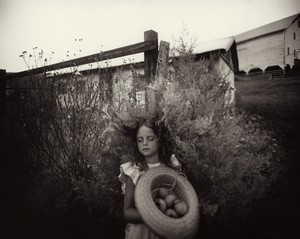
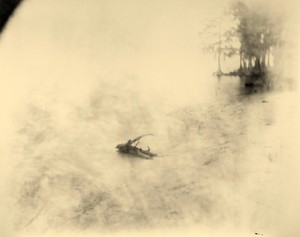
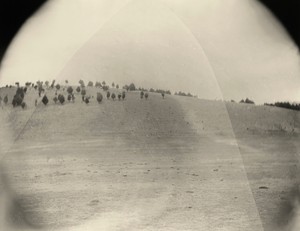
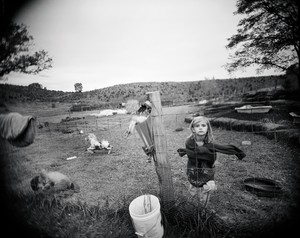
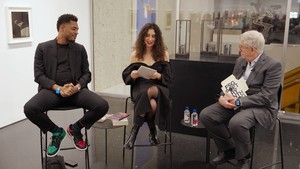
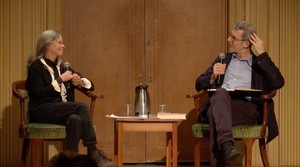
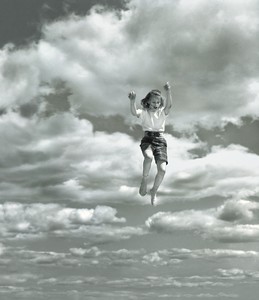
Sally Mann joined novelist Amor Towles in a conversation about her widely celebrated new book, Art Work: On the Creative Life (2025), at an event hosted by the New School and the Strand in New York. Published by Abrams, Art Work is about the challenges and pleasures of the creative process. Its mix of illuminating stories, practical advice, and life lessons, illustrated throughout with photographs, letters, and journal entries, offers insights into Mann’s own experience of making art. Here, Mann and Towles speak about the writing process, historical ghosts, and fortunate mistakes.
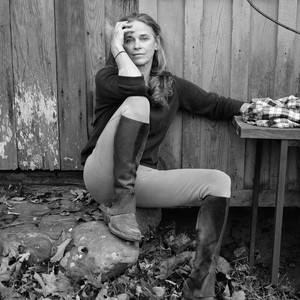
Sally Mann is an American photographer and writer. Her work is held in many notable collections, including the National Gallery of Art, Washington, DC; the Metropolitan Museum of Art, New York; the Victoria & Albert Museum, London; and the Moderna Museet, Stockholm. Mann’s Hold Still: A Memoir with Photographs (Little, Brown, 2015) was named a finalist for the 2015 National Book Award and in 2016 won the Andrew Carnegie Medal for Excellence in Nonfiction. She was inducted into the American Academy of Arts and Sciences in 2022 and is a Prix Pictet laureate. Photo: Annie Leibovitz
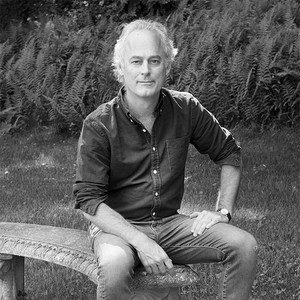
Born and raised in the Boston area, Amor Towles graduated from Yale and received an MA in English from Stanford. Having worked as an investment professional for over twenty years, he now devotes himself full time to writing in Manhattan, where he lives with his family. His novels Rules of Civility, A Gentleman in Moscow, and The Lincoln Highway, and his collection of shorter fiction, Table for Two, have all been New York Times bestsellers, have collectively sold more than eight million copies, and have been translated into more than forty languages. Photo: Dmitri Kasterine
Amor TowlesArt Work is a very generous book, in that you invite us into your home, into your correspondence with friends. You share your journal entries and give us your thought process behind certain photographs. You are talking not only about art, but about the making of art. It’s funny, too: Right at the beginning, you tell us that after your last book, Hold Still [2015], you spent eight years saying, I will never write another book. But you nevertheless began to accumulate chapter headings for the book that you weren’t going to write. What were the additional things you decided you needed to say?
Sally MannAll of this writing started with the Massey Lectures that Harvard asked me to deliver in 2011. I was terrified—I thought, I better write something that makes me sound not so stupid, because it’s Harvard after all. Those lectures became the catalyst for Hold Still, which was more formal, more scholarly, than Art Work, which flowed almost effortlessly, conversationally. I know that sounds impossible—writing is never easy—but it really was just a series of anecdotes from my life, strung together. I began writing them down and there I was: down the old rabbit hole. When you start writing, do you just pour yourself into it?
ATWell, I’m a planner. There’s a pouring out, but it is within a constraint I designed in advance.
SMDo you have a whiteboard where you lay out your chapters?
ATI have a long outline. A thirty-page outline.
SMYeah, not me. Gosh, I wish.
ATThe title Art Work is appropriate because the book very much considers art as work, and obviously there’s a play on words there. Did you know at the beginning that that was going to be such an important focus?
SMWell, I knew this much: Art is not always fun. Art is work!
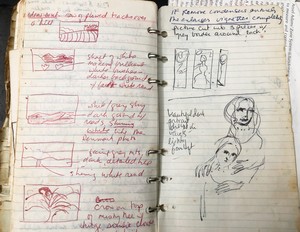
A page from Sally Mann’s notebook, c. 1973
ATYou say it right at the beginning: This book is about how to get shit done.
SMIt’s all kinds of shit.
ATThat’s true. It’s a variety of shit. You quote Emily Dickinson, “Luck is not chance—It’s toil,” and that’s a recurring theme. You demystify the moment of inspiration. Could you talk a little bit about that, about how you think of inspiration versus perspiration, or however you want to put it?
SMYeah, it’s 99 percent perspiration. I did not employ that aphorism, but I think that’s the gist of the thing. It’s true that some pictures really are exciting, effortless. In those cases, after the shutter clicks, I drop down on my knees in thanksgiving, knowing that if I just don’t screw up the negative, I’ve got a good picture. But those moments are rare.
ATYou talk about, in a variety of cases, the dynamic of you taking a picture and then digging deeper into re-creating, revisiting, and choreographing it. Like the example in your book of the slaughtered duck; you revisited the subjects dozens of times, rearranging the elements of the scene. Was that something you began doing early in your career? Or did you discover it along the way?
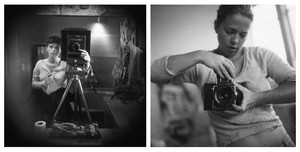
SMI’ve been going through early 35mm pictures beginning from when I was seventeen, and yes, I see evidence of the same instinct. They’re often very carefully built.
ATWhere do you think that comes from?
SMI might be a little OCD-ish. They probably should’ve medicated me as a child, nipped it in the bud. [laughs]
ATYou talk about the importance of embracing art as work, or as a job, particularly in difficult periods where you don’t have inspiration.
SMWhich is most of the time, really.
ATFor the young artists in the audience: There you go. It seems from your writing, there can be quite long periods when you feel like you’re not advancing artistically in the way you would like. How long can a trough be, or how deep, and what do you do during such a time?
SMI’m such a peasant, you know. I just go to work. And I take pictures, again and again, until I get a good one. I often work with a concept in mind. I mean, I think of an overarching theme for a body of work and I try to make pictures that will fit in. So sometimes I’ll have a brand-new idea and right off the bat I get a good picture. I think: This is going to be a great project, piece o’ cake. And maybe the next one is also pretty good. But then, as surely as night follows day, the third and fourth ones are terrible. This happens with writing, too. You just have to claw your way out of the trough to get another good picture, taking one after another. You can’t talk yourself into a good picture.
ATIt’d be a bad habit. You have a deep interest in the landscape—and for those of you who don’t know, Sally lives in the town she was born in, which has a population of fewer than eight thousand people. So that’s a real commitment to place. You have a quote about making the local universal.
SMThat’s William Carlos Williams. “The local is the only universal.”
ATCould you talk about the role of place in your work, how you think about it both thematically and practically?
SMEmotionally, it’s so important to me. I love the place where I live and never wanted to leave it. I got sent off to boarding school because I was a difficult child, and came back at absolutely the first opportunity. Maybe I was just profoundly insecure and needed to be someplace where I felt comfort. Lexington, Virginia, is a special place and it is inspiring for me. I can always walk out my door and find something beautiful to make a picture of. That’s not necessarily a prerequisite for anybody else; it just happens to work for me.
ATDo you think that would’ve been true wherever you were? If you had grown up in Detroit, do you think that you would be documenting that, or is there something about the rural Southern environment that is particularly arresting for you?
SMWell, it’s the light, of course, right? It’s always about that when you’re a photographer. I’m photographing down in the Mississippi Delta now, working in color with my digital Leica, and I sometimes have this sense that you can’t make a bad picture down there because of that Delta light.
ATYou also speak and write about the presence of history in the South—mortality, and bribery, and tragedy, and evil, and passion, and all these various emotional elements, which are built into the landscape for you. Is that part of the thematic pursuit that you describe?
SMYou can’t live in the South and be unaware of the historical ghosts and the degree of suffering and pain that made that culture and that landscape as rich and beautiful and complicated as it is. The excruciating history is everywhere.
ATHow you think about time in terms of the past seems to come up a lot in your writing. And your photographic work gives us a feeling of the past to some degree as well, partly because you’re intentionally using antiquated technology, like the daguerreotype style of photography. But I’m curious: How do you think of the future in your work?
SMRight now I seem to be taking the Elizabeth Strout approach—the same story, over and over again, a thousand ways. I guess the measure of one’s creativity is how many ways you can tell your singular, unique story. Working with color now is just one more way.
ATWould you talk about your relationship with your equipment? It seems like, in the trajectory of your work, there’ve been these moments of discovery or investigation as you look into different ways to take the picture, develop the picture. Different materials that you might use, right?
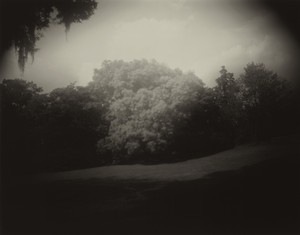
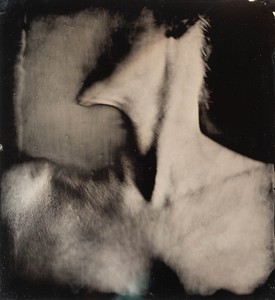
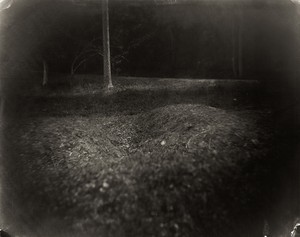
SMThat’s part of the thousand different ways to tell the same story. I’m not going to take the same picture over and over again. I’m always looking for ways to make it new, and that means looking for different techniques. Right now, I’m working with some black-and-white sheet film that a friend found on eBay; it’s completely out of date and unpredictably weird. Well, okay, strictly speaking, it doesn’t necessarily do its weird things unless you get bored with developing and walk across the room and open up the New York Times on your phone and read it for a while and come back to discover that the film you’re developing has randomly solarized. The effect is amazing. I’m having so much fun. It’s an entirely new way to tell that same story.
The other exciting thing is that the film is basically free. Usually, each sheet of eight-by-ten film is, like, twelve dollars, maybe more. The first “investment” in making a picture is setting up the damn camera, maybe twenty pounds, and my lens and tripod weigh another twenty-plus pounds. Setting up to take a picture, hauling all that crap out, the whole time you’re doubting yourself. Is it really worth pulling off to the side of the road and getting all this shit out of my car? Is it really worth twelve dollars to just take one negative? And I always take two or three because I’m not very good at metering the light. So there you’ve got thirty-six dollars in film alone and who knows if the picture will be any good. I’m the kind of person who reuses Saran Wrap, for crying out loud; I don’t like to waste things. So it makes it especially hard to make the decision to press the shutter.
ATWhy is this film free?
SMBecause my pal Eban gives it to me! It’s not normal black-and-white film although it is silver based. He gets a 250-foot roll and he graciously cuts it up into eight-by-ten sheets for me.
ATIs it old?
SMYes. It’s litho film, used for offset printing, way back in the printing industry rearview mirror. I had no idea I could get it to do what’s it’s doing.
ATAnd was it a mistake?
SMHalf of what I do are mistakes. Then I go, Hey! I think I like this mistake, but duplicating it can be the challenge. The trick is to replicate it and make it a systemic mistake, a reproducible serendipity.
ATOne of the interesting things in the book, and in your work in general, is that you share these journal entries and correspondence from decades ago. You kept a book of quotations, which is hundreds of pages long—
SMYeah, you’re in it.
ATYou hadn’t told me that before, thank you! You mentioned you’ve kept all your old calendars, your Day-Timers.
SMOf course I did.
ATAll this you’re sharing is like a collage of your story. You’re like an archivist; it’s a cabinet of curiosities of your inner life.
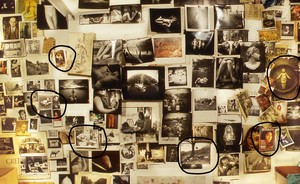
Bulletin board in Sally Mann’s darkroom, c. 1991
SMThankfully, I have a lot of room.
ATAs an artist, what do you surround yourself with? Describe your studio for us. Given that you have this instinct for cataloging, collecting, and capturing stuff from the past, what do you gather around yourself?
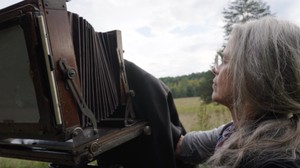
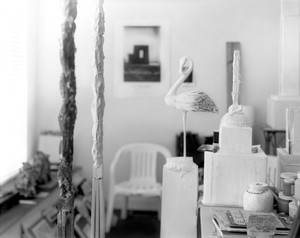
SMI have two studios. My clean studio is where I dry mount, care for, and store my prints; it has to be very, very clean. And then, above a barn just a few hundred yards away from my house is my wet plate collodion studio. It is indescribably cluttered, filled with stuff, where I photograph and work with the silver nitrate that stains everything it touches.
ATI imagine it gives you comfort—I mean in the way you describe comfort as being in Lexington—to be around all of that.
SMI’ve got plenty of comforting things in there. All my dead animals are there.
ATAll your dead animals?
SMOnly one was a pet. Eva, my greyhound, is hanging on the wall, and a lot of other mummified animals are there. And it’s got portraits, family portraits. It’s quite a scene. Plus there’s no Wi-Fi, no phone, so it’s a wholly other world.
An outtake of Sally Mann’s Dead Duck (1988)
ATI want to read you three quotes by other photographers and get your take on whether you agree or disagree. The quotes are from Susan Sontag’s collection of them with which she ends On Photography [1977]. The first one is Henri Cartier-Bresson:
I went to Marseille. A small allowance enabled me to get along, and I worked with enjoyment. I had just discovered the Leica. It became the extension of my eye, and I have never been separated from it since I found it. I prowled the streets all day, feeling very strung-up and ready to pounce, determined to “trap” life—to preserve life in the act of living. Above all, I craved to seize, in the confines of one single photograph, the whole essence of some situation that was in the process of enrolling itself before my eyes.
How do you think of your own work in relation to this? Does the way you capture images or capture life seem similar, or different?
SMIn every discipline, we all probably have that same urge to pounce. I definitely have it. I get a little weird when I sense a picture; I’m distracted and my range of vision narrows and I’m so concentrated and so dedicated to getting that picture. It’s some kind of fugue state.
ATFascinating. I don’t know Cartier-Bresson’s work process well, but he talks about it in the book The Decisive Moment [1952]. But you then go another step, which is that you’re willing to work with the image, to bring it to a different place.
SMIf I was as good as him, I wouldn’t have to. [laughter] That portly puddle-jumper—Cartier-Bresson caught him at the exact right moment. I mean, if I was good enough to take that picture, I wouldn’t ever have to go through all the trouble I do to make my work!
ATOkay, here’s one from Edward Weston: “Only with effort can the camera be forced to lie. Basically it is an honest medium, so the photographer is much more likely to approach nature in the spirit of inquiry, of communion, instead of with the saucy swagger of self-dubbed ‘artists.’”
SM“Saucy swagger!” The alliteration.
ATWhat do you think about the idea that photography is basically an honest medium?
SMEarly in my career, Edward Weston was one of my photographic heroes and I still love the damn pepper, which is just a straightforward, honest picture. But people aren’t taking those kinds of just-the-facts-ma’am pictures anymore. We’ve graduated out of that aesthetic. I was trying to think when exactly I realized that photographs could lie. For the longest time in my childhood, even up into my early teens, I thought photographs were always real. It wasn’t until, I think maybe it was Jerry Uelsmann—who none of you have heard of, probably—but Jerry started printing multiple negatives onto one sheet of paper, in one image. It was like early Photoshop, although done all by hand in the darkroom. When he came on the scene, I started realizing you could create new and ambiguous worlds, elaborate and evocative fictions, with photography. I was excited by that realization, and that’s what I started doing.
ATIt was, I take it, a liberating discovery?
SMRight. I haven’t stopped.
ATThe last quotation is—this is kind of a true-or-false question—from Dorothea Lange: “It is no accident that the photographer becomes a photographer any more than a lion tamer becomes a lion tamer.”
SMShe’s saying that one is born a lion tamer?
ATWhatever aspects of personality or experience send you in that direction—it’s fated. Because who would choose to be a lion tamer?
SMI don’t know, I think you absolutely do choose to be a lion tamer. So I might have to disagree; sorry, Dorothea. I think we all have multifarious talents within us and we choose which of them to develop; you could be a lion tamer and a photographer and a writer.
Sally Mann is an American photographer and writer. Her work is held in many notable collections, including the National Gallery of Art, Washington, DC; the Metropolitan Museum of Art, New York; the Victoria & Albert Museum, London; and the Moderna Museet, Stockholm. Mann’s Hold Still: A Memoir with Photographs (Little, Brown, 2015) was named a finalist for the 2015 National Book Award and in 2016 won the Andrew Carnegie Medal for Excellence in Nonfiction. She was inducted into the American Academy of Arts and Sciences in 2022 and is a Prix Pictet laureate. Photo: Annie Leibovitz
Born and raised in the Boston area, Amor Towles graduated from Yale and received an MA in English from Stanford. Having worked as an investment professional for over twenty years, he now devotes himself full time to writing in Manhattan, where he lives with his family. His novels Rules of Civility, A Gentleman in Moscow, and The Lincoln Highway, and his collection of shorter fiction, Table for Two, have all been New York Times bestsellers, have collectively sold more than eight million copies, and have been translated into more than forty languages. Photo: Dmitri Kasterine