
Now available
Gagosian Quarterly Summer 2026
The Summer 2026 issue of Gagosian Quarterly is now available, featuring Ellen Gallagher’s Fast-Fish and Loose-Fish (2026) on the cover.
Over the course of his career, Zao Wou-Ki (1920–2013) developed a unique style that merged traditional Chinese painting with European modernism. Born in Beijing, Zao attended the China Academy of Art in Hangzhou for six years before becoming an assistant professor at the school. In 1948 he traveled to Paris, which would eventually become his home, and formed friendships with artists such as Alberto Giacometti and Joan Miró. Zao’s style underwent a series of transformations during the 1950s: following a brief Paul Klee–inspired period, he completed a number of semiscriptural paintings whose markings evoked ancient Chinese carved oracle bones; he then adopted an even more saturated and abstract style after visiting the studios of many prominent Abstract Expressionists during a pivotal 1957 trip to New York. Zao received his first of many retrospectives in 1965 at the Museum Folkwang in Essen, Germany.
In 1971 Zao temporarily turned away from oil painting and began focusing on smaller compositions in india ink while caring for his ill wife. Distraught by her passing the following year, he traveled to Shanghai to visit his family for the first time in over two decades. These events brought Zao closer to his Chinese roots, spurring him to develop a monochromatic brush-and-ink technique that wedded motifs from traditional Chinese calligraphy and landscape painting with visual cues from his network of Abstract Expressionist contemporaries. By the 1980s and 1990s, Zao had developed an increasingly substantial artistic presence in his birth country. The National Art Museum of China, Beijing, and the National Museum of History, Taipei, both staged important solo exhibitions of his work in 1983, and the Shanghai Museum organized a sixty-year retrospective, which also traveled to Beijing and Guangzhou between 1998 and 1999. In 2002 Zao was elected to the French Académie des Beaux-Arts, and the following year he was celebrated with his first retrospective in France at the Galerie Nationale du Jeu de Paume in Paris. He was awarded the title of Grand Officier de l’Ordre de la Légion d’honneur in 2006.
The Summer 2026 issue of Gagosian Quarterly is now available, featuring Ellen Gallagher’s Fast-Fish and Loose-Fish (2026) on the cover.

In this video, Jenny Saville sits down inside her first major exhibition in Venice to discuss how the great Venetian artists of the past and the city’s heritage influence her work. The show brings together more than thirty canvases and works on paper from the 1990s to the present, tracing the development of her practice, which is deeply rooted in the history of painting.
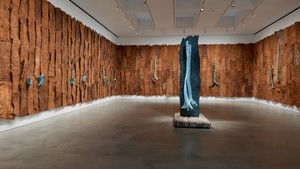
On the occasion of his exhibition The Reflection of Bronze at Gagosian, New York, Giuseppe Penone and curator Adam D. Weinberg sit down to discuss the genesis of, and their collaboration on, the show.
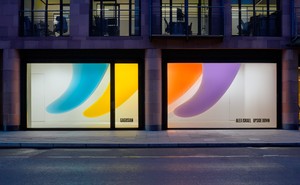
Ahead of Alex Israel’s exhibition of four new Fin sculptures at Gagosian, London, the artist spoke with Susan Casey, author of The Wave: In Pursuit of the Rogues, Freaks, and Giants of the Ocean (2010), about the ocean, surfing, and Los Angeles.
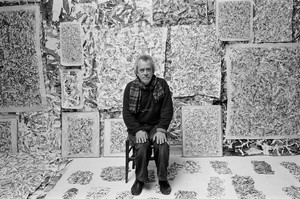
On July 9, Simon Hantaï: the last studio opens at Gagosian, Gstaad. Curated by Anne Baldassari, the show comprises sixteen of the artist’s dernier atelier (last studio) paintings of 1982–85. The exhibition is accompanied by an illustrated catalogue, copublished by Gagosian and Skira, which features an essay by Baldassari and an extensive portfolio of previously unpublished photographs by Édouard Boubat. Here, we share the introductory chapter from the publication.
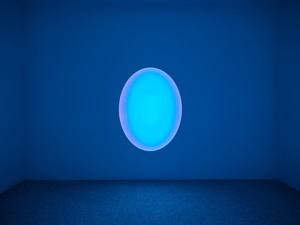
An exhibition at Gagosian, Hong Kong, brings together three of James Turrell’s Glasswork pieces along with site plans, photographs, and models of his Skyspaces and Roden Crater. Here, Alice Godwin explores the history of the Glassworks and their relationship to the artist’s wider practice.

On April 16, the Institute of Contemporary Art, Boston, opened the first midcareer survey of Derrick Adams’s multidisciplinary practice. Covering over twenty years of work, the exhibition, titled View Master, brings together the artist’s painting, sculpture, collage, performance, and video, as well as a vibrant new commission created for the museum’s façade. Ahead of the opening, Adams met with Tessa Bachi Haas, cocurator of the survey, to discuss his formative experiences with television, the impact of his work in arts education on his practice, and the importance of taking a more complex, more joyful, and more expansive approach to Black American life and culture.

Adam D. Weinberg has been working with Giuseppe Penone on an exhibition of the artist’s new sculptures, The Reflection of Bronze, that opens at Gagosian, New York, on April 22. The works explore the character and possibilities of bronze. Here, Weinberg considers Penone’s enduring engagement with the alloy and addresses the conceptual underpinnings of the exhibition’s three-room structure.

Jeff Koons tells Alison McDonald about his appreciation for the pioneering artist and thinker Marcel Duchamp.
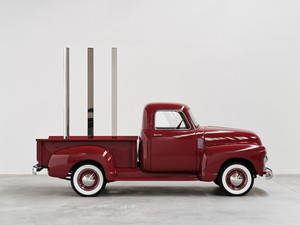
The Singular Experience at Gagosian’s Le Bourget gallery is the largest exhibition of Walter De Maria’s work in France in several decades. Organized by Donna De Salvo, senior adjunct curator at Dia Art Foundation, the exhibition marks the first time De Maria’s final sculpture, Truck Trilogy (2011–17), is being shown outside of the United States. Here, De Salvo speaks with artist Lucy Raven about her evolving kinship with De Maria and more.
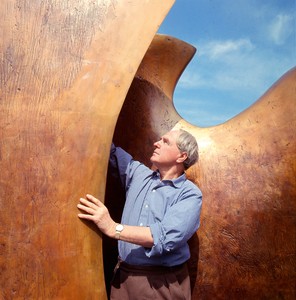
Laura Bruni writes about a major exhibition celebrating the work of the British sculptor Henry Moore at the Royal Botanic Gardens, Kew, London.
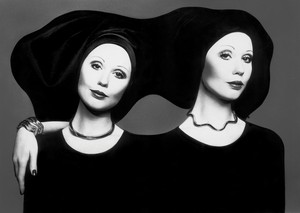
The exhibition Pomellato, Le Joaillier Révolutionnaire opened at Palais de Tokyo, Paris, on June 24. The Italian jewelry house’s trailblazing advertising campaigns—created by some of the most consequential names in photography—act as the narrative arc of the exhibition, curated by Alba Cappellieri. Here, Sarah Godfrey tracks Pomellato’s history, speaks with Cappellieri about what drew her to this project, and examines some of the key photographs from the show.
