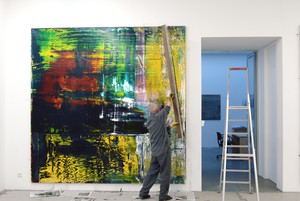
Donald Marron
Jacoba Urist profiles the legendary collector.
Extended through February 28, 2025

Installation view with Gerhard Richter, Moving Picture (946-3) Kyoto Version (2019–24)
Artwork © Gerhard Richter 2024 (11122024). Photo: Matteo D’Eletto, M3 Studio
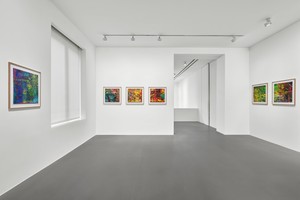
Installation view
Artwork © Gerhard Richter 2024 (11122024). Photo: Matteo D’Eletto, M3 Studio

Installation view
Artwork © Gerhard Richter 2024 (11122024). Photo: Matteo D’Eletto, M3 Studio
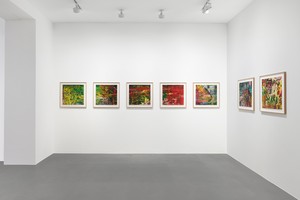
Installation view
Artwork © Gerhard Richter 2024 (11122024). Photo: Matteo D’Eletto, M3 Studio
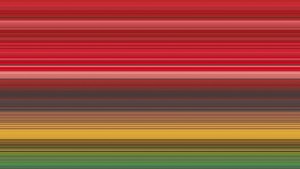
Gerhard Richter
Moving Picture (946-3) Kyoto Version, 2019–24 (still)
Digital projection (color, sound, 36 min.), edition of 8
© Gerhard Richter 2024 (28102024)
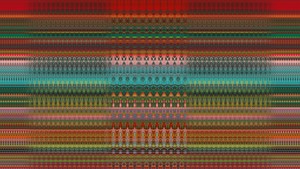
Gerhard Richter
Moving Picture (946-3) Kyoto Version, 2019–24 (still)
Digital projection (color, sound, 36 min.), edition of 8
© Gerhard Richter 2024 (28102024)
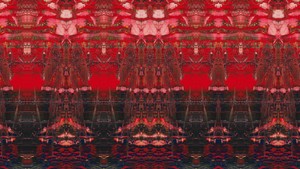
Gerhard Richter
Moving Picture (946-3) Kyoto Version, 2019–24 (still)
Digital projection (color, sound, 36 min.), edition of 8
© Gerhard Richter 2024 (28102024)

Gerhard Richter
Moving Picture (946-3) Kyoto Version, 2019–24 (still)
Digital projection (color, sound, 36 min.), edition of 8
© Gerhard Richter 2024 (28102024)
Gagosian is pleased to announce that Gerhard Richter will present Moving Picture (946-3) Kyoto Version (2019–24), an immersive installation in film and sound that will fill the entire exhibition space at its Rome location. This is the gallery debut of Moving Picture (946-3) Kyoto Version and the artist’s first gallery exhibition in Italy since 1983.
Moving Picture (946-3) Kyoto Version is the immersive, experiential apotheosis of Richter’s Strip project, which he began working on in 2010 following his discovery of digital tools for mining existing paintings for new artistic strategies. The Strip series was initiated when the artist digitally fractured the photographic image of a canvas into progressively smaller divisions which he then doubled, or mirrored, across expansive surfaces. This process opened up a world of new possibilities that resulted in the Strip paintings (2011–16), as well as books, prints, tapestries, and STRIP-TOWER (2023), a monumental sculpture now on view at Serpentine, London.
Moving Picture (946-3) Kyoto Version consists of a film, made in collaboration with Corinna Belz, projected at a monumental scale, spanning over 7 meters (more than 23 feet) wide and accompanied by a score for trumpet composed by Rebecca Saunders and recorded by Marco Blaauw and Sebastian Schottke. Ten speakers surround the viewer, giving a physical force and presence to the music. Previously, Richter’s experimentations in combining image and sound into immersive experiences have resulted in temporary works at the Manchester International Festival (in 2015, with Arvo Pärt) and The Shed, New York (in 2019, with Pärt and Steve Reich).
Throughout his storied career, Richter has consistently revitalized painting through an analytical exploration of the potentials of photography, chance occurrence, and systematic processes, all of which find their ultimate expression in Moving Picture. In the 1960s he harnessed found magazine and newspaper photographs as source imagery for his paintings, while in the 1970s he took pictures of his own paintings and vastly enlarged minute details of their brushstrokes. Richter has long found generative possibilities in the chance arrangements of color grids, first with his Color Chart paintings of the 1960s and later with 4900 Colors (2007) and the Cologne Cathedral Window (2007). Like the last of these projects, Moving Picture is a work in light, illuminating the infinite beauty of chance.
Note to Visitors
The full film runs for thirty-six minutes and is scheduled continuously between 10am and 6:30pm. The start times are 10:05am, 10:44am, 11:23am, 12:02pm, 12:41pm, 1:20pm, 1:59pm, 2:38pm, 3:17pm, 3:56pm, 4:35pm, 5:14pm, and 5:53pm. Entrance is permitted at any time.
Request more information
about this exhibition
Jacoba Urist profiles the legendary collector.
Hans Ulrich Obrist traces the history behind Richter’s Cage paintings and speaks with the artist about their creation.
The Spring 2021 issue of Gagosian Quarterly is now available, featuring Gerhard Richter’s Helen (1963) on its cover.
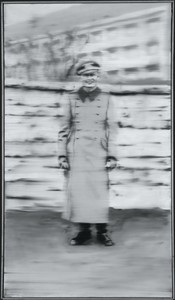
Richard Calvocoressi reflects on the monochrome world of Gerhard Richter’s early photo paintings.
The Spring 2020 issue of Gagosian Quarterly is now available, featuring Cindy Sherman’s Untitled #412 (2003) on its cover.
Jenny Saville reveals the process behind her new self-portrait, painted in response to Rembrandt’s masterpiece Self-Portrait with Two Circles.