
Now available
Gagosian Quarterly Summer 2026
The Summer 2026 issue of Gagosian Quarterly is now available, featuring Ellen Gallagher’s Fast-Fish and Loose-Fish (2026) on the cover.
Gagosian is pleased to announce its participation in Art Basel 2026 with a multi-artist booth at the fair as well as historical works by Chris Burden and Ed Ruscha in the Unlimited sector. In addition, the presentation extends to Selections at the gallery’s space at Rheinsprung 1, a short walk from Messe Basel. Across these sites, Gagosian offers a grouping of outstanding works by twentieth- and twenty-first-century greats, reflecting the gallery’s consistent championing of innovative and influential creative practice through institutional-quality exhibitions and projects.
Among the important paintings on view are several by Helen Frankenthaler. A member of the second generation of postwar American abstract painters, Frankenthaler played a pivotal role in the transition from Abstract Expressionism to Color Field painting. The expansively scaled Jockey (1978) embodies the artist’s lyrical, exploratory approach to abstraction, also reflecting the shift from oil to acrylic that she made in the early 1960s—a change that saw her employ large, flat areas of pigment. Produced in 1984, Willem de Kooning’s No title incorporates the focused palette and pale ground that characterize the artist’s “late style” paintings. Undulating bands of color create a surface that seems to turn in space, hinting at an elusive figuration while remaining fundamentally abstract. Embodying a more reductive approach than de Kooning’s earlier work, No title nonetheless retains the exuberant visual energy that runs throughout his oeuvre.
Several paintings on view in Basel make reference to the natural world; among these is Jadé Fadojutimi’s large-scale canvas Untitled (2026). A characteristically joyful expression of the artist’s fluid approach to everyday experience and the quest for self-knowledge, it communicates her drive to understand more fully the intertwined notions of beauty and identity. Orchestrating a beguiling range of colors, shapes, and lines, Fadojutimi conjures a sense of continual transformation in a layered compositional “environment” that suggests a field or garden of flowers while edging toward gestural abstraction. Jonas Wood’s oil and acrylic still life Fruit on Wood (2026) depicts a tabletop scattered with bananas, grapes, oranges, pineapples, watermelons, and other fruits, some arranged in bowls, others placed directly on the familiarly grained surface. The composition is typical of Wood’s bold, graphic approach to painting, drawing, and printmaking, which combines art historical references with images of the objects, interiors, and individuals that populate his everyday life.
The context of Christopher Wool’s text painting Hole in your fuckin head (1992) is quotidian too, but more explicitly urban and antiestablishment; the work confronts the viewer with the bluntly aggressive phrase of its title in glossy black enamel on a white-painted aluminum panel. The phrase’s lack of spacing and strictly gridded arrangement slows comprehension, while its basic stenciled typography—the body of work was inspired by graffiti that Wool observed on a parked delivery truck on New York’s Lower East Side—transforms it into a more formal composition that resonates with his abstract paintings. Maurizio Cattelan’s sculpture Confession (2026) is differently provocative, featuring two large steel nails that appear to penetrate a slab of statuary marble that has been carved to simulate a fabric sheet laid over a relief map of the United States. Seeming to introduce radiating creases into the surface of the stone, the nails suggest a crucifixion. The work’s materials and format additionally recall Cattelan’s Envy (2025), in which a single nail punctures a plain marble “canvas.”
In Black Sheep (2007), Damien Hirst—an artist whose work is akin to Cattelan’s in its high-impact mode of address—revisits his epochal 1994 sculpture Away from the Flock, which was attacked with black ink when first exhibited, replacing the preserved white sheep of the earlier sculpture with a darker variant. Part of Hirst’s Natural History series (1991–), the vitrine exemplifies the artist’s fascination with bridging the gaps between science and spirituality, life and death, while also constituting a self-portrait in its titular allusion to his iconoclastic public image. If formaldehyde is among the materials of which Hirst might claim creative ownership, galvanized iron could be said to belong to Donald Judd. In an untitled wall work from 1967 which was previously in the collection of the Museum of Modern Art, New York, Judd coats the material in red lacquer, emphasizing its crystalline surface. A “bullnose” progression, the work features rounded, projecting elements that decrease in size from left to right, embodying a mathematical rhythm. These balanced proportions stress the object’s physical qualities and the relationship between part and whole.
While Judd draws on industrial processes and materials in the production and form of his work, the subtle, tender way in which Tyler Mitchell pictures the young subject of his photograph Leo in Pool (2026) reveals the influence of the artist’s Southern upbringing, capturing an ethereal but still emotionally resonant form. Printed onto a mirror, the image has an oneiric quality that aligns with the intangibility of the human spirit, asserting physical presence and stubborn self-determination while seeming also to exist only in the light of historical memory. Jamian Juliano-Villani also pursues an interest in cultural history while mining contemporary pop culture for icons and motifs, the source for her portrait Bocci (2026) being a vintage window display at New York’s Bonwit Teller department store. Naming the painting in homage to the game of bocce, she produces an “arranged marriage” of discontinuous form and content that challenges notions of authorship and meaning.
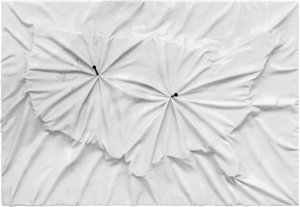
Maurizio Cattelan, Confession, 2026 © Maurizio Cattelan. Photo: Laura Veschi
Gagosian’s booth at Art Basel 2026. Video: Pushpin Films
The Summer 2026 issue of Gagosian Quarterly is now available, featuring Ellen Gallagher’s Fast-Fish and Loose-Fish (2026) on the cover.

In this video, Jenny Saville sits down inside her first major exhibition in Venice to discuss how the great Venetian artists of the past and the city’s heritage influence her work. The show brings together more than thirty canvases and works on paper from the 1990s to the present, tracing the development of her practice, which is deeply rooted in the history of painting.
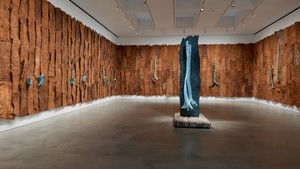
On the occasion of his exhibition The Reflection of Bronze at Gagosian, New York, Giuseppe Penone and curator Adam D. Weinberg sit down to discuss the genesis of, and their collaboration on, the show.
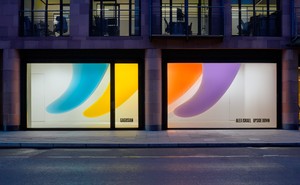
Ahead of Alex Israel’s exhibition of four new Fin sculptures at Gagosian, London, the artist spoke with Susan Casey, author of The Wave: In Pursuit of the Rogues, Freaks, and Giants of the Ocean (2010), about the ocean, surfing, and Los Angeles.
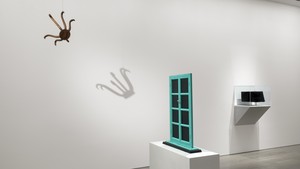
Marcel Duchamp is the inaugural exhibition of the gallery’s new ground-floor space in the historic building at 980 Madison Avenue. In this video, the Quarterly’s Alison McDonald discusses the artist’s most iconic readymades and their connection to New York City.
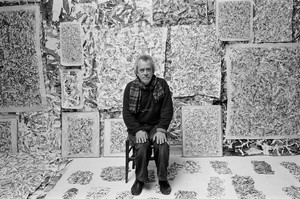
On July 9, Simon Hantaï: the last studio opens at Gagosian, Gstaad. Curated by Anne Baldassari, the show comprises sixteen of the artist’s dernier atelier (last studio) paintings of 1982–85. The exhibition is accompanied by an illustrated catalogue, copublished by Gagosian and Skira, which features an essay by Baldassari and an extensive portfolio of previously unpublished photographs by Édouard Boubat. Here, we share the introductory chapter from the publication.
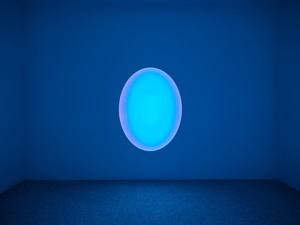
An exhibition at Gagosian, Hong Kong, brings together three of James Turrell’s Glasswork pieces along with site plans, photographs, and models of his Skyspaces and Roden Crater. Here, Alice Godwin explores the history of the Glassworks and their relationship to the artist’s wider practice.

On April 16, the Institute of Contemporary Art, Boston, opened the first midcareer survey of Derrick Adams’s multidisciplinary practice. Covering over twenty years of work, the exhibition, titled View Master, brings together the artist’s painting, sculpture, collage, performance, and video, as well as a vibrant new commission created for the museum’s façade. Ahead of the opening, Adams met with Tessa Bachi Haas, cocurator of the survey, to discuss his formative experiences with television, the impact of his work in arts education on his practice, and the importance of taking a more complex, more joyful, and more expansive approach to Black American life and culture.

Adam D. Weinberg has been working with Giuseppe Penone on an exhibition of the artist’s new sculptures, The Reflection of Bronze, that opens at Gagosian, New York, on April 22. The works explore the character and possibilities of bronze. Here, Weinberg considers Penone’s enduring engagement with the alloy and addresses the conceptual underpinnings of the exhibition’s three-room structure.

Jeff Koons tells Alison McDonald about his appreciation for the pioneering artist and thinker Marcel Duchamp.
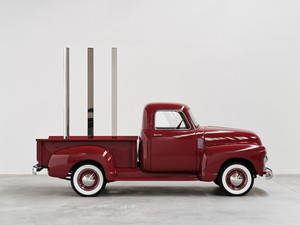
The Singular Experience at Gagosian’s Le Bourget gallery is the largest exhibition of Walter De Maria’s work in France in several decades. Organized by Donna De Salvo, senior adjunct curator at Dia Art Foundation, the exhibition marks the first time De Maria’s final sculpture, Truck Trilogy (2011–17), is being shown outside of the United States. Here, De Salvo speaks with artist Lucy Raven about her evolving kinship with De Maria and more.
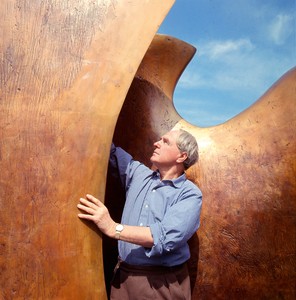
Laura Bruni writes about a major exhibition celebrating the work of the British sculptor Henry Moore at the Royal Botanic Gardens, Kew, London.