
Now available
Gagosian Quarterly Summer 2026
The Summer 2026 issue of Gagosian Quarterly is now available, featuring Ellen Gallagher’s Fast-Fish and Loose-Fish (2026) on the cover.
Hulk Elvis represents for me both Western and Eastern cultures, a sense of a guardian, a protector, that at the same time is capable of bringing the house down. I have tried to blend these cultural histories together. The Hulk represents a duality that shifts from a superhero to a divine being.
—Jeff Koons
Gagosian is pleased to announce a solo presentation of works by Jeff Koons at Frieze New York 2025, nearly twenty-five years since the first collaboration between the artist and the gallery. Three sculptures—Hulk (Organ) (2004–14), Hulk (Tubas) (2004–18), and Hulk (Dragon and Turtle) (2004–21), all from the Hulk Elvis series—are on view against a specially produced immersive vinyl backdrop. All the sculptures are from Koons’s own collection, and the artist participated in every stage of the exhibition process, from the initial selection to the design of the booth and the layout of the installation.
Drawing on sources including figures from classical antiquity, everyday objects, and contemporary icons, Koons explores the conjunction of the readymade and the sublime in lavishly realized artifacts and tableaux. Identifying commonalities throughout cultural history, he confronts fundamental aspects of the human psyche by working through such unifying concepts as the new, the banal, and the sublime. Koons continues to produce highly polished—but nonetheless accessible—objects and images that exude beauty, sexuality, spirituality, and even happiness.
The polychrome bronze and mixed-media sculptures at Frieze New York pair the Incredible Hulk superhero with a variety of collaged objects. The works’ surfaces mimic the gloss of vinyl inflatables—forms with which Koons has worked since his early career, pairing their distinctive qualities with those of bronze since Aqualung from the Equilibrium series (1985). Hulk (Dragon and Turtle) finds the superhero merged with two pool toys styled after cartoon animals. Hulk (Organ), a functioning organ incorporating keys, pipes, and a pedalboard that extend from the towering figure’s upper body, legs, and shoulders, features a sound element. Hulk (Tubas) has a musical component too, multiple brass bells of the titular horn surrounding the figure’s head and torso. As their titles suggest, these two works both double as functioning instruments capable of intense volume.
For Koons, the Hulk embodies both a current in Western popular culture and the Eastern figure of the “guardian god.” Endowed with protective abilities, the character’s capacity for violence also renders him a fundamentally human animal. Philip Tinari, writing in the catalogue for Hulk Elvis at Gagosian Hong Kong (2014), observes that the Hulk first appeared in 1962, and was thus “a creature of the Cold War and of Camelot.” In these works, its wide-legged stance also refers to that of Elvis in Andy Warhol’s images of the iconic rock ’n’ roller. By now, however, Bruce Banner’s alter ego has largely shed such national and cultural associations, coming to symbolize instead something primordial and universal. Finally, Koons’s painting Triple Hulk Elvis III (2007), which incorporates the superhero’s form alongside other elements including a partial image of foundational rock band Led Zeppelin, is reproduced along with fragmented details on the booth’s vinyl backdrop.

Jeff Koons, Hulk (Organ), 2004–14 © Jeff Koons. Incredible Hulk™ and © Marvel. All rights reserved
Gagosian’s booth at Frieze New York 2025, featuring sculpture by Jeff Koons. Artwork © Jeff Koons. Incredible Hulk™ and © Marvel. All rights reserved. Video: Pushpin Films
The Summer 2026 issue of Gagosian Quarterly is now available, featuring Ellen Gallagher’s Fast-Fish and Loose-Fish (2026) on the cover.

In this video, Jenny Saville sits down inside her first major exhibition in Venice to discuss how the great Venetian artists of the past and the city’s heritage influence her work. The show brings together more than thirty canvases and works on paper from the 1990s to the present, tracing the development of her practice, which is deeply rooted in the history of painting.
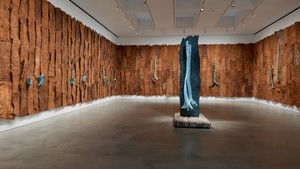
On the occasion of his exhibition The Reflection of Bronze at Gagosian, New York, Giuseppe Penone and curator Adam D. Weinberg sit down to discuss the genesis of, and their collaboration on, the show.
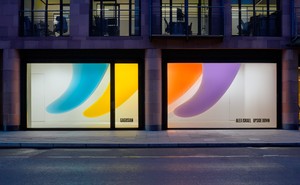
Ahead of Alex Israel’s exhibition of four new Fin sculptures at Gagosian, London, the artist spoke with Susan Casey, author of The Wave: In Pursuit of the Rogues, Freaks, and Giants of the Ocean (2010), about the ocean, surfing, and Los Angeles.
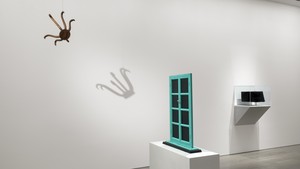
Marcel Duchamp is the inaugural exhibition of the gallery’s new ground-floor space in the historic building at 980 Madison Avenue. In this video, the Quarterly’s Alison McDonald discusses the artist’s most iconic readymades and their connection to New York City.
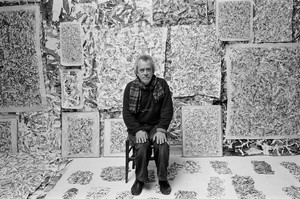
On July 9, Simon Hantaï: the last studio opens at Gagosian, Gstaad. Curated by Anne Baldassari, the show comprises sixteen of the artist’s dernier atelier (last studio) paintings of 1982–85. The exhibition is accompanied by an illustrated catalogue, copublished by Gagosian and Skira, which features an essay by Baldassari and an extensive portfolio of previously unpublished photographs by Édouard Boubat. Here, we share the introductory chapter from the publication.
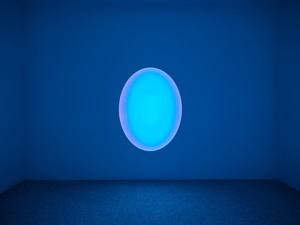
An exhibition at Gagosian, Hong Kong, brings together three of James Turrell’s Glasswork pieces along with site plans, photographs, and models of his Skyspaces and Roden Crater. Here, Alice Godwin explores the history of the Glassworks and their relationship to the artist’s wider practice.

On April 16, the Institute of Contemporary Art, Boston, opened the first midcareer survey of Derrick Adams’s multidisciplinary practice. Covering over twenty years of work, the exhibition, titled View Master, brings together the artist’s painting, sculpture, collage, performance, and video, as well as a vibrant new commission created for the museum’s façade. Ahead of the opening, Adams met with Tessa Bachi Haas, cocurator of the survey, to discuss his formative experiences with television, the impact of his work in arts education on his practice, and the importance of taking a more complex, more joyful, and more expansive approach to Black American life and culture.

Adam D. Weinberg has been working with Giuseppe Penone on an exhibition of the artist’s new sculptures, The Reflection of Bronze, that opens at Gagosian, New York, on April 22. The works explore the character and possibilities of bronze. Here, Weinberg considers Penone’s enduring engagement with the alloy and addresses the conceptual underpinnings of the exhibition’s three-room structure.

Jeff Koons tells Alison McDonald about his appreciation for the pioneering artist and thinker Marcel Duchamp.
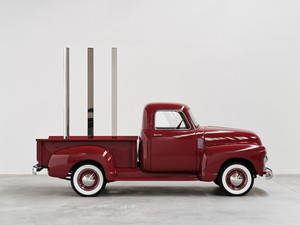
The Singular Experience at Gagosian’s Le Bourget gallery is the largest exhibition of Walter De Maria’s work in France in several decades. Organized by Donna De Salvo, senior adjunct curator at Dia Art Foundation, the exhibition marks the first time De Maria’s final sculpture, Truck Trilogy (2011–17), is being shown outside of the United States. Here, De Salvo speaks with artist Lucy Raven about her evolving kinship with De Maria and more.
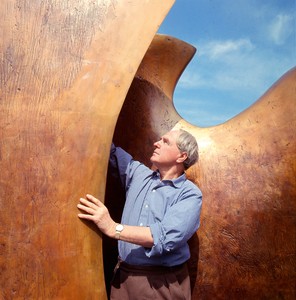
Laura Bruni writes about a major exhibition celebrating the work of the British sculptor Henry Moore at the Royal Botanic Gardens, Kew, London.