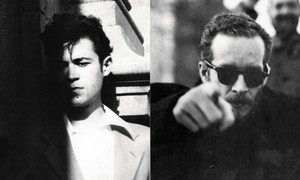
Delineators: Jordan Belson and Harry Smith
Raymond Foye tracks the relationship between the two mavericks, investigating their influence on one another and their enduring legacies.
May 26, 2021
In this video, Raymond Foye and Rani Singh discuss the general principles and methodologies of archiving, editing, and presenting the work of overlooked artists and writers. They share firsthand accounts and learning experiences from working with artists and poets such as Jordan Belson, Gregory Corso, Rene Ricard, and Harry Smith.
This talk, held on Tuesday, May 18, 2021, at 1pm eDt, is part of an ongoing program of conversations and presentations with leading artists and cultural figures.
Contents page: Rene Ricard, So Who Left Who, 2007 © Estate of Rene Ricard
Raymond Foye tracks the relationship between the two mavericks, investigating their influence on one another and their enduring legacies.
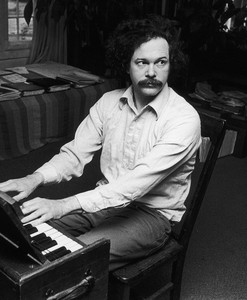
Raymond Foye speaks with the author, musician, and American-counterculture record-keeper Ed Sanders at his home in Woodstock, New York.
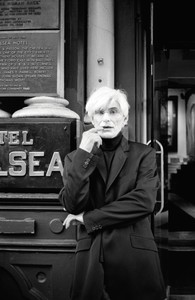
Raymond Foye speaks with the actor who impersonated Andy Warhol during the great Warhol lecture hoax in the late 1960s. The two also discuss Midgette’s earlier film career in Italy and the difficulty of performing in a Warhol film.
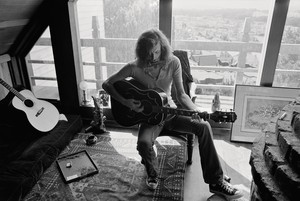
Raymond Foye offers a window into his long-standing friendship with Graham Nash, guiding us through the legendary musician’s evolving interest in art and the visual world.
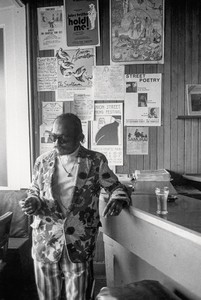
In November 2019, City Lights Publishers released Collected Poems of Bob Kaufman, the first comprehensive collection of the poet’s work. Here Raymond Foye, the book’s coeditor, reminisces about his long friendship with Kaufman and reflects on the enduring power of the poems.
Courtney J. Martin, executive director of the Robert Rauschenberg Foundation, discusses its approach to the artist’s lifelong philanthropy, the intricacies of stewarding an artist’s goals and passions, and more.
This ongoing series features conversations with experts in the field of artists’ estates and legacy stewardship who offer insights that might prove useful to artists, their staff, foundations and estates, scholars, and others. For this installment, Daniel Belasco, executive director of the Al Held Foundation, meets with Valerie Balint, director of Historic Artists Homes and Studios (HAHS), to discuss the importance of preserving and engaging with artists’ personal and creative spaces.
This ongoing series features conversations with experts in the field of artists’ estates and legacy stewardship who offer insights that might prove useful to artists, their staff, foundations and estates, scholars, and others. For this installment, Daniel Belasco, the executive director of the Al Held Foundation, meets with Daniel Tobin, the cofounder of Urban Art Projects (UAP), to discuss the role that a major contemporary-art foundry plays in artists’ legacies.
The Harry Ransom Center at the University of Texas at Austin is an internationally renowned research center with a long and esteemed history of managing millions of objects, including books, manuscripts, photographs, art, and more. Dr. Stephen Enniss, director of the Center, and Megan Barnard, associate director for administration and curatorial affairs, met with Lisa Turvey to consider the history of the Ransom Center and their ongoing work in the field of archives, from acquisition to stewardship.
For this installment of our Building a Legacy series, Nicholas Cullinan, the director of London’s National Portrait Gallery, speaks with author and curator Allie Biswas.
This ongoing series features conversations with experts in the field of artists’ estates and legacy stewardship who offer insights that might prove useful to artists, their staff, foundations and estates, scholars, and others. For this installment, Lisa Turvey, editor of the catalogue raisonné of Ed Ruscha’s works on paper, met with Sharon Flescher, executive director of the International Foundation for Art Research (IFAR), and Lisa Duffy-Zeballos, art research director of IFAR. They discussed the complexities of provenance research, the burgeoning of the field in recent years, and the multiple resources available for tracing the ownership history of artworks.
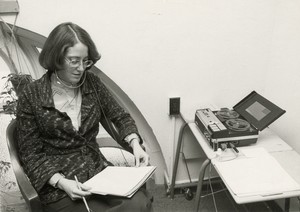
Since 1958, the Smithsonian Institution’s Archives of American Art has collected more than 2,500 oral histories from the most influential voices in American cultural history. Lisa Turvey, editor of the catalogue raisonné of Ed Ruscha’s works on paper, met with the Archives’ Ben Gillespie, oral historian, and Jennifer Snyder, oral history archivist, to speak about the Oral History Program.