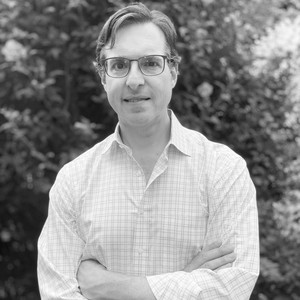
Daniel BelascoIn today’s art world, the growing sophistication of the marketplace has raised awareness that there are often many hands involved in the making of ambitious art. The romantic myth of the male artist genius creating masterpieces alone in his studio has given way to a more nuanced appreciation of the collaborations involved in the planning, design, fabrication, and maintenance of art, especially in public places. At the Al Held Foundation, we now consider Held’s employment of assistants to paint his huge canvases, which was an open secret in the 1980s, as a conceptual practice inspired by the Renaissance workshop. In sculpture, artists partner with foundries to render models and ideas in metal and other robust media to realize their desires for material and temporal permanence, but the expense, complexity, and communal nature of casting and fabrication presents institutional challenges to the maintenance of intellectual property.
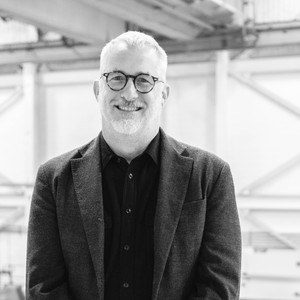
Few people are better positioned to share their insights about these issues than Daniel Tobin. Thirty years ago, he and his brother Matthew founded Urban Art Projects (UAP), in Brisbane, Australia. Since that time, they have worked with hundreds of artists and expanded their facilities to China and the United States, pioneering new technologies along the way. Cofounder of UAP, Tobin oversees a large and talented staff of craftspeople ranging from engineers and designers to casters, finishers, and painters. This conversation will explore the role a major contemporary art foundry plays in artists’ legacy. UAP is especially well-suited to this conversation because of its leading position internationally, solidified through its acquisition of the legendary Hudson Valley foundry Polich Tallix (PTX) in 2019. How can we learn about some of the larger issues facing artists and their stakeholders through the discussion of the legacy of a foundry? Let’s begin with the beginning. Can you please speak about how and why you and your brother started Urban Artists, now UAP, in the early ’90s?
Daniel TobinThank you for that introduction. We were both at art school in the late ’80s. There was a small local art-based foundry nearby and both Matthew and I started working there as students. The largest castings that we did at that foundry were no bigger than twelve inches long and normally just one cast. We used a lost-wax-and-ceramic-shell casting method. That’s where we started, in a very basic way, to explore the craft of making in the foundry environment.
To jump forward to the early ’90s, we’d both graduated from art school and the local foundry moved offshore to Asia, so we had the opportunity to set up our own place. We bought a steelworks in Brisbane, a very small place, and made our own furnace and started to make work for our artist friends and others. The first substantial commission we won was working with First Nations artist Judy Watson, creating a cast-metal series for her Koori Floor [1994] at the Casula Powerhouse Arts Centre in Sydney. And we still make work for her today, thirty years later. One of the things we’re very committed to is understanding the artist’s creative intent and their project needs and delivering on those needs—actually exceeding the artist’s expectations. The craft of making is an extraordinary space to work in, to explore and understand the nuances of an artist’s practice and then bring that work into reality.
DBI like the idea of exceeding expectations. From the beginning, you’ve said that your mission is to work with artists in public space, which always has additional complexities of dealing with local municipalities and anticipating public response, both positive and negative. Once an artwork is installed, what are some of the challenges and responsibilities of the foundry to maintain the work’s integrity as the environment in which the work is installed evolves, as it inevitably does?
DTThere are multiple challenges and multiple responsibilities. When we create a work, we work with the artist and commissioner to identify the most appropriate and robust materiality for its purpose, considering both the artist’s aesthetic needs and the siting of the work. Once the work is installed, we provide a maintenance manual to the commissioner and to the artist so that they understand the needs of the work as it settles into the environment in which it’s placed. The commissioner is responsible for that maintenance, but UAP offers services for each work that’s installed. So many factors come into play when thinking about the long-term installation of art outdoors. Is it in a public space or a private space? Are there seasonal changes? In Australia, the climate is fairly temperate, so there aren’t huge changes in temperature or precipitation. In the northern hemisphere there are the seasons to contend with, and issues of how often you repatinate or rewax a work. Those choices in the end belong to the final owner or commissioner of the work.
DBHow do you elicit requirements from artists? Do you ask them to submit a statement, or do you interpret what they communicate to you during the course of development and production?
DTGenerally, the maintenance manual is technical, and just describes the steps required from a manufacturing point of view. In terms of the artist’s intent, that would usually be provided to the commissioner through the gallery or from the artists themselves. The works that we deliver are mostly cast bronze and cast stainless steel, and they’re going to last for hundreds of years. So that legacy will continue long after we’re gone and long after the artist is gone. It’s an interesting question—there’s no right or wrong answer to maintenance. It depends on how long you’re looking into the future, I suppose.
DBI’m interested in this direction. In a private space, a building can be sold and the new owner can decide to remodel and find a new home for the artwork. In public space, the work may be damaged, or the environment may change around it. Are artists realistic in their expectations about what’s going to happen to the work once it’s installed? Or do some insist that the integrity of the work must be respected and the environment needs to adapt to the work, rather than the work adapting to the environment?
DTYes [laughs], I think it’s all of the above. I think some artists are ambitious and push what’s really possible, and that’s exciting to be around, but we’re also very careful to walk through the process and any risks involved. Mirror-polished bronze, for one thing, is a finish that’s difficult to preserve, in both the short and the long term. Bronze is a living material so it’s always oxidizing, it’s always responding to the environment. In outdoor spaces it changes very quickly, so it certainly is not something we would recommend with just a wax coating. For one artist we’re investigating a ceramic surface treatment that would protect the bronze for a longer period of time. We’re always communicating the maintenance requirement of the work, whether it requires maintenance regularly, multiple times a year, or whether it’s something that can be treated less often. It just depends on the work itself.
DBI want to shift gears and talk about UAP’s recent acquisition of PTX, the legendary foundry started by Dick Polich in the Hudson Valley, which has made innovative work for everyone from Louise Bourgeois to Jeff Koons. PTX has continued in its Rock Tavern location under UAP’s ownership and even, I understand, expanded its productivity. You’re in an unusual position where you’re dealing both with individual artists and their legacies and also with a foundry itself, Polich Tallix, that has its own history. What attracted you to the merger, and how are you working to continue the legacy of PTX and its founder, Dick Polich?
DTThat’s a great question and it’s been a humbling experience to take over the reins of PTX from Dick, who as you say was an amazing man and a visionary in terms of the foundry space. He grew the foundry from humble beginnings and turned it into one of the largest art foundries in the world. An MIT-trained metallurgist, he was a wizard and changed techniques in the foundry space. PTX/UAP now has the facility to make some of the largest lost-wax and sand castings in the world, including for artists Charles Ray and Yayoi Kusama, thanks to Dick’s unique commitment to the artists he was working with. So yeah, it’s humbling to become part of the PTX legacy. The makers on the floor are a huge part of that, some of them having worked there for decades. We have an amazing group of very experienced technicians, craftspeople, and makers who have worked with art luminaries including Isamu Noguchi, Nancy Graves, Roy Lichtenstein, and Frank Stella. So that legacy is extraordinary. The two businesses are both family owned, and we both love that interchange between maker and artist. Dick invited artists into the working space as we did in Australia in our space. There were so many synergies, and as we look to the future, we want to retain and celebrate Dick and his greater team’s legacy and propel that for the next fifty years.
DBPart of the acquisition brought in new relationships with legacy artists, such as Lichtenstein, who started working with Dick in 1976. I could be wrong, but the foundry probably accumulated a whole warehouse full of models and molds over the decades, some of which might be lost property that the artist abandoned, others that were left in the conservatorship of the foundry for future editions.
The process of creating metal sculpture through casting does require the production of intermediate objects, such as maquettes, models, and molds. Often they’re used to create new pieces in an edition. How does the foundry handle the materials—process pieces, drawings, models, engineering designs, molds—left behind? Of course, with the transition to three-dimensional digital design and manufacturing, they may only exist as computer files rather than as traditional large rubber and ceramic molds.
DTMostly all the material that’s created in the delivery of a work is owned by the artist. Molds that will be used for editions moving forward we retain at our workshop. Dick had a large storage facility nearby; we’ve recently extended our space here and brought all those models back onsite to our expanded workshop. We’ve had some models for decades, so we’ve been undergoing an auditing process with works that have fallen into disuse. We have an established archiving process for artists and molds of works that are currently still in edition. Every year we reach out to artists to check whether they’d like to have those molds returned and held in their studios. With the drawing sets and engineering, most of that is in a digital archive, and all the project and delivery information is kept there as well. And all of that can be shared with the artist and is regularly shared with the artist’s studio as per requested.
DBAs there’s more awareness of the need for archiving to properly attend to artistic legacy, do you find that more of your time is now devoted to stewarding the molds and communicating with artists about their status?
DTYes. In Australia we have quite a large collection of maquettes, samples, and models that were created during works’ production. We hold those in perpetuity with the artists’ consent, or they’re returned to artists upon request. Here in the United States, a lot of the models we work with come from the artists’ studios, or if they’re produced at the foundry the artists are given the option to retain them in their studios. So it varies from artist to artist and studio to studio. I think more and more, the artist is interested in the processes of making that go into works of art, and we’re seeing more of those remnants of the making process being shown in exhibitions or in classes or held as part of museum collections. And that’s a fantastic thing as well.
DBThat nicely illustrates the point I was making about the sophistication of today’s art audiences: they understand the distinctions among the model, the mold, and the final work, and can appreciate them all on their own terms. But what about issues of posthumous casting? Perhaps you’ve dealt with this at UAP but certainly it’s an issue with PTX. What are some of the ethical guidelines or principles that you follow to ensure that posthumous castings respect the original artist’s intentions and maintain authenticity?
DTIn terms of the intellectual property of the artist from the foundry perspective, we only work with the artist’s estate that has been given custodianship of those works. So we work with either a member of the family, a member of the studio, or the foundation itself, or all three depending on the setup. With Lichtenstein’s sculpture, we’ve been working closely with his foundation and also with a member of his original studio, who does final painting on the works.
It’s wonderful to see these great artists and their practices be sustained posthumously, and to see the foundry being part of that ongoing legacy. We’ve formalized a preservation team within UAP at Rock Tavern and appointed a conservator, Sylvia Jeffries, with great experience to run that implementation. I think an earlier question implied that the project doesn’t stop once the work is made; the finished work has an extended life and will have an impact on audiences for a very long time, so the nurturing and sustenance of that piece is just as important, or more important even, than the making of it.
DBYeah, that also opens up questions about conservation. To what extent does the firm’s activities include restoring works created by the foundry, or perhaps even much older pieces? One of my favorite stories from Dick Polich was how the sculpture Alma Mater at Columbia University [by Daniel Chester French, 1903], which had been bombed during the student protests in the 1960s, was floated upriver to Peekskill several years later and his foundry restored it.
DTSculpture in the great outdoors certainly needs to be robust. When we first merged with PTX, artist Arturo Di Modica’s Charging Bull [1989] on Wall Street was damaged, requiring our team to fix its broken horn. A symbol of a surging stock market, the bull had been targeted multiple times over the years. As well as looking after works postfabrication, our preservation team also sits with artists at the start of a project, understanding the intent of the work and the material choices, explaining maintenance issues, exploring paint finishes and sacrificial coatings that go on the cast metal, and helping the artist to make informed decisions about what they want to create and how the work will age and change over its life cycle. Preservation is about prevention as well as remediation and refurbishment.
DBIt sounds like UAP’s getting out in front of some of these issues around preservation and legacy for the artists you work with. I was interested to learn that there’s a new staff member dedicated to these issues. What prompted the establishment of that role?
DTBefore having a conservator on staff, our experienced team members would treat works that came in for refurbishment or advise clients on solutions for preservation. We decided to formalize that. The preservation department is dedicated to extending the legacy of artists by informing material decisions during design and production, along with providing ongoing care, conservation strategies, maintenance, and restoration services. UAP sees this as a natural extension of its production services, and as a way of building on the integrated approach Polich Tallix took to working with artists directly to ensure that their concerns and legacy were always front of mind during the fabrication process. Our team has been working with numerous artists, including Yayoi Kusama, Joel Shapiro, Lynda Benglis, Yoshitomo Nara, and the estates of Roy Lichtenstein and Franz West.
DBIt sounds like you’re taking on an educational role by operating in this nexus of galleries, museums, artists’ studios, estates, foundations, and universities. We’re almost out of the time, so I wanted to offer you an opportunity to mention any other issues you’re dealing with around legacy, copyright, and future-proofing.
DTI think we’ve covered almost everything. What we’ve also been doing alongside our preservation team is upgrading our facilities in the foundry itself. We’ve installed a paint facility that allows us to control the quality of paint, whether with wet-sprayed or hand-painted works. We’ve been investing in AR [augmented reality] and we have an ongoing partnership with two universities in Australia to design robotic technologies for mass customization. With every new piece of equipment, we don’t lose employees, we add to our staff. Each artwork is different and we’re engaging new technologies to assist our makers through that, like helping Jeffrey Gibson create work for the Venice Biennale this year. He’s been engaging in AR and creating work here for production. We’ve also set up studios within the foundry that allow artists to make work onsite and interact with our technicians and makers directly, which we’re really excited by. Raven Halfmoon just finished a residency at our workshop space, and the Australian artist Lindy Lee has been in twice in the last year. We’re starting a partnership with Monument Lab, a Philadelphia-based not-for-profit that works with artists around the country to instigate twenty-first-century memorials.
DBI think that’s great. We’ve been very thorough here; one thing that’s missing is, can you provide some data points about UAP? How many employees, how many locations, how many works of art are you creating at any given location?
DTYes. Here in the United States, we have a team of 115 (designers, project managers, and makers) working on 213 active projects. We recently opened an office in Los Angeles to support the growing need of artists on the West Coast. Globally we have a team of 300-plus working on projects around the world, including Australia, North America, Asia, and the Middle East.
DBThanks. Now the reader really understands the scale and the scope of UAP.