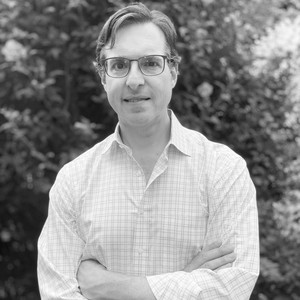
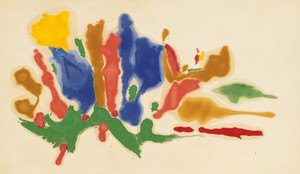
Daniel BelascoI’m pleased to have the opportunity to interview Valerie Balint, director of Historic Artists Homes and Studios [HAHS], a growing coalition of sixty-one museums that were once the homes and studios of American artists. HAHS is amplifying a wave of interest in authentic spaces of artistic creation. The focus of this conversation is the role and value of preserving artists’ studios and homes as sites of education and interpretation. In my role as the executive director of the Al Held Foundation, I’ve learned the power of place in stewarding a complex of five buildings on four acres, Held’s home and studio for forty years and now the foundation headquarters. One of my greatest pleasures is guiding visitors to the “aha” moment when they first walk into his voluminous studio in a former dairy-barn hayloft: the essence of Held as an artist of immersive abstract spaces just clicks. So Valerie, have you had any of these “aha” moments as a visitor to an artist’s studio?
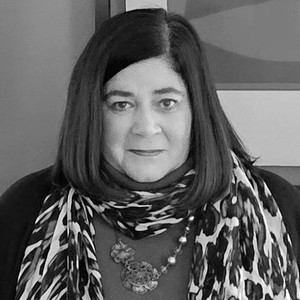
Valerie BalintI have. There are so many. I would argue that every aspect of an artist’s preserved home or studio—an external space, an internal place, a corner of a room—has that ability to resonate with that artist and their legacy. One of my most compelling and contemplative moments was in my first year at HAHS. In 2017, I went to Edward Hopper’s preserved home in Nyack, New York. Many people know about his experiences in Cape Ann, his Washington Square studio, his home in Truro on Cape Cod; those are the places we most associate with him, and they represent later periods in his life and career. But he was born in Nyack, New York, and he grew up and lived there into his twenties and returned there often over the course of his life. Today, the site is not heavily furnished, but the minute I stepped into the space I saw that the light streaming in the window was basically an encapsulation of every Hopper painting I’ve ever seen in my life as a professional in the museum field. And what I came to understand is that this germination of an idea around light and shadow in space, and in this particular place at this moment, remained with Hopper his entire career. Inspiration is not linear; artists can have a kernel of an idea that they return to, reject, come back to. So sometimes an “aha” moment reinforces what you might already have noticed in an artist’s work, and then at other times it’s about understanding additional impulses and interests that may have inspired an artist but don’t necessarily correlate to their work directly.
DBHAHS plays an extraordinary role in helping to identify, organize, and increase access to many spaces that generate these moments. Could you tell us about the organization’s mission and background?
VBHAHS really began with the incredible advocacy of the art historian Wanda Corn. She was trying to save a space in Washington, DC, Alice Pike Barney’s studio, an effort that wasn’t successful—the building stands but is not dedicated to the artist’s legacy or to retaining the material culture. It’s actually the Latvian embassy. Through that experience Wanda began to wonder, Where are other studios and spaces? How do they connect to each other, and how do they deal with the challenges of sitting at the fulcrum between historic house and art museum?
So, in partnership with the National Trust for Historic Preservation, Wanda started to think about how to create a coalition. At the beginning the mission was about specific challenges and opportunities related to stewarding these types of sites. We still keep that core of mentorship and peer exchange, but our goal is also to reach the public consciousness—and “public” in the broadest terms: scholars, museum practitioners, collectors, visitors, and the next generation of artists and youth. We aim to increase the understanding that artists’ site-specific legacies are critical to any discussion of the evolution of art history in this country. To do that we have now started to be more outward-facing, trying to engage the public in our own programming and working to elevate the conversation in the academic field, while also drawing visitors to these sites.
DBOne of the things I also find inspiring is how HAHS has redefined its membership from the traditional notion of the artist’s studio as a delimited architectural space for the production of painting and sculpture to a more flexible category of an artist-designed environment. I was hoping you might offer a couple of examples of these kinds of sites.
VBYou know, as we looked at how we define spaces, we began to ask fundamental questions: What does the idea of home mean, what does the idea of an artwork mean, what does studio space mean? These definitions are in fact malleable and permeable, especially in current academic discussion. So we began to look at environments such as Noah Purifoy’s outdoor desert assemblage-sculpture park. Purifoy is a fascinating individual who spent an entire life working in public arts policy before going out to the Mojave Desert and basically using the desert floor as a studio. The whole thing was incredibly experimental—any material was fine—and these wonderful assemblages are powerful on their own, but it’s also a question of the interconnectivity of the whole. And then we go to a place like Pasaquan in Buena Vista, Georgia, where Eddie Owens Martin, a largely self-taught artist and an LGBTQ activist, created a three-dimensional work of art that includes masonry walls, painted jewelry, clothing, anything you can imagine.
When I think about artist-built environments, they’re about two things for me: this challenging of the boundaries of what is art and what is practiced, but also of materiality. These individuals are really experimental and often live outside the mainframe of more traditional artistic circles. Another perhaps better-known example, which isn’t currently in HAHS, is Henry Fite’s Opus 40 sculpture park in New York’s Hudson Valley. When I think of these places, I go right back to my own “aha” moments throughout my almost twenty years as a curator at Olana, also in the Hudson Valley—Frederic Church’s 250-acre opus on his aesthetics of panorama and composition and theatricality and color. For me, that move from an Olana to a Pasaquan is not as large a leap as one would think. Which is also what’s important about HAHS. When you start to examine these sites collectively, you discover commonalities that cross era and mode and location.
DBHave you noticed interest growing among visitors?
VBFor many decades there’s been a conversation in the historic-house-museum world about audiences declining at historic sites. Meanwhile, what’s really interesting is, the visitorship at historic sites of creativity is on the rise. And there’s a reason for that: innovation is embedded, and the art of the possible, of an idea becoming manifest, is in the DNA of every single one of these places. So it’s not surprising that in an increasingly virtual world, there’s a desire for the tangible, and these artists’ places are about as tangible as you can get.
At the same time, because these artists were mavericks and risk-takers and mirrors of their time, there are ways to bridge that historic relevance with contemporary issues we’re facing today. Beyond just the sparking of creativity, these were always places of intellectual debate and discussion.
DBI joined the Al Held Foundation seven years ago, and it was already an intact, preserved space housing the collection, archive, and offices. The board had made that decision before my arrival. Could you share some of the factors that artists and/or their legatees should consider in the preservation of a studio or an environment? Do they all merit preservation?
VBI will say that I wish it was more often a living artist who was planning for legacy. There’s a much stronger tradition, at least in this country, of creating a foundation posthumously, focused on the placement of art, on scholarship, and all these things that are important to an artist’s legacy. It’s hard sometimes for artists to visualize the importance of their paintbrush, their books, whatever it may be, to a greater understanding of their work. So one of the things I tell artists when they’re considering this is to really think about what they want, not in the short term but in the long term. And to be honest with family members about what their vision is and then to bring in other voices, not necessarily to dictate that planning but to start to coalesce the vision for them as people. And this can apply to descendants or stakeholders too.
When I think about artist-built environments, they’re about two things for me: this challenging of the boundaries of what is art and what is practiced, but also of materiality. These individuals are really experimental and often live outside the mainframe of more traditional artistic circles. Another perhaps better-known example, which isn’t currently in HAHS, is Henry Fite’s Opus 40 sculpture park in New York’s Hudson Valley. When I think of these places, I go right back to my own “aha” moments throughout my almost twenty years as a curator at Olana, also in the Hudson Valley—Frederic Church’s 250-acre opus on his aesthetics of panorama and composition and theatricality and color. For me, that move from an Olana to a Pasaquan is not as large a leap as one would think. Which is also what’s important about HAHS. When you start to examine these sites collectively, you discover commonalities that cross era and mode and location.
DBHave you noticed interest growing among visitors?
VBFor many decades there’s been a conversation in the historic-house-museum world about audiences declining at historic sites. Meanwhile, what’s really interesting is, the visitorship at historic sites of creativity is on the rise. And there’s a reason for that: innovation is embedded, and the art of the possible, of an idea becoming manifest, is in the DNA of every single one of these places. So it’s not surprising that in an increasingly virtual world, there’s a desire for the tangible, and these artists’ places are about as tangible as you can get.
At the same time, because these artists were mavericks and risk-takers and mirrors of their time, there are ways to bridge that historic relevance with contemporary issues we’re facing today. Beyond just the sparking of creativity, these were always places of intellectual debate and discussion.
DBI joined the Al Held Foundation seven years ago, and it was already an intact, preserved space housing the collection, archive, and offices. The board had made that decision before my arrival. Could you share some of the factors that artists and/or their legatees should consider in the preservation of a studio or an environment? Do they all merit preservation?
VBI will say that I wish it was more often a living artist who was planning for legacy. There’s a much stronger tradition, at least in this country, of creating a foundation posthumously, focused on the placement of art, on scholarship, and all these things that are important to an artist’s legacy. It’s hard sometimes for artists to visualize the importance of their paintbrush, their books, whatever it may be, to a greater understanding of their work. So one of the things I tell artists when they’re considering this is to really think about what they want, not in the short term but in the long term. And to be honest with family members about what their vision is and then to bring in other voices, not necessarily to dictate that planning but to start to coalesce the vision for them as people. And this can apply to descendants or stakeholders too.
DBIf someone’s at the very beginning of this process, are there online guides or how-tos? Are there best practices available?
VBThere are many online guides. The Joan Mitchell Foundation and the Aspen Institute are amazing resources around building artist foundations as they traditionally exist. There’s less about preserving studios, because we get back to that position of sitting at the fulcrum of art museum and historic house. And so there isn’t one place. I hope that someday HAHS will become the central place for those resources. Because there are so many possible models, this is in many ways the function that HAHS increasingly serves: we can be a beginning, an initial resource, and then it’s about connecting, within the network, sites in various stages of evolution, from well-established places like the Thomas Cole house in Catskill, New York, to places that are more nascent, like the recently opened studio of the modernist and Georgia O’Keeffe contemporary Olive Rush, in Santa Fe. When you get to this type of work, the vision and the plans for that particular site are often singular. So linking up to the resources that apply to their individual situation is a key component of the work that HAHS does.
DBYou mentioned earlier how these sites often have archives or art collections. A big part of the planning and preservation process, and of the funding that supports it, is to decide whether to retain these materials onsite and include them as part of the visitor experience or to disperse them within other institutions.
VBExactly. But no matter what the decision, the key is to understand that anything from the archive down to kitchenware can be activated at a site. An amazing example of that was the Lee Miller exhibition at Gagosian this past winter. I’ve had the privilege of going to the site in the UK where Miller and Roland Penrose lived. I’ve met Antony Penrose and Ami Bouhassane, Miller’s son and granddaughter respectively, who spearhead that operation, and they have the archives, they have everything. The Gagosian show was so grounded in place. I mean, Lee Miller was a person of many talents; her life had many iterations—model, cookbook author, war photographer, art photographer. Much of her work in the show reflected the life that these two built with friends and artist colleagues in this very specific place that still exists. When making choices about what materials to keep onsite or include in an exhibition, people envision ways in which the story can be about that integration of life and the multifaceted practices of artists exploring and experimenting, in architecture, landscape architecture, personal curating, or book authoring. The archives, the art collection, some of the more domestic touchpoints—these are ways to tell that story in a way quite distinct from seeing an exhibition of work in a single medium, like photography. That’s the beauty: that these places can play with their archives, while at the same time having a rich collection that warrants a fantastic exhibit.
DBYes, there has definitely been a shift in curatorial practice toward including material culture alongside works of art, providing a more dimensional presentation of the artwork. Audiences seem to really appreciate that.
I wanted to chat a little about some other current and emerging trends. An increasing number of historic artists’ homes and studios, especially some of the more established ones, are inviting contemporary artists into their spaces to exhibit, usually showing either a site-responsive piece created for that location or studio work presented in the spirit of the host artist’s home and studio. I was hoping you could tell me a little more about this trend. Do you feel that it represents a shift in the status of artists’ homes and studios toward becoming quasi-museums?
VBThe idea of having contemporary exhibitions on the landscape at some of these places has existed for decades, for example at Chesterwood in the Berkshires. But the idea of a call and response is fairly new and is to the benefit of all. For one thing, living artists always need places and support for their work. They also understand intrinsically the potency of place. The practice also exposes audiences to the continuing threads of artmaking in this country, to learning about a historical artist that you might love and then also learn about an artist practicing today. And, of course, certain communities of artists have not been included in discussions or in preserved spaces more generally—African-American artists, Indigenous artists, women artists—so these initiatives create necessary opportunities. The activation of historical spaces to include contemporary artists of all disciplines aligns with the fact that many of these artists, if they were successful, supported younger and emerging artists in their own eras, so showing younger and emerging artists now doesn’t seem forced. We’re at the very beginnings of what it means to activate spaces in this way with contemporary artists and how to include them as active participants in curatorial work.
DBDo you have any final thoughts on the unique role that studios specifically can play in the ongoing legacy of an artist?
VBWhen we think about legacy and the continuing examination of art and artists, what gets preserved, and what people can go see and learn about, dictates the canon, right? So providing opportunities for both scholars and everyday visitors to come and engage with art in a physical way, and to understand the roles that artists played in their time, is not only critical to discussions around certain artists but also one of the most accessible ways to educate the public about legacy work and about the importance of artistic heritage.
The art world is not a static thing and the art markets are not static things. We’re beginning to discuss at very high levels of the art world, How do we give agency? How do we decide hierarchies? And that filters down to place, and to whether there’s a will to preserve. Some of these artists who are now coming to the fore in discussion, their places were not preserved, but we wish they had been, so we must have a very long view on that. It’s important for artists to understand that there’s something to be gained by having people inhabit your space. In doing so, they can learn about your work and your practice and the impulses and experiences that informed it.