Alison McDonaldIn October you celebrated the centenary of Robert Rauschenberg’s birth with a series of exhibitions and programs. That must have been an exciting time. Why was it important to mark that occasion?
Courtney J. MartinAnniversaries can serve as moments of reflection and offer opportunities for an institution to come together and rethink its mission. The centennial was our chance to educate ourselves as a foundation, figure out who we are at this moment, and decide what we want to prioritize relative to his legacy. And I am fortunate because I find him to be utterly and completely fascinating. He’s obviously an enmeshed member of American art history, twentieth-century art history, postwar art history. There are all kinds of ways you can put him in those different boxes. And I can see his continued relevance to artists working today, and the centennial emphasized that as well.
AMYou recently published a book of his writings, which is something of a revelation.
CJMYes, the first book of his writings came out in October. Sure, lots of contemporary artists that we know have writings, but this is different for Rauschenberg because in his lifetime he was a self-diagnosed dyslexic. Because he was so approachable, kind, and funny, always exuding warmth and speaking with a Southern accent, people did not always recognize that he was hugely intellectual and theoretical. This book of writing challenges those impressions.
AMWere there exhibitions that you helped support during this moment as well?
CJMAs a foundation, before the centennial we did not fund exhibitions of the artist’s work as we have in the past year. We supported them in the sense that we waived fees for image usage, or we allowed researchers access to our archives and the expertise of our curatorial and archival staff.
AMSomething that stood out to me during the centennial was that Rauschenberg reinvented himself numerous times over the course of his career and showed up across disciplines in unexpected ways. There are so many different facets to who he was and what he did, and having this condensed into one moment emphasized that for me. And of course he was very philanthropic during his lifetime, starting early in his career. Looking back on those efforts now, you have an opportunity to see how his generosity made waves for future generations, helping other creators who then became successful and became generous themselves.
CJMChange, Inc., which is the organization that he founded in 1970, gave out small-scale grants to artists in emergencies, and some of our best stories relate to support that was given during medical emergencies. That spirit of generosity, his willingness to give to other people, is something that occurs over and over again—funding people’s ability to get health care for their children, supporting artists who had fires in their studios, helping with studio emergencies, things like that. And all of that happened before Change, Inc. What he does by establishing Change, Inc. is systematize it and bring it to a wider network of people. I do think it’s rare that somebody at that young of an age recognizes not only that they could do it but that they should do it. He starts the current iteration of our foundation in the ’90s with the hope that it will extend posthumously. I am amazed that he had that kind of forethought and that he thought beyond just a small circle of artists he knew in New York, or people he would later know in Florida, and included all artists as prospective beneficiaries.
AMWhat are some of the benefits of systematizing that kind of giving? And what do you feel are important considerations when structuring similar plans related to other artist foundations into the future?
CJMThat is a good question. It is very important to set up a clear understanding of intention. When Rauschenberg passed, it was already very clear to his executors that there would be a turnover. That was without question. Often, I go back to what Rauschenberg did as an example of where we should be going. I have his example of working with the Foundation for Contemporary Arts. I have his example of what he charted out in Change, Inc. And then I actually have the work that was done and the tenets that he set out for the first iteration of the foundation. We have two firm mission statements to look back to and ask, Are we staying close to those missions? Are we deviating from them? What is it that we should be doing? And how do we shape a contemporary response that looks like the thing that he charted out? For example, he funded AIDS research. It is very unlikely now that we would be in this space because AIDS research is very different now from what it was in the ’80s. But what is the international health crisis that is happening right now?
AMWhat advice would you have for a living artist, and their family or studio, when it comes to thinking about how to organize themselves for legacy building?
CJMWell, first, understanding what is at stake. If you are an artist, is it your goal that you have a collection posthumously? Is it important that you have family involvement? Do you want to be philanthropic? If so, what are your interests? Do you actually want to state them or do you want to let someone else make that decision later? Because you can go both ways, and there are success stories on both sides. But it needs to be clear to all parties at the moment at which you have made that decision that this is what you’re doing. Sometimes it’s not clear, and that leads to anxiety and confusion.
AMWould you agree that the two most important things to decide when establishing a foundation are a mission statement and funding?
CJMYes.
AMOf course, funding is complex and different for every artist, but what advice might you have in this regard? Do artists need to earmark some of their works, or a specific collection of assets, that can be deaccessioned as needed? Or are there other, more creative ways in which people can prepare for future revenue streams?
CJMThat question of resources is fascinating. There are concrete resources—a collection of the artist’s own work is a concrete resource. Image-rights fees can be a concrete resource. But there’s also goods and property. A lot of artist-endowed foundations own the artist’s original studio or household space, which becomes property the foundation could either use or sell. One of the things that I have been really surprised by, and I’ve seen this with several artists’ estates, is how much art was exchanged with other artists and how that presents different questions from owning work by the artist themselves. Does that work need to stay with the estate, and if it stays with the estate does it need to be transferred to the foundation? What is the function of that art? Is it a collection on its own that needs to be recognized as such? Should it be gifted? Should it be returned to the artists who made the work?
AMThere is so much overhead that comes with managing art collections—proper insurance, storage, logistical requirements for lending, and the responsibility to ensure that it be seen.
CJMNone of it is simple and I would say that, at least between European and American midcentury artists, there was a prolific way in which they traded art with each other. Many artists who found fame early bought the work of their peers to build community and support other artists. As a result, many of them left major collections that have a value in and of themselves, but they also have a legacy value. They can help future generations understand the artist who acquired the collection in a more meaningful way.
I have seen more artists moving onto museum boards, and I think it has opened museums to a broader perspective. I would like to see the same thing happening in artist-endowed foundations.
AMIn addition to your role at the Rauschenberg Foundation, you have experience on the boards of the Henry Moore Foundation and the Chinati Foundation. What strategic insights might you be able to share from these very different artists and experiences?
CJMThey look radically different to me. Rauschenberg and [Donald] Judd knew each other, they lived in the same neighborhood and were in overlapping social groups. But there is nothing about any of the objects made by any one of those three—the third being Henry Moore—that you would call the same. Still, at their core, all of them had a real interest in supporting other artists. With Judd, he thought of Chinati as a museum that he was establishing for the works of other artists in which his work was also included. And he saw that going forward, it needed to be separate from not only the Judd Foundation but also from the requirement to enhance his own artistic legacy. He had a clear perspective on showing those works together, specifically in the landscape of Marfa, that has guided the Foundation going forward. Moore was a mentor, a teacher, he grew a generation of artists. He was a statesperson for artists at midcentury in Britain and in New York as well. One of his greatest gifts to other artists was giving them an example of how to run a studio. How to be an equitable employer? Before he established the Henry Moore Foundation, he was interested in building an administrative network to help other artists succeed. All three wanted to serve a community of artists, and that desire folds into how each of their philanthropic efforts goes forward. And there are other overlaps—all of them have boards invested not only in the art itself but also in scholarship, research. I do not think that’s an accident. It has a lot to do with the people who are drawn to those artists and feel a commitment to the work, which comes out of an understanding of how the artists placed themselves as people in addition to being artists.
AMHow do foundations build strategic boards? Is it important to include other artists, museum professionals, family members?
CJMI have never been on a board that has a charter for placement of membership. But I have had the experience of building an advisory board for a museum when I was at the Yale Center for British Art. I asked myself, What was it that I needed to best function in this role? I felt that because I was in an institution that had been built by a world-renowned architect [Louis Kahn], I needed an architect on our advisory board so that any questions that I had relative to the facilities, the operational aspects of the museum, I could have a conversation with someone who had an investment in the museum and its programming. Personally, I feel that institutions related to art of any scope and type should have at least one artist on their board. I cannot imagine having a conversation about how we move forward serving living artists without having multiple perspectives from living artists. I have seen more artists moving onto museum boards, and I think it has opened museums to a broader perspective. I would like to see the same thing happening in artist-endowed foundations.
AMArtist foundations often want to grow an audience for the work, so they invite the public in. At the same time, they want to provide meaningful engagement to professionals and to offer artists opportunities such as residencies, which are typically by invitation only. What are some of the challenges between public and private that you grapple with?
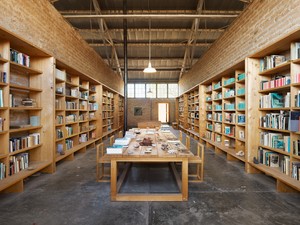
CJMThe Rauschenberg Foundation is not a museum. It would be wonderful if we had the ability to host the public every single day with regular opening hours, but we cannot. At the same time, we see a fair number of researchers, writers, academics, students, curators, coming to our archive and to our library or meeting with our curatorial staff. That is a meaningful part of our public efforts because those voices are shaping the discourse about not just Rauschenberg but also his peers. Serving a hundred scholars in a year will result in articles, books, essays, and exhibitions going forward. So that public is important to us, but that public is less visible to other people.
AMSometimes an archive can include material samples for conservation purposes, other times there’s ephemera or letters or photographs of the artist working. How do you define an archive, and which categories have you found most useful?
CJMWe have every category that you just named. We have paper materials that are not considered to be works of art, but we also have paper materials that are works of art and live inside the collection. We have photographs, clothing, notes, and ephemera. We have receipts from fabric that he bought in stores around the world. And we have used those receipts to match against objects that he made from those fabrics. We have letters from other artists. We have examples of things that he found, items from the natural world and things from built environments. We have objects from his performances. We have all those things in our archive.
AMHow do you decide what to keep and how to organize it?
CJMWell, having a good archivist is very important. And again, we are fortunate that he made lots of decisions about what should be contained in the archive. In fact, the book of Rauschenberg’s writings that we just discussed—the origin of that project starts within our archive. One day our archivist, Francine Snyder, found a folder that was labeled “writing.” I do not know that she would have necessarily pulled these things together or gone looking for them if they were separated across the archive, but he had segregated them out, which indicated, “These are important to me as writings.”
AMYou have described your role at the foundation as part of a continuum that will continue “past your working days.” This struck me, as it forecasts a long future legacy for the Foundation, and that perspective must inform decisions you are making daily. What considerations come into play when planning for the estimated lifespan of a foundation? How important is it to identify a goal or endpoint?
CJMIn certain foundations it’s paramount. And for artists and their advisors, counselors, and studio staff, having those conversations is critical. Is there a problem that you want to solve? Is there a future where we can one day be able to eradicate X or be able to serve X? Are there activities that should be ongoing? Is there a moment where you no longer care that there is a dedicated place to go that hosts the collection or archive? An early decision that needs to be made is whether there will be a catalogue raisonné, because that can take a long time to research. As such, it can be a factor in determining the lifespan of a foundation.
AMAnd how would you go about deciding, if that question was not answered by an artist, when to sunset a foundation? What are some of the benefits to that?
CJMSome of it is purely practical. Are there enough funds to continue? Are those funds being used for that purpose? Is there still an interest in doing this work? Was something being funded that is no longer interesting or viable or vibrant? Or it’s a question of impact. There are some models that I find completely inspiring, like the Roy Lichtenstein Foundation, for example, that do incredibly impactful work in a large way for a focused period. Get the work out to collections. Make substantial gifts to certain institutions. Shore up the resources of places that may have been fragile themselves. And then that’s it. The work is done. That can be incredibly smart and speak to a confidence about understanding what the goals were.