Alison McDonaldWhat do you think Warhol wanted for his legacy? It might seem like a simple question, but I am sure it has been complicated to navigate.
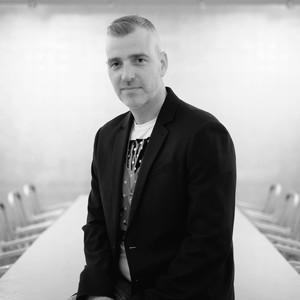
Michael Dayton HermannDuring his lifetime, Warhol said that he wanted to be reincarnated as a big ring on Elizabeth Taylor’s finger. And while I can’t confirm one way or the other whether that happened, what we do know is that his will stipulated that a nonprofit charitable organization be created with a mission to support the advancement of the visual arts. This act of generosity is often overshadowed by the artist’s celebrity, which just continues to grow over time. It is my hope and expectation that over time, the Warhol name will eventually be known as much for the philanthropic work of the foundation as for the artist’s incredibly impactful art practice.
AMWas the foundation established during his lifetime?
MDHNo, but his will dictated that nearly all of the assets from his estate go to the foundation, which was established shortly after his passing, in 1987.
AMThe mission is rather open-ended: “the advancement of the visual arts” can be interpreted in many ways. How does the foundation come to a consensus about what that might mean?
MDHYes, the phrase is short and highly open to interpretation—which one can only assume was Warhol’s intention. Other artists are certainly much more specific about exactly how they want their foundations to be administered. We’ve interpreted the directive we’ve been given differently over time because the world is always changing. Warhol always kept his finger on the pulse of American culture, and the foundation tries to honor that. To that end, I think one of the biggest strengths of the foundation is our incredibly engaged, diverse, and dynamic board of directors, which consists of seventeen members with term limits. That structure ensures that we can meet the evolving needs of the foundation and respond to the communities that we serve.
AMHow do you tackle the responsibilities of stewardship?
MDHWe see stewardship through the lenses of past, present, and future. For the past, we ask ourselves what Warhol’s historic legacy was. This is the realm of scholarship, the catalogue raisonné, and the care of original works of art. For the present, we ask ourselves what Warhol’s legacy means today, and this manifests itself mostly in our licensing projects. And for the future, which of the three is the most directly related to the mission Warhol set forth, we ask ourselves how we can honor Warhol’s wishes by advancing the visual arts for future generations, which consists of our grant making.
AMHow has Warhol’s family been included in the foundation?
MDHWarhol’s family has always been included in the foundation in some way. And for me personally, one of the great privileges that I’ve had is getting to know Warhol’s brother John Warhola, who served on our board for many years. Following his passing, Andy’s nephew, John’s son Donald, was appointed to our board of directors. As family members who were close to Andy, their voices remind us that not only are we stewards of this iconic artist who continues to influence culture, but we’re fulfilling the wishes of a human being, someone who was a son, a brother, and an uncle. That’s very grounding.
AMWhat revenue streams are available to the foundation and how do you keep them thriving?
MDHWell, when your founder is famous for saying being good in business is the most fascinating kind of art, it sets a really high bar of expectation. The foundation has primarily three sources of revenue: art sales, licensing, and gains from our endowment. Since our inception, we’ve been quite thoughtful about how original works of art from our collection are sold. One of our first projects consisted of partially gifting more than 100 major works to twenty-four different museums across the United States. Since then, over decades, we have also worked with commercial galleries to introduce bodies of work through exhibition catalogues and scholarly essays. Most recently, over the past two years, I’ve conceived and curated three high-profile auctions and established an ongoing project with eBay for charity. That effort has introduced new works into the market that have appealed to collectors across the spectrum of subjects, mediums, and price levels, and has raised more than $6 million for the foundation. In terms of licensing, we proactively seek out partners who understand and are inspired by Warhol’s legacy and have the capabilities to celebrate that legacy in ways that are relevant for audiences today.
AMDuring Warhol’s lifetime, he was interested in the commercial world, the power of media, and all types of collaborations with brands. In fact one could argue that his artmaking practice extended into all types of media, with projects like Interview magazine, for example. Given this precedent, how has the foundation made decisions regarding intellectual property?
MDHI see Warhol as a creative genius who really wasn’t interested in boundaries between art, commerce, and media. For him, it was all part of one creative vision.
In decision-making around licensing, we are mindful not to ask ourselves what Warhol would do. First, it’s presumptuous to try to get into the mind of somebody thirty-five years after they’ve passed away, and second, Warhol was always ahead of his time. The one thing we do know is that he would do something beyond what we can imagine, so we don’t try to imagine it.
That said, we do ask ourselves how we can be inspired by what Warhol did during his lifetime. And when we answer that question appropriately, our licensing activities become a natural extension of Warhol’s interests.
AMHow do you know what not to do?
MDHThere are no hard rules for us in terms of what we can or can’t do. It’s a matter of how you do it, right? For some projects, such as our past licensing collaborations with Perrier and Absolut, we picked up on projects that Warhol undertook during his lifetime. Others, such as the collaboration with Comme des Garçons or the Netflix docuseries that launched recently, we feel offer a fresh understanding of Warhol and his work.
The most important consideration for all licensing projects is the impact they may have on the artist’s legacy. We also take great care in considering the alignment of a project with the foundation’s values and mission. And following that, we certainly take strategic and financial aspects into consideration. The decisions I’m most proud of in this role are the things that nobody’s heard about because we said no to opportunities.
AMFor other artists interested in exploring the value of their intellectual property, what are some of the practical considerations they need to be aware of?
MDHFirst and foremost, it’s important for artists to recognize that the world of licensing is an entirely different industry from the art world. It operates in different ways. For any artist wanting to meaningfully leverage their intellectual property, it’s important that they have a really good lawyer who specializes in this field so that they understand how to navigate the space. They also need to be interested in committing time and energy to gaining knowledge in the market where they want to leverage their IP. If they want to get into fashion or NFTs, they really need to understand what those industries’ markets are like.
Lastly, if they can afford it, they should consider hiring dedicated staff with experience in licensing, as that can be quite helpful. People often look at the work that we do, and at this point we have a large and sophisticated licensing program, but what I often remind people is that we started quite small in all ways, and we thoughtfully took our time to get to the place where we are now. Artists should really take their time to slowly explore this and move thoughtfully through the space at a reasonably slow pace, instead of jumping into it.
AMHow important is it to protect your IP? What measures do you need to take to protect the IP rights the foundation holds?
MDHIt’s very important to protect your intellectual property. If anything uses your intellectual property, most audiences will assume it was done with your authorization. So you want to minimize confusion in the market and you don’t want your reputation to be negatively affected. I think how artists choose to deploy their intellectual property should always be a natural extension of their artistic practices. Unauthorized usages, by definition, aren’t that. And even with authorized usages, it’s important to acknowledge that the potential audience for a licensing project is exponentially greater than the audience for an original work of art. Far more people saw the Warhol Burger King advertisement that was aired during the Super Bowl, for example, than saw the Warhol retrospective at the Whitney Museum [of American Art, New York]. Because of this, licensing decisions have enormous potential to impact the reputation of an artist both positively and negatively. As we make decisions in our licensing program, I often remind myself that my first exposure to contemporary art was a Keith Haring Swatch watch that I got when I was about twelve years old. And while in Haring’s case it made me a lifelong fan, the opposite can be true as well.
AMDuring a recent conversation you described to me how creators outside the visual arts—authors, musicians, dancers—tend to have most of their revenue generated through licensing arrangements. It would be interesting for our audience to hear about similarities and differences for visual artists in this regard.
MDHIt’s important to recognize that copyright was designed to encourage creators to create new works by giving them a limited monopoly over their creations. What’s unique about visual artists is that they generally make most of their income from the first sale of an object, not the licensing of the copyright, whereas authors, playwrights, musicians, and other creators’ primary income is often through licensing rights to their work.
AMWould you tell us about the ongoing catalogue raisonné project at the foundation?
MDHMy career at the foundation started when I was an assistant to the catalogue raisonné’s editor, Dr. Neil Printz. The project was initiated during Warhol’s lifetime, in 1977, by the Swiss art dealer Thomas Ammann. When he passed away, in 1993, the foundation partnered with his gallery, Thomas Ammann Fine Art, and then took full stewardship of the project in 2004. As of today, five volumes have been completed, documenting Warhol’s paintings and sculptures from 1961 to 1978, with volume six in the works. When people ask how prolific Warhol was, I just point to these books to indicate that it really is far beyond what most people would ever imagine.
We have a team of six people dedicated to this project. Led by Dr. Printz and Sally King-Nero, they’re world-class scholars and researchers and they’ve produced a comprehensive and exacting catalogue of Warhol’s works, which is a terrific read, if you spend time with the entries for each of the works.
AMThe foundation is actively engaged in philanthropy. How much money have you given away and over how many years?
MDHThe Andy Warhol Foundation started giving grants shortly after it was incorporated, in 1987. To date, over the past thirty-five years, we have distributed over $260 million in cash grants to 1,000 arts organizations in forty-nine states. Today, we award approximately 100 grants annually; we have a budget of about $17 million dedicated toward grantmaking, which is administered by a staff of four people in our program department.
AMAre the grants given to institutions or individuals? And how do you determine the best recipients for them?
MDHSince its inception, the foundation has felt that it can best serve the needs of artists by funding the arts organizations and cultural institutions that support them rather than trying to offer them grants directly. The grants that we provide cover the full spectrum of artistic activity, from grassroots happenings to alternative spaces to major museums. The common thread in our funding is that we actively support projects that challenge the status quo. We try to push the field in new directions through risk-taking and experimentation.
AMHow does the application process work?
MDHThe application process is intentionally designed not to be prescriptive. We recognize that artists and the organizations that support them have incredibly diverse ways of operating, so we accept requests from 501(c)(3) organizations twice a year. Applicants must submit a three-page proposal that describes the organization and the activities for which funds are being requested. Then each proposal is carefully considered on its own merit by our grants team, which makes recommendations to our board of directors. While we would often love to fund more, our budget is limited. But still, with 100 grants a year and $17 million dollars, the work is quite impactful.
Prior to COVID, our program department was constantly traveling as a way to better understand the needs of artistic communities throughout the country. We also work with thirty-two different regional regranting organizations; they in turn support local artistic communities.
AMHow has the foundation risen to challenges such as COVID, hurricanes, et cetera?
MDHOne of the foundation’s strengths is how responsive and adaptable its grants program is. The program team have their fingers on the pulse of the issues that are central to artists today and they’re able to respond quickly to urgent needs that come up. Some examples include our establishing and funding Creative Capital, which was launched in response to diminished NEA funding in the 1990s, and our responses to the needs of the artistic community following 9/11, Hurricane Katrina, Hurricane Sandy, COVID, and most recently the war in Ukraine. We have a reputation for acting quickly to support artist communities in need.
AMWhat are some of the fundamental gifts and other types of support that the foundation has given over the years to establish significant holdings of Warhol’s art and documentation of his life in other institutions?
MDHWarhol’s legacy is so vast and complicated that one institution can’t do it all. To date, we have donated 52,000 works of art to over 300 institutions. The highlights include the establishment of the Andy Warhol Museum in Pittsburgh. We cofounded the museum with the Carnegie Institute and Dia Art Foundation, donating 8,000 works of art, as well as the tens of thousands of archival objects that form the basis of the Andy Warhol Study Center. We also gifted the Andy Warhol photography archive to Stanford University—130,000 negatives and contact sheets that were scanned, catalogued, and made available online for the public.
Another tremendous gift is the Andy Warhol Photographic Legacy Project, in which over 28,000 original photographs by Warhol were given to 200 college and university collections. We supported the Andy Warhol Film Project, which is a joint effort among the Whitney, the Museum of Modern Art in New York, and the Warhol Museum to preserve and catalogue all of Warhol’s films. We’ve contributed over 35,000 high-resolution files to Artstor, which is the leading image resource for educational and scholarly usages. The list goes on, but [laughs] we’ll stop there.
AMWhat infrastructure is required to be in place before a foundation can embark on this type of giving? What are some of the legal and logistical considerations? How much staff is needed to oversee this properly?
MDHIn terms of infrastructure, I’ve found that artist foundations are as varied as the artists’ practices. The artist-endowed foundation community really benefits from an organization called the Aspen Institute Artist-Endowed Foundations Initiative, which is led by Christine Vincent, that thoughtfully brings together leaders from the field to share knowledge and information. Recognizing that all of these foundations are set up differently—and necessarily so, because they represent such a diversity of artists, yet share interests—it is important that they share information and knowledge, so that has been an incredible resource for the artist-endowed-foundation community.
AMWhat do you see in the future for the foundation?
MDHWe will continue to steward Warhol’s legacy and fulfill his wish to advance the visual arts for the foreseeable future. Warhol said that his Factory was a place where people came not to see him but to see who else showed up. And the work of the foundation similarly expands beyond the celebration of Warhol to inspire and support a multitude of artistic practices that challenge us to see the world differently.