Everything sculpture has, my work doesn’t.
—Donald Judd
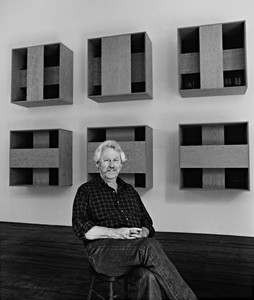
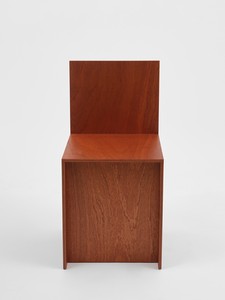
Donald Judd’s radical work and thinking helped shape the look of the late twentieth century and continues to influence artists, architects, and designers worldwide. He has exercised a transformative influence over the ways in which both art objects and practical designs are produced, exhibited, encountered, and used.
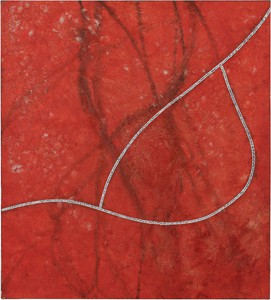
Judd was born in 1928 in Excelsior Springs, Missouri. After serving in the United States Army in Korea from June 1946 until November 1947, he returned to the US and attended the College of William and Mary in Williamsburg, Virginia; the Art Students League of New York; and Columbia University in New York, where he completed a BS in philosophy in 1953. He went on to work toward a master’s degree in art history at Columbia. From 1959 to 1965, Judd was a prolific critic for magazines including Arts, Art International, and Art News; he continued to write throughout his career, addressing the relationship of art practice to architecture, design, political action, and lived experience in letters and published essays. As an artist, he started out as a painter before turning to three-dimensional work.
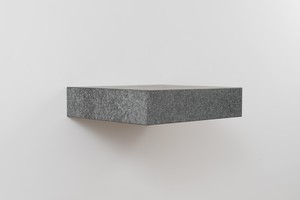
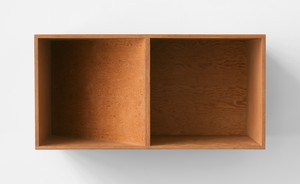
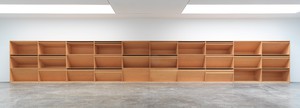
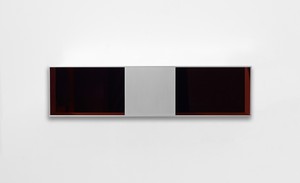
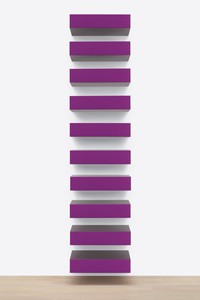
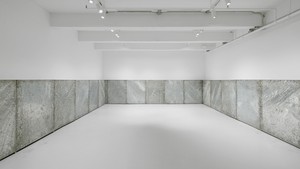
In the early 1960s Judd wrote a number of essays calling for the rejection of illusionism in favor of an art of tangible substance. In doing so, he aligned himself with other artists, including John Chamberlain and Dan Flavin, whose work also incorporated commonplace and industrial materials. He began to employ fabricators to produce his work, expanding the studio process in a way that also influenced the emergent Conceptual art movement. Recognizing the physical environment as intrinsic to his work, Judd came to address spatial concerns through three-dimensional form, and the mid-to-late 1960s saw him produce many iconic works including the “stacks”—which are hung at regular intervals in a vertical configuration—and “progressions”—the measurements of which are determined by numerical sequences.
In 1963, Green Gallery in New York held Judd’s first solo exhibition of mature work, and in 1966, Leo Castelli organized what would be the first in an extended series of solo exhibitions for the artist. In 1966, he participated in Primary Structures, a pivotal exhibition at the Jewish Museum, New York, curated by Kynaston McShine. Critically acclaimed for its innovative contextualization of geometric and reductive aesthetics, McShine’s exhibition also resonated with Judd’s artistic approach in its specific organization of objects in relation to the space of the gallery.
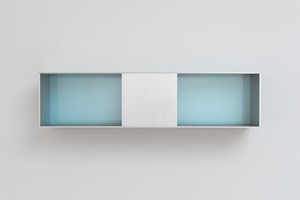
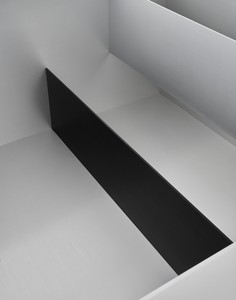
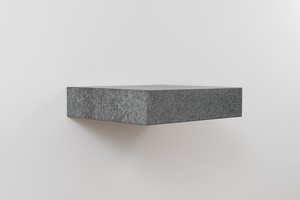
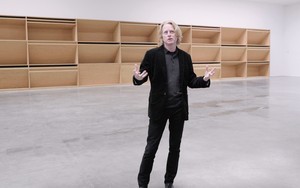
In the mid-1960s, Judd began making hollow metal boxes, many with colored interiors, which he placed directly onto the floor, breaking with the use of pedestals traditional to sculpture. In attempting to erase the physical and psychological distance between object and observer, Judd aimed to make his works part of their environment, and of the viewer’s world. This intention resonated with his ideas about the permanent installation of artworks, which he developed further with his 1968 purchase of 101 Spring Street, a five-story building in SoHo, New York, that served as a residence and studio for the next twenty-five years. In 1973, he began acquiring properties in Marfa, Texas, installing his own and other artists’ work there until his death in 1994.
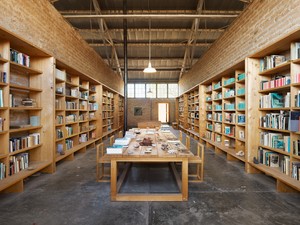
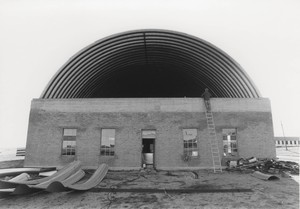
Judd aimed to preserve his art, spaces, libraries, and archives as a lasting resource, and to this end defined the principles of Judd Foundation in 1977. He also founded the Chinati Foundation/La Fundación Chinati in 1986 for the permanent installation of large-scale works by himself and his contemporaries. Major exhibitions include the Whitney Museum of American Art, New York (1968 and 1988); Stedelijk Van Abbemuseum, Eindhoven, Netherlands (1970); National Gallery of Canada, Ottawa (1975); Tate Modern, London (2004); and Museum of Modern Art, New York (2020–21).