Now available
Gagosian Quarterly Summer 2026
The Summer 2026 issue of Gagosian Quarterly is now available, featuring Ellen Gallagher’s Fast-Fish and Loose-Fish (2026) on the cover.
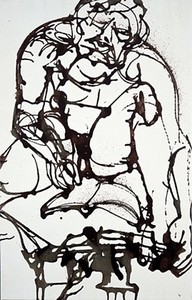
David Smith
Untitled, 1964
Enamel on canvas, 51 ⅛ × 32 ½ inches (129.9 × 82.6 cm)
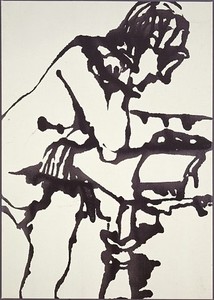
David Smith
Untitled, 1964
Enamel on canvas, 33 ⅛ × 49 inches (84.1 × 124.5 cm)
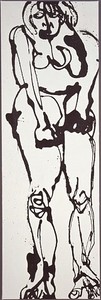
David Smith
Untitled, 1964
Enamel on canvas, 51 × 16 ⅝ inches (129.5 × 42.2 cm)
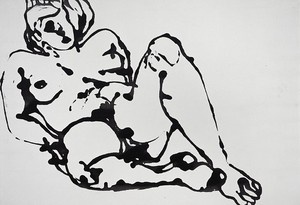
David Smith
Untitled, 1964
Enamel on canvas, 33 ⅛ × 49 inches (84.1 × 124.5 cm)
Opening Reception: January 25, 6-8pm These paintings have a radical freshness, breadth, and apparent spontaneity, due in part to the fact that Smith radically cropped them from unstretched canvas ... As a group, the paintings convey a dynamic multitude of facial expressions and attitudinal types, ranging from the supine odalisque, ... to the intellectual reader, ... to the confrontational gladiator. They even seem to include the descriptive allusions to such popular types as the silver-screen vamp...the coy teenage temptress, post-Lolita...the bohemian earth mother, and the modern -day Amazon—a powerful woman on the phone.* Gagosian Gallery is pleased to announce the opening of David Smith: The Last Nudes. The exhibition is a selection of paintings made in the winter of 1964, during the last months of Smith's life. Painted at his studio in Bolton Landing, upstate New York, they are being shown for the first time in Europe. Beginning in the late twenties, and throughout his life, Smith used the figure as a touchstone from which drawings, paintings and sculpture drew resonant meaning. In the case of the Last Nudes, the starting point was photographs taken by Smith of models in everyday poses: standing in a hallway, reading a book, casually sitting in a chair, their nudity a disjunctive confrontation. As Candida Smith points out, "the mediation of the photographic technique created an abstracted space between artist and model." The physical potency of the photographs was transformed by Smith through his dynamically gestural painting process into these formally powerful, sexually charged paintings. Due to their shocking anti-puritanical content, as well as the difficulty in integrating them with the heroically "pure" concept of "Abstract Expressionism," the Nudes have been censoriously omitted from most discussion of Smith's work. Ranging from lyrically rendered drawing to explosively gestural abstraction, these paintings exemplify Smith's refusal to allow for a delineation between painting and sculpture or between abstract and figurative work. The Last Nudes, painted with enamel paint in tones of blacks and browns, were executed with an ear syringe. By squeezing the bulb of the syringe, Smith dripped, squirted, puddled and drew the enamel paint across unstretched, pre-primed canvas. It is evident that he moved and tipped the canvas while working; the paintings show the pouring and dripping marks of constant motion when the enamel was still wet. The Last Nudes were painted in 1964 during the peak of Smith's creative output. Made concurrently with the sculptural series: Cubi, Gondola and Zig, they underline the significance that the figure held throughout Smith's work. The spontaneity and sensuality of the Last Nudes adds to our understanding of the depth and complexity of Smith's achievement and compliments the massive grandeur of his sculpture. David Smith, now at home in a more diverse pantheon, turns out not to be the monolithic figure once imagined ...a truly seminal, multifarious artist whose work, grounded in all the senses, continues in unexpected ways to make his mark.* A fully illustrated catalogue with an essay by Brooks Adams will accompany the exhibition. * Excerpts taken from Brooks Adams: David Smith's Last Nudes. Published by Gagosian Gallery, 2000.
The Summer 2026 issue of Gagosian Quarterly is now available, featuring Ellen Gallagher’s Fast-Fish and Loose-Fish (2026) on the cover.

In this video, Jenny Saville sits down inside her first major exhibition in Venice to discuss how the great Venetian artists of the past and the city’s heritage influence her work. The show brings together more than thirty canvases and works on paper from the 1990s to the present, tracing the development of her practice, which is deeply rooted in the history of painting.
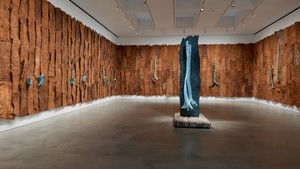
On the occasion of his exhibition The Reflection of Bronze at Gagosian, New York, Giuseppe Penone and curator Adam D. Weinberg sit down to discuss the genesis of, and their collaboration on, the show.
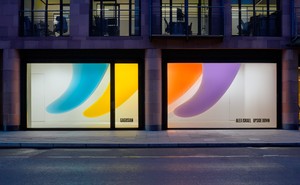
Ahead of Alex Israel’s exhibition of four new Fin sculptures at Gagosian, London, the artist spoke with Susan Casey, author of The Wave: In Pursuit of the Rogues, Freaks, and Giants of the Ocean (2010), about the ocean, surfing, and Los Angeles.
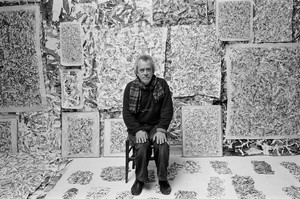
On July 9, Simon Hantaï: the last studio opens at Gagosian, Gstaad. Curated by Anne Baldassari, the show comprises sixteen of the artist’s dernier atelier (last studio) paintings of 1982–85. The exhibition is accompanied by an illustrated catalogue, copublished by Gagosian and Skira, which features an essay by Baldassari and an extensive portfolio of previously unpublished photographs by Édouard Boubat. Here, we share the introductory chapter from the publication.
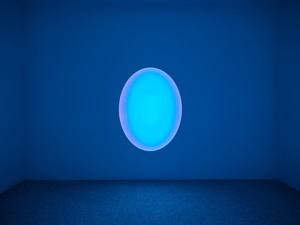
An exhibition at Gagosian, Hong Kong, brings together three of James Turrell’s Glasswork pieces along with site plans, photographs, and models of his Skyspaces and Roden Crater. Here, Alice Godwin explores the history of the Glassworks and their relationship to the artist’s wider practice.

On April 16, the Institute of Contemporary Art, Boston, opened the first midcareer survey of Derrick Adams’s multidisciplinary practice. Covering over twenty years of work, the exhibition, titled View Master, brings together the artist’s painting, sculpture, collage, performance, and video, as well as a vibrant new commission created for the museum’s façade. Ahead of the opening, Adams met with Tessa Bachi Haas, cocurator of the survey, to discuss his formative experiences with television, the impact of his work in arts education on his practice, and the importance of taking a more complex, more joyful, and more expansive approach to Black American life and culture.

Adam D. Weinberg has been working with Giuseppe Penone on an exhibition of the artist’s new sculptures, The Reflection of Bronze, that opens at Gagosian, New York, on April 22. The works explore the character and possibilities of bronze. Here, Weinberg considers Penone’s enduring engagement with the alloy and addresses the conceptual underpinnings of the exhibition’s three-room structure.

Jeff Koons tells Alison McDonald about his appreciation for the pioneering artist and thinker Marcel Duchamp.
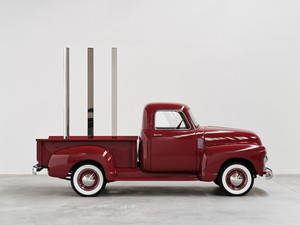
The Singular Experience at Gagosian’s Le Bourget gallery is the largest exhibition of Walter De Maria’s work in France in several decades. Organized by Donna De Salvo, senior adjunct curator at Dia Art Foundation, the exhibition marks the first time De Maria’s final sculpture, Truck Trilogy (2011–17), is being shown outside of the United States. Here, De Salvo speaks with artist Lucy Raven about her evolving kinship with De Maria and more.
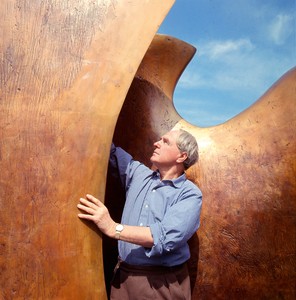
Laura Bruni writes about a major exhibition celebrating the work of the British sculptor Henry Moore at the Royal Botanic Gardens, Kew, London.
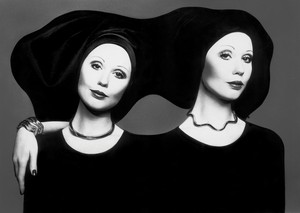
The exhibition Pomellato, Le Joaillier Révolutionnaire opened at Palais de Tokyo, Paris, on June 24. The Italian jewelry house’s trailblazing advertising campaigns—created by some of the most consequential names in photography—act as the narrative arc of the exhibition, curated by Alba Cappellieri. Here, Sarah Godfrey tracks Pomellato’s history, speaks with Cappellieri about what drew her to this project, and examines some of the key photographs from the show.