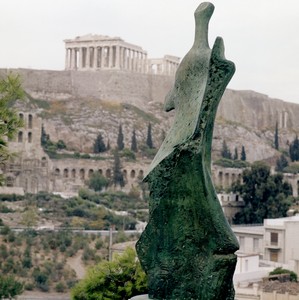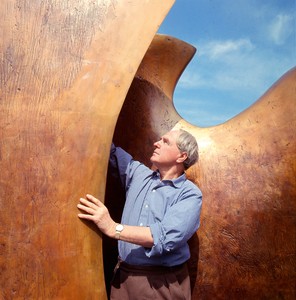
Henry Moore: Monumental Nature
Laura Bruni writes about a major exhibition celebrating the work of the British sculptor Henry Moore at the Royal Botanic Gardens, Kew, London.
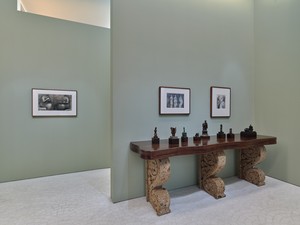
Installation view
Artwork © The Henry Moore Foundation. Furniture © Malaparte. Photo: Thomas Lannes
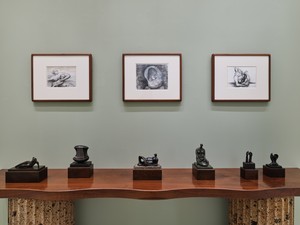
Installation view
Artwork © The Henry Moore Foundation. Furniture © Malaparte. Photo: Thomas Lannes
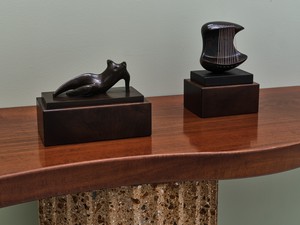
Installation view
Artwork © The Henry Moore Foundation. Furniture © Malaparte. Photo: Thomas Lannes
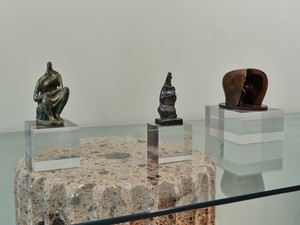
Installation view
Artwork © The Henry Moore Foundation. Furniture © Malaparte. Photo: Thomas Lannes
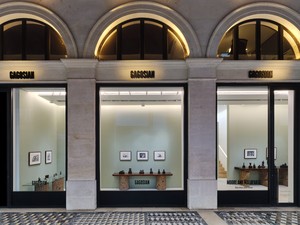
Installation view
Artwork © The Henry Moore Foundation. Furniture © Malaparte. Photo: Thomas Lannes
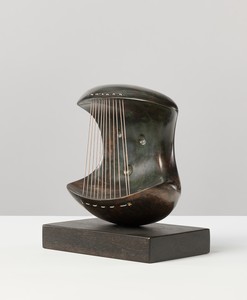
Henry Moore
Head, 1939 (cast 1968)
Bronze and string, 6 ⅜ × 5 ⅝ × 3 ½ inches (16 × 14.3 × 8.9 cm), cast 6/6 + 1
© The Henry Moore Foundation. Photo: Prudence Cuming Associates Ltd
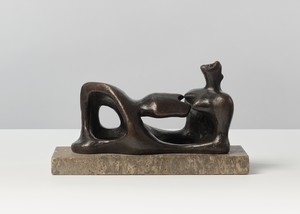
Henry Moore
Reclining Figure, 1945 (cast 1962)
Bronze, 4 ⅜ × 7 ⅝ × 3 ⅛ inches (11 × 19.3 × 7.9 cm), cast a/6 + 2
© The Henry Moore Foundation. Photo: Prudence Cuming Associates Ltd
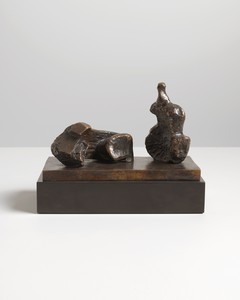
Henry Moore
Two Piece Reclining Figure: Maquette No. 2, 1961
Bronze, 6 ⅛ × 9 ⅝ × 4 ½ inches (15.4 × 24.5 × 11.5 cm), cast 0/9 + 1
© The Henry Moore Foundation. Photo: Mike Bruce
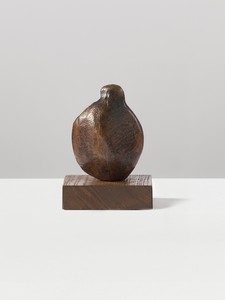
Henry Moore
Mother and Child, 1961 (cast 1964)
Bronze on wood base, 4 × 3 × 2 ¾ inches (10 × 7.4 × 7 cm), edition cast e/6 + 1
© The Henry Moore Foundation. Photo: Prudence Cuming Associates Ltd
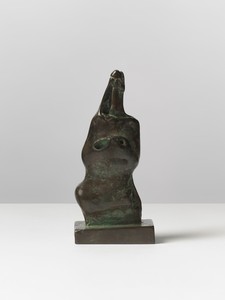
Henry Moore
Torso, 1962 (cast 1976)
Bronze, 4 ½ × 2 ⅛ × 1 ¼ inches (11.4 × 5.2 × 3.2 cm), edition cast 00/6 + 1
© The Henry Moore Foundation. Photo: Prudence Cuming Associates Ltd
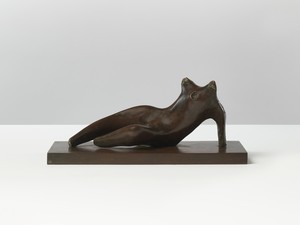
Henry Moore
Reclining Torso, 1981
Bronze, 3 ½ × 8 ½ × 3 ¾ inches (8.9 × 21.6 × 9.5 cm), cast 00/9 + 2
© The Henry Moore Foundation. Photo: Prudence Cuming Associates Ltd
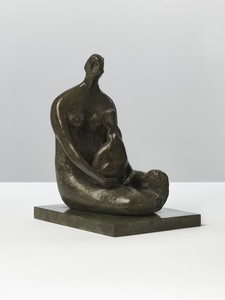
Henry Moore
Seated Woman Holding Child, 1982
Bronze, 6 ⅞ × 4 ⅜ × 5 ⅝ inches (17.5 × 11 × 14.3 cm), cast 00/9 + 2
© The Henry Moore Foundation. Photo: Prudence Cuming Associates Ltd
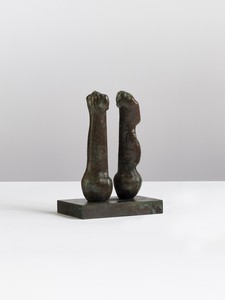
Henry Moore
Two Bulb Forms, 1983
Bronze, 4 ⅛ × 3 × 2 inches (10.5 × 7.4 × 4.9 cm), edition cast 7/9 + 1
© The Henry Moore Foundation. Photo: Prudence Cuming Associates Ltd
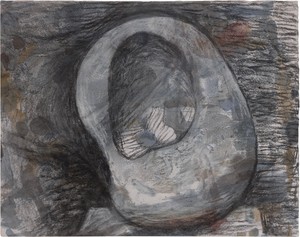
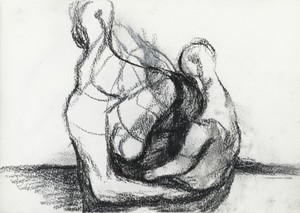
Henry Moore
Stringed Figure, c. 1982
Watercolor, charcoal, and gouache on paper, 8 ¾ × 11 ⅛ inches (22.2 × 28.2 cm)
© The Henry Moore Foundation. Photo: Prudence Cuming Associates Ltd
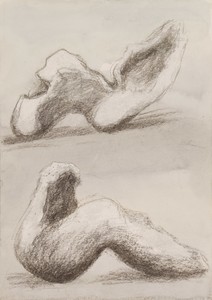
Henry Moore
Mother and Child, 1983
Charcoal and chalk on paper, 7 × 10 inches (17.8 × 25.4 cm)
© The Henry Moore Foundation. Photo: Nigel Moore
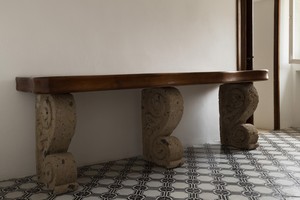
Original walnut and tuff console table conceived in 1941 by Curzio Malaparte in situ at Casa Malaparte, Capri
© Malaparte. Photo: Dariusz Jasak
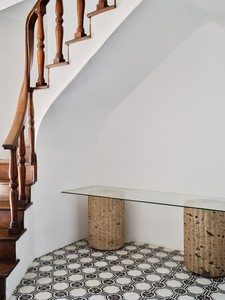
Original walnut and glass desk conceived in 1941 by Curzio Malaparte in situ at Casa Malaparte, Capri
© Malaparte. Photo: Thomas Lannes
There is in nature a limitless variety of shapes and rhythms from which the sculptor can enlarge his form-knowledge experience.
—Henry Moore
Gagosian is pleased to announce Moore and Malaparte: Rhythm and Form, an exhibition of small-scale sculptures and drawings by Henry Moore in dialogue with three pieces of furniture from Casa Malaparte, two of them exclusive designs. Opening at 9 rue de Castiglione on January 22, 2025, the presentation draws unexpected connections between sculptor and designer, including a fascination with crafting organic forms in tune with the natural world and an immersion in the interaction of these objects with their architectural settings.
A giant of modern sculpture, Moore reveled in the relationship between art and its environment. In Moore and Malaparte, this connection is brought to life in domestically scaled bronze sculptures featuring themes that recurred throughout the artist’s career. Works such as Reclining Figure (1945) and Seated Woman Holding Child (1982) are shown atop reproductions of furniture from Casa Malaparte, revealing surprising but unequivocable affinities between Moore’s and Malaparte’s approaches to design. Works on paper in ink, pencil, watercolor, and other materials, including Women Winding Wool (1949) and studies for three-dimensional works such as Two Sculptural Ideas (c. 1984), further enrich this dialogue. Many of Moore’s works also reveal an enthusiasm for organic forms and elemental sites, underscoring his perception of the natural world’s concrete reality as the root of abstract explorations—a vision that resonates with Malaparte’s.
Request more information
about this exhibition
Laura Bruni writes about a major exhibition celebrating the work of the British sculptor Henry Moore at the Royal Botanic Gardens, Kew, London.
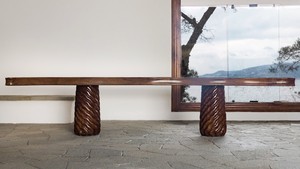
Featuring interviews with Tommaso Rositani Suckert and Serena Cattaneo Adorno, this video presents a unique look at the history of Casa Malaparte in Capri and documents the fabrication of new editions of the iconic furniture pieces from the house, designed in the late 1930s by avant-garde writer Curzio Malaparte.
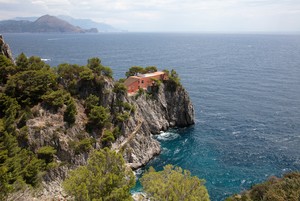
Wyatt Allgeier explores the legacy of Curzio Malaparte and corresponds with the avant-garde author’s youngest descendant, Tommaso Rositani Suckert, on the subject of his decision to reproduce select pieces of furniture from the iconic Casa Malaparte in Capri, Italy.
The Fall 2019 issue of Gagosian Quarterly is now available, featuring a detail from Sinking (2019) by Nathaniel Mary Quinn on its cover.
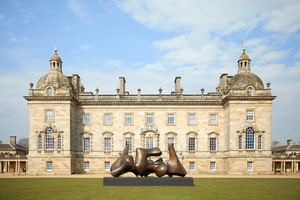
Sebastiano Barassi reflects on the centrality of nature in the work of Henry Moore—as form, material, inspiration, and site.
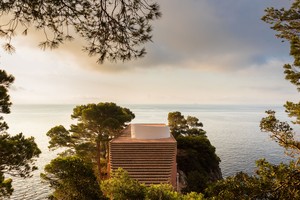
In July 2017, a special installation of paintings was shown at Casa Malaparte, Capri, the famous house built by the author, publisher, diplomat, and filmmaker Curzio Malaparte.
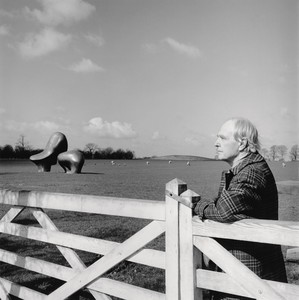
A look inside the Henry Moore Foundation, their new initiatives, and what’s next.