Ed Ruscha and Erling Kagge: Silence, Slowness, Exploration
Ed Ruscha sits down with the author and explorer Erling Kagge to discuss existence.
Art Fair
February 15–17, 2019, booth C06
Paramount Picture Studios, Los Angeles
frieze.com
Gagosian is pleased to participate in the inaugural edition of Frieze Los Angeles. Featuring works by Chris Burden, Jennifer Guidi, Shio Kusaka, Sterling Ruby, Ed Ruscha, Mary Weatherford, and others, the presentation will explore the various ways that Los Angeles–based artists have used drawing as both a physical and conceptual tool in their wide-ranging practices.
To receive a PDF with detailed information on the works, please contact the gallery at inquire@gagosian.com. To attend the fair, purchase tickets at frieze.com. To preview our booth, go to artsy.net.
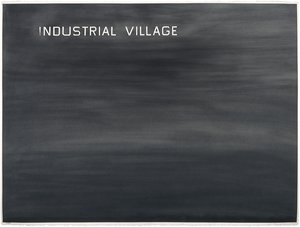
Ed Ruscha, Industrial Village, 1982 © Ed Ruscha
Ed Ruscha sits down with the author and explorer Erling Kagge to discuss existence.

Ahead of Persephone, an exhibition of new paintings by Mary Weatherford inside Hong Kong’s historic Pedder Building, the Quarterly’s Wyatt Allgeier met with Weatherford and the architect Mark Lee to talk about their collaboration. Here, they discuss how custom architectural interventions—from mirrored columns to strategic light play—transform the gallery, evoking Persephone’s mythic journey through the underworld and back into the light of spring.

Tracking works by Chris Burden, Bruce Nauman, Maria Nordman, and Eric Orr as outliers and outcroppings of the California Light and Space movement, Michael Auping argues that darkness—the absence of light and space—is a key element of the aesthetic.

As American identity once again comes into question during a politically charged election cycle, the Quarterly revisits the motif of the American flag in art. Here, John B. Ravenal contextualizes Robert Lazzarini’s new wall-based flag sculptures and elucidates the tensions they lay bare in the symbol of our nation.
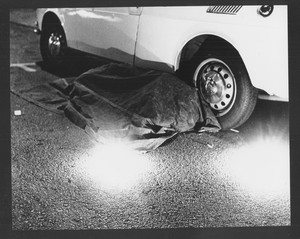
Sydney Stutterheim has published Artist, Audience, Accomplice: Ethics and Authorship in Art of the 1970s and 1980s (Duke University Press, 2024), a survey of performance art and related practices that involve, in various manners, the figure of the accomplice. To celebrate the publication, the Quarterly is publishing an excerpt that examines Chris Burden’s Deadman (1972).
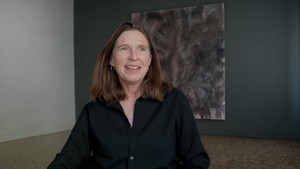
In conjunction with her exhibition The Flaying of Marsyas at Museo di Palazzo Grimani, Venice, Mary Weatherford discusses the featured paintings, which are directly inspired by Titian’s late, eponymous masterpiece of circa 1570–76 and reflect her enduring fascination with the painting.
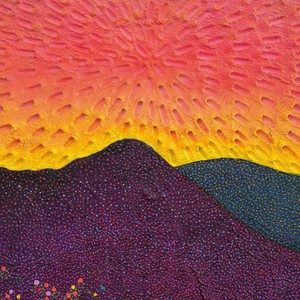
Invited to exhibit at Château La Coste in Provence, Jennifer Guidi created a new body of work that engaged with the cantilevered architecture of the gallery building, designed by Richard Rogers, and with the artistic heritage of the region. Amie Corry reports on the evolution of the exhibition and on its place within Guidi’s larger practice.
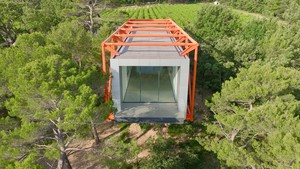
In this video, produced by Château La Coste, Jennifer Guidi discusses her latest solo exhibition, Mountain Range, conceived in response to the architecture of Château La Coste’s Richard Rogers Gallery and the surrounding landscape of Provence in the South of France. The exhibition, organized in collaboration with Gagosian, is now on view through September 3, 2023.
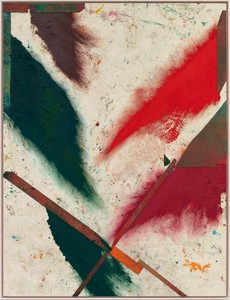
Ester Coen meditates on the dynamism of Sterling Ruby’s recent projects, tracing parallels between these works and the histories of Futurism, Constructivism, and the avant-garde.
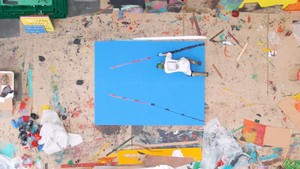
Join Sterling Ruby in his Los Angeles studio as he works on new abstract paintings ahead of his exhibition TURBINES at Gagosian in New York.
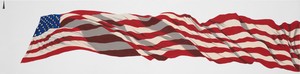
Gillian Pistell writes on the loaded symbol of the American flag in the work of postwar and contemporary artists.
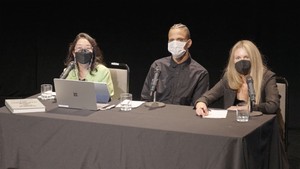
Join Gagosian to celebrate the publication of Poetic Practical: The Unrealized Work of Chris Burden with a conversation between American Artist, Yayoi Shionoiri, and Sydney Stutterheim presented at the Kitchen, New York. Considering the book’s sustained examination of sixty-seven projects that remained incomplete at the time of Burden’s death in 2015, the trio discuss the various ways that an artist’s work and legacy live on beyond their lifetime.