Rani SinghThe three of us have such diverse experiences working with artists and archives, and as we know, every scenario presents its own set of considerations. So let’s jump in and start with the basics: I’ve found that there is often confusion about what an artist’s archive consists of. Has that come up for you?
Heather GendronThat’s a great question. When we were conducting research interviews for the “Artists’ Studio Archives” workbook, artists we spoke with often referred to parts of their studio as “the archive”—maybe because that word has become part of our everyday language, in the way that everything seems to be “archived” now. But that term worked well for us as a tool in conveying to artists what to keep and steward in their studios in the long term. Later, when we were doing workshops related to the workbook, I noticed that artists who were completely unknown, or who were very early in their career, would sometimes be a little intimidated by the word, but in general we found it useful and meaningful because it’s connected to legacy, history, documentation—all the ideas we want to impress on people when we’re talking about studio archives.
Jill SterrettYes, it’s valuable to look closely at the word “archive”—to understand what it has meant historically and what we all think it means now, in the context of the studio, because everybody has a different idea of what “archive” means. In a collecting institution, there is typically an archive that holds certain records, and this is different from the object files—the files that contain the information about the artworks in the collection. In many museums there is also an archive of artist materials that doesn’t belong in either one.
RSSo how would you describe to an artist what their archive consists of?
HGIn the workbook, we list the types of things that might be found in an artist’s archive, whether it’s in a studio or an institution: not only records, ephemera such as correspondence, invitations and announcements, and financial papers, but also sketchbooks, writings, objects and materials used to create work, notes and photos documenting process, inventories of artworks created by the artist, and so on. But we distinguish between an institutional archive and a studio archive in terms of their purpose: the entire purpose of a studio archive is to serve the day-to-day needs of the artist. It has an eye to legacy, but the important thing is that it serve the artist.
In practical terms, too, the list is not meant to be prescriptive or exhaustive, because in the workbook we were trying to reach an audience ranging from artists who really don’t have the resources to have a studio assistant to people who have teams of assistants. So we were trying to be inclusive of all of those different scenarios, and to think about what would be reasonable and not totally overwhelming for the individual.
RSHow do you explain to artists the purpose of a studio archive and how it feeds their legacy? What are the various roles that the archive plays in benefiting and shaping that legacy?
JSI start with what the artist needs, rather than with how their archive should be structured—I’m interested in thinking about their practice, the scholarly applications of everything they have.
HGRight. Because the things that artists create day-to-day, the records and the documentation they create—those are the very things we would want to collect in an archive. Anything from personal correspondence, to correspondence with a curator putting together an exhibition, to some kind of registry or inventory of their work, to their library, or their materials—all those things. Organizing it can seem like a lot to tackle, though, so in the workshops we didn’t start with the whole, we tried to break down the challenge into manageable tasks: “Pick one thing you’d like to do in your studio to get it organized, and then plan it out so that it’s actually do-able.” If you don’t keep good records, you’re not going to be as well prepared to promote yourself and your work, and to get others to know about you.
RSJill, I’m interested in hearing more about archives of artists’ materials. How did the archive at SFMOMA [the San Francisco Museum of Modern Art] come about, and how is it useful to the staff members who work with the artworks in the collection?
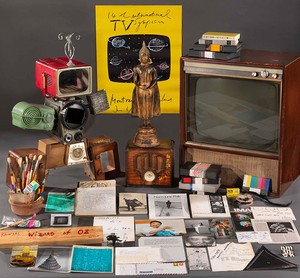
JSIt came about because we had been hosting artists in the conservation studio at SFMOMA for many years, and inevitably during the projects we worked on with them we accumulated materials that helped us to understand their practices—Jay DeFeo’s painting trowel, Katharina Fritsch’s pigments. We were keeping these materials in our desk drawers, we had no other structure in place, and at a certain point we admitted how uncomfortable we felt about that. Because everybody had been keeping these materials, we were able to gather them together and create an artist-materials archive. We weren’t trying to make a formal archive; we were trying to understand what this group of materials meant, not just to us but to the institution, and what we could be doing with it.
One of the very early commitments we made was that we wouldn’t treat these materials like an accessioned collection, with all of the rigors of traditional collection management. They were materials that had been lived with; they allowed us to understand materiality in a way that you only can when you’re able to touch them. So the artist-materials archive has as one of its foundational principles that you can touch everything. It functions to animate works of art in a different way.
The things that artists create day-to-day, the records and the documentation they create—those are the very things we would want to collect in an archive.
RSCan you give us an example of how the artist-materials archive has been used?
JSWhen we were preparing for the Eva Hesse retrospective that opened in 2002, we had the mold for Hesse’s work Sans II, a series of resin boxes that hang horizontally on the wall in a long row. We knew Doug Johns, who had helped her make that piece, and then it turned out that we knew where she’d bought the resins on Canal Street. We went to that shop, and the young man who had sold Hesse the resins had bought the company. He was able to help us approximate the resin formula she used, so we decided to mock up a section of Sans II. The section we made—Hesse had talked about “nothingness,” and when you saw the transparency of the resin pieces we made, you could understand that nothingness in a different way than by looking at the actual work, which has aged to an amber color.
RSWhat did you do with that mock-up?
JSWe kept it, but it was designated as a mock-up and catalogued in the artist-materials archive. When Sol LeWitt’s team came to create the wall drawing Loopy Doopy at the museum, we collected all the tools they used to create it. There are wire samples from Ruth Asawa, Robert Gober’s wax prototypes for some of his sculptures . . .
RSWould it be valuable for artists to document their materials and processes as part of their studio records? Is this something they could be thinking about as part of their archive?
JSI have no doubt that it would be useful, absolutely. The question is, on what occasion are you doing that? What makes it happen? On the occasion of an exhibition is a really good time to think about it. The next challenge is how you collect all of the materials and what you do with them once you have them.
HGMy advice to artists would be, Just do your best. If you feel like documenting a process, document it because you yourself are getting something out of documenting it, and you have the time and the resources to do it. If you can, save some of the material you used to make the work, or document an ephemeral piece you’ve made with photography or video—leave some clues behind.
RSCan I ask both of you to talk about the role of oral histories, and how you feel they play into an understanding of artists’ intentions and illuminate the archive?
HGIt’s something we try to do in archives held by institutions, but you often need to find somebody who has been trained in creating oral histories in order to do it well. It’s not to say that you can’t interview somebody and have it be meaningful without training, but often we try to be very formal about it. It can be part of the process of taking someone’s records into the archives, where an archivist interviews the person about their life’s work and history to put together a timeline, so that when they’re processing the papers they better understand how to organize the collection to make things findable. So these types of interviews serve a practical purpose.
RSJill, you’re on the board of directors of the organization Voices in Contemporary Art [VoCA], which conducts artist-interview workshops, among many other things. Could you tell us about that, and about the role of oral histories in the work you do?
JSYes, the VoCA program came about because we recognized that for most of us who have trained in some kind of research, conversations with artists have never really been part of the methodology; typically you don’t receive the same kind of formal training that you would for, say, conducting research in archives. Whether you call them oral histories or not—because sometimes that term is used to mean something very specific, as Heather just described—it has to do with understanding how you test a hunch, how you develop rapport, how you understand the contours of memory, how you frame a conversation so that you continue to draw out the ideas that each of you is interested in in that conversation. These are things that some people do naturally, but you can learn them in the same way that you can learn how to do archival research.
When it comes to digital records, emails, websites, and things like that, we have a refrain that’s fairly common in libraries and archives: locks, or “Lots of copies keep stuff safe.” Basically that’s a good rule of thumb.
RSBorn-digital materials are on the mind of many artists. What kind of advice would you give to artists about preserving digital materials as part of their archive?
HGWhen it comes to digital records, emails, websites, and things like that, we have a refrain that’s fairly common in libraries and archives: locks, or “Lots of copies keep stuff safe.” Basically that’s a good rule of thumb. Some artists like to make printouts of important emails. Email accounts: make sure you keep them alive, and that you dump your data if you’re going to close them. Digital records are quite fugitive—they can have something called bit rot, and the material on which that data sits can degrade. So typically you want to migrate the data every so often. For example, I have an external hard drive on which I kept all of my work on the workbook, and I have the date on which I bought it and I know that I need to change it out and to migrate that data after about three years, just to be on the safe side. You might decide to keep an old laptop, but store it somewhere where it’s dry and kind of cool, because later on technologists might be able to salvage some of the records on it. The idea is to keep it alive.
At Yale we just received a grant, jointly funded by the Andrew W. Mellon Foundation and the Alfred P. Sloan Foundation, to fund work to create emulation as a service. That’s a process in which native software is collected and then used to help access digital records from a long time ago. It’s really important, because it means that the integrity of the original is retained—if you’re looking at a record from 1998, for example, you’re experiencing that 1998 look and feel, it doesn’t change. Obviously that’s essential for digital artworks, but it can also be important for records, because looking at something as it was created is still, I think, really important to researchers—to experience the actual records that were created, and to have a sense of the time and place.
RSIn terms of making an artist’s archive publicly accessible—by placing it with an organization or institution, for example—what are some considerations to keep in mind?
JSI would say in some ideal world, keeping all of the materials and records together might make sense. Realistically, though, that is almost unattainable for most people. Keeping it all together and maintaining it in a way that would allow you to provide access is a really costly venture.
HGI’m trying to think of an example of something that gets close to that, and the one that comes to mind is the Nam June Paik Archive at the Smithsonian American Art Museum. That was an enormous undertaking.
JSYes, it’s a fantastic example. There are other models as well. I recall one instance when a number of museums were invited to an artist’s house and studio to look at the materials he left behind when he passed away. One of the institutions collected his pigments, which suited their artist-materials holdings. Another collected materials fashioned around practice—his in-process drawings, his painting tools, the jigs he used to make his frames—to accompany their collection of his paintings. And I realized then that the materials were placed where they would find a useful life. I really appreciated that, and I think it was a good outcome.
HGThose are interesting examples, because those types of materials aren’t traditionally considered part of an archive in an institution, so I think it goes back to your point earlier about having a very broad definition of what a studio archive includes.
I think there’s another piece to this, too, where artists might not see themselves in an archive because they’re lesser known, or because they’re from a marginalized community—any number of reasons. We try to explain that archival institutions collect a range of materials, and when you’re thinking about placing your records with an institution, you might try to think of places that have like collections. At Yale, for instance, we have a big LGBTQ collection. There just might be options for artists that aren’t so obvious. I hear it over and over again: “Well, my university didn’t want my records because they don’t collect artists’ archives.”
RSYes, there are numerous benefits of collections being housed in context with other archives.
HGI think it’s exciting, too, when an artist’s records end up in an archive at an institution such as a university or a museum while the artist is still alive, because then the records become accessible and the artist might have more exposure—a researcher may learn about them serendipitously in an archive.
RSDo you have any advice for artists in terms of building their archive now so that it feeds into their legacy later?
JSSome estate-planning advice I saw recently comes to mind: break a large task into its parts—here’s what you might think about doing in your thirties, here’s what you might think about doing in your forties, and so on. In other words, you don’t have to go all in at the age of thirty, but just think about a trajectory. Maybe that’s a less intimidating way for artists to approach their own work.
HGYes, I think it’s back to motivation, and taking the time to think about what’s important to you at that moment, and being able to carve out enough time to think about legacy. Maybe there were a couple of pieces that you created a couple of years ago that you didn’t document well, so you carve out a little time to do that. Or you decide that the correspondence is really important for this one project you did for the city, a public-art project, and you want to retain those records, so you take the time to make printouts, or to migrate that email correspondence to some other medium to keep it over time.
People often want to look forward or live in the moment, and they’re so busy doing what they’re doing that they don’t want to look back, but I do think it’s essential that people take the time. It could be monthly, it could be annually, it could be weekly, depending on where you are at your stage of life or career: it’s a gift to yourself to take the time and space to care for your studio archive.