Aria DarcellaYou two have been collaborating for 25 years. How has that grown?
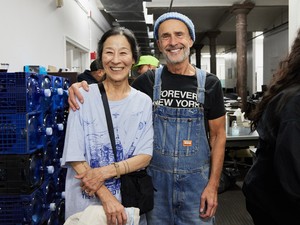
Stella IshiiIt has been quite spontaneous and organic. During visits to Creative Growth, it was simply, “I love this person’s work—I’d love to show it.” The first big show we did at our space in New York was a presentation of Judith Scott’s sculpture. Tom entrusted us to install it. Since then, we’ve had group shows and solo exhibitions. Also, we did a rug show—that was a lot of fun. Kim [Hastreiter] curated and helped us with that.
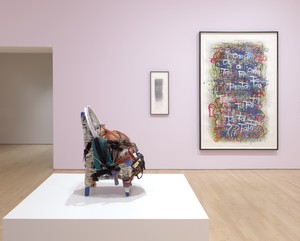
Tom di MariaJudith Scott had a one-woman show at the Brooklyn Museum a few years ago, curated by Catherine Morris from the Feminist Center and Matthew Higgs from White Columns. She was in the Venice Biennale in 2017. When I was hired at Creative Growth, my directive from the board was to have Creative Growth artists’ work be seen as contemporary art. Scott was a leading artist here at the time, but people in the art world didn’t know what to do with her work or weren’t that interested in presenting it at the time. People like Stella have a different open-mindedness around what’s new—in fashion, it’s always what’s new, what’s exciting, what’s different. As Creative Growth artists’ work does not respond in standard ways to art history because they’re self-taught artists, we looked for people outside of the traditional art–academic world who would see the work as interesting. Stella did that first show of Judith Scott, and years later when it came back into the New York galleries and museums, the art world claimed it. But it really came from fashion people and people with independent vision.
ADWhat do you think it is about the worlds of art and fashion that lead to building communities?
TdMI’m an academically trained artist, so I’m not an outsider. But even with that background, there’s a certain level of discomfort when you walk into a contemporary gallery, because you don’t know what you’re supposed to see or how you are supposed to respond or what questions you can ask. If you understand that an all-white painting is about painting and dismantling art historical structures, it makes sense. But if you don’t, you’re possibly lost. Fashion and self-taught art builds community because you can approach it on your own terms. You can see it without the pressure of right or wrong or needing an academic knowledge base to appreciate it.
SIThat feeling you get when you go into galleries—a lot of times you walk in like, “I’m supposed to understand this, but I don’t really.” Then you read the explanation, you read the history. Outsider art is much more of an emotional response. You don’t need an academic background.
ADCan you tell me about “Beyond Trend”? What is it, and when did it begin?
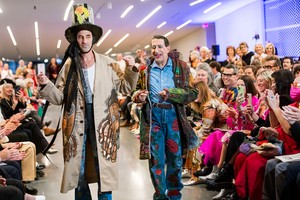
TdMIn our studios, a lot of artists started to make clothing—painting on clothing, hand-stitching, weaving. Ten years ago we thought we would feature clothing in our gallery. We do openings like an art center would. The artists said, “Why don’t we wear some of the clothes and do a little fashion show during the opening?” It just became a really fun, spontaneous thing. By the third year you couldn’t get into the building. People had their faces pressed to the glass to watch the artists, and we set up a runway in the studio. It became bigger and bigger. Right before COVID, we had like 3,000 people in the Scottish Rite Center in Oakland.
ADStella, how did you come to host these shows?
SIWe did it here last year, November. I think after COVID it wasn’t possible to do one in Oakland just yet. Creative Growth was looking for other ways to have the show, which is a fundraiser. It was going to happen in New York at one venue, and I believe that fell through. I said: “We have a big space. Maybe we can do it here.” There’s something about fashion shows that I’m not always comfortable with. There’s this separation of what’s on the catwalk and the audience—it’s just too great sometimes. When I attend fashion shows, I don’t feel like I’m really part of it. You’re looking and oohing and ahhing or you’re critiquing, but there’s a separation. If I’m going to do a fashion show for my own brand, I want it to be more inclusive, where the catwalk and the audience are more together, where there’s communication. So that’s how we did it here in the middle of the showroom on a very low budget. But it turned out to be a big success. I didn’t want any professional models. At Creative Growth, they don’t use professional models. It’s usually friends, family, and then the artists. So it was my staff, friends, and family. Tom ended the show—
TdMHopefully by design, not because everybody left!
SIWe opened the show with Soos [Packard], who was a professional model before she came to work with me at The News almost twenty years ago. We counted on her modeling experience to open the show! Many of the garments we received were things that we had sent to Creative Growth—blanks that were used as canvases. And when they came back, they all just had so much life. We had so much fun opening that box.
TdMHaving the work presented in New York on models, even if they weren’t professionals, who weren’t the artists themselves, really elevated it and changed it into a way of seeing an artist’s work in a gallery, not in their studio. There’s something very personal about an artist wearing their own clothes, and when you see it on somebody else, you really see it more as an object. So that was a shift. A positive one, but it really brought it into the art world and out of disability culture in some ways.
SIThe other thing that I really loved was that everything that came down the runway was for sale. As soon as the show was over, all the models—and this was very meticulously planned—put the outfit back. We sold not only the clothes but also works on paper, which doesn’t happen in a fashion show. You don’t turn around and then it’s like, “Okay, now we’re selling this.”
TdMTalk about breaking down the divide between the audience and models—okay, now you can buy the shirt off my back.
ADWhat does the SFMOMA exhibit mean to you?
TdMFor me, it’s the culmination of 25 years here. We talked about that early mandate from the board. Can we have the artists’ work be seen as contemporary? To really have this exhibition in the museum right now is in some ways beyond what was hoped for at the time. That’s really interesting in how it completes the first phase of bringing artists into the canon. The second phase, for me, is a social change, a civil rights advancement. The work you have to do to get your voice heard at the table. Sometimes you have to assimilate, sometimes you have to make concessions to get there. And then, once you’re there, you have to really say: “Thank you for inviting me to the dinner party. Now there are some things we have to talk about.” I think that’s the next phase for art and disability. We now see the work as contemporary—how do we not disguise or hide the culture of disability, which is inherent in many of the objects? The lived experience of many artists with disabilities is a powerful component of their work, and we want that to shine, too.