
A Foreign Language By Catherine Lacey: Part Three
The third installment of a short story by Catherine Lacey.
Winter 2025 Issue
The fourth and final installment of a short story by Catherine Lacey.
Though it hadn’t been late when they returned home from Nile’s place, Ismail and Tomasa went to bed and slept eleven hours, waking with the late winter dawn to hold each other in silence, watching the light change on the walls. Their bodies felt palpably new, like those days of adolescence when a girl wakes with a spine and legs that have lengthened in the night.
Ismail thought of the first boy he’d ever loved, dwelling on the day he’d told him that Ismail should never tell anyone what they’d done, what they were, and that they should count themselves lucky that they both liked girls, too. Yet neither of them had girlfriends; they only had each other and the woods, and this dangerous, uncertain thing. Ismail had wanted to object to the obligatory secrecy, but it was not clear where or to whom he could safely lodge such a complaint. He felt there should be nothing wrong with this, that it was just touch, a kind of peace that dissented from the obligatory violence of men.
For years he carried the memory of that boy and other boys around like a secret weight in his pocket, invisible and heavy and present at all times. When he told Tomasa about them it had lightened, a little, yet he still sometimes felt that he was walking around with his shoes untied.
But what was the problem, really? He’d been in love with two other women before meeting Tomasa—differently, each of them, though less steadily—and he knew that love, that truthful and stabilizing sensation in the space between one person and another, was no different with a man or a woman, except in the obligation to conduct one love in the shadows and the other out in the open. Yet love was a life form; it needed the sun.
There’d been a moment in the middle of the previous afternoon in Nile’s apartment when Tomasa had leaned back on her elbows and simply watched the two men, as if their pleasure was so intense that the fumes were enough to intoxicate her, too. She’d never clearly imagined what it might look like, what it might sound like—the sight of one man loving another—and though she felt herself to be a part of their encounter, so close she could touch them, she knew she was also outside of it, a liminality that felt somehow sacred.
She watched for two minutes, maybe three, until she crawled back to them and kissed them both, reverent in the presence of two men touching without harm, without anger. She studied Nile’s fists gripping the sheets to steady himself, and for a moment, Ismail pressed his chest against Nile’s back, and Tomasa knew this was the closest two human hearts could ever be.
And why did Dominica seem to be so near? Was it something about Nile’s arms braced on the bed—like the posture Dominica had taken above her that one night in the field—or was it the way Ismail had run his fingers through Nile’s hair? The gesture was brusque and tender at once, the way Dominica had always been.
At first Dominica kissed her the way close friends might kiss—with closed mouths and briefly—but over time there was a natural tendency to linger, and in those charged moments in a bedroom or in the forest or the field, both girls thought (silently and separately) that perhaps their whole lives were changing.
Then one afternoon after school, Dominica insisted that this wasn’t how girls should be; a formality grew between them, during which Tomasa thought obsessively about Dominica’s mouth. And what did a kiss between women mean, anyway? With a man it was something quite serious, maybe even dangerous, or something marital, permanent, a gateway to a life with children and a household, the end of childhood. But between two women a kiss was only what it was—only, what was it?
Then, a few weeks after Tomasa was engaged to that man, on a night so clear they felt almost drowned by all the starlight, the girls laid in silence in that field between their houses until Dominica took Tomasa by the neck, her fingers clawing through Tomasa’s hair, and kissed her, ruthlessly. Tomasa had never felt so melted and yet so solid as that moment, with the full force of Dominica’s body against her own. Her life was melting, and her hometown was melting, and her dead parents were melting, and the marriage that had been arranged for her like a gallows was also melting, and the reality of this moment with Dominica became a monument to itself, the clearest fact on earth.
And once you’re wed that will be the real end of this, the end of being a girl, Dominica had explained to her, holding her hand and speaking as a father might speak. You’ll be a mother. You’ll have to live as a mother. That is how the world is.
Tomasa cried as Dominica repeated her clinical advice, and they stayed together in the tall grass until dew settled on their skin. Then they parted like ghosts, each following an invisible current that took them where they had to go.
But as Tomasa walked back to the only home she’d ever known, she knew her future was turning ever more heavy and human. She’d been promised away like a horse. Her husband-to-be was even older than her older brother, and he frightened her as most men frightened her. But this was the only way, it seemed, she and her brother could escape the complications of their orphanhood. Think of your children, her brother had told her when she’d confessed her hesitance, think of the life they will have. But her unborn children did not feel as inevitable to Tomasa as they seemed to be to him.
That night she’d expected to tiptoe though the dark toward her cot, trying not to wake her brother, who must have been already asleep, but when she opened the door she saw her brother and her betrothed sitting at the kitchen table, an oil lamp burning between them.
You’ve kept me waiting for hours, the man said. Her brother lowered his face. Where have you been?
She confessed to looking at the stars with Dominica, feeling guilty yet certain that no man could ever understand how a whole world had just erupted between the two girls.
But you are a bride, a grown woman; only little girls look at stars.
Galileo wasn’t a little girl, she objected, enjoying every syllable of that name, the long-dead man she’d first learned about from her friend.
His hand swung back and slapped her, hard, knocking a drop of spit from Tomasa’s mouth that must have been at least partially Dominica’s.
Do not correct me. You are never to correct me, he said. She held her burning cheek and stared at the floor.
I came here, he said, spacing his words out as if they were an important decree, to read you the poem I wrote for you.
And so he read it, though Tomasa could not understand it through the ringing in her ears. It seemed to go on for hours, but it must have only been minutes, and afterward her brother thanked the man, and apologized for his silent sister.
You must keep her in line until she is my responsibility, the man said to her brother, as if Tomasa was not in the room at all.
There was a look of rage on her brother’s face, but for whom or what was this rage?
When the man turned to Tomasa to say his goodbye, she bowed to him on instinct, and felt an obedience so profound that it was as if this man was time itself, and she had no choice but to submit herself to him, as he would take her into the future regardless of her submission. She was convinced this must be the seriousness of true love, a wifely love, taking over her soul, but as the wedding came closer this feeling fractured. Her jaw made clicking noises. She didn’t want this life.
But then, years later, as she lay in bed beside Ismail, her husband, on his knees holding the hips of this young man, and as she studied Nile’s pained yet peaceful face, and as she ran a hand down her own body so near to theirs, all of this—the memory of that violent night, and the ache of missing Dominica, and other violent nights, and her brother’s averted eyes—all of that old pain seemed to evaporate, to entirely cease. There are rare hours in this life that can, as if by magic, reorient the past.
Nile called to ask if he could stop by that afternoon for his bike, but when he arrived Molasses recognized him as the enemy and hissed and threw his claws in such a rage that the three of them locked themselves in the bedroom while the cat screamed and thrashed at the door. They held onto each other as if they were children hiding from other children in a game, or as if the cat really were that monster we spend our childhoods anticipating, or searching for, or imagining. They were quiet for a while, no one quite sure of what to say, the bright shadow of yesterday still cast over them, then one of them tilted their face into the neck of another and the previous afternoon reprised for some hours, punctuated by the cat’s occasional objection.
Afterward the three lay in bed and both Ismail and Tomasa asked Nile questions about his family, and why he’d moved to this city, and what did he want to do with his life. They were all three at the age where it occasionally still seemed that their lives were ahead of them, though it was becoming clear that their lives were already well underway. Nile said he still wasn’t sure; he was interested in so many things, building things, studying things, and he loved poetry—reading poems or listening to poets read their work, even the bad poems, even the terrible ones.
Ismail asked if he’d ever written a poem, and Nile said he sometimes had a feeling that seemed like a poem, but that it seemed better to leave it as a feeling.
What kind of feeling makes a poem?
The only poems Tomasa had ever heard were the ones that Dominica read to her from the three cloth-bound books she kept in her bedroom, and that man’s so-called love poems, while Ismail knew nothing of poetry except the religious sort from his childhood.
I don’t think I could ever quite say, Nile answered. Maybe a poem is always a failure to catch the feeling.
Neither Tomasa nor Ismail had any idea what he meant by this, but they nodded and somehow the subject moved to the idea of children, that kind of future.
How could I want children, Nile asked, when I’m still not sure if I ever wanted to be anyone’s child?
Neither Tomasa nor Ismail wanted them either, but the old woman who often leaned out her window on the ground floor asked them almost every day when she could expect a baby in the building, even after Tomasa told her, repeatedly, that there were no such plans.
Babies do not care about our schedules, the woman said, and don’t be so pessimistic! A mother should never retreat into pessimism.
Nile grinned at this, and Tomasa, seeing his face from this strange angle, remembered what she thought of him when they first met during those early days in this country—that it was so easy to talk to him, but difficult to know if anything was getting through. Did she still feel this way? It was all very familiar, this coupling between the three of them, and it was all so strange.
Tomasa and Ismail watched Nile bike away that evening from their building’s front stairs, and just before he rounded the corner he lifted his hand from the bars to wave once at them; he did not have to turn his head to know they were watching.
The old woman leaned out her window—Who was that?
Our friend, Ismail replied.
Over the weeks and months of that winter and early spring, it seemed they’d crossed an invisible boundary behind which the rest of the world continued to live. It wasn’t just when they were with each other that it seemed so—though it was true that when they were in cafés or on walks together that the world moved differently around them—but when they were each alone it was as if some kind of mental restraint they’d been previously unaware of had been removed. Ismail wrote long, detailed letters to his mother, and Tomasa began singing along to the radio even when she didn’t know the words, and Nile wrote poems in secret, then threw them with pleasure into his fireplace.
They did not always go home together—and sometimes it seemed enough to just read books alongside each other, or visit a museum, or go to the cinema—but over time their bodies grew more fluent in this new choreography, and they began to innately understand the soundtrack of the others’ breathing. Was there anything wrong with this? They each sometimes suspected that they’d gotten more than their fair share of the pleasure and joy in this life, and yet there was no law against it, no law that they acknowledged.
In Rin’s apartment the portraits of Ismail and Tomasa and Nile still hung, though they were rarely noticed amid the others. Rin had fallen ill and now his home felt more like an unpopular museum than the decadent salon it had once been. Ismail was the one who told the other two the news. He’d run into the analyst in the street, with the redhead once again at her side, and the analyst had bluntly reported that Rin was dying, that people were paying their last respects.
Nile and Tomasa and Ismail went together to call on him, and as they stood in Rin’s bedroom—a nurse at his side and a thousand amber pill bottles scattered across the dressers and nightstands—Rin insisted that, in fact, he was feeling quite well, that this whole episode should be over any day now and he’d get back to his work. This did not seem to be the case, but the three said how glad they were to hear it, how he did look quite well. Rin’s wrinkles seemed much deeper in the afternoon light, and his skin was pale enough to seem bloodless.
The three of you, Rin said, squinting at them and breathing very slowly as a new smile came over his face, you’re all fucking, aren’t you?
The nurse gasped and blushed, and when the doorbell rang she bolted from the room to attend to it.
You don’t have to answer, Rin said to their wide-eyed expressions. But it’s quite clear. The dying can see everything—oh, not that I’m dying, but I’m close enough, at least for now.
Ismail murmured something about how they’d all become quite close ever since the night of the Carlos party, and Tomasa said nothing except what the look on her face said, but Nile was the one to confirm that Rin was right, nodding and affirming it as if it were a simple matter, and maybe it was.
Carlos and I had a boyfriend for a time. It was, perhaps, the most difficult and thrilling time in our lives.
Nile wanted to clarify that, in fact, he held no title in the couple’s life, and that there were no obligations nor any particular name for what they were doing, but before he could form these sentences he felt uncertain of whether this was true.
Rin lifted his camera from where it rested on the blanket, and took one photograph of the three, though his hands were trembling, and it was difficult to know if his settings were quite right, and he suspected he wouldn’t have time to develop the film in this lifetime.
Perhaps this was the moment—being framed, being seen—that first called everything between them into question. There had been little thinking and absolutely no discussion of what, precisely, they were. They spoke of other things, of everything, and a blazing faith had taken over, a faith in the faithful translation from what they felt about each other into action. They’d all started bringing each other gifts and leaving little notes hidden in each other’s apartments. Nile had been keeping Tomasa’s favorite tea in his kitchen though he didn’t like the taste of licorice and never drank it himself, and Ismail stopped at every junk shop he passed, searching for the variety of antique brass button engraved with ships, the ones that Nile collected compulsively. But it was true they had no name, no language for each other, and Rin’s camera called attention to a piece of language that had never been formed. The fact that they did not seem to need this piece of language was somehow obscured by the knowledge that it was absent.
That evening the three of them went to a chamber-music concert in an abandoned and half-destroyed cathedral on the edge of town, and as the second movement began, Nile’s eyes flushed with tears, and as the last movement was coming to a close, he was hardly able to hold back sobs. Ismail had noticed this mid-concert, and put an arm around Nile’s shoulders, and when the concert ended, the three stayed seated, Tomasa holding Nile’s hand, as the audience, enlivened by the performance, flooded outward.
I don’t know what it is, Nile said eventually, wiping his eyes. He went home alone.
What it was: the cellist in the ensemble that night had looked a lot like the last and clearest memory Nile had of his father, and though Nile did not yet know it, his father had recently died in a hailstorm when one abnormally large ice pellet struck his head and knocked him to the ground where he fell unconscious and drowned in the cold slush, just out of view, in an alley between two pubs full of people he’d known all his life. A telegram had been sent with this news for Nile, but a typo had prevented it from reaching him.
Nile’s mother, facing her prodigal son’s lack of response, assumed the rift between them had remained intact, even in the face of his death. This was not so, but she will live with this story until she gives in and writes her son a letter in mid-April, and upon reading it Nile will go immediately to the train station and begin the long journey of trains and boats and buses to his family’s small village. And yet, several technical delays and a mudslide and another hailstorm will slow Nile’s journey from its usual two days to four and a half days, and once Nile reaches his village, a place he hasn’t seen in many years, he will fall ill and be forced to stay there much longer than expected, and while he is under the spell of a fever one night he will become convinced that there was no Tomasa and Ismail, that that love was all a figment, a fantasy, a delusion.
But before that April letter comes revealing what Nile does not yet know, there will be several more meals and walks and trips to the cinema and afternoons in bed, their bodies entangled in every possible way, and hours spent talking in the dark about the tiniest details of their lives. Tomasa and Ismail will sometimes discuss how Nile seemed remote or distracted that day, and sometimes Nile will wonder whether there was anything out of balance between Ismail and Tomasa, but mostly their hours together will be spent in this unlikely bliss. A natural comfort is already developing between them, and they’ve gotten used to shuffling the cat, Molasses, into the bathroom before Nile comes over.
In late March something unusual happened. Tomasa received a letter from Luci, though it had been some time since she’d gotten news from home. Dominica, earlier in the year, had nearly drowned and as a result had developed some kind of illness in the brain. Luci had not been allowed to see Dominica in person—her husband was a tyrant—but she’d heard that Dominica was no longer herself.
Tomasa had wept athletically as she sat in her living room, the letter in hand, and Ismail suggested maybe they should skip dinner with Nile that night, but she wanted to go, she wanted to tell him. And yet when she told him how she’d learned that Dominica could barely speak now, how she’d forgotten her children’s names, how she’d nearly died, Nile did not remember who Dominica was.
Remind me—was she the witch?
Under the table, Ismail put his hand on Tomasa’s knee.
She retold the story of Dominica, and the witch, and the man, and the night she left. Nile seemed to remember it all then, and Tomasa tried hard not to hold this against him, not to feel betrayed that he didn’t remember these crucial details that she’d told him months prior.
Days later, Rin died, and the next day Po-Boy II followed his master wherever he went, but in the first week of April, just before Nile would vanish without a message or a phone call, he invited Tomasa and Ismail to a poetry reading at a bar in his neighborhood. There were blossoms on the trees and none of them knew, as no one ever knows, how limited their time together really was.
Thirty-seven poets, one after another, read their poetry that night, and every time a poet finished, there was a wave of what seemed like genuine applause. After every fifth poet there was a break for more cocktails and gossip and flirtation.
Almost everyone in the room was a poet, too, except for Ismail and Tomasa and (as far as anyone knew) Nile. The poets were still busy gossiping about the play with the boat, which had been written by one of the poets in the room and produced by a few others, but much of what was said about the play was that its commercial success was evidence of its lack of depth, and another poet claimed to have been violently seasick in the months since she’d seen it.
At the end of the night there was a poetry duet performed by two poets who wrote all their poems together, aloud, in a room they’d painted entirely red—from the ceiling to the floor. These poets were beloved by all the other poets, and even the poets who despised the poet pair still admired what they were able to pull off, what was possible when one poet was able to add himself to another poet.
I could never be a poet, Ismail whispered to Nile in the wild din of the night’s final applause. Too much clapping.
After so many hours of so much poetry, the crowd flooded outward into the street to smoke cigarettes and break each other’s hearts, and the three lovers stood close to one another, smelling each other, touching each other’s wrists, not knowing they’d be together for not much longer. Ismail wanted to know what the poems meant, and Tomasa wanted to know whom they’d been written for, but Nile did not have any questions about the poems, as he did not lack a single thing in his life.
A light-brown dog not wearing a collar approached them on a sidewalk, hurrying, then walked straight ahead with palpable intent, somewhere to go, something quite specific to do.

Catherine Lacey is the author of The Möbius Book (2025), and of five other books including Biography of X (2023). She has earned a Guggenheim Fellowship, a Whiting Award, the New York Public Library’s Young Lions Fiction Award, the Brooklyn Library Prize, and a Lambda Literary Award, and her work has been translated into a dozen languages.
The third installment of a short story by Catherine Lacey.

The second installment of a short story by Catherine Lacey.

The first installment of a short story by Catherine Lacey.
Helen Oyeyemi continues her four-part story cycle with the second installment, “At the Auspicious Hour.”

As part of a growing posthumous appreciation of the feminist writer Elaine Kraf, her previously unpublished novel Memory House was released by the Modern Library. Here, Alana Pockros explores Kraf’s iterative worlds.
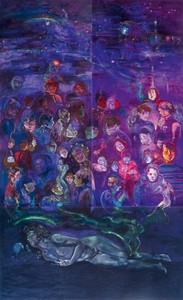
The most recent edition of Picture Books, an imprint organized by Emma Cline and Gagosian, pairs Mary Gaitskill’s novella STAUF: A Tragedy with Jill Mulleady’s painting The Shift. In celebration of this forthcoming publication, Gaitskill and Mulleady discuss the myth of Faust, good and evil in the digital age, and the channeling of raw matter into art.

Sally Mann joined novelist Amor Towles in a conversation about her widely celebrated new book, Art Work: On the Creative Life (2025), at an event hosted by the New School and the Strand in New York. Published by Abrams, Art Work is about the challenges and pleasures of the creative process. Its mix of illuminating stories, practical advice, and life lessons, illustrated throughout with photographs, letters, and journal entries, offers insights into Mann’s own experience of making art. Here, Mann and Towles speak about the writing process, historical ghosts, and fortunate mistakes.
The Quarterly’s 2026 fiction writer, Helen Oyeyemi, kicks off her series with the first installment, “Introduction to a Genie (of Sorts).”

Francesca Wade’s new biography of Gertrude Stein sifts through the writer and collector’s layered life and legacy. Here, Wade speaks with the Quarterly’s Gillian Jakab.

We present the final installment of a four-part short story by Arinze Ifeakandu.

We present the third installment of a four-part short story by Arinze Ifeakandu.
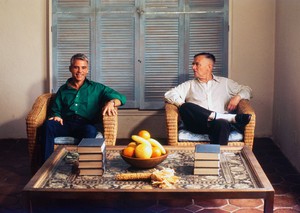
Katherine Bucknell, previously the editor of a four-volume edition of Christopher Isherwood’s diaries, has now published Christopher Isherwood Inside Out, an intimate and rigorous biography of the celebrated writer and gay cultural icon. Here she meets with Josh Zajdman to discuss the challenges and revelations of the book.