Now available
Gagosian Quarterly Summer 2026
The Summer 2026 issue of Gagosian Quarterly is now available, featuring Ellen Gallagher’s Fast-Fish and Loose-Fish (2026) on the cover.
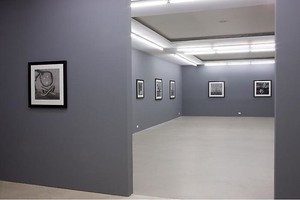
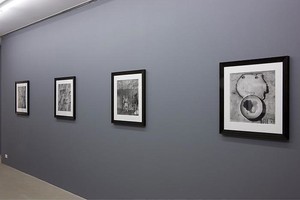
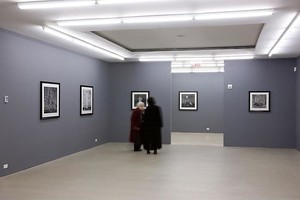
Roger Ballen: Boarding House
Installation view, photo by Robert McKeever
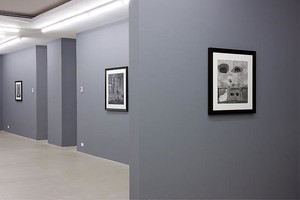
Roger Ballen: Boarding House
Installation view, photo by Robert McKeever
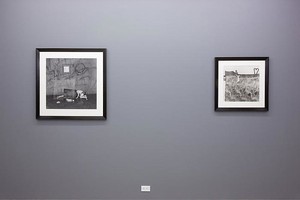
Roger Ballen: Boarding House
Installation view, photo by Robert McKeever
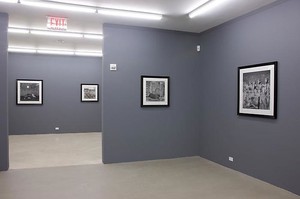
Roger Ballen: Boarding House
Installation view, photo by Robert McKeever
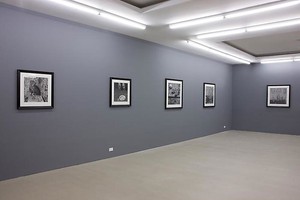
Roger Ballen: Boarding House
Installation view, photo by Robert McKeever
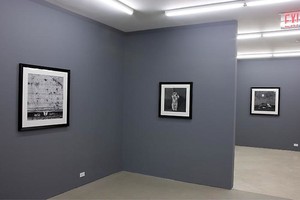
Roger Ballen: Boarding House
Installation view, photo by Robert McKeever
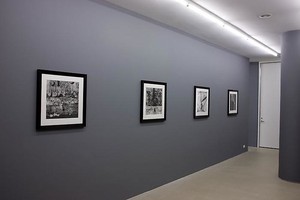
Roger Ballen: Boarding House
Installation view, photo by Robert McKeever
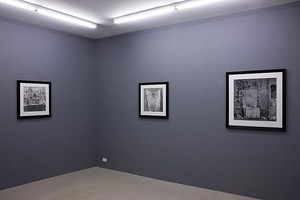
Roger Ballen: Boarding House
Installation view, photo by Robert McKeever
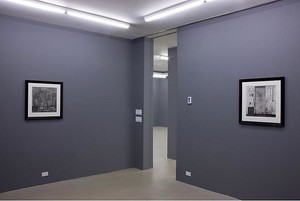
Roger Ballen: Boarding House
Installation view, photo by Robert McKeever
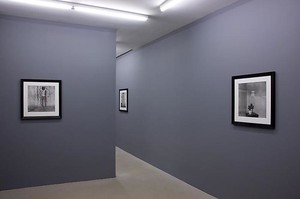
Roger Ballen: Boarding House
Installation view, photo by Robert McKeever
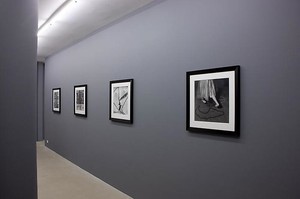
Roger Ballen: Boarding House
Installation view, photo by Robert McKeever
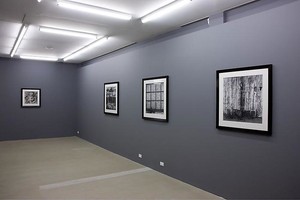
Roger Ballen: Boarding House
Installation view, photo by Robert McKeever
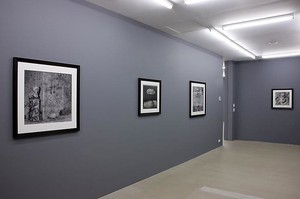
Roger Ballen: Boarding House
Installation view, photo by Robert McKeever
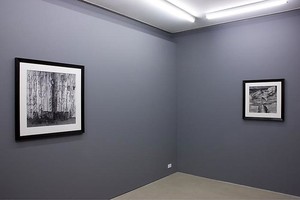
Roger Ballen: Boarding House
Installation view, photo by Robert McKeever
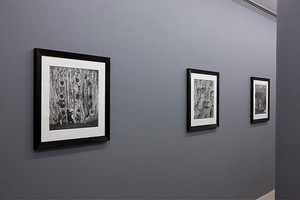
Roger Ballen: Boarding House
Installation view, photo by Robert McKeever
Roger Ballen: Boarding House
Installation view, photo by Robert McKeever
Roger Ballen: Boarding House
Installation view, photo by Robert McKeever
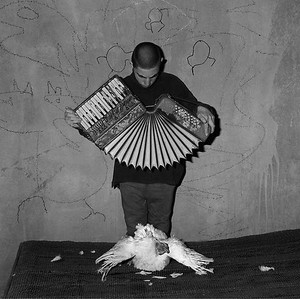
Roger Ballen
Eulogy, 2004
Gelatin silver print, 19 11/16 × 19 11/16 inches (50 × 50 cm), edition of 10
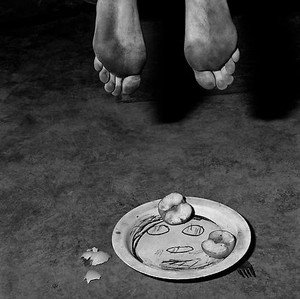
Roger Ballen
Fragments, 2005
Gelatin silver print, 19 11/16 × 19 11/16 inches (50 × 50 cm), edition of 10
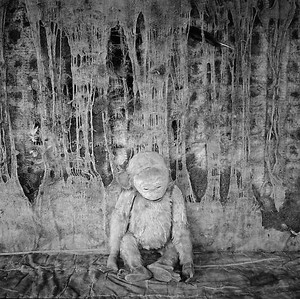
Roger Ballen
Pathos, 2005
Gelatin silver print, 31 ½ × 31 ½ inches (80 × 80 cm), edition of 10
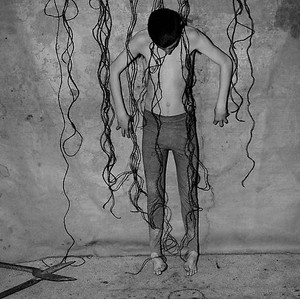
Roger Ballen
Cut loose, 2005
Gelatin silver print, 19 11/16 × 19 11/16 inches (50 × 50 cm), edition of 10
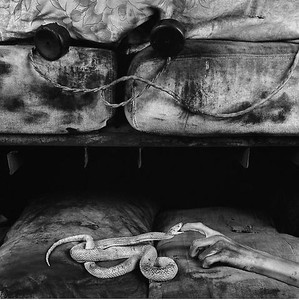
Roger Ballen
Bite, 2007
Gelatin silver print, 31 ½ × 31 ½ inches (80 × 80 cm), edition of 10
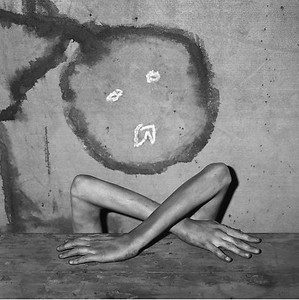
Roger Ballen
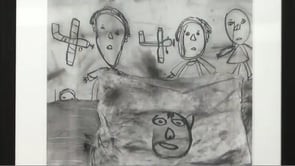
Mimicry, 2007
Gelatin silver print, 19 11/16 × 19 11/16 inches (50 × 50 cm), edition of 10
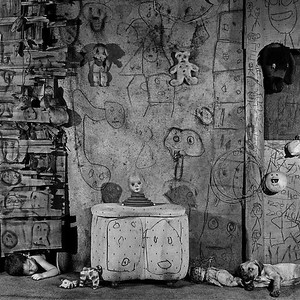
Roger Ballen
Boarding House, 2008
Gelatin silver print, 31 ½ × 31 ½ inches (80 × 80 cm), edition of 10
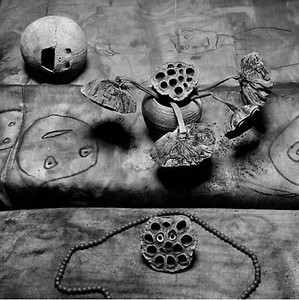
Roger Ballen
Seed pods, 2008
Gelatin silver print, 31 ½ × 31 ½ inches (80 × 80 cm), edition of 10
It is difficult to explain this place except that I think it exists in some way or another in most people's mind.
—Roger Ballen
Gagosian Gallery is pleased to present "Boarding House," a new series of photographs by Roger Ballen taken between 2004 and 2008.
Ballen applies principles of sculpture, drawing, and painting to the psychologically evocative environments depicted in his theatrical photographs. Working exclusively in black and white, he examines the core sensations of the human psyche, based as much in fact as in fiction. Both a continuation and advancement of themes in his earlier series Outland (2001) and Shadow Chamber (2005), Boarding House emphasizes the absence of human presence and features obscured bodies, animals and hand-drawn faces whose minimal identifying characteristics initiate an immediate, visceral response. The Boarding House is a three-story warehouse hidden among the gold mines of Johannesburg and inhabited by disenfranchised, impoverished families, fugitives and witch doctors. Lacking walls, many rooms are separated only by rugs, blankets, and metal sheets. In his visually complex tableaux, Ballen forgoes a strictly documentary approach and casts further doubt on their veracity, intervening to alter each room, and collaborating directly with the subject to create the sculptures and drawings that appear in the photographs .
Ballen's unique artistic vocabulary, which he composes using a square format, creates visual ambiguities as universal metaphors of the human condition. A fixed truth in the Boarding House exists only within the viewer's psyche, as if the mind is playing tricks. In Pathos (2005), there is an apparent lack of human intervention, yet haunting evidence of remains 'left behind' where a ragged clothed monkey is placed against a threadbare rug. In Mimicry (2006), a child's naïve drawing traces the subject's arms. Paradoxical relationships wind through the series and culminate in Fragments (2005), where a plate of apples inscribed with a hand-drawn face sits below a pair of hovering feet, suggesting either a macabre end or a miraculous ascension.
Roger Ballen was born in New York in 1950 and lives and works in Johannesburg, South Africa. His work is represented in museum collections including the Victoria and Albert Museum, London, Centre Pompidou, Paris, and the Museum of Modern Art, New York. His work has been the subject of exhibitions at international institutions including the State Museum of Russia, St. Petersburg, 2004; Bibliotheque National, Paris, 2006; Deichtorhallen, Hamburg, 2007 and La Triennale di Milano, 2009.
The Summer 2026 issue of Gagosian Quarterly is now available, featuring Ellen Gallagher’s Fast-Fish and Loose-Fish (2026) on the cover.

In this video, Jenny Saville sits down inside her first major exhibition in Venice to discuss how the great Venetian artists of the past and the city’s heritage influence her work. The show brings together more than thirty canvases and works on paper from the 1990s to the present, tracing the development of her practice, which is deeply rooted in the history of painting.
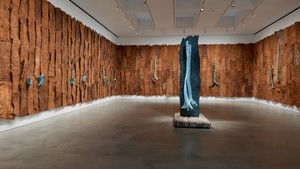
On the occasion of his exhibition The Reflection of Bronze at Gagosian, New York, Giuseppe Penone and curator Adam D. Weinberg sit down to discuss the genesis of, and their collaboration on, the show.
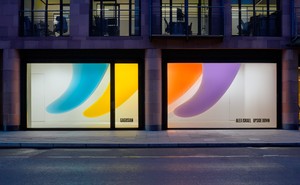
Ahead of Alex Israel’s exhibition of four new Fin sculptures at Gagosian, London, the artist spoke with Susan Casey, author of The Wave: In Pursuit of the Rogues, Freaks, and Giants of the Ocean (2010), about the ocean, surfing, and Los Angeles.
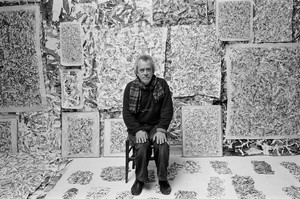
On July 9, Simon Hantaï: the last studio opens at Gagosian, Gstaad. Curated by Anne Baldassari, the show comprises sixteen of the artist’s dernier atelier (last studio) paintings of 1982–85. The exhibition is accompanied by an illustrated catalogue, copublished by Gagosian and Skira, which features an essay by Baldassari and an extensive portfolio of previously unpublished photographs by Édouard Boubat. Here, we share the introductory chapter from the publication.
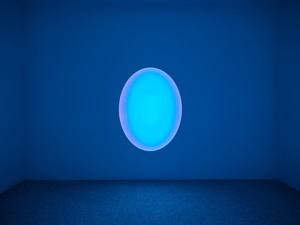
An exhibition at Gagosian, Hong Kong, brings together three of James Turrell’s Glasswork pieces along with site plans, photographs, and models of his Skyspaces and Roden Crater. Here, Alice Godwin explores the history of the Glassworks and their relationship to the artist’s wider practice.

On April 16, the Institute of Contemporary Art, Boston, opened the first midcareer survey of Derrick Adams’s multidisciplinary practice. Covering over twenty years of work, the exhibition, titled View Master, brings together the artist’s painting, sculpture, collage, performance, and video, as well as a vibrant new commission created for the museum’s façade. Ahead of the opening, Adams met with Tessa Bachi Haas, cocurator of the survey, to discuss his formative experiences with television, the impact of his work in arts education on his practice, and the importance of taking a more complex, more joyful, and more expansive approach to Black American life and culture.

Adam D. Weinberg has been working with Giuseppe Penone on an exhibition of the artist’s new sculptures, The Reflection of Bronze, that opens at Gagosian, New York, on April 22. The works explore the character and possibilities of bronze. Here, Weinberg considers Penone’s enduring engagement with the alloy and addresses the conceptual underpinnings of the exhibition’s three-room structure.

Jeff Koons tells Alison McDonald about his appreciation for the pioneering artist and thinker Marcel Duchamp.
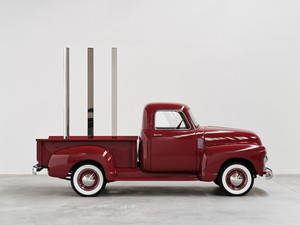
The Singular Experience at Gagosian’s Le Bourget gallery is the largest exhibition of Walter De Maria’s work in France in several decades. Organized by Donna De Salvo, senior adjunct curator at Dia Art Foundation, the exhibition marks the first time De Maria’s final sculpture, Truck Trilogy (2011–17), is being shown outside of the United States. Here, De Salvo speaks with artist Lucy Raven about her evolving kinship with De Maria and more.
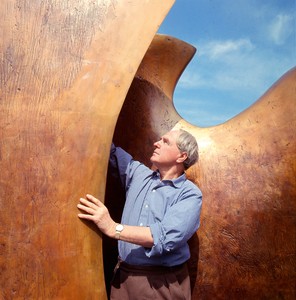
Laura Bruni writes about a major exhibition celebrating the work of the British sculptor Henry Moore at the Royal Botanic Gardens, Kew, London.
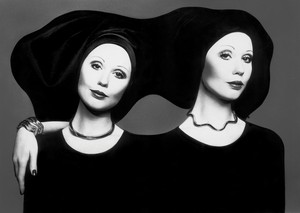
The exhibition Pomellato, Le Joaillier Révolutionnaire opened at Palais de Tokyo, Paris, on June 24. The Italian jewelry house’s trailblazing advertising campaigns—created by some of the most consequential names in photography—act as the narrative arc of the exhibition, curated by Alba Cappellieri. Here, Sarah Godfrey tracks Pomellato’s history, speaks with Cappellieri about what drew her to this project, and examines some of the key photographs from the show.