Now available
Gagosian Quarterly Summer 2026
The Summer 2026 issue of Gagosian Quarterly is now available, featuring Ellen Gallagher’s Fast-Fish and Loose-Fish (2026) on the cover.
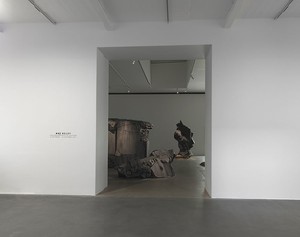
Mike Kelley: Exploded Fortress of Solitude
Installation view, photo by Mike Bruce
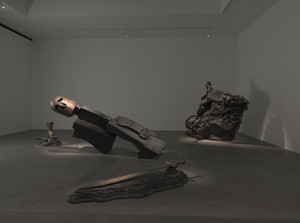
Mike Kelley: Exploded Fortress of Solitude
Installation view, photo by Mike Bruce
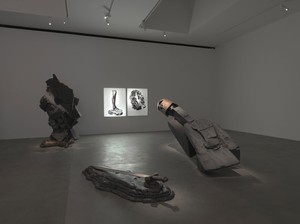
Mike Kelley: Exploded Fortress of Solitude
Installation view, photo by Mike Bruce
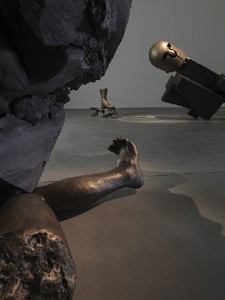
Mike Kelley: Exploded Fortress of Solitude
Installation view, photo by Mike Bruce
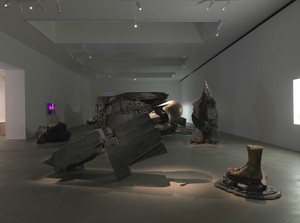
Mike Kelley: Exploded Fortress of Solitude
Installation view, photo by Mike Bruce
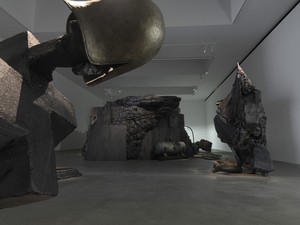
Mike Kelley: Exploded Fortress of Solitude
Installation view, photo by Mike Bruce
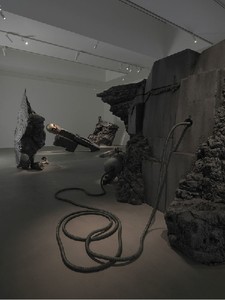
Mike Kelley: Exploded Fortress of Solitude
Installation view, photo by Mike Bruce
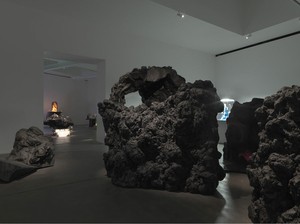
Mike Kelley: Exploded Fortress of Solitude
Installation view, photo by Mike Bruce
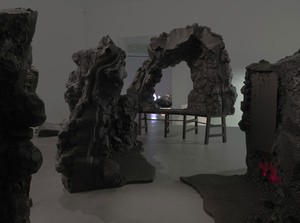
Mike Kelley: Exploded Fortress of Solitude
Installation view, photo by Mike Bruce
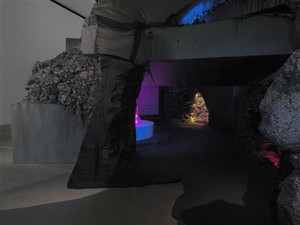
Mike Kelley: Exploded Fortress of Solitude
Installation view, photo by Mike Bruce
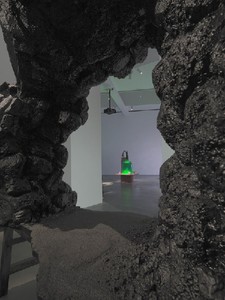
Mike Kelley: Exploded Fortress of Solitude
Installation view, photo by Mike Bruce
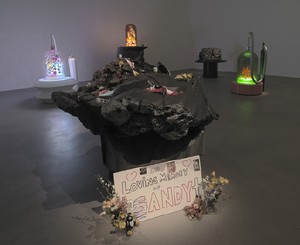
Mike Kelley: Exploded Fortress of Solitude
Installation view, photo by Mike Bruce
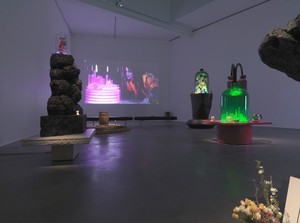
Mike Kelley: Exploded Fortress of Solitude
Installation view, photo by Mike Bruce
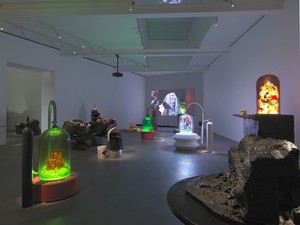
Mike Kelley: Exploded Fortress of Solitude
Installation view, photo by Mike Bruce
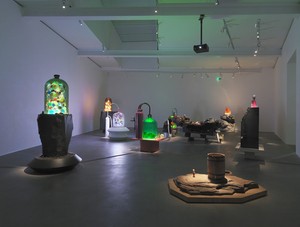
Mike Kelley: Exploded Fortress of Solitude
Installation view, photo by Mike Bruce
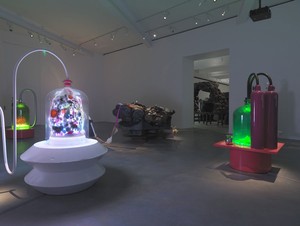
Mike Kelley: Exploded Fortress of Solitude
Installation view, photo by Mike Bruce
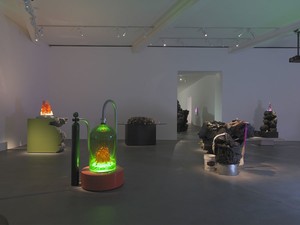
Mike Kelley: Exploded Fortress of Solitude
Installation view, photo by Mike Bruce
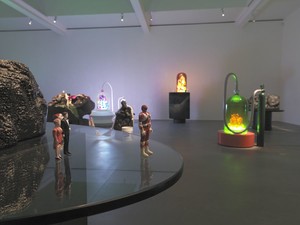
Mike Kelley: Exploded Fortress of Solitude
Installation view, photo by Mike Bruce
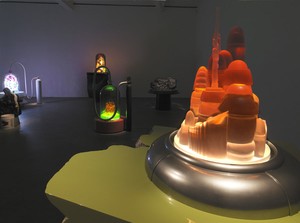
Mike Kelley: Exploded Fortress of Solitude
Installation view, photo by Mike Bruce
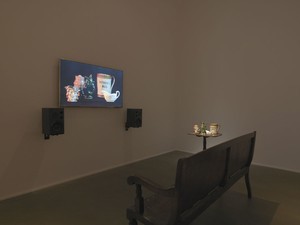
Mike Kelley: Exploded Fortress of Solitude
Installation view, photo by Mike Bruce
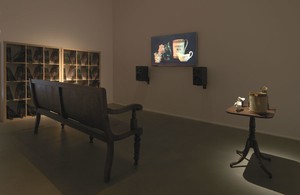
Mike Kelley: Exploded Fortress of Solitude
Installation view, photo by Mike Bruce
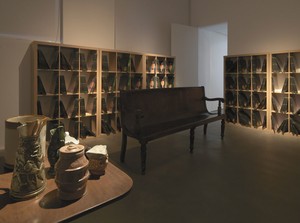
Mike Kelley: Exploded Fortress of Solitude
Installation view, photo by Mike Bruce
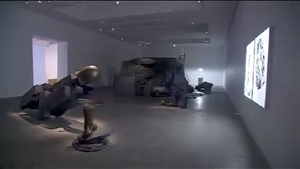
Installation video
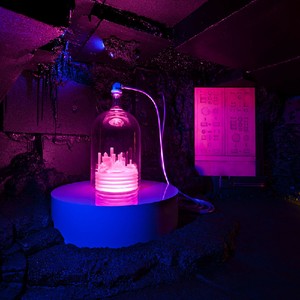
Mike Kelley
Kandor 10B (Exploded Fortress of Solitude), 2011
Mixed media installation, Overall (approx): 9' 6" × 50' × 75' (2.9 × 15.2 × 22.9 m)
© Mike Kelley 2011, photo by Fredrik Nilsen
Gagosian Gallery is pleased to present sculptures and a large-scale installation by Mike Kelley.
The Kandors series, which Kelley initiated in 1999, are sculptural depictions of Superman’s birthplace Kandor. The popular Superman story recounts the adventures of an alien being sent to Earth as a baby to escape the total destruction of his home planet Krypton. However, it turns out that Kandor was not, in fact, destroyed. Shrunk and bottled by a villain, the futuristic city was later rescued by Superman and protected under a bell jar in his sanctuary, the Fortress of Solitude. For almost a quarter-century in comic-book time, Kandor and its miniature citizens survived in Superman’s care, sustained by tanks of atmosphere, a constant reminder of his lost past and a metaphor for his psychic disconnection from his adopted planet.
In examining the extensive archive that was amassed of Kandor’s depiction in Superman comics, Kelley was struck by the inconsistent nature of its ongoing representation. Choosing twenty diverse examples from the myriad two-dimensional renderings of the sci-fi city, Kelley has created three-dimensional Kandors and variant works. In these he explores the formal properties of reflectivity and translucency by casting the Kandors in colored resins, setting them in tinted glass bottles, and illuminating them like reliquaries in specifically designed settings.
In the current exhibition, Kelley has shifted his formal investigations to monumental sculptural problems, depicting Superman’s Fortress of Solitude as a sort of bunker in ruins. The centerpiece Kandor 10B (Exploded Fortress of Solitude) is a pile of dark boulders and slabs forming a cave with a quarry-like foyer made from faux black rock and built on a scale that invites the viewer into the forbidden fortress. Set within the cave’s inner recesses is a glowing rose-colored city-in-a-bottle. The same black rock forms organic plinths that support Kandor city sculptures, as well as a series of “satellite” elements that surround and echo Kandor 10B’s broken ramparts. The satellites are paired with sculpted metallic body parts recalling fragments of classical sculpture, and other materials, evoking public war memorials and related edifices.
The Summer 2026 issue of Gagosian Quarterly is now available, featuring Ellen Gallagher’s Fast-Fish and Loose-Fish (2026) on the cover.

In this video, Jenny Saville sits down inside her first major exhibition in Venice to discuss how the great Venetian artists of the past and the city’s heritage influence her work. The show brings together more than thirty canvases and works on paper from the 1990s to the present, tracing the development of her practice, which is deeply rooted in the history of painting.
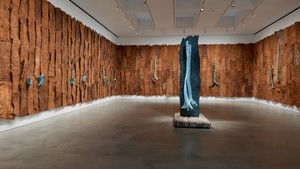
On the occasion of his exhibition The Reflection of Bronze at Gagosian, New York, Giuseppe Penone and curator Adam D. Weinberg sit down to discuss the genesis of, and their collaboration on, the show.
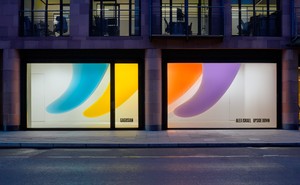
Ahead of Alex Israel’s exhibition of four new Fin sculptures at Gagosian, London, the artist spoke with Susan Casey, author of The Wave: In Pursuit of the Rogues, Freaks, and Giants of the Ocean (2010), about the ocean, surfing, and Los Angeles.
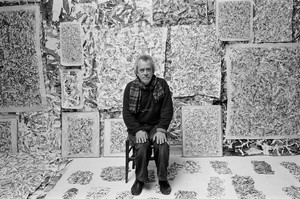
On July 9, Simon Hantaï: the last studio opens at Gagosian, Gstaad. Curated by Anne Baldassari, the show comprises sixteen of the artist’s dernier atelier (last studio) paintings of 1982–85. The exhibition is accompanied by an illustrated catalogue, copublished by Gagosian and Skira, which features an essay by Baldassari and an extensive portfolio of previously unpublished photographs by Édouard Boubat. Here, we share the introductory chapter from the publication.
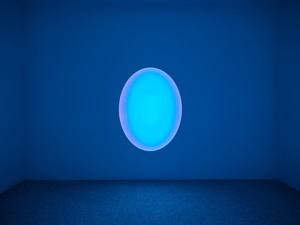
An exhibition at Gagosian, Hong Kong, brings together three of James Turrell’s Glasswork pieces along with site plans, photographs, and models of his Skyspaces and Roden Crater. Here, Alice Godwin explores the history of the Glassworks and their relationship to the artist’s wider practice.

On April 16, the Institute of Contemporary Art, Boston, opened the first midcareer survey of Derrick Adams’s multidisciplinary practice. Covering over twenty years of work, the exhibition, titled View Master, brings together the artist’s painting, sculpture, collage, performance, and video, as well as a vibrant new commission created for the museum’s façade. Ahead of the opening, Adams met with Tessa Bachi Haas, cocurator of the survey, to discuss his formative experiences with television, the impact of his work in arts education on his practice, and the importance of taking a more complex, more joyful, and more expansive approach to Black American life and culture.

Adam D. Weinberg has been working with Giuseppe Penone on an exhibition of the artist’s new sculptures, The Reflection of Bronze, that opens at Gagosian, New York, on April 22. The works explore the character and possibilities of bronze. Here, Weinberg considers Penone’s enduring engagement with the alloy and addresses the conceptual underpinnings of the exhibition’s three-room structure.

Jeff Koons tells Alison McDonald about his appreciation for the pioneering artist and thinker Marcel Duchamp.
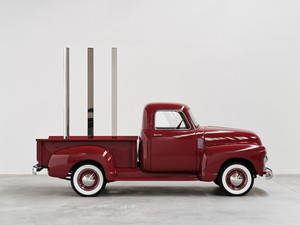
The Singular Experience at Gagosian’s Le Bourget gallery is the largest exhibition of Walter De Maria’s work in France in several decades. Organized by Donna De Salvo, senior adjunct curator at Dia Art Foundation, the exhibition marks the first time De Maria’s final sculpture, Truck Trilogy (2011–17), is being shown outside of the United States. Here, De Salvo speaks with artist Lucy Raven about her evolving kinship with De Maria and more.
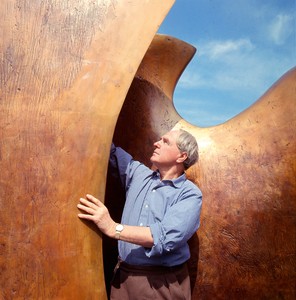
Laura Bruni writes about a major exhibition celebrating the work of the British sculptor Henry Moore at the Royal Botanic Gardens, Kew, London.
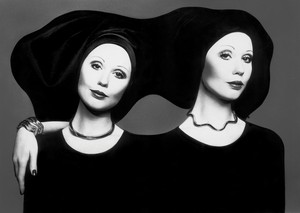
The exhibition Pomellato, Le Joaillier Révolutionnaire opened at Palais de Tokyo, Paris, on June 24. The Italian jewelry house’s trailblazing advertising campaigns—created by some of the most consequential names in photography—act as the narrative arc of the exhibition, curated by Alba Cappellieri. Here, Sarah Godfrey tracks Pomellato’s history, speaks with Cappellieri about what drew her to this project, and examines some of the key photographs from the show.