
Theaster Gates: Dave, All My Relations
A conversation between Theaster Gates and Jessica Bell Brown, with an introduction by Sydney Stutterheim.
Summer 2022 Issue
In this ongoing series, curator Hans Ulrich Obrist has devised a set of thirty-seven questions that invite artists, authors, musicians, and other visionaries to address key elements of their lives and creative practices. Respondents are invited to make a selection from the larger questionnaire and to reply in as many or as few words as they desire. For this installment, we are honored to present the artist Theaster Gates, whose Serpentine Pavilion 2022 Black Chapel opened in London on June 10.
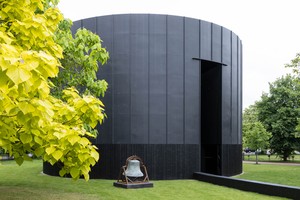
Serpentine Pavilion 2022 Black Chapel by Theaster Gates, London, 2022. Photo: Iwan Baan, courtesy Serpentine
Serpentine Pavilion 2022 Black Chapel by Theaster Gates, London, 2022. Photo: Iwan Baan, courtesy Serpentine
Hans Ulrich ObristWhat is your definition of art?
Theaster GatesMaterialized thought made with intention.
HUODoes money corrupt art?
TGMoney doesn’t corrupt art. People are corrupt. Corruption moves in us. If we are not trading for blankets or lucre, we would trade for notoriety, society pages, or favor. You have to choose to keep a good heart and a healthy sense of why you make. That’s the hard part.
HUOWhat is the role of titles?
TGTitles are a second artwork.
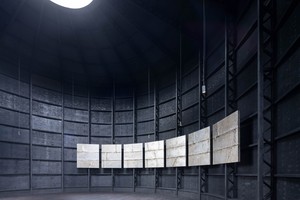
Serpentine Pavilion 2022, designed by Theaster Gates. Photo: Iwan Baan, courtesy Serpentine
HUOWhat is your most recent work?
TGI am making a pavilion for you! Well, for me. Well, for the world. I am making a pavilion in London. Sir David Adjaye and his team supported me with the design. It was a really good process for me to go through. I hope to make many more pavilions.
HUOWhat is your unrealized project?
TGI have so many. I keep thinking about a studio on the ocean where I only draw for myself. There is tea, a volleyball, and a brazier for stews and warmth.
HUOWhat role does chance play?
TGChance is everything for me. The relationship between chance and time is central to the way I make. I rarely over-plan.
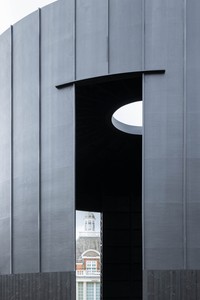
Serpentine Pavilion 2022, designed by Theaster Gates. Photo: Iwan Baan, courtesy Serpentine
HUOWhat keeps you coming back to the studio?
TGThe studio has so much of my DNA in it. It feels like an extension of my dreams, my body, my aspirations. It’s the “me-ness” of the studio that keeps me there. Like a good stretch. I love being with my extended thoughts.
HUOWho do you admire most in history?
TGMy mother.
HUOWhat achievements of yours are you especially proud of?
TGI’m super happy that I became an artist.
HUODo you have rituals?
TGI bathe a lot. When I was young, we didn’t have showers. We only had claw-foot tubs and I came to love the immersion. Now, I try to soak as much as possible and love the traditions of water therapy from around the world.
HUOAny miracles lately?
TGWhen I talk about the resurrection of buildings and the work that happens as a result of bringing a once dead building to life again, the process feels miraculous. It makes me believe more in our ability to create and participate in miracles.
Artwork © Theaster Gates Studio
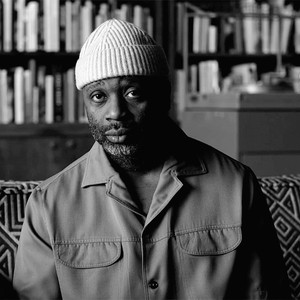
Theaster Gates’s practice traverses an extraordinary range, from collecting to social gathering, architecture and object making, experimental music and sound, and the ethical and physical reconstruction of civic life. His interdisciplinary fusion of archiving, performance, institution building, painting, and sculpting is deeply rooted in African American histories and cultures, and revolves around the transformation of objects, edifices, and communities through art and cultural activity. Photo: Chris Strong
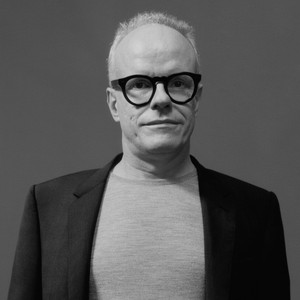
Hans Ulrich Obrist is artistic director of the Serpentine, London. He was previously the curator of the Musée d’Art Moderne de la Ville de Paris. Since his first show, World Soup (The Kitchen Show), in 1991, he has curated more than 350 exhibitions. Photo: Tyler Mitchell
A conversation between Theaster Gates and Jessica Bell Brown, with an introduction by Sydney Stutterheim.

Writer and curator Olivia Anani met Theaster Gates in his exhibition Black Mystic at Gagosian, Le Bourget, to discuss the importance of translation and relocation, the ever-expanding horizons of his practice, and his use of tar.
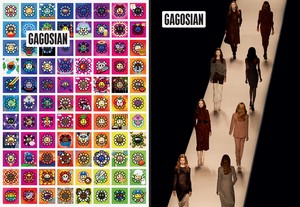
The Summer 2022 issue of Gagosian Quarterly is now available, with two different covers—featuring Takashi Murakami’s 108 Bonnō MURAKAMI.FLOWERS (2022) and Andreas Gursky’s V & R II (2022).
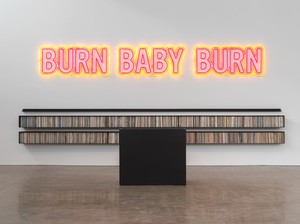
Theaster Gates, steward of the Frankie Knuckles record collection, is engaging with the late DJ and musician’s archive of records, ephemera, and personal effects. For the Quarterly’s “Social Works” supplement, guest edited by Antwaun Sargent, Gates presents a selection of Knuckles’s personal record collection. Chantala Kommanivanh, a Chicago-based artist, educator, and musician—and the records manager for Rebuild Foundation, Chicago—provides annotations, contextualizing these records’ importance and unique qualities. Ron Trent, a dear friend of Knuckles’s, speaks to the legacy evinced by these materials.

Join the artists for an extended conversation about their most recent exhibitions, their forebears in the world of ceramics, and the key role that history plays in their practices.

The Fall 2020 issue of Gagosian Quarterly is now available.

As a prelude to his first-ever solo exhibition in New York, Theaster Gates discusses his prescient work with the photographic archive of Chicago’s Johnson Publishing Company and his formation of Black Image Corporation as a conceptual project. In conversation with Louise Neri, he expands on his strategies as artist and social innovator in his quest to redeem and renew the sacred power of Black images and Black space.
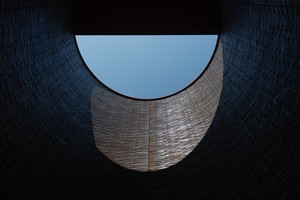
Social historian Chris Dingwall reflects on Theaster Gates’s engagement with the history of quotidian materials, focusing on the symbolic qualities and function of his brick-based sculpture.
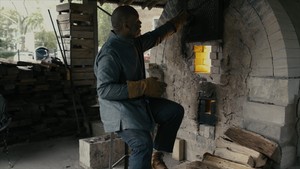
Join Theaster Gates in his studio as he prepares for an upcoming exhibition at Gagosian, New York. In this video, shot on location in Chicago during the tumultuous weeks of protest in late spring 2020, Gates reflects on the metaphorical power of materials and process, and on the redemptive potential of art.
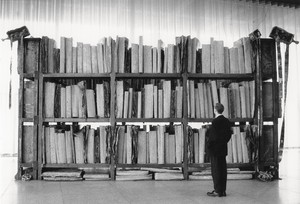
James Lawrence explores how contemporary artists have grappled with the subject of the library.
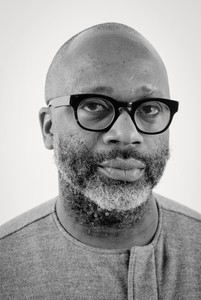
Theaster Gates’s exhibition Amalgam explores the social histories of migration and interracial relations by highlighting the specific history of the Maine island of Malaga. Here, William Whitney considers the exhibition in relation to Gates’s ongoing art practices and social commitments.
The Winter 2019 issue of Gagosian Quarterly is now available, featuring a selection from Christopher Wool’s Westtexaspsychosculpture series on its cover.