
Now available
Gagosian Quarterly Summer 2026
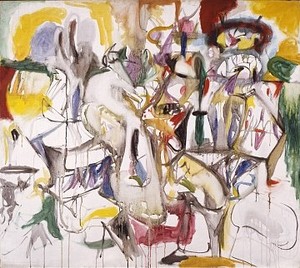
The Summer 2026 issue of Gagosian Quarterly is now available, featuring Ellen Gallagher’s Fast-Fish and Loose-Fish (2026) on the cover.
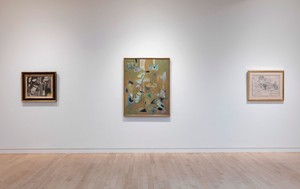
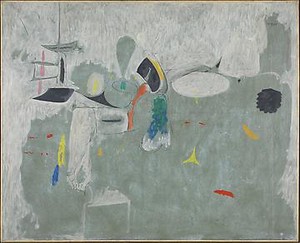
Installation view, Arshile Gorky: 1947, Gagosian, Madison Avenue, New York, 2011
© Estate of Arshile Gorky/Artists Rights Society (ARS), New York. Photo: Rob McKeever
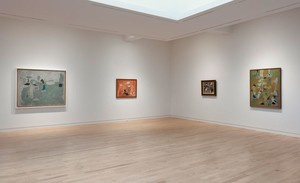
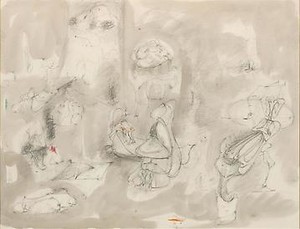
Installation view, Arshile Gorky: 1947, Gagosian, Madison Avenue, New York, 2011
Photo: Rob McKeever
Arshile Gorky was a key figure in the transformation of American art, and is well known for his work that fused American Abstraction with European Surrealism. In 1941, Gorky began integrating turpentine into his paints in order to loosen the structure and allow more freedom with form. This resulted in a dynamic aesthetic that moved away from the hard-edged, flat forms common to the work of the 1930s in favor of thinner lines and less saturated hues. In the late 1940s, Gorky began making forays from New York to the Virginia countryside, where he produced his “pastoral” work—an exploration of the classical Arcadian theme. Day after day, he went out into the fields, looking intently at the various flowers and grasses and working freely with pencil, pens, crayons, and watercolors. Later, he repeatedly drew the plein air drawings, integrating the ideas and lessons they contained into his formal vocabulary. He detached color from line to create discrete pictorial components; he washed the drawings in his bathtub, hung them up to dry, and scraped or sanded the surface. In this new surface experimentation the recognizable identity of an image was further altered by eliminating specific botanical or biological details.
Arshile Gorky—born as Vostanik Manoog Adoyan—was born in 1904 in Khorkom, Armenia, and died by taking his own life in 1948 in Connecticut. He escaped the Armenian genocide in 1915, emigrated to the U.S. in 1920, and changed his name in the process of reinventing his identity. He attended the New School of Design, Boston, in 1922, and the Grand Central School of Art, New York City, in 1925. Gorky’s work has been exhibited in several solo and group exhibitions. Major recent exhibitions include “The Breakthrough Years,” National Gallery of Art, Washington, D.C. (1995, traveled to Albright–Knox Art Gallery, Buffalo; and Modern Art Museum of Fort Worth, Texas); “A Retrospective of Drawings,” Whitney Museum of American Art, New York (2003, traveled to Menil Collection, Houston, through 2004); “Vosdanik Manouk Adoian a.k.a. Arshile Gorky,” Fresno Art Museum and Armenian Museum, California (2006); “Drawings, The Early Years,” University of Virginia Art Museum, Charlottesville (2007); “Hommage,” Centre Georges Pompidou and Centre Culturel Calouste Gulbenkian, Paris (2007); “Drawings and Paintings by Arshile Gorky–Mina Boehm Metzger Collection,” Whistler House Museum of Art, Massachusetts (2009); and “A Retrospective,” Philadelphia Museum of Art, Pennsylvania (2009, traveled to Tate Modern, London; and Museum of Contemporary Art, Los Angeles, through 2010).
The Summer 2026 issue of Gagosian Quarterly is now available, featuring Ellen Gallagher’s Fast-Fish and Loose-Fish (2026) on the cover.

In this video, Jenny Saville sits down inside her first major exhibition in Venice to discuss how the great Venetian artists of the past and the city’s heritage influence her work. The show brings together more than thirty canvases and works on paper from the 1990s to the present, tracing the development of her practice, which is deeply rooted in the history of painting.

Francis Bacon lived and worked in Paris for a decade starting in the mid-1970s. The city and the art he encountered there provided a profound backdrop for his austere late style, which often brings together smooth, colorful backgrounds, spare architectural signifiers, and sculptural human forms. Here, three striking paintings from that period are considered by Sebastian Smee.
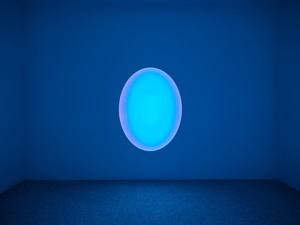
An exhibition at Gagosian, Hong Kong, brings together three of James Turrell’s Glasswork pieces along with site plans, photographs, and models of his Skyspaces and Roden Crater. Here, Alice Godwin explores the history of the Glassworks and their relationship to the artist’s wider practice.

Janne Sirén considers Anselm Kiefer’s new paintings, the subject of an exhibition at Gagosian, New York, entitled Seal My Ears Shut and I Shall Hear You Still.

On April 16, the Institute of Contemporary Art, Boston, opened the first midcareer survey of Derrick Adams’s multidisciplinary practice. Covering over twenty years of work, the exhibition, titled View Master, brings together the artist’s painting, sculpture, collage, performance, and video, as well as a vibrant new commission created for the museum’s façade. Ahead of the opening, Adams met with Tessa Bachi Haas, cocurator of the survey, to discuss his formative experiences with television, the impact of his work in arts education on his practice, and the importance of taking a more complex, more joyful, and more expansive approach to Black American life and culture.

Adam D. Weinberg has been working with Giuseppe Penone on an exhibition of the artist’s new sculptures, The Reflection of Bronze, that opens at Gagosian, New York, on April 22. The works explore the character and possibilities of bronze. Here, Weinberg considers Penone’s enduring engagement with the alloy and addresses the conceptual underpinnings of the exhibition’s three-room structure.

On March 28, a major exhibition of Jenny Saville’s work opened at Ca’ Pesaro–Galleria Internazionale d’Arte Moderna in Venice, bringing together nearly thirty paintings from the 1990s to the present. The exhibition is curated by Elisabetta Barisoni, head of the museums division at Venice’s Ca’ Pesaro, Museo Fortuny, and head of MUVE in Mestre. Saville’s monumental canvases are set in dialogue with the great Venetian artists of the past, creating a unique encounter between contemporary painting and the city’s artistic heritage. Here, the artist speaks with Stefania Ventra, professor with Ca’ Foscari University of Venice, about her early trips to Venice, the radicality of Titian’s painting, and depicting emotional truth.

Jeff Koons tells Alison McDonald about his appreciation for the pioneering artist and thinker Marcel Duchamp.
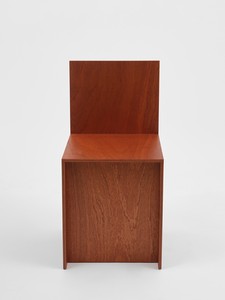
From their respective fields, three international cultural figures—artist and designer Ronan Bouroullec, fashion visionary Michèle Lamy, and chef and restaurateur Enrique Olvera—reflect on Donald Judd’s work in furniture, the subject of recent exhibitions in South Korea and Japan.
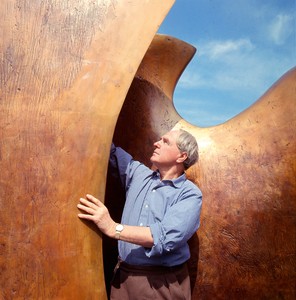
Laura Bruni writes about a major exhibition celebrating the work of the British sculptor Henry Moore at the Royal Botanic Gardens, Kew, London.
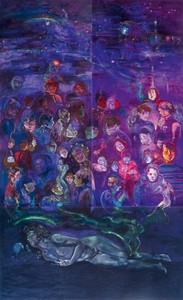
The most recent edition of Picture Books, an imprint organized by Emma Cline and Gagosian, pairs Mary Gaitskill’s novella STAUF: A Tragedy with Jill Mulleady’s painting The Shift. In celebration of this forthcoming publication, Gaitskill and Mulleady discuss the myth of Faust, good and evil in the digital age, and the channeling of raw matter into art.