

Now available
Gagosian Quarterly Summer 2026
The Summer 2026 issue of Gagosian Quarterly is now available, featuring Ellen Gallagher’s Fast-Fish and Loose-Fish (2026) on the cover.
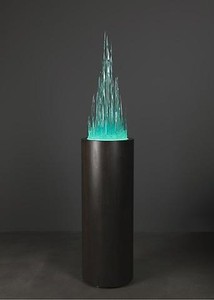
Mike Kelley
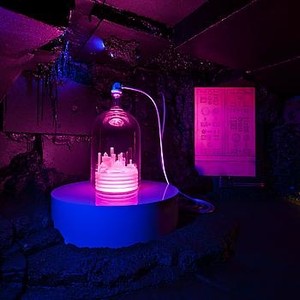
City 17, 2007–09
Mixed media, Overall: 83 15/16 × 17 ⅛ × 17 ⅛ inches (213.2 × 43.5 cm), edition of 5
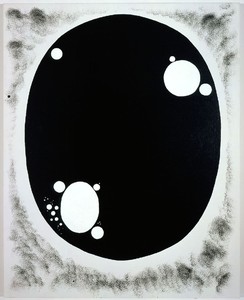
Mike Kelley
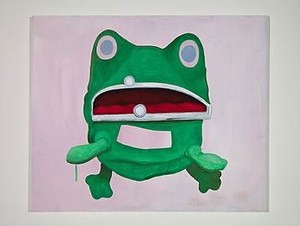
Limpid Pool, 1987
Acrylic on canvas mounted on wood, 60 × 48 inches (152.4 × 121.9 cm)
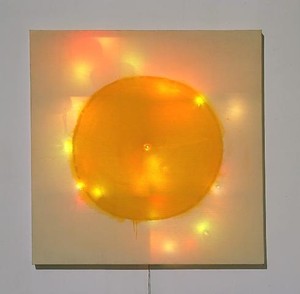
Mike Kelley
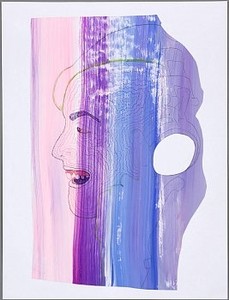
Twinkling Coppers (from “Plato's Cave, Rothko's Chapel, Lincoln's Profile”), 1986
Acrylic on canvas with penny and string of multicolored flashing electrical Christmas lights, 60 × 60 × 3 ⅜ inches (152.4 × 152.4 × 8.6 cm)
© Mike Kelley Foundation for the Arts. All rights reserved/Licensed by VAGA, New York. Photo: © Douglas M. Parker Studio
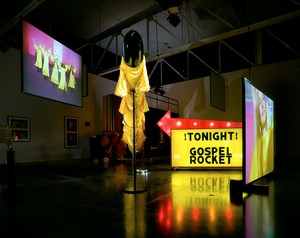
Positing cerebral concepts from psychology, philosophy, and art theory against kitschy craft mediums, awkward adolescent scenarios, and rudimentary renderings, Mike Kelley’s oeuvre works against art’s hierarchical history as it expands its breadth. His 2005 project, “Day Is Done,” is a massive, amorphous collection of works in diverse media that reconstruct purported “repressed memories” of generic high–school activities as recorded in anonymous yearbook photographs. He scrutinizes moments of ritual and tradition by restaging scenes common in American adolescence, such as school dances and Halloween activities, investigating the moral and experiential subtexts of these events in the process.
Mike Kelley was born in 1954 in Detroit, Michigan, and died in 2012 in Los Angeles, California. He received his B.A. in 1976 from the University of Michigan, Ann Arbor, and his M.F.A. in 1978 from California Institute of the Arts, Valencia. Recent solo exhibitions include “Categorical Imperative and Morgue,” Van Abbemuseum, Stedelijk, The Netherlands (2000); “Sod and Sodie Sock (w/Paul McCarthy),” Biennale d’art contemporain de Lyon, Institut d’art contemporain, France (2003); “Mike Kelley–The Uncanny,” The Tate Liverpool, England (2004, traveled to MUMOK, Museum of Modern Art, Vienna); “Profounders vertes,” Musée du Louvre, Paris (2006); “Day is Done Judson Church Dance,” Judson Memorial Church, New York (2009); “Themes and Variations from 35 Years,” The Stedelijk Museum, Amsterdam (2012); “Mobile Homestead,” Museum of Contemporary Art Detroit, Michigan (2013); Centre Pompidou, Paris (2013); “An Homage to Mike Kelley,” MoMA PS1, New York (2013); and Museum of Contemporary Art, Los Angeles (2014).
The Summer 2026 issue of Gagosian Quarterly is now available, featuring Ellen Gallagher’s Fast-Fish and Loose-Fish (2026) on the cover.

In this video, Jenny Saville sits down inside her first major exhibition in Venice to discuss how the great Venetian artists of the past and the city’s heritage influence her work. The show brings together more than thirty canvases and works on paper from the 1990s to the present, tracing the development of her practice, which is deeply rooted in the history of painting.

Francis Bacon lived and worked in Paris for a decade starting in the mid-1970s. The city and the art he encountered there provided a profound backdrop for his austere late style, which often brings together smooth, colorful backgrounds, spare architectural signifiers, and sculptural human forms. Here, three striking paintings from that period are considered by Sebastian Smee.
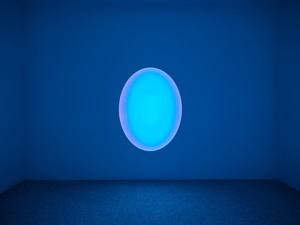
An exhibition at Gagosian, Hong Kong, brings together three of James Turrell’s Glasswork pieces along with site plans, photographs, and models of his Skyspaces and Roden Crater. Here, Alice Godwin explores the history of the Glassworks and their relationship to the artist’s wider practice.

Janne Sirén considers Anselm Kiefer’s new paintings, the subject of an exhibition at Gagosian, New York, entitled Seal My Ears Shut and I Shall Hear You Still.

On April 16, the Institute of Contemporary Art, Boston, opened the first midcareer survey of Derrick Adams’s multidisciplinary practice. Covering over twenty years of work, the exhibition, titled View Master, brings together the artist’s painting, sculpture, collage, performance, and video, as well as a vibrant new commission created for the museum’s façade. Ahead of the opening, Adams met with Tessa Bachi Haas, cocurator of the survey, to discuss his formative experiences with television, the impact of his work in arts education on his practice, and the importance of taking a more complex, more joyful, and more expansive approach to Black American life and culture.

Adam D. Weinberg has been working with Giuseppe Penone on an exhibition of the artist’s new sculptures, The Reflection of Bronze, that opens at Gagosian, New York, on April 22. The works explore the character and possibilities of bronze. Here, Weinberg considers Penone’s enduring engagement with the alloy and addresses the conceptual underpinnings of the exhibition’s three-room structure.

On March 28, a major exhibition of Jenny Saville’s work opened at Ca’ Pesaro–Galleria Internazionale d’Arte Moderna in Venice, bringing together nearly thirty paintings from the 1990s to the present. The exhibition is curated by Elisabetta Barisoni, head of the museums division at Venice’s Ca’ Pesaro, Museo Fortuny, and head of MUVE in Mestre. Saville’s monumental canvases are set in dialogue with the great Venetian artists of the past, creating a unique encounter between contemporary painting and the city’s artistic heritage. Here, the artist speaks with Stefania Ventra, professor with Ca’ Foscari University of Venice, about her early trips to Venice, the radicality of Titian’s painting, and depicting emotional truth.

Jeff Koons tells Alison McDonald about his appreciation for the pioneering artist and thinker Marcel Duchamp.
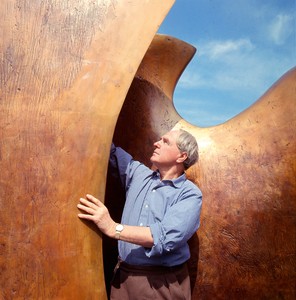
Laura Bruni writes about a major exhibition celebrating the work of the British sculptor Henry Moore at the Royal Botanic Gardens, Kew, London.
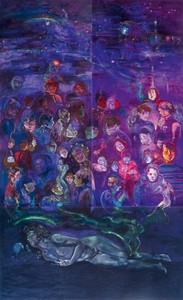
The most recent edition of Picture Books, an imprint organized by Emma Cline and Gagosian, pairs Mary Gaitskill’s novella STAUF: A Tragedy with Jill Mulleady’s painting The Shift. In celebration of this forthcoming publication, Gaitskill and Mulleady discuss the myth of Faust, good and evil in the digital age, and the channeling of raw matter into art.
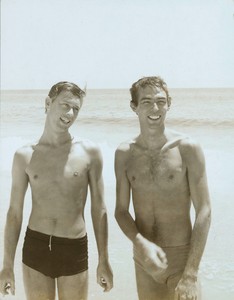
Andrew Durbin’s dual biography The Wonderful World That Almost Was: A Life of Peter Hujar and Paul Thek, published by Farrar, Straus and Giroux, tracks the convergences and divergences in the lives of the two artists, from their first meeting in Coral Cables, Florida, in 1956 through their generative romantic and creative partnership in New York, Italy, Fire Island, and beyond. Ahead of the release, Durbin met with the Quarterly’s Wyatt Allgeier to speak about the development of the project, the sublime noncompliance of these two artists, and the motifs of love, death, and rebirth that weave through the telling of their story.