
On Cocoanut Avenue: John Chamberlain in Florida
Curator Michael Auping reflects on his time spent with John Chamberlain in Sarasota, Florida.
March 3, 2015
Two twentieth-century heavyweights collide in a show of works by John Chamberlain and Jean Prouvé in New York. Derek Blasberg talks to Patrick Seguin about Prouvé and design on the occasion of the exhibition.
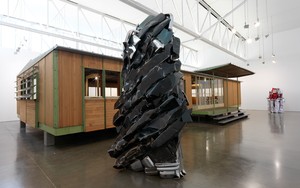
Installation view, Chamberlain | Prouvé, Gagosian West 24th Street, New York, February 27–April 4, 2015. Photo by Rob McKeever
Installation view, Chamberlain | Prouvé, Gagosian West 24th Street, New York, February 27–April 4, 2015. Photo by Rob McKeever
Derek BlasbergLet’s start at the beginning.
Patrick SeguinWell, this exhibition is the eighth collaboration between Gagosian and Galerie Patrick Seguin. The first collaboration was in 2004, at Gagosian Beverly Hills, where we presented Jean Prouvé and Charlotte Perriand. In 2010, the inaugural exhibition of paintings by Cy Twombly opened at Gagosian Paris and we arranged an exhibition of Jean Prouvé’s prefabricated architectural designs, which opened at the same time in the project space on the second floor. We have also realized two exhibitions of work by Jean Nouvel together. In Paris we presented La Table au Km and in London we showed Triptyques, an exhibition of three-paneled colored mirrors. Most recently, in 2013, we showed the wonderful Calder | Prouvé exhibition at two locations, Gagosian Le Bourget and Galerie Patrick Seguin in Paris.
DBThat is a wonderful history of collaboration.
PSAs a collector of contemporary art, I have a great deal of interest in the artists Gagosian represents and, in fact, I am privileged to own artworks by numerous artists represented by the gallery. Many contemporary artists seem to be quite fond of Prouvé, and Larry Gagosian is a great collector and one of the first serious collectors in my field. His collection includes important works by artists such as Prouvé, Perriand, Jean Royère, and Pierre Jeanneret. Who knows, he might even live in a Prouvé house someday! As a result of our overlapping interests, we maintain a tight, intense, and lasting friendship, and by extension, our galleries work well together. We also both maintain a very keen and avid interest in the areas where contemporary art and design overlap.
DBWhat is the concept behind this show?
PS Prouvé was very close with many of the artists of his time. In fact, I own artworks that were originally owned by Prouvé that I bought from his heirs, such as a Calder mobile, which was a gift from Calder to Prouvé, and a 1939 Fernand Léger watercolor dedicated to Prouvé. For this show, the clear link between Prouvé and Chamberlain lies in the use of steel. Both of them were able to make steel expressive and both took metal to its highest potential, but had very different motivations driving their work. Prouvé used methods developed through industry and aeronautics; thanks to a huge press machine he managed to bend, curve, and arch steel. This method was applied throughout his work. He used it to create both furniture and the portal frame of a house, and, in fact, he used to say “There is no difference between creating a piece of furniture and a building.” Chamberlain bent and crumpled steel to make inherently powerful sculptures; he was able to create extreme gestures and expressiveness through energy, color, form, and movement.
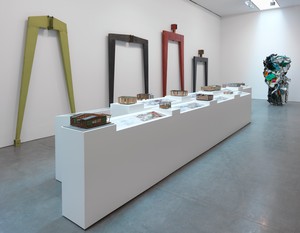
Installation view, Chamberlain | Prouvé, Gagosian West 24th Street, New York, February 27–April 4, 2015. Photo by Rob McKeever
DBIt would be interesting to know more about works by Prouvé included in the exhibition.
PSThere are two Prouvé demountable structures on view: Ferembal (1948; 75 × 26 feet) and Villejuif (1956; 36 × 30 feet). We are also including models, archival images, blueprints, and portal frames that relate to nine other Prouvé houses, all of which are demountable. The largest, Ferembal, can be set up in seven days while the smallest, 6 × 6, the icon of emergency housing, can be set up in seven hours by only three people without any specific tools.
DBLet’s talk a little bit about you. Were you always interested in design? When did you start collecting and dealing?
PSIn 1989, I opened the gallery with my wife Laurence. From the start we admired Prouvé’s demountable structures and felt they were as important as his furniture. We bought the first in 1990, a 6 × 6 created in 1944 for war victims in Eastern France. Since then the gallery has gathered twenty houses—most of which are prototypes or unique pieces. We are actually working on a 6 × 6 house adaptation, which is on view in the Gagosian exhibition. At the end of WWII, Prouvé lacked commissions and the factory’s activity was dropping off so he decided to serve the reconstruction process: he imagined knocked down houses of either 385 or 600 square feet, which could be built in only a few hours by three people. We approached Richard Rogers, of Rogers Stirk Harbour + Partners, to adapt it into a perfect retreat house.
DBIt has been said that “effortlessness” is a mark of genius and Prouvé was particularly gifted with that quality.
PSProuvé was a visionary. For example, his ideas foreshadowed concerns that now effect the environmental movement. He wanted an architecture that left no trace on the landscape. According to Rogers, if Prouvé was working today, he would use the best techniques and materials available to serve this purpose. Therefore, the new retreat house we are creating with Rogers will be fitted with equipment suited to collect and recycle rainwater, solar panels, eco-friendly toilets, and trolleys meant to stock water and energy. Moreover the house is meant to endure climates that range from the Mediterranean to the Alps so from 95°F to 5°F. The team who worked on this adaptation brought together architects, engineers, and environmentalists. There is great potential in these structures and I believe that a lot of people dream of having a Prouvé zen retreat in their garden.
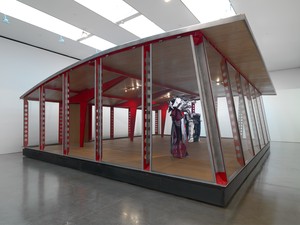
Installation view, Chamberlain | Prouvé, Gagosian West 24th Street, New York, February 27–April 4, 2015. Photo by Rob McKeever
Prouvé was a visionary. his ideas foreshadowed concerns that now effect the environmental movement. He wanted an architecture that left no trace on the landscape.
Patrick Seguin
DBA frequent question that gets posed when it comes to a show like this is: “How do you handle such a complicated installation?”
PSThe are two buildings exhibited: Ferembal, which was the office of a plant in Nancy, Jean Prouvé’s native city, and Villejuif, which was designed for a school complex in Villejuif, in the Paris suburbs. We bought Ferembal in 1991 and worked with Jean Nouvel on an adaptation. We showed the adaptation for the first time in 2010 in the Jardin des Tuileries, near the Louvre, in Paris. The Gagosian exhibition will be the first time the work is shown in the US. Both houses were shipped in seventy museum crates and a team of ten people from my gallery set up the houses in collaboration with the Gagosian team. The exhibition was installed in ten days. We also filmed the installation of both houses so viewers can see how the houses are constructed in three minutes.
DBAt this point Prouvé’s influence is wide reaching. You no longer need to be an architect or an engineer to appreciate his work.
PSIt is a niche. One doesn’t buy a Jean Prouvé house as he would a table or a set of chairs. However three Prouvé houses were sold last year to very important collections: a 6 × 6 (1944; 19.6 × 19.6 feet), the Maison des Jours Meilleurs (1956; 30 × 21 feet), and the Metropole House (c. 1950; 26 × 40 feet). We now work with collectors and their architects to adapt these structures for modern uses: retreat houses, guest houses, tea houses… Today, with twenty Prouvé structures as part of my inventory, my team is very knowledgeable and able to deal with these buildings worldwide. These houses, which can be built in record time, are fitted with movable foundations and without any ground hold so they can be set up virtually anywhere, in any climate, in any terrain… It is a unique experience to live in historic architecture and to witness first-hand an avant-garde way of thinking about architecture, which continues to be ahead of its time.
John Chamberlain © 2015 Fairweather & Fairweather LTD/Artists Rights Society (ARS), New York.Jean Prouvé © Estate of Jean Prouvé/Artists Rights Society (ARS), New York/ADAGP, Paris. Chamberlain | Prouvé at Gagosian West 24th Street, New York, February 27–April 4, 2015.
Derek C. Blasberg is a writer, fashion editor, and New York Times best-selling author. He has been with Gagosian since 2014, and is currently the executive editor of Gagosian Quarterly.
Curator Michael Auping reflects on his time spent with John Chamberlain in Sarasota, Florida.
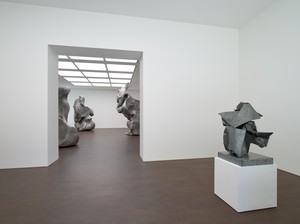
Catalyzed by the exhibition Crushed, Cast, Constructed: Sculpture by John Chamberlain, Urs Fischer, and Charles Ray, Alice Godwin examines the legacy and development of a Surrealist ethos in selected works from three contemporary sculptors.
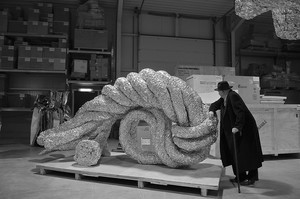
In Foil Adventures: John Chamberlain’s Late Works in Aluminum, Corinna Thierolf discusses how, starting in the mid-1960s, the artist investigated and perfected working with this material.
The Spring 2018 Gagosian Quarterly with a cover by Ed Ruscha is now available for order.
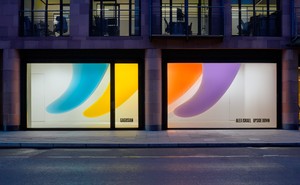
Ahead of Alex Israel’s exhibition of four new Fin sculptures at Gagosian, London, the artist spoke with Susan Casey, author of The Wave: In Pursuit of the Rogues, Freaks, and Giants of the Ocean (2010), about the ocean, surfing, and Los Angeles.

On April 16, the Institute of Contemporary Art, Boston, opened the first midcareer survey of Derrick Adams’s multidisciplinary practice. Covering over twenty years of work, the exhibition, titled View Master, brings together the artist’s painting, sculpture, collage, performance, and video, as well as a vibrant new commission created for the museum’s façade. Ahead of the opening, Adams met with Tessa Bachi Haas, cocurator of the survey, to discuss his formative experiences with television, the impact of his work in arts education on his practice, and the importance of taking a more complex, more joyful, and more expansive approach to Black American life and culture.

Jeff Koons tells Alison McDonald about his appreciation for the pioneering artist and thinker Marcel Duchamp.
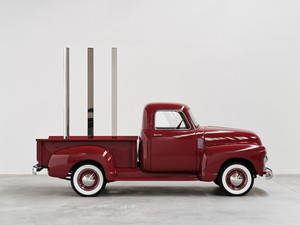
The Singular Experience at Gagosian’s Le Bourget gallery is the largest exhibition of Walter De Maria’s work in France in several decades. Organized by Donna De Salvo, senior adjunct curator at Dia Art Foundation, the exhibition marks the first time De Maria’s final sculpture, Truck Trilogy (2011–17), is being shown outside of the United States. Here, De Salvo speaks with artist Lucy Raven about her evolving kinship with De Maria and more.
Ed Ruscha sits down with the author and explorer Erling Kagge to discuss existence.
Following the debut of her Fall/Winter 2026 collection at Dia Chelsea, New York, Ulla Johnson met with Sarah Godfrey to discuss her recent collaborations with the Helen Frankenthaler and Lee Krasner foundations, her upbringing in and dedication to New York City, and her nonhierarchical approach to collecting.
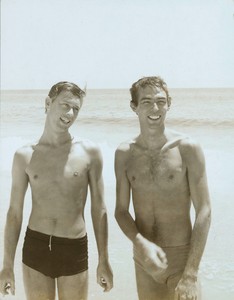
Andrew Durbin’s dual biography, The Wonderful World That Almost Was: A Life of Peter Hujar and Paul Thek, published by Farrar, Straus and Giroux, tracks the convergences and divergences in the lives of the two artists, from their first meeting in Coral Cables, Florida, in 1956 through their generative romantic and creative partnership in New York, Italy, Fire Island, and beyond. Ahead of the release, Durbin met with the Quarterly’s Wyatt Allgeier to speak about the development of the project, the sublime noncompliance of these two artists, and the motifs of love, death, and rebirth that weave through the telling of their story.

On March 28, a major exhibition of Jenny Saville’s work opened at Ca’ Pesaro–Galleria Internazionale d’Arte Moderna in Venice, bringing together nearly thirty paintings from the 1990s to the present. The exhibition is curated by Elisabetta Barisoni, head of the museums division at Venice’s Ca’ Pesaro, Museo Fortuny, and head of MUVE in Mestre. Saville’s monumental canvases are set in dialogue with the great Venetian artists of the past, creating a unique encounter between contemporary painting and the city’s artistic heritage. Here, the artist speaks with Stefania Ventra, professor with Ca’ Foscari University of Venice, about her early trips to Venice, the radicality of Titian’s painting, and depicting emotional truth.