Following the debut of her Fall/Winter 2026 collection at Dia Chelsea, New York, Ulla Johnson met with Sarah Godfrey to discuss her recent collaborations with the Helen Frankenthaler and Lee Krasner foundations, her upbringing in and dedication to New York City, and her nonhierarchical approach to collecting.
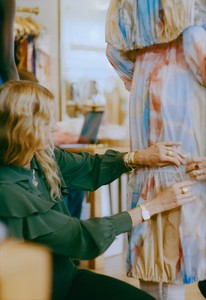
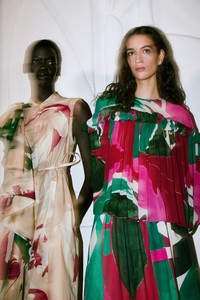
Ulla Johnson working on her Spring/Summer 2026 collection, featuring a dress made in collaboration with the Helen Frankenthaler Foundation
Ulla Johnson working on her Spring/Summer 2026 collection, featuring a dress made in collaboration with the Helen Frankenthaler Foundation
Sarah Godfrey joined Gagosian in 2024. As an artist liaison, she supports exhibitions and special projects for Michael Heizer, Anselm Kiefer, and the Willem de Kooning Foundation. Previously she was assistant curator of works on paper at the Fine Arts Museums of San Francisco and worked in the luxury sector at Christie’s, New York.
Ulla Johnson founded her eponymous label in New York in 1999, building a global womenswear brand defined by craft, color, and modern femininity. The company operates flagship stores in New York and Los Angeles, with distribution through leading retailers worldwide.
Sarah GodfreyCongratulations on your recent collection! I’d love to talk about that show, but to begin, could we discuss your collaboration with the Helen Frankenthaler Foundation for the Spring/Summer 2026 collection? How did that project come about?
Ulla JohnsonFirst, thank you. For the Frankenthaler collaboration, that was several years in the making. Working with estates is often a long game. I’ve loved Frankenthaler’s work for a long time and we’d been in dialogue with the foundation for a while, working toward a time when everything clicked for all of us. A lot of trust needs to be established on both sides, and obviously the art world moves at a different cadence from the fashion calendar, where we present with quite a rapidity. It’s four times a year—we do two shows but there’s two collections in between. So I’ve just come to understand that things like this come when they will.
SGCould you say more about what you find appealing about Frankenthaler’s work, and why you chose those three paintings—Western Dream [1957], Moontide [1968], and Nature Abhors a Vacuum [1973]—to interpret for the collection?
UJWith Frankenthaler, the way she worked with the canvas—the putting it on the floor, this sort of thrust from the shoulder, the way the paint moves, the soak-stain technique—it just felt so applicable to fabric. And there’s this sense of being borderless, which is also how we work: We’re not really constrained by anything except for the body, and even there, not really, because volume can be variable. The three paintings were chosen with many aspects in mind, but the ultimate decisions were about what would work on the body. This is clearly a different type of experience of the work. We really wanted to capture a sense of movement, a passion for color, and those paintings all have a lot of storytelling within the color, but also each work represents something quite different.
SGI noticed that they have different tones.
UJDifferent tones, and also different periods. Western Dream was an early work, and has a lot more ground versus gesture. Then Moontide has a much more reductive palette, and that one and Nature Abhors a Vacuum have this incredible sense of the presence of nature, which is always part of my inspiration. Those three paintings continued to be the jumping-off points for the rest of the collection’s palette, mood, and silhouette. And then it was almost like when an actor takes on a role and they do this crazy deep dive into their subject. I found myself listening to a lot of recordings of Frankenthaler, and she spoke so eloquently and confidently about her work and was very matter-of-fact as far as where she saw her place within the canon, and what held back, or didn’t, the dialogue around her work. We used some audio from an interview she did with Charlie Rose, where she spoke about beauty being an incendiary word, and how she aimed to challenge the notion of beauty as something merely pleasant. She reclaimed beauty as something profound, which is something I’m looking to do as well.
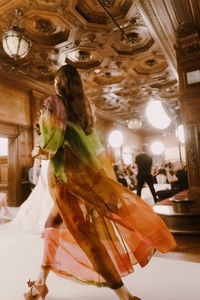
Ulla Johnson’s Spring/Summer 2026 collection, featuring a dress made in collaboration with the Helen Frankenthaler Foundation
SGI’m always interested when designers show in museums. Your most recent show was at Dia Chelsea, and you’ve shown at the Brooklyn Museum—do you think of your venue choices as informing the way the collection is to be interpreted?
UJAt the very heart of it is that being a born-and-bred New Yorker, I’m always trying to shine a light on New York and this city’s cultural institutions. There’s always a lot of conversation about New York Fashion Week and who’s showing, and so on, but I think constantly about bringing it back to things outside that brief five-day period, about bringing people into these institutions that are here year-round. Even with covid, when we couldn’t do in-person shows, we made two movies, one at Lincoln Center and one at the Four Freedoms memorial on Roosevelt Island. And then our first in-person show after covid was at the Brooklyn Botanic Garden. To this day I go there sometimes on my way home. All of these places are part of my story, and I admire the people who are currently building the programs at these institutions. We also did a show at the New York Public Library, so it’s not just art institutions, I should say.
SGWhat felt significant about the Cooper Hewitt[, Smithsonian Design Museum, New York] for the Spring/Summer 2026 collection?
UJThis moment in particular was important for the brand—there was this idea of homecoming for me in general around this show. That week we also opened a store nearby on Madison Avenue. I grew up on the Upper East Side, not on Madison but in Yorkville. That’s changed a lot—back then it was a very German, Eastern European, more immigrant neighborhood. I had resisted being uptown my entire life; I moved to Brooklyn as soon as I could. So opening on Madison and showing on Fifth Avenue was a really big step.
SGDid you ever visit the Cooper Hewitt growing up? Are there any other early museum experiences that have stuck with you?
UJMy mother was an artist, a painter. She actually wore a million hats—she was an archaeologist by training and then ended up doing restoration, conservation, and painting icons. I was an only child and was getting dragged to museums all the time. When I was very small she worked at the American Museum of Natural History, painting some of the backdrops for the dioramas and also putting together some of the dinosaurs, making molds of missing dinosaur bones for the skeletal mounts. So I grew up in this museum milieu. We saw every show at the Metropolitan Museum of Art and we were at the Cooper all the time. So it felt really special to show in that place. I feel like the Cooper deserves to be celebrated; they have such a storied history of exhibiting really interesting design work, and they have a wonderful director, Maria Nicanor, who has some great programming coming up. People don’t know the history of the building being the home of Andrew Carnegie—he spent the last years of his life there giving all of his money away, which I found to be really meaningful. I had my green room in his former office, which was just so special, with handpainting on the walls and every level of fine craftsmanship. We don’t have that many buildings like that in New York.
This moment in particular was important for the brand—there was this idea of homecoming for me in general around this show.
Ulla Johnson
SGI’d love to hear more about this most recent show, at Dia Chelsea. What informed that choice for this collection?
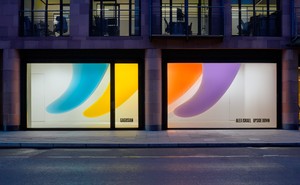
UJWe were really inspired by color and scent for this collection, so it felt right to do it in this white-box space. A lot of times I’m drawn to spaces that have a lot of their own character, but it was exciting to have everything stripped away and really let the clothes speak.
SGYou mentioned scent. Am I right in thinking that you’ve just launched your first scents?
UJYes. Also a long time in the making.
SGWhat’s it like to transition media and start expressing yourself through this other form entirely?
UJFirstly, exciting. When starting to think about scent, I kept returning to memory, because they’re so linked for me. I’m working with perfumer Lyn Harris, based in London, who’s so inspiring. I already had an idea of what I wanted one of the scents to evoke, which was this sort of sun-soaked Mediterranean feeling, the sound of cicadas in the pines. It was something that reminded me of my childhood, because we used to vacation in Croatia every summer. There was a particular scent that comes off the heated rocks, off the water, and all of these things that were meaningful to me. There are so many stories we could tell, but we started with a set of three scents.
With the packaging, we ended up doing something very nontraditional and working with two different ceramists, Jane Yang-d’Haene and Jonathan Yamakami, to make hand-built containers for the scents, the candle, and the incense holder. They’re not made from molds, which is unusual; I wanted something that felt amazing in the hand.
SGDo you think of what you do as a designer as a form of artmaking? You work with so many different craftspeople, artists, artisans, et cetera—
UJI think that’s complicated, right? Because a lot of what we consider to be art are things that don’t have a use value per se.
SGAnd clothing is very functional.
UJIt is. So I never really want that. I don’t really perceive myself in that way. I think what we do is artistic, I hope, but so much of what I do is related to the act of how the woman herself puts it together. I’m certainly influenced by art, and I think the tension between fashion and art has shifted over time. I think there was an aloof attitude in art toward fashion in some ways, and I’m sure that still exists in different forms to this day, but I think some of it has really been exploded lately. That’s very exciting to see, because when different disciplines speak to each other, only good things can come of it.
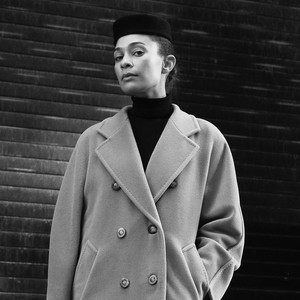
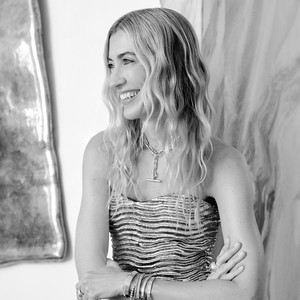
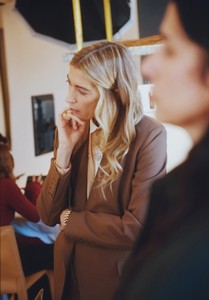
Ulla Johnson, New York, 2026
SGIn the past, you’ve mentioned Mary Gabriel’s book Ninth Street Women [2018], and I know you collaborated with the Pollock-Krasner Foundation for your Spring/Summer 2025 collection, bringing the work of Lee Krasner to those pieces. Am I right that Gabriel wrote the show notes for that collection?
UJYes. I loved her book. It covered a very exciting time in New York, in art, in women’s history, in general—so much was changing. Yet these women, to varying degrees, lived in the shadows of their husbands. I learned from Katy Hessel’s podcast, Krasner herself really created the art market as we know it now in the way that she valued Jackson Pollock’s works. The price tags attached were really unheard of at the time; she was a very savvy businessperson. But despite all that, it took her a really long time to gain any recognition for her own work. In fact, she couldn’t even attend her own retrospective at the Guggenheim Bilbao[, because it took place posthumously]. I had a real affinity for her also because she was a child of immigrants, a child of New York, a Brooklyn girl. There was so much in her personal story that I found interesting, but it was also this time when women were first able to have a voice in painting. It was so radical, what they did. Frankenthaler came from a very different type of background and had a different type of access, but she still struggled. She struggled with the perception of women’s work relative to their male peers. And to this day, women are not valued to the same extent as their male peers.
SGEvery time you look them up, there’s a man in the first sentence. In the intro to their bio: “the wife of so-and-so,” or something like that.
UJYes. That they were able to find each other, that they were able to have this type of resilience to continue to present their work even when they weren’t getting celebrated—so much perseverance, so much confidence. And for me, I built this business with no investor, no family money. It was constructed from nothing. And to do that takes a fair degree of stubbornness, the ability to fail and continue to try and succeed time after time. I’ve been so privileged to be working in this time where I’m not facing some of the roadblocks that they did. And still—
SGThere’s always going to be a roadblock. There’s a line of Gabriel’s about your and Krasner’s shared affinities, nature being a key one. And she says, as a result, “A Lee Krasner painting is no longer something we look at, it’s something we live in.”
Ulla Johnson’s Spring/Summer 2025 collection, featuring garments made in collaboration with the Pollock-Krasner Foundation
UJThat was so meaningful to me. Lee herself said that she wanted the work to breathe and come alive. So I thought when we did an installation of fabric panels in the space at the show, where they moved as the models walked by them wearing the garments—this sense of something we live in. How wonderful.
SGThinking through these cross-cultural conversations, when you started the brand, was that your intention—to create something bigger and have clothing be almost the medium through which that happens?
UJI would say yes. I mean, it’s evolved a lot over time. I basically started this straight out of school, so it’s had a lot of different lives, as have I. But there was a moment about ten years ago when I was in a position to be going through a great deal of my mother’s collections. I grew up traveling a lot because my mother was an immigrant and both of my parents were archaeologists, and they both had a great affinity and respect for material culture. So that’s something that I grew up around all the time: artifacts, collections, textiles, folk costumes, Victorian lace, all these beautiful handmade things. I was going through my mother’s archive, which she had meticulously organized, and I very much believe in the emotional weight of objects and of touching all of these things, especially things made by hand. It sounds otherworldly in a way, but I really do believe that it’s not just the hand of the maker, but also, since some of these things are hundreds of years old, it’s all of the people who darned it, who kept it safe, kept it clean. These things are imbued with meaning and feelings. And suddenly I really felt this need to continue this type of work.
SGCollaboration seems to be so crucial to all of this. How have you found some of your global partners and collaborators?
UJI’d been dabbling in handmade techniques but I was producing most of my collection in New York, and our capacity for knitting, embroidery, that type of thing, doesn’t really exist so much in this country anymore, unfortunately. I decided that I wanted to take a trip to Peru, which has an incredible knitting and weaving culture. I went with my daughter to a tiny village outside Arequipa and I ended up meeting all these incredible people, a whole community with a commitment to maintaining and pushing forward the language of their craft. It was really a pivotal moment in my life.
When I came back from that trip, I was so committed to going to different regions where craft is still very much alive, and to working with communities to bolster that. I went to India, where an incredible embroidery craft still exists. I went to Kenya to work with brass and glass artisans. This is something that has to be done face-to-face; it’s not a Zoom-based type of dialogue. All of this has been a very rewarding part of the arc of the brand.
SGYou mentioned going through your mother’s collections. You too collect—what drives that pursuit? What are you drawn to?
UJBoth of my parents collected and made things. My dad also did wood carving. They were constantly making things together. I grew up in a nine-hundred-square-foot apartment, so you can imagine [laughter]—
SGA cabinet of curiosities.
UJYes. There were ceramics, textiles, books, metalwork, shells, and everything was draped in textiles. We lived in Germany for a year and my mother collected all this incredible cut glass. It was like the universe in nine hundred square feet. And again, there was such a reverence for each thing—even amid all of the bounty, everything had its own place and its own story. That has informed my own approach: Wherever I go, I pick things up along the way.
Some of that is by design, for work. Some of it comes back into the language of the work in a very obtuse, circuitous way. And I collect things both humble and fine. I can love a rock as much as I do a painting. I don’t have a hierarchy. I collect baskets from the entire world—I’m basically assembling a basket museum [laughter]. Ultimately, I think I collect what speaks to me. Often it’s about the story of either my moments with it or the moments that happened before or after. And then collecting art has been an incredible privilege. I hope I’m just a steward for these things before where they go next. At the end of the day, the things I’m drawn to—to me, it’s really about the heart.
Photos: courtesy Ulla Johnson
Sarah Godfrey joined Gagosian in 2024. As an artist liaison, she supports exhibitions and special projects for Michael Heizer, Anselm Kiefer, and the Willem de Kooning Foundation. Previously she was assistant curator of works on paper at the Fine Arts Museums of San Francisco and worked in the luxury sector at Christie’s, New York.
Ulla Johnson founded her eponymous label in New York in 1999, building a global womenswear brand defined by craft, color, and modern femininity. The company operates flagship stores in New York and Los Angeles, with distribution through leading retailers worldwide.