Early in his nearly five-decade-long career, Michael Auping accepted a curatorial post in Sarasota, Florida—an out-of-the-way city nevertheless well known to artists and tourists alike. While there he would meet John Chamberlain and organize a major survey focusing on the artist’s early engagement with sculptural wall reliefs. John Chamberlain: Reliefs 1960–1982, on view at Ringling Museum of Art in 1983, was the first show to address this important body of work, and Chamberlain’s first major institutional exhibition since his 1971 retrospective at the Guggenheim Museum in New York. While preparing for that exhibition, Auping recorded many interviews with Chamberlain, and has recently begun comprehensively transcribing and compiling them. The interviews and accompanying commentary reflect on Auping’s years in Sarasota with a refreshing sense of humility and humor, while simultaneously adding important information on Chamberlain, at this pivotal moment in his career, to the historical record.
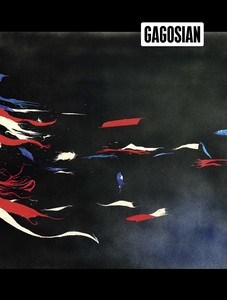
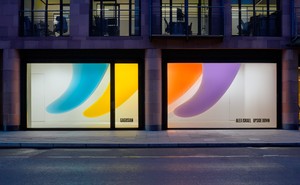
Exhibition announcement card for John Chamberlain: Reliefs 1960–1982, Ringling Museum of Art, Sarasota, Florida, 1983
Exhibition announcement card for John Chamberlain: Reliefs 1960–1982, Ringling Museum of Art, Sarasota, Florida, 1983
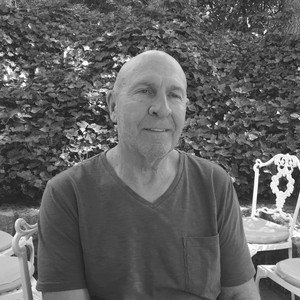
Michael Auping is an independent curator and art historian. Well-known as a curator and scholar of Abstract Expressionism, he has organized exhibitions of the work of Arshile Gorky, Philip Guston, and Clyfford Still. He has also organized major exhibitions of the work of Georg Baselitz, Anselm Kiefer, and Susan Rothenberg.
In 1979 I moved to Sarasota, Florida, to become curator of modern and contemporary art at the Ringling Museum of Art. I came from California, where I had been an associate curator of contemporary art at the University Art Museum in Berkeley (now the Berkeley Art Museum). Jim Elliott, director of UAM at the time, told Alanna Heiss, founding director of PS1, that I had run away to the circus. In some ways he was right: the Ringling Museum complex then comprised an art museum, a circus museum with a re-creation of a circa 1910 big-top encampment, and an eighteenth-century Venetian theater. The Gulf Coast town that surrounded seemed equally disparate—retirees, fishermen, boat builders, bartenders. There was a well-known clown college just south of the city.
Chamberlain arrived in Sarasota soon after I did. We quickly became colleagues, and eventually friends. Chamberlain and Sarasota would eventually merge together in my mind as symbiotic and rooted in a specific moment in time. In the beginning, I was curious to understand why he was in Sarasota. I knew why I was there (a promotion and a raise). But why was an artist, whom I thought of as a quintessential urban dweller, in this sprawling beach town with its laid-back vibe? There were several answers as to Chamberlain’s motives, which I would eventually discover, and which would ultimately help me see his art in a new light.
Unlike the east coast of Florida, which had been developed decades earlier by wealthy, blue-blood families who tended to dress like they belonged in an F. Scott Fitzgerald novel, the Gulf Coast had a rugged aspect that appealed more to adventurers than socialites. It was slowly growing into a resort town, but back then it still had a lot of relatively open and undeveloped areas, especially as you traveled from Sarasota Bay across coastal Highway 41 and turned inland. This openness had both a practical and a psychological appeal for Chamberlain. Watching him navigate this place was like watching a pirate invade a colonial outpost.
In some ways his move was practical: he needed a large space to work and more storage for his growing collection of auto parts. At the time he told me, “New York got too confined and expensive. So I moved to Connecticut, but then my neighbors there kept telling me to get the junk off my lawn. That ‘junk’ happened to be my sculpture. I told them to fuck off, and they called the police. So I left. I needed more room anyway—more affordable room. As it turns out, making sculpture out of old car parts is almost as expensive as making new cars out of new parts.”
Chamberlain had what he called “a very nervous nervous system.” He said, “I need a place where I can roam. Searching for ideas means moving around the place that I live. It isn’t just about making things. It’s also about finding things. Exploring.” In the process of working on a large exhibition of his relief sculptures, which would open at the Ringling Museum in 1983, I witnessed his wandering energy up close, meeting with him whenever I could, wherever he was, at any given time. He occasionally lived aboard his houseboat, the Ottonella, or his sailboat, the Cocola, both of which were moored at the marina in Sarasota Bay. He sometimes slept in a lean-to tent at an outdoor studio just outside of Glueck’s Auto Parts, a salvage yard that was a continuous source of materials for his art making.
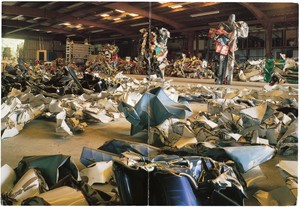
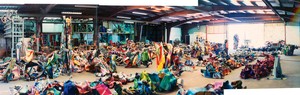
But “10 Coconut Studio,” located at the corner of 10 Cocoanut Avenue and Tenth Street, was where the main action happened. Even by today’s standards of mega studio complexes, this former lumber warehouse, which Chamberlain converted into a massive studio and sometimes residence, was impressive. And it was more than even that. It was a stage for large-scale fantasies. Chamberlain had plenty of room to move around in it—that is, until he filled it up with large pieces of colored metal. He had a new vision and ambition for his corpus of car parts. It didn’t just seem to be individual works neatly placed in a space. There was something larger and “mega organic” going on.
Chamberlain was a master of internalizing multiple references in his work, from the gestures of Abstract Expressionism, to Pop art and its relationship to the American automobile, to a crushed version of Minimalism’s additive, part-to-whole strategies. In one of the rooms at 10 Cocoanut he installed works by Donald Judd and Frank Stella that were sleek, geometric, and industrial-looking. They certainly looked out of place, providing a distinct contrast with Chamberlain’s own work and materials. It was as if he wanted to clearly delineate and perhaps even emphasize the differences between himself and his longtime friends.
Visiting that studio regularly over more than five years, I began to reframe how I saw the artist’s practice. It seemed to me that his move to Sarasota was part of a reimagining of his own work. By that point in his already-successful career, he had become weary of people situating his efforts in relation to US industry, either as an homage or a rebuke, as if his twisting and crushing of the auto industries’ products was a political statement. In Sarasota, he could change that perception. As he succinctly and wryly put it to me: “I came here to do some gardening.”
Sarasota wasn’t just a beach town. It had a jungle element to it, and 10 Cocoanut was on its edge, in an untamed coastal landscape where banyan trees, exotic wild plants, and aggressive vines grew like they were on steroids. Chamberlain’s art and studio were growing just as dramatically. The studio was a corrugated steel building with industrial-strength rigging equipment and a large, open-mouth metal crusher. For Chamberlain, the concept of a “factory,” such as the one that his friend Andy Warhol created, was gradually being replaced by the metaphor of steel gardens. Long lines of variously colored car parts were spread across the floor. Practically speaking, this was a straightforward way to sort the materials into different sizes and shapes before assembling the sculptures, but these lines also looked very much like rows in a garden. There was a new kind of animism here, and a masterful, illusionistic view of the materials as something other than car parts. In the heat and humidity of the Gulf Coast, one could imagine this corrugated-steel studio as an incubator or arboretum.
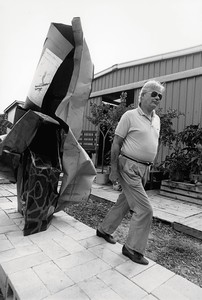
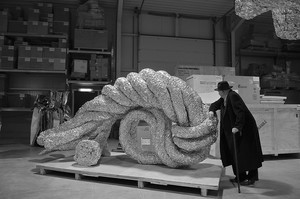
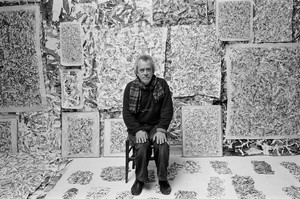
John Chamberlain, Sarasota, Florida, c. 1983. Photo: courtesy Michael Auping
My sculpture has something to do with the feeling of being on the water. Not just a feeling, but the physical and visual experience of being on the water.
John Chamberlain
The metal parts were sharp and rusty, so you had to be careful walking through this jungle of steel. But when you did, you would see various works starting to rise up off the floor, the way a plant might emerge from a seed. The space was originally made to store lumber, so the studio had a cavernous character and was lit only sporadically, which added to the eerie, jungle-like quality. When it was full, everything started to look like it belonged in the Amazon. When the pieces got large enough, the artist would take them outside and install them in what he called Chamberlain’s Gardens. This was no formal English garden; it felt very wild and a little dangerous.
It was in Sarasota that Chamberlain developed the Gondola series—long, floor-hugging forms made from the chassis of cars and trucks. Their titles referenced the famous Venetian boats, and the subtitles cited the names of authors and poets, such as Herman Melville, Marianne Moore, Jack Kerouac, Charles Olson, and Henry Miller. It sounds romantic, but they looked like alligators crawling around. Large reliefs hanging on the surrounding walls suggested huge, multicolored staghorn ferns. I’m exaggerating a bit, but not that much.
The place had a surreal and sexy quality. The artist’s mantra at the time was that his art had come to be about “gardening and sex”: “Art, gardening, and sex are fundamental to human nature. You don’t have to go to school to learn them. You just do it to your own needs, your personal specifications.” Finding out just what Chamberlain’s “specifications” were would be a journey. One hot and humid day, he sat me down on one of his huge foam-rubber sofa sculptures, in which seating arrangements were made by his cutting out pieces of the foam. You had to find an opening in which your body fit. “It’s all in the fit,” he would say. “And that is about sex and art.”
During one of our visits, he put me on the couch so I could watch his 1968 film The Secret Life of Hernando Cortez, in which Chamberlain, along with Warhol “superstars” Taylor Mead and Ultra Violet, wandered around the Yucatan looking for something (it’s never clear what) in a reimagined version of Hernán Cortés’s exploration of the Americas. They do at least find an abundance of casual sexual encounters. I had seen it before, but couldn’t discern the point of it until that moment. Viewing it in this darkly lit jungle of steel, I could see it as a strange cross between Warhol and Joseph Conrad. It had something of Warhol’s casual voyeurism of human sexuality, but also something a bit more chaotic and wild, a little closer to Conrad’s Heart of Darkness.
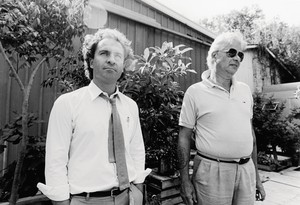
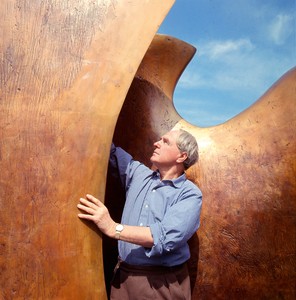
Michael Auping and John Chamberlain, Sarasota, Florida, c. 1983. Photo: Jan Silberstein
I asked Chamberlain why he used actors who were well known for their collaborations with Warhol, and his first response was, “Because they were available.” But he quickly elaborated, “And you don’t have to give them a script. They invent the story. In that environment, it’s like being at the end of the Earth, compared to Hollywood. I just went with the flow, the way I do with my other materials. I’m in the jungle there too.” After that viewing and interview, whenever I entered Chamberlain’s cavernous studio and saw him shoving car parts into the mouth of his crusher, I would think of mad Colonel Kurtz from Francis Ford Coppola’s Apocalypse Now (which draws heavily from Conrad’s novel) ensconced in his idea of a dark, primeval paradise.
It may again seem here like I’m letting my imagination run a little wild, but Chamberlain greatly admired Conrad: “Conrad could take you to a place where you didn’t think your mind could go. Getting to that place is what art is all about. . . . He doesn’t just tell a story. It’s just acting out your insanities, things that other people might think are crazy. . . . By the way, JC and I have the same initials.” Chamberlain also appreciated that he and Conrad had both been in the Navy. Chamberlain talked a lot about the Navy, and how his experience on the ocean informed his approach to sculpture. With some trepidation, I went sailing with him a couple of times. I was essentially ballast. In other words, my role was to move from one side of the boat to the other, depending on which side needed some weight when the wind tipped us. I needed to do this without hitting my head on the mast or getting knocked out of the boat by it. Even though I’d grown up in Southern California, I was never destined to be a sailor. But it seemed that Chamberlain was. His boat was relatively big—if memory serves, about fifty feet long—and he knew how to handle it.
On one of our voyages, I brought along my tape recorder. As it turns out, when the seas were calm, that was a good time to talk to Chamberlain. He went on about the ocean:
My sculpture has something to do with the feeling of being on the water. Not just a feeling, but the physical and visual experience of being on the water. Balance and motion. . . . Water is always moving. You have to balance the boat so it doesn’t tip. You also have to balance your body. You have to find a position or a stance that allows you to move quickly if you need to, but stable enough that you don’t fall over—or, worse, overboard. Those relationships between the water, the moving boat, and your body are what my sculpture is partly about. It’s about that stance. All sculpture is about gesture and stance, including mine. My sculptures always take a certain stance. And that makes it about how the sculpture stands and how the viewer stands in relation to it. When you are on a boat, you are constantly changing your stance or thinking about changing your stance. My sculptures work when they look like they are on the move.
I had always thought of Chamberlain’s art as a figurative gesture (Auguste Rodin was one of his heroes). But in his mind, “stance” was somehow more specific, about how the body feels and reacts not to a figurative narrative, but to the physicality of the work.
For Chamberlain, being on the ocean was both physical and visual. “Just look at the water. It’s always moving. The ocean is never static. My sculpture is liquid, and that relates to form and color. Look at the light and color distortions when you look into the water. That can happen with multicolored sculpture.” There is definitely a liquid quality to a lot of Chamberlain’s art—he builds with facets of car color that catch light, the result being that they keep our eyes moving. And after talking to Chamberlain, you begin to see the drips, ripples, and waves in the work. He also liked looking beneath the water—at seaweed, kelp beds, sea grass, coral. He would talk about putting some of his sculptures underwater so that he could see them rising up like coral reefs. And you can see his beautifully blurry prints and wide, luxe photographs as underwater images.
Regardless of whether any of us sees exactly what Chamberlain saw, in Sarasota it was easy and exhilarating to do a deep dive into his ideas. As it turned out, my initial fears of being isolated and off the art grid there turned out to be exaggerated. The Gulf Coast had become a special place for several New York artists to escape urban pressures and the East Coast winters. A place to recharge their thinking. Robert Rauschenberg made Captiva Island his home and studio and was almost always there when he wasn’t on the road. James Rosenquist moved to Aripeka, just above Tampa, where he had a massive painting studio. I visited them both; Sarasota was almost exactly in between the two. But it was my access to Chamberlain that was the jackpot for me. I was there for a little over five years, and in the years that followed I stayed in touch and continued to interview him about what was going on in his art. He would remain in Sarasota for a little over a decade, creating a large and important body of work there. Eventually he moved back to New York. He was always on the move. He took the car parts and the sailboat with him.
Michael Auping is an independent curator and art historian. Well-known as a curator and scholar of Abstract Expressionism, he has organized exhibitions of the work of Arshile Gorky, Philip Guston, and Clyfford Still. He has also organized major exhibitions of the work of Georg Baselitz, Anselm Kiefer, and Susan Rothenberg.