Avis Berman’s biography of Roy Lichtenstein, Becoming Roy Lichtenstein: The Path to Pop, will be published this fall by Abbeville Press, aligning with a major retrospective at the Whitney Museum of American Art, New York, in October. For the Quarterly she has adapted part of her text to focus on the artist’s formative experiences in New York in the 1920s and ’30s.
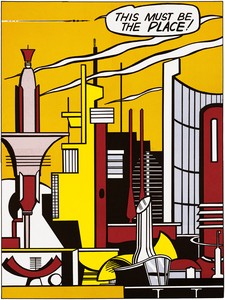
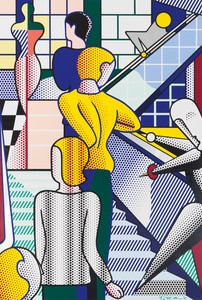
Roy Lichtenstein, This Must Be the Place, 1965, offset lithograph, in yellow, red, blue, and black on white wove paper, 24 ¾ × 17 ¾ inches (62.9 × 45.2 cm)
Roy Lichtenstein, This Must Be the Place, 1965, offset lithograph, in yellow, red, blue, and black on white wove paper, 24 ¾ × 17 ¾ inches (62.9 × 45.2 cm)
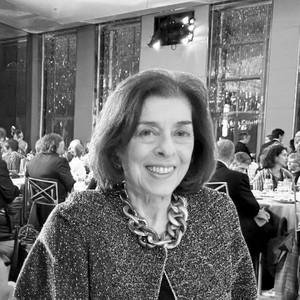
Avis Berman is the author of Rebels on Eighth Street: Juliana Force and the Whitney Museum of American Art, James McNeill Whistler, Edward Hopper’s New York, and Roy Lichtenstein: The Impossible Collection, and coauthor of Katharine Kuh’s memoir My Love Affair with Modern Art: Behind the Scenes with a Legendary Curator. Berman sustains a parallel career as an oral historian, interviewing over five hundred people in the visual arts for museums and artists’ foundations.
The essentials of childhood form us all. Even when we rebel against them, our thoughts, beliefs, and dreams are inseparable from our earliest years. Roy Lichtenstein, a native New Yorker, was no exception. He declared that his hometown was “the center of the universe,” a belief rooted in his childhood in Manhattan.1 His boyhood experiences—rich, textured, and determinative—could have happened nowhere else.
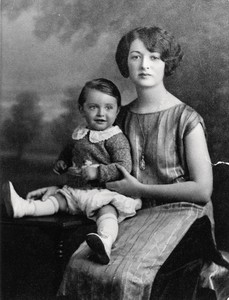
Born on October 27, 1923, Lichtenstein, a quiet boy bent on being an artist, was raised in an upper-middle-class milieu. He was the only son of Milton and Beatrice Werner Lichtenstein, his father a commercial real estate broker, his mother a musically talented woman who had wanted to be a concert pianist before her marriage. Beatrice, whom everyone called “Beezie,” and Milton were wed on March 1, 1922, and lived on the Upper West Side. The Lichtensteins’ first apartments were in the high nineties and low hundreds hugging West End Avenue, a district of well-tended apartment buildings and blocks close to Riverside Park and the Hudson River. West End Avenue was supposed to become a second Park Avenue; that never quite caught on, but it was filled with solid residential construction made for families with servants. Roy lived on and near West End Avenue for the first seventeen years of his life, making it the area of New York he knew best growing up.
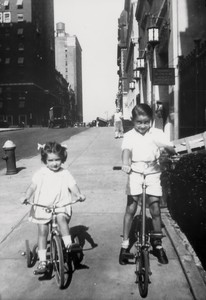
In the late 1920s, Milton’s business was prospering and Beezie was pregnant again. Before the birth of Renée, their second child, on December 17, 1927, they moved into the Clebourne, a grand building at 924 West End Avenue. Lichtenstein was an unlikely iconoclast in this atmosphere of privilege, but precisely because the household was proper and orderly, its heavy politesse created a setting that an artist might satirize. Selma Koch, Lichtenstein’s cousin, said, “At dinner, butter was never put on the table” except as “butter balls, and grapefruit had to be scalloped.”2 Renée Lichtenstein agreed: “We always had live-in help, and. . . . [t]here was some poor soul, in uniform, serving dinner. Good conversation and everything on time. All that was very structured. . . . But . . . [our parents] . . . were just funny, and we laughed a lot. . . . in spite of being very middle class in their actions and the way they led their life, verbally they always saw the irony of things. . . . That surely got passed down to my brother and his painting.”3
In late 1931 the Lichtensteins moved into 505 West End Avenue, at 84th Street, where they lived on the same floor as the conductor, composer, and virtuoso pianist Sergei Rachmaninoff. For Beezie this was akin to a dream realized: She still practiced the piano and her favorite composers were Tchaikovsky and Chopin. Lichtenstein remembered crawling underneath his mother’s piano, pushing the pedals to see how they worked, well before the family lived at 505 West End.4 Without any formal teaching he learned to play well enough to bang out blues and boogie-woogie. Rachmaninoff’s presence turned into a shared pastime for Beezie, Roy, and Renée: When the weather was good, the three of them left the building to stand outside the pianist’s open windows, listening to him play as the melodic sound floated down to the street below.
Lichtenstein also discovered the excitements of newspaper comic strips and vibrant radio serials in the genres of adventure and science fiction. He followed Dick Tracy, featuring the tough-talking detective who faced off against peculiar-looking villains; Alley Oop, starring a Stone Age protagonist who rode around on a dinosaur; and his favorite of the three, Buck Rogers. Buck Rogers in the 25th Century A.D., to give the strip its full title, was extravagantly pseudoscientific. The central character, an action hero who time-travels from the 1920s to vanquish evil in the twenty-fifth century and has a sideline in interplanetary exploration, made his debut in a comic strip in 1929 that was syndicated to forty-seven newspapers;5 by 1932, the strip had become an equally popular radio serial. These melodramas were an escapist brew of futuristic technology, clashes between good and evil, and valiant young men and boys acing feats of derring-do through their supernatural powers.
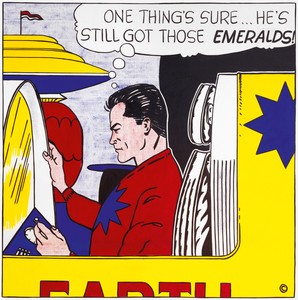
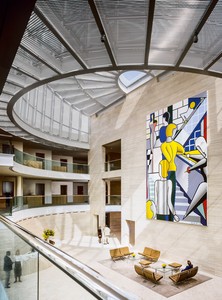
Lichtenstein’s immersion in newspaper strips and radio programs that were central to popular culture for middle-class American children in the 1930s was his introduction to cartoon imagery, style, characterization, and symbolism, and his imagination was seeded by them. The entertainments he knew from boyhood he would quarry decades later, augmenting them with 1960s adventure comics in the same genre. Thought to be avant-garde, he was nothing less than retrospective—among other things, he was memorializing the ephemera of his past. Buck Rogers was the central figure in a 1961 oil titled Emeralds, and Lichtenstein portrayed what he called “Buck Rogers architecture” in the print This Must Be the Place (1965) and in his monumental Times Square Mural (1990), both of which envision a space-age urban environment from a faux-1930s perspective. The name “Buck Rogers” was Lichtenstein’s shorthand for the folly of expecting the future to be anything like predictions of it.
Roy Lichtenstein, Emeralds, 1961, oil and graphite pencil on canvas, 68 ⅜ × 68 ½ inches (173.7 × 172.7 cm)
During the second half of 1933, the family moved to a seven-room apartment at 305 West 86th Street, between West End Avenue and Riverside Drive. It would be their home for the next eighteen years. At school, Lichtenstein was an average student, his academic performance just adequate because he spent his time outside the classroom on art and music. Art was the primary preoccupation, but his other passion was jazz and blues. The infatuation would probably have been less intense and meaningful but for his friendship with an intrepid boy named Donald Wolf, who educated him in jazz. Wolf had formed a band with two other boys; they patterned themselves after a Benny Goodman swing quartet, but they lacked a clarinetist. Lichtenstein was taking clarinet lessons, so he joined Wolf and his friends to fill the celebrated musician’s spot.
Lichtenstein and Wolf were part of an event that became a milestone in American cultural history: Wolf got a pair of fourth-row tickets to Benny Goodman’s momentous concert at Carnegie Hall on January 16, 1938. Here, hot jazz and swing were heard in an august sanctum more known for Bach than for blues. Jazz and other varieties of African-American music had appeared earlier at Carnegie Hall, but this concert was different, jazz historian James Lincoln Collier writes, in the way it “captured the public imagination,” and its effect still resonates beyond the jazz community.6 Goodman’s band, a musical sensation, defined swing at that moment. He performed with his full-size, thirteen-piece orchestra, gave spots to his trio and his quartet—chamber units within his larger ensemble—and included a jam session with musicians from Duke Ellington’s and Count Basie’s bands. The trio consisted of Goodman, Gene Krupa on drums, and pianist Teddy Wilson, hired in 1935; the quartet had emerged when vibraphonist Lionel Hampton signed on in 1936. The addition of these brilliant musicians, Lewis Erenberg writes, made Goodman “the most visible symbol of racial integration in the music business.”7 At first the trio and quartet had been heard only on radio broadcasts and recordings, so less cognizant listeners would not have known that the band was integrated, Wilson and Hampton being Black. As Goodman’s clout grew, he insisted that his entire ensemble appear on stage—either everyone played or no one did.8
The Goodman concert would win canonical status as a marker of racial equality a year before the contralto Marian Anderson was denied permission to sing before an integrated audience in Washington, DC. The audience was as excited as the musicians were nervous. Despite the Goodman band’s fame, jazz was still considered a low form of entertainment, and Carnegie Hall was a byword for elevated classical music. This dichotomy only added to the furor: All of the hall’s 2,760 seats sold out, as did a hundred extra chairs added to the side of the stage to accommodate the demand.9 On the day of the concert, a long line queued at the box office for standing-room tickets.
The concert was a triumph. After Basie’s “One O’Clock Jump,” tributes to the Gershwins and Irving Berlin followed with “I Got Rhythm,” “The Man I Love,” and “Blue Skies.” When the quartet played, Wilson brought down the house with his rendition of “Body and Soul.” This jazz standard was Lichtenstein’s favorite song. The finale was the swing blockbuster “Sing, Sing, Sing,” which Goodman’s full band embroidered with variation on variation. The teenagers in the audience were bouncing up and down in their seats as Goodman sizzled on the clarinet and Krupa hit the drums. Don Wolf never forgot the event—nearly seventy years after the concert took place, he brightened from his memory of its sights and sounds. As for Lichtenstein, the performance may have been the first time he witnessed popular art crashing the gates of cultural acceptance and high art being the better for it.
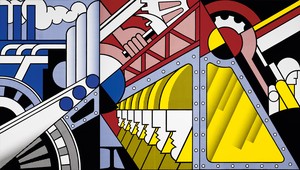
Roy Lichtenstein, Preparedness, 1968, acrylic, oil, and graphite pencil on canvas, in 3 parts (joined), 120 × 216 inches (304.8 × 548.6 cm). Photo: courtesy Solomon R. Guggenheim Museum, New York
Pablo Picasso had personified the summit of modern art for decades but in the late 1930s he was attracting even more attention. In the spring of 1937 he painted Guernica, the apocalyptic canvas that was swiftly recognized as a consummate expression of antiwar protest against fascism’s threat to the world. Picasso’s impact on New York was heightened through the agency of the Museum of Modern Art and its visionary director, Alfred H. Barr Jr. The artist was sparsely represented in the museum’s permanent collection, and Barr would remedy that as the preamble for two exhibitions planned for 1939: a celebration of the institution’s first ten years of existence and an all-encompassing Picasso retrospective. In 1938 and 1939, Barr acquired two paintings that are touchstones of the museum’s collection to this day: Girl before a Mirror and Les Demoiselles d’Avignon.10 They and nine other Picasso works were exhibited from May 10 to September 30, 1939, during the run of Art in Our Time, an exhibition of over 280 paintings, drawings, watercolors, prints, sculptures, and photographs, plus a concurrent architecture show and film program. The opening of this tenth-anniversary show was timed to coincide with the launch of the museum’s new, purpose-built building at 11 West 53rd Street. More than 1 1/2 million people visited the new Modern and its inaugural exhibition. As a New Yorker, an artist in the making, and a museumgoer, Lichtenstein would not have missed them.
The publicity for Art in Our Time positioned the show as bait for the crowds expected to jam the 1939–40 New York World’s Fair, which had opened on April 30, just ten days before.11 Lichtenstein was one of the 25 million spectators at the fair and there is no guesswork about its effect on him: It was not only a formative experience but the great visual event of his early life. The fair was a hymn to industrial design, and the profession’s titans created pavilions and exhibitions for it. Lichtenstein derived later renditions of Depression-era motifs and images from its streamlined architecture and overall design, and he poked fun at a materialism marketed as social idealism. The fair’s main theme was “building the world of tomorrow,” and it trumpeted a fantastical future of machine-age efficiency. Television was introduced, as were Frigidaires and fluorescent lights. In its rampant consumerism, the fair was practically a lexicon of the Pop art that would emerge twenty years later, and throughout the 1960s Lichtenstein would exploit the ironies of an American escapism reached through technological bliss.
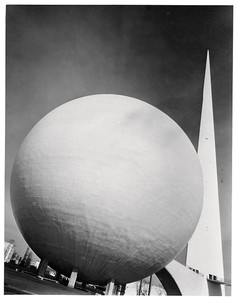
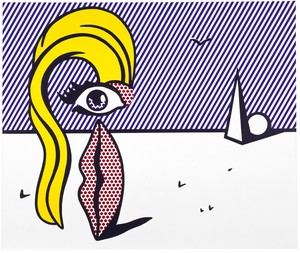
Like so many young people of his generation, Lichtenstein did not so much visit the fair as live in it. The art historian Robert Rosenblum was captivated by the fair as a child and was drawn back to it again and again; he would describe it as an “Elysian Fields” with a “science-fiction modernity,” akin to “something out of Buck Rogers or Flash Gordon” landing in Queens.12 No wonder Lichtenstein registered the 1930s as sequences of design motifs and architectural caprices. Visitors entered the fair along a flag-lined boardwalk, beyond which gleamed a tall white obelisk and a wide white globe, united in a sleek partnership. These structures were the Trylon and Perisphere, the trademark symbols of the Fair. The Trylon and Perisphere, paired in geometric balance, were so freighted and yet so meaningless that forty years later Lichtenstein could not resist their graphic and humorous potential, incorporating them into two Surrealist-inflected paintings in 1977.
The Trylon and Perisphere at the New York World’s Fair, 1939–40. Photo: Manuscripts and Archives Division, the New York Public Library
Roy Lichtenstein, Figure with Trylon and Perisphere, 1977, acrylic, oil, and graphite pencil on canvas, 42 × 50 inches (106.7 × 127 cm)
Lichtenstein’s favorite ride was Futurama, a spectacle devised by the designer Norman Bel Geddes for the General Motors pavilion. It was a sensational trip through a vision of what a fully motorized America would look like in 1960. Visitors sat in sound-equipped chairs on a train whooshing through a panorama of streets, mountains and rivers, airports and sidewalks, descending and ascending for fifteen thrilling minutes. Lichtenstein remembered the pavilion’s roads around planned cities, which prophesied miracles yet only made things worse. Preparedness (1968) and Peace through Chemistry (1969–70), two of Lichtenstein’s most biting titles, were inspired by the “rational thinking” and seemingly benevolent social straitjacketing implicit in corporate wish-fulfillments like Futurama if taken to actual conclusions. Lichtenstein’s memory was accurate: The titles of the murals on the fair buildings’ exteriors were as bromidic as the ones he created. These murals were Lichtenstein’s first sustained exposure to a major art form of the 1930s. It was an art form that he would attempt with distinction, becoming one of the most significant muralists of his generation in what was largely a postmural culture.
From November 15, 1939, to January 7, 1940, Picasso: Forty Years of His Art took over the Modern. It opened during the first semester of Lichtenstein’s senior year in high school and contained more than 350 works, including Guernica. Lichtenstein did not say whether or not he saw this megashow in New York, although even more fiercely than in May, when the museum had reopened, he was closer to a future dedicated to art. In 1939 Lichtenstein was not entirely ready for Picasso, especially in such depth and intricacy. He recalled that when he first saw Picasso’s work, “it looked . . . very insensitive to me”—its “crudeness” was overwhelming, and Guernica was one of the pictures that had perturbed him as crude.13 Picasso’s raw vigor struck him as more threatening than tonic. By 1941, though, the Spaniard was Lichtenstein’s chief artistic god and Guernica his favorite painting.
As the summer of 1940 sped to an end, Lichtenstein prepared to enter Ohio State University, where he could get art training and the college degree his parents required. That September, he left the East Coast for Columbus. He would not live in New York full-time again until 1963.
1 Roy Lichtenstein, quoted in Avis Berman, “In a New Times Square, a Wink at Futures Past,” New York Times, September 1, 2002.
2 Selma Lichtenstein Koch, interview with the author, March 20, 2002, p. 42. Roy Lichtenstein Foundation Archives, New York.
3 Renée Lichtenstein Tolcott, interview with the author, July 26, 2001, pp. 13–14. Roy Lichtenstein Foundation Archives.
4 Lichtenstein, in an interview with Frederic Tuten, January 22, 1988, 8. Roy Lichtenstein Foundation Archives. Lichtenstein, in Richard Brown Baker, “Oral history interview with Roy Lichtenstein, 1963 November 15–1964 January 15.” Archives of American Art, Smithsonian. Available online at www.aaa.si.edu/collections/interviews/oral-history-interview-roy-lichtenstein-11994#transcript (accessed December 20, 2025).
5 See McCandlish Phillips, “Returning from the 25th Century . . . ,” New York Times, December 2, 1969, p. 62.
6 James Lincoln Collier, Benny Goodman and the Swing Era (New York and Oxford: Oxford University Press, 1989), pp. 214–15.
7 Lewis A. Erenberg, Swingin’ the Dream: Big Band Jazz and the Rebirth of American Culture (Chicago and London: University of Chicago Press, 1998), pp. 82–83.
8 See Ross Firestone, Swing, Swing, Swing: The Life and Times of Benny Goodman (New York and London: W. W. Norton & Company, 1993), p. 183.
10 See Michael FitzGerald, Picasso and American Art, exh. cat. (New York: Whitney Museum of American Art, in association with Yale University Press, New Haven and London, 2006), p. 169.
11 Russell Lynes, Good Old Modern: An Intimate Portrait of the Museum of Modern Art (New York: Atheneum, 1973), p. 197.
12 Robert Rosenblum, “Remembrance of Fairs Past,” in Remembering the Future: The New York World’s Fair from 1939 to 1964, exh. cat. (New York: Queens Museum/Rizzoli International Publications, 1989), pp. 11–12.
13 Lichtenstein, in Baker, “Oral history interview with Roy Lichtenstein.”
Avis Berman, Becoming Roy Lichtenstein: The Path to Pop (Abbeville Press, 2026)
Roy Lichtenstein, Whitney Museum of American Art, New York, Opens October 2026
Avis Berman is the author of Rebels on Eighth Street: Juliana Force and the Whitney Museum of American Art, James McNeill Whistler, Edward Hopper’s New York, and Roy Lichtenstein: The Impossible Collection, and coauthor of Katharine Kuh’s memoir My Love Affair with Modern Art: Behind the Scenes with a Legendary Curator. Berman sustains a parallel career as an oral historian, interviewing over five hundred people in the visual arts for museums and artists’ foundations.