


Now available
Gagosian Quarterly Summer 2026
The Summer 2026 issue of Gagosian Quarterly is now available, featuring Ellen Gallagher’s Fast-Fish and Loose-Fish (2026) on the cover.

Richard Diebenkorn
Untitled (Magician’s Table), 1947
Gouache and graphite on hardboard, 14 ⅛ × 14 ¾ inches (35.9 × 37.5 cm)
© 2025 Richard Diebenkorn Foundation/Artists Rights Society (ARS), New York

Richard Diebenkorn
Untitled #32 (Sausalito), 1949
Oil on canvas, 57 × 39 ½ inches (144.8 × 100.3 cm)
© 2025 Richard Diebenkorn Foundation/Artists Rights Society (ARS), New York

Richard Diebenkorn
Untitled, 1949
Oil on canvas, 48 × 41 inches (121.9 × 104.1 cm), North Carolina Museum of Art, Raleigh
© 2025 Richard Diebenkorn Foundation/Artists Rights Society (ARS), New York

Richard Diebenkorn
Untitled, c. 1950–52
Ink on paper, 17 × 14 inches (43.2 × 35.6 cm)
© 2025 Richard Diebenkorn Foundation/Artists Rights Society (ARS), New York

Richard Diebenkorn
Untitled, 1950
Ink on paper, 14 ½ × 9 ⅝ inches (36.8 × 24.4 cm)
© 2025 Richard Diebenkorn Foundation/Artists Rights Society (ARS), New York

Richard Diebenkorn
Untitled (Albuquerque), 1950–51
Oil on canvas, 16 ¼ × 17 ⅝ inches (41.3 × 44.8 cm)
© 2025 Richard Diebenkorn Foundation/Artists Rights Society (ARS), New York

Richard Diebenkorn
Untitled, 1952
Oil on canvas, 83 ½ × 45 ½ inches (212.1 × 115.6 cm)
© 2025 Richard Diebenkorn Foundation/Artists Rights Society (ARS), New York

Richard Diebenkorn
Urbana #2 (The Archer), 1953
Oil on canvas, 64 ½ × 47 ½ inches (163.8 × 120.7 cm)
© 2025 Richard Diebenkorn Foundation/Artists Rights Society (ARS), New York

Richard Diebenkorn
Still Life with Matches, 1955
Oil on canvas, 20 ½ × 14 ¼ inches (52.1 × 36.2 cm)
© 2025 Richard Diebenkorn Foundation/Artists Rights Society (ARS), New York

Richard Diebenkorn
Berkeley #52, 1955
Oil on canvas, 58 ⅝ × 53 ⅞ inches (148.9 × 136.8 cm), National Gallery of Art, Washington, DC
© 2025 Richard Diebenkorn Foundation/Artists Rights Society (ARS), New York

Richard Diebenkorn
Untitled, c. 1955–66
Charcoal on paper, 12 × 17 ½ inches (30.5 × 44.5 cm)
© 2025 Richard Diebenkorn Foundation/Artists Rights Society (ARS), New York

Richard Diebenkorn
Interior with View of the Ocean, 1957
Oil on canvas, 49 ½ × 57 ⅞ inches (125.7 × 147 cm), Phillips Collection, Washington, DC
© 2025 Richard Diebenkorn Foundation/Artists Rights Society (ARS), New York

Richard Diebenkorn
Untitled, c. 1958–66
Ink on paper, in 2 parts (joined), overall: 17 × 12 ⅝ inches (43.2 × 32.1 cm)
© 2025 Richard Diebenkorn Foundation/Artists Rights Society (ARS), New York

Richard Diebenkorn
Ingleside, 1963
Oil on canvas, 81 ¾ × 69 ½ inches (207.6 × 176.5 cm), Grand Rapids Art Museum, Michigan
© 2025 Richard Diebenkorn Foundation/Artists Rights Society (ARS), New York

Richard Diebenkorn
Ocean Park #19, 1968
Oil and charcoal on canvas, 98 × 80 inches (248.9 × 203.2 cm), San Francisco Museum of Modern Art
© 2025 Richard Diebenkorn Foundation/Artists Rights Society (ARS), New York

Richard Diebenkorn
Ocean Park #17, 1968
Oil and charcoal on canvas, 80 × 72 inches (203.2 × 182.9 cm), Stanley Museum of Art, University of Iowa, Iowa City
© 2025 Richard Diebenkorn Foundation/Artists Rights Society (ARS), New York

Richard Diebenkorn
Ocean Park #79, 1975
Oil and charcoal on canvas, 93 × 81 inches (236.2 × 205.7 cm), Philadelphia Art Museum
© 2025 Richard Diebenkorn Foundation/Artists Rights Society (ARS), New York

Richard Diebenkorn
Untitled, 1984/1992
Acrylic, gouache, crayon, and graphite on paper, 38 × 25 inches (96.5 × 63.5 cm)
© 2025 Richard Diebenkorn Foundation/Artists Rights Society (ARS), New York

Richard Diebenkorn
Untitled, c. 1988–92
Gouache, pasted paper, graphite, and crayon on paper, 9 ½ × 6 ⅜ inches (24.1 × 16.2 cm)
© 2025 Richard Diebenkorn Foundation/Artists Rights Society (ARS), New York

Richard Diebenkorn
Untitled, c. 1988–91
Gouache on paper, 30 ⅜ × 23 inches (77.2 × 58.4 cm)
© 2025 Richard Diebenkorn Foundation/Artists Rights Society (ARS), New York

Richard Diebenkorn
Untitled, c. 1991
Acrylic, charcoal, and gouache on paper, 25 × 19 inches (63.5 × 48.3 cm)
© 2025 Richard Diebenkorn Foundation/Artists Rights Society (ARS), New York
Do search. But in order to find other than what is searched for.
—Richard Diebenkorn
Among the most renowned artists to emerge from postwar California, Richard Diebenkorn (1922–1993) is recognized as a key figure in the development of American art. Diebenkorn started out as a representational artist, before gaining fame for work in the Abstract Expressionist mode. He developed a uniquely experimental approach to figuration in the mid-1950s, and a decade later, returned to abstraction with his masterful Ocean Park series (1967–88).
Born in Portland, Oregon, Diebenkorn grew up in San Francisco and attended Stanford University. Serving in the Marine Corps during World War II and stationed in North Carolina and Virginia, he visited art collections in Washington, DC; New York; and Philadelphia, where he studied important works by Paul Cezanne, Henri Matisse, and Piet Mondrian. Upon his return to the Bay Area, he attended the California School of Fine Arts (later renamed the San Francisco Art Institute). In 1946, he received the prestigious Albert Bender grant-in-aid, funding that enabled him to relocate temporarily to Woodstock, New York, where he made occasional, strategic visits to New York City’s galleries and museums. During that year, his wife, Phyllis, recalled that he “learned about color” and “painted from dawn till dusk.” In 1947, he was invited to join the California School of Fine Arts faculty.
Following his first solo exhibition at the California Palace of the Legion of Honor in 1948, Diebenkorn enrolled at the University of New Mexico, Albuquerque, in 1950 for a master of arts degree. There, he produced paintings characterized by spatially ambiguous colored planes, energetic brushwork, and meandering calligraphic lines that synthesize the improvisatory spirit of Abstract Expressionism with desert landscapes seen from above. After a year teaching in Urbana, Illinois, and the summer months in New York, he moved back to California in the fall of 1953. With the Berkeley abstractions (1953–56), his palette became more vibrant and his compositions more complex.

The Summer 2026 issue of Gagosian Quarterly is now available, featuring Ellen Gallagher’s Fast-Fish and Loose-Fish (2026) on the cover.

In this video, Jenny Saville sits down inside her first major exhibition in Venice to discuss how the great Venetian artists of the past and the city’s heritage influence her work. The show brings together more than thirty canvases and works on paper from the 1990s to the present, tracing the development of her practice, which is deeply rooted in the history of painting.
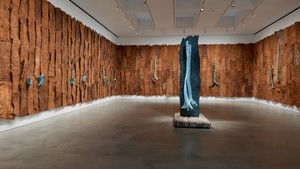
On the occasion of his exhibition The Reflection of Bronze at Gagosian, New York, Giuseppe Penone and curator Adam D. Weinberg sit down to discuss the genesis of, and their collaboration on, the show.
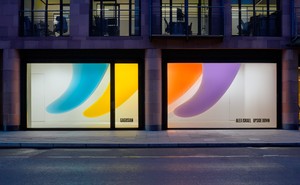
Ahead of Alex Israel’s exhibition of four new Fin sculptures at Gagosian, London, the artist spoke with Susan Casey, author of The Wave: In Pursuit of the Rogues, Freaks, and Giants of the Ocean (2010), about the ocean, surfing, and Los Angeles.
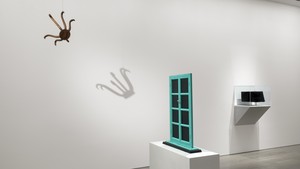
Marcel Duchamp is the inaugural exhibition of the gallery’s new ground-floor space in the historic building at 980 Madison Avenue. In this video, the Quarterly’s Alison McDonald discusses the artist’s most iconic readymades and their connection to New York City.
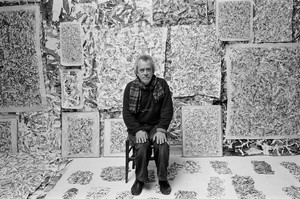
On July 9, Simon Hantaï: the last studio opens at Gagosian, Gstaad. Curated by Anne Baldassari, the show comprises sixteen of the artist’s dernier atelier (last studio) paintings of 1982–85. The exhibition is accompanied by an illustrated catalogue, copublished by Gagosian and Skira, which features an essay by Baldassari and an extensive portfolio of previously unpublished photographs by Édouard Boubat. Here, we share the introductory chapter from the publication.
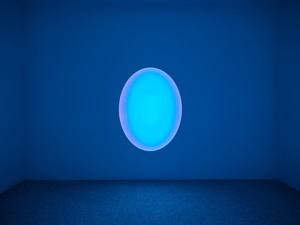
An exhibition at Gagosian, Hong Kong, brings together three of James Turrell’s Glasswork pieces along with site plans, photographs, and models of his Skyspaces and Roden Crater. Here, Alice Godwin explores the history of the Glassworks and their relationship to the artist’s wider practice.

On April 16, the Institute of Contemporary Art, Boston, opened the first midcareer survey of Derrick Adams’s multidisciplinary practice. Covering over twenty years of work, the exhibition, titled View Master, brings together the artist’s painting, sculpture, collage, performance, and video, as well as a vibrant new commission created for the museum’s façade. Ahead of the opening, Adams met with Tessa Bachi Haas, cocurator of the survey, to discuss his formative experiences with television, the impact of his work in arts education on his practice, and the importance of taking a more complex, more joyful, and more expansive approach to Black American life and culture.

Adam D. Weinberg has been working with Giuseppe Penone on an exhibition of the artist’s new sculptures, The Reflection of Bronze, that opens at Gagosian, New York, on April 22. The works explore the character and possibilities of bronze. Here, Weinberg considers Penone’s enduring engagement with the alloy and addresses the conceptual underpinnings of the exhibition’s three-room structure.

Jeff Koons tells Alison McDonald about his appreciation for the pioneering artist and thinker Marcel Duchamp.
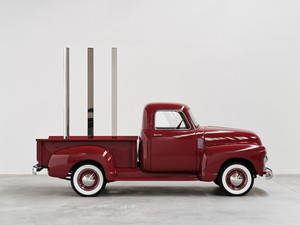
The Singular Experience at Gagosian’s Le Bourget gallery is the largest exhibition of Walter De Maria’s work in France in several decades. Organized by Donna De Salvo, senior adjunct curator at Dia Art Foundation, the exhibition marks the first time De Maria’s final sculpture, Truck Trilogy (2011–17), is being shown outside of the United States. Here, De Salvo speaks with artist Lucy Raven about her evolving kinship with De Maria and more.
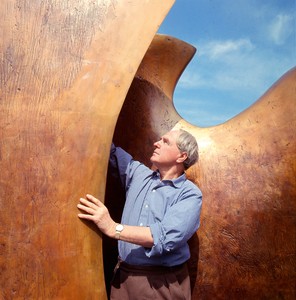
Laura Bruni writes about a major exhibition celebrating the work of the British sculptor Henry Moore at the Royal Botanic Gardens, Kew, London.
Request more information about
Richard Diebenkorn