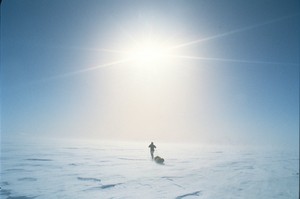
Ed Ruscha and Erling Kagge: Silence, Slowness, Exploration
Ed Ruscha sits down with the author and explorer Erling Kagge to discuss existence.
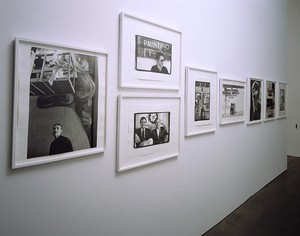
Installation view
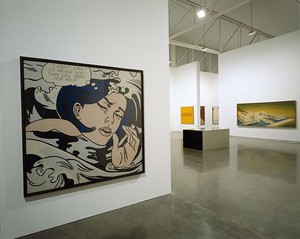
Installation view
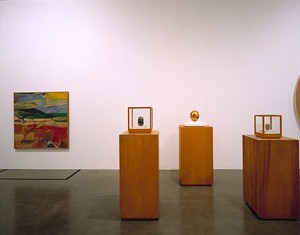
Installation view
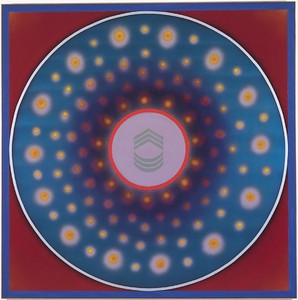
Billy Al Bengston
Buster, 1962
Oil and sprayed lacquer on Masonite, 60 × 60 inches (152.4 × 152.4 cm)
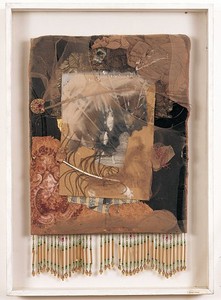
Bruce Conner
September 13, 1959, 1959
Mixed media assemblage, 22 × 15 ½ inches (56 × 39 cm)
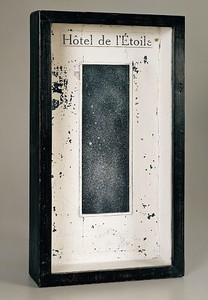
Joseph Cornell
Hotel de L’Etoile, 1950
Wood, glass, oil, and paper box construction, 22 ½ × 12 ¾ × 7 inches (57.2 × 32.4 × 17.8 cm)
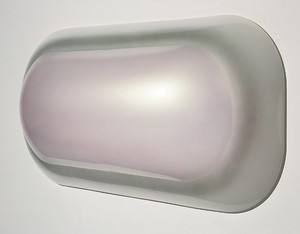
Craig Kauffman
Untitled (Bubble), 1968
Acrylic and lacquer on vacuum-formed plastic, 43 × 89 × 15 inches (109.2 × 226.1 × 38.1 cm)
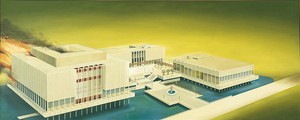
Ed Ruscha
Los Angeles County Museum on Fire, 1968
Oil on canvas, 52 ½ × 133 ½ inches (135.9 × 339.1 cm)
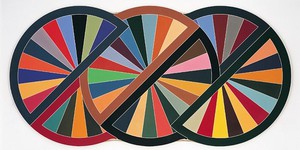
Frank Stella
Firuzabad III, 1970
Polymer and fluorescent polymer paint on canvas, 120 × 241 inches (304.8 × 612.1 cm)
Gagosian is pleased to present an exhibition celebrating the years of the pioneering Ferus Gallery in Los Angeles (1957–67). Organized by Irving Blum, the exhibition brings together historical examples of the artists fostered and represented by Ferus during this decade.
During the 1960s, under the direction of Irving Blum, Ferus became one of the most significant galleries on the West Coast. This exhibition will feature twenty-two of the Ferus artists, with many works on loan from international museums and private collections. Some of the highlights of the exhibition will include Andy Warhol’s Campbell’s Soup Cans from the collection of the Museum of Modern Art in New York; Ed Ruscha’s Los Angeles County Museum on Fire from the Hirshhorn Museum in Washington, DC; and Ed Kienholz’s Walter Hopps, Hopps, Hopps from the Menil Collection in Houston.
Artists included in this exhibition: John Altoon, Larry Bell, Billy Al Bengston, Wallace Berman, Bruce Conner, Joseph Cornell, Jay DeFeo, Richard Diebenkorn, Robert Irwin, Jasper Johns, Donald Judd, Craig Kauffman, Ellsworth Kelly, Ed Kienholz, Roy Lichtenstein, Ed Moses, Kenneth Price, Ed Ruscha, Kurt Schwitters, Hassel Smith, Frank Stella, Andy Warhol
A fully illustrated catalogue with an essay by Kirk Varnedoe and an interview with Irving Blum by Roberta Bernstein will accompany the exhibition.
Ed Ruscha sits down with the author and explorer Erling Kagge to discuss existence.
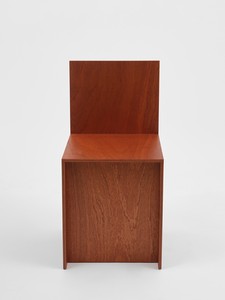
From the perspectives of their respective fields, three international cultural figures—artist and designer Ronan Bouroullec, fashion visionary Michèle Lamy, and chef and restaurateur Enrique Olvera—reflect on Donald Judd’s work in furniture, the subject of recent exhibitions in South Korea and Japan.
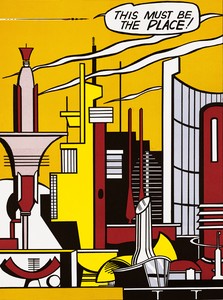
Avis Berman’s biography of Roy Lichtenstein, Becoming Roy Lichtenstein: The Path to Pop, will be published this fall by Abbeville Press, aligning with a major retrospective at the Whitney Museum of American Art, New York, in October. For the Quarterly she has adapted part of her text to focus on the artist’s formative experiences in New York in the 1920s and ’30s.

On January 22, Gagosian, in partnership with Castelli Gallery, opened an exhibition of historic works by Jasper Johns at the 980 Madison Avenue gallery in New York. A survey of the crosshatch paintings and drawings that dominated his practice from 1973 to 1983, the presentation united works that have rarely been seen with loans from sources including distinguished American museums. The exhibition commemorates the fiftieth anniversary of this body of work’s debut at Castelli Gallery in 1976. Here, Larry Gagosian speaks with the Quarterly’s Alison McDonald about the impetus for this project, his memories of seeing the exhibition in 1976, and the enduring impact of these paintings on artists and collectors.
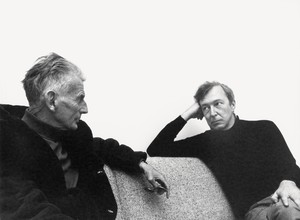
Nearly fifty years ago, Samuel Beckett and Jasper Johns met in Paris and began a collaboration on what would become Foirades/Fizzles, a deluxe limited-edition artist’s book published by Petersburg Press in 1976. Now, on the occasion of the Jasper Johns retrospective at the Philadelphia Museum of Art and New York’s Whitney Museum of American Art, Gagosian Quarterly looks back to the genesis of this project with a conversation between independent researcher Anthony Atlas and Gagosian director Bob Monk. Their discussion focuses on the creative encounter between the artist and the writer and on how the book and related works became a generative source in Johns’s art.

The Fall 2025 issue of Gagosian Quarterly is now available, featuring Andy Warhol’s Blue Liz as Cleopatra (1962) on the cover.

Carlos Valladares tracks the artist’s engagements with Hollywood glamour, thinking through the ways in which the star system and its marketing engine informed his work.

In the second part of a two-part essay, art historian John B. Ravenal considers Jasper Johns’s continued engagement with the motif of woodgrain.

As American identity once again comes into question during a politically charged election cycle, the Quarterly revisits the motif of the American flag in art. Here, John B. Ravenal contextualizes Robert Lazzarini’s new wall-based flag sculptures and elucidates the tensions they lay bare in the symbol of our nation.

In the first part of a two-part essay, art historian John B. Ravenal considers Jasper Johns’s continued engagement with the motif of woodgrain.
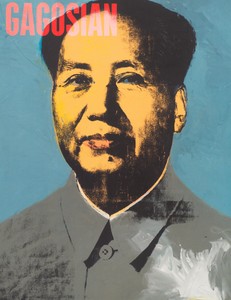
The Fall 2024 issue of Gagosian Quarterly is now available, featuring Andy Warhol’s Mao (1972) on the cover.

Jessica Beck examines Andy Warhol’s return to painting in the 1970s, focusing on the artist’s Mao series.
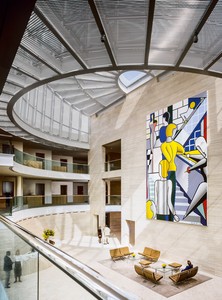
Michael Ovitz, cofounder of Creative Artists Agency (CAA), looks back to 1989, the year he and the architect I. M. Pei commissioned Roy Lichtenstein to create the Bauhaus Stairway Mural for the then new CAA Building in Los Angeles. Through the experience of working with Lichtenstein, Ovitz formed a meaningful friendship with the artist.
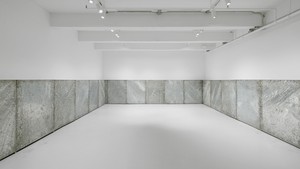
In this video, Flavin Judd, the artist’s son and artistic director of Judd Foundation, discusses a historic large-scale work by his father from 1970, ahead of its presentation at Art Basel Unlimited 2024.
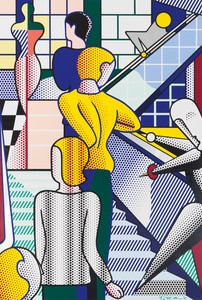
Alice Godwin and Alison McDonald explore the history of Roy Lichtenstein’s mural of 1989, contextualizing the work among the artist’s other mural projects and reaching back to its inspiration: the Bauhaus Stairway painting of 1932 by the German artist Oskar Schlemmer.
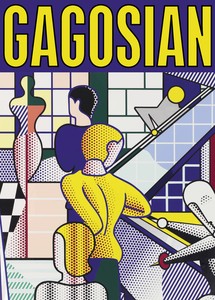
The Summer 2024 issue of Gagosian Quarterly is now available, featuring a detail of Roy Lichtenstein’s Bauhaus Stairway Mural (1989) on the cover.
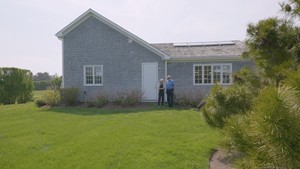
In celebration of the centenary of Roy Lichtenstein’s birth, Irving Blum and Dorothy Lichtenstein sat down to discuss the artist’s life and legacy, and the exhibition Lichtenstein Remembered curated by Blum at Gagosian, New York.
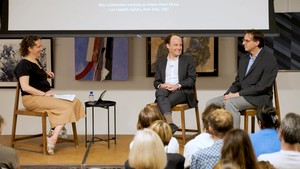
Gagosian and the Art Students League of New York hosted a conversation on Roy Lichtenstein with Daniel Belasco, executive director of the Al Held Foundation, and Scott Rothkopf, senior deputy director and chief curator of the Whitney Museum of American Art, New York. Organized in celebration of the centenary of the artist’s birth and moderated by Alison McDonald, chief creative officer at Gagosian, the discussion highlights multiple perspectives on Lichtenstein’s decades-long career, during which he helped originate the Pop art movement. The talk coincides with Lichtenstein Remembered, curated by Irving Blum and on view at Gagosian, New York, through October 21.
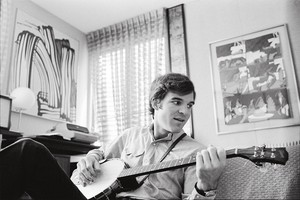
Actor and art collector Steve Martin reflects on the friendship and professional partnership between Roy Lichtenstein and art dealer Irving Blum.
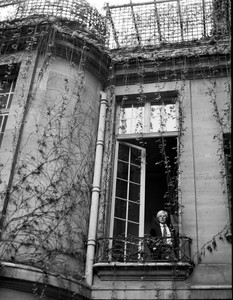
Andy Warhol’s Insiders at the Gagosian Shop in London’s historic Burlington Arcade is a group exhibition and shop takeover that feature works by Warhol and portraits of the artist by friends and collaborators including photographers Ronnie Cutrone, Michael Halsband, Christopher Makos, and Billy Name. To celebrate the occasion, Makos met with Gagosian director Jessica Beck to speak about his friendship with Warhol and the joy of the unexpected.
