Georg Baselitz and the Possibilities of Print
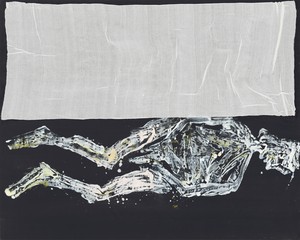
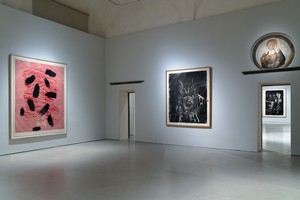
On the occasion of Baselitz: AVANTI! at the Museo Novecento in Florence, Italy, Holly EJ Black considers the roots and reverberations of Georg Baselitz’s printmaking.
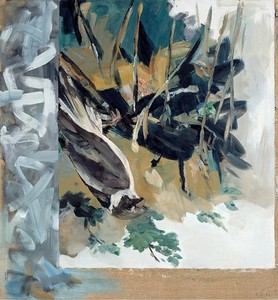
Georg Baselitz
Der Falke, 1971
Oil and acrylic on canvas, 70 ⅞ × 66 ⅞ inches (180 × 170 cm)
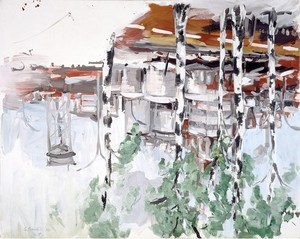
Georg Baselitz
Industrielandschaft, 1970
Acrylic on canvas, 78 ¾ × 98 ⅜ inches (200 × 250 cm)
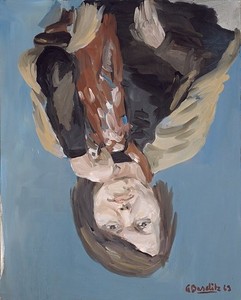
Georg Baselitz
Porträt Elke, 1969
Acrylic on canvas, 63 ¾ × 51 ⅛ inches (162 × 130 cm)
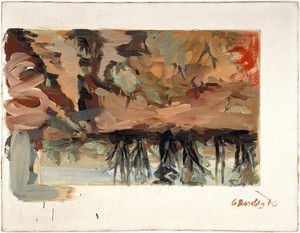
Georg Baselitz
Mühlheimer Wald (2), 1970
Acrylic on canvas, 51 ⅛ × 63 ¾ inches (130 × 162 cm)
Gagosian is pleased to present two exhibitions highlighting the myriad accomplishments of painter and sculptor Georg Baselitz. These exhibitions will be held concurrently in both the uptown and downtown New York galleries.
In Gagosian’s Madison Avenue gallery, Georg Baselitz: The Turning Point: Paintings 1969–71 documents a revolutionary shift in the artist’s paintings that began in 1969. Although Baselitz had previously explored a range of artistic styles as diverse as Northern Renaissance panel painting and New York School abstraction, he significantly departed from long-standing artistic conventions when he started in 1969 to turn his painted subjects on their heads. The canvases on view are portraits—depicting Baselitz’s wife, his friends, or art world luminaries—or rural landscapes that have been inverted. Baselitz’s avant-garde approach, a reaction against the perspectival system employed in figure painting since the Renaissance, has since become characteristic of his painting. An intended effect of such portraits and landscapes is that they seem at first glance to be complete abstractions. Of his inverted subjects, Baselitz has said that, “I must take everything which has been an object of painting—landscape, the portrait, and the nude, for example—and paint it upside-down. That is the way to liberate representation from content.”
On view in the downtown Chelsea gallery, Georg Baselitz: Recent Sculptures features monumental wooden sculptures produced since 2003, as well as several works dating from 1996 through 1997. Baselitz, who has created more than fifty sculptures in wood since 1980, has noted that the medium offers unique advantages: “The same problem can be addressed more directly in sculpture, which is less hedged about with qualifications than painting. It is more primitive and brutal.” These larger-than-life-size carvings have each been hewn from a single tree trunk with the aid of an ax and a chainsaw—a contemporary approach to traditional German woodcarving. While they invoke the human form, the sculptures do not recall specific people. Paint applied to the figures’ surfaces suggests clothing or facial features, but the blocky, hulking bodies seem almost to be caricatures when seen from afar. Baselitz’s sculptures, like his paintings, waver between figuration and abstraction, and particularly when viewed at close range, they emphasize surface texture, light, and shadow.
Accompanying Georg Baselitz: The Turning Point: Paintings 1969–71 is a fully illustrated catalogue with an essay by Rudi Fuchs, former director of the Stedelijk Museum in Amsterdam. Georg Baselitz: Recent Sculptures is also documented by an illustrated catalogue, with a foreword by Michael Baxandall, professor emeritus of European art at the University of California, Berkeley; and an essay by Peter Nisbet, Daimler-Benz Curator of the Busch-Reisinger Museum, Harvard University, Cambridge, Massachusetts.
On the occasion of Baselitz: AVANTI! at the Museo Novecento in Florence, Italy, Holly EJ Black considers the roots and reverberations of Georg Baselitz’s printmaking.
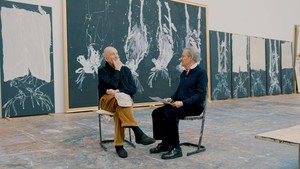
In conjunction with the exhibition The Painter in His Bed, at Gagosian, New York, Georg Baselitz and Richard Calvocoressi discuss the motif of the stag in the artist’s newest paintings.
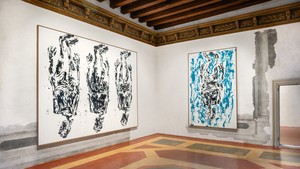
On the occasion of Georg Baselitz: Archinto at Museo di Palazzo Grimani, Venice, Artcore Films produced a short documentary featuring the artist. In the video, Baselitz details the origins of the project, how he approached the unique space, and his experiments in process and technique.
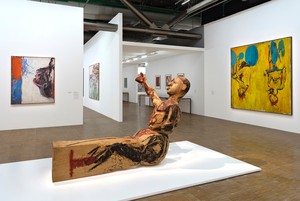
Richard Calvocoressi visits Georg Baselitz’s retrospective exhibition at the Centre Pompidou in Paris and reflects on both the historical specificity and timeless themes of the artist’s sixty-year career.
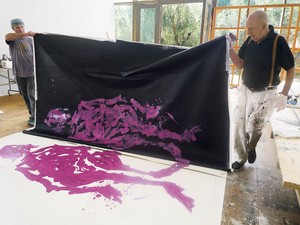
In celebration of five recent projects related to Georg Baselitz, Richard Calvocoressi, Max Hollein, and Katy Siegel speak with the artist and look at his prolific career.
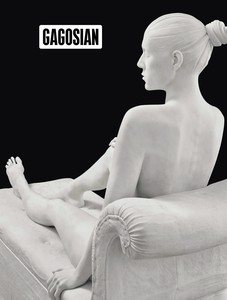
The Fall 2021 issue of Gagosian Quarterly is now available, featuring Damien Hirst’s Reclining Woman (2011) on its cover.

Richard Calvocoressi narrates a tour of an exhibition of new paintings by Georg Baselitz in San Francisco, describing the visual effect of these luminous compositions and explaining their relationship to earlier works by the artist.
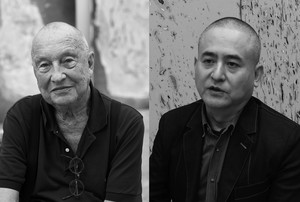
On the occasion of Georg Baselitz: Years later at Gagosian, Hong Kong, Zeng Fanzhi composed a written foreword for the exhibition’s catalogue and a video message to the German painter. Baselitz wrote a letter of thanks to the Chinese artist for his insightful thoughts.
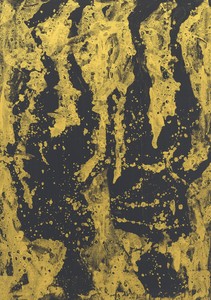
Richard Calvocoressi writes on the painter’s latest bodies of work, detailing the techniques employed and their historical precedents.
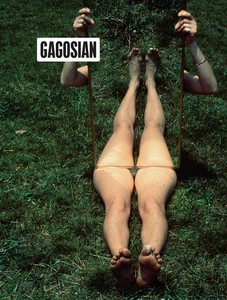
The Summer 2020 issue of Gagosian Quarterly is now available, featuring Joan Jonas’s Mirror Piece 1 (1969) on its cover.
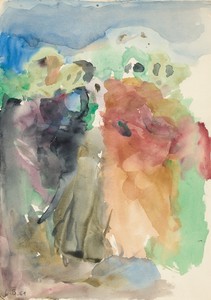
On the occasion of a career-spanning exhibition at the Gallerie dell’Accademia, Venice, Richard Calvocoressi tracks the evolution of Georg Baselitz’s development from his early education in East Germany to his revelatory trip to Florence, in 1965, and beyond.
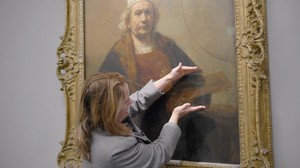
Jenny Saville reveals the process behind her new self-portrait, painted in response to Rembrandt’s masterpiece Self-Portrait with Two Circles.
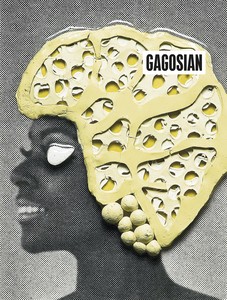
The Summer 2019 issue of Gagosian Quarterly is now available, featuring a detail from Afrylic by Ellen Gallagher on its cover.
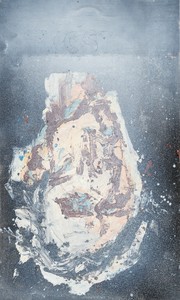
Georg Baselitz speaks with Sir Norman Rosenthal on the subject of his latest work. The two discuss these paintings, all depictions of self-portraits by artists from the past and present, and what it means to pay homage.
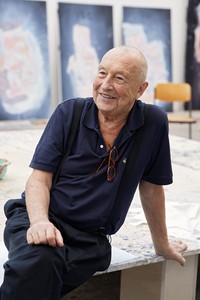
Morgan Falconer visits the artist’s studio outside Munich to learn more about his newest paintings, a series entitled Devotion.
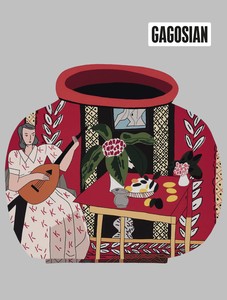
The Spring 2019 issue of Gagosian Quarterly is now available, featuring Red Pot with Lute Player #2 by Jonas Wood on its cover.