Georg Baselitz and the Possibilities of Print
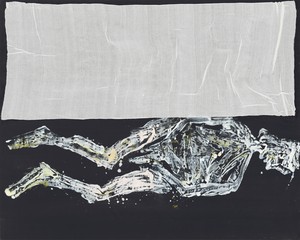
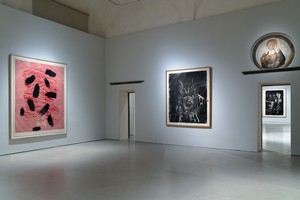
On the occasion of Baselitz: AVANTI! at the Museo Novecento in Florence, Italy, Holly EJ Black considers the roots and reverberations of Georg Baselitz’s printmaking.
Georg Baselitz
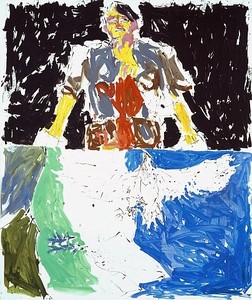
Adler 53 - Held 65 (Remix), 2007
Oil on canvas, 118 ⅛ × 98 ⅜ inches (300 × 250cm)
If you’re remixing popular music you change the rhythm or the sound. . . . What I do is something entirely different. I have thought for a long time about what to call what I do.
I liked the word ‘remix’ because it comes from youth culture.
What I could never escape was Germany, and being German.
—Georg Baselitz
Gagosian is pleased to present an exhibition of recent paintings by Georg Baselitz.
Baselitz’s long and challenging career is marked by intense periods of activity, usually culminating in a heroic masterpiece or group of masterworks, followed by startling renewal and rethinking of his subject. A traditional artisan, he works in equally traditional media—painting, drawing, printmaking, and wood sculpture—often on a monumental scale.
From the outset, Baselitz confronted the visceral realities of history and the human and cultural tragedies of a world in turmoil with a cast of tragic antiheroes, from the grotesque masturbating boy of Die große Nacht im Eimer (The Big Night Down the Drain) (1962–63) to the broken soldiers of the Fracture paintings and the inverted figures of the disturbing “upside-down paintings.” In 1980, at the German pavilion at the Biennale di Venezia, he caused a stir with a monumental carved wooden figure that appeared to making a Hitlerian salute. Evidently, what it is to be German and a German artist has been very much on Baselitz’s mind throughout his career—paintings abound with child Hitlers and dismembered woodcutters—although his oeuvre owes as much to a broader range of influences, including art brut, the drawings and writings of Antonin Artaud, sixteenth-century German woodcuts, and African sculptures. With the reunification of Germany in 1990, however, the angst seemingly ebbed from his vision and he produced a series of paintings that he refers to as “sentimental pictures” about his childhood, home, and family in the former East German province of Saxony.
On the occasion of Baselitz: AVANTI! at the Museo Novecento in Florence, Italy, Holly EJ Black considers the roots and reverberations of Georg Baselitz’s printmaking.
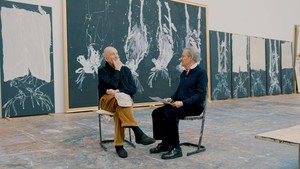
In conjunction with the exhibition The Painter in His Bed, at Gagosian, New York, Georg Baselitz and Richard Calvocoressi discuss the motif of the stag in the artist’s newest paintings.
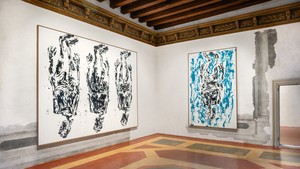
On the occasion of Georg Baselitz: Archinto at Museo di Palazzo Grimani, Venice, Artcore Films produced a short documentary featuring the artist. In the video, Baselitz details the origins of the project, how he approached the unique space, and his experiments in process and technique.
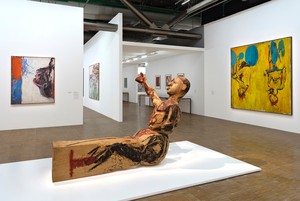
Richard Calvocoressi visits Georg Baselitz’s retrospective exhibition at the Centre Pompidou in Paris and reflects on both the historical specificity and timeless themes of the artist’s sixty-year career.
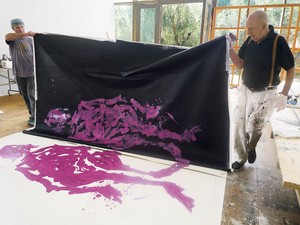
In celebration of five recent projects related to Georg Baselitz, Richard Calvocoressi, Max Hollein, and Katy Siegel speak with the artist and look at his prolific career.
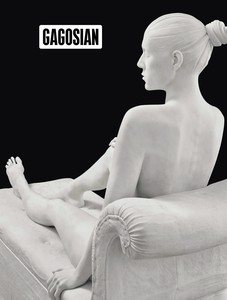
The Fall 2021 issue of Gagosian Quarterly is now available, featuring Damien Hirst’s Reclining Woman (2011) on its cover.
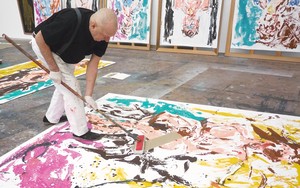
Richard Calvocoressi narrates a tour of an exhibition of new paintings by Georg Baselitz in San Francisco, describing the visual effect of these luminous compositions and explaining their relationship to earlier works by the artist.
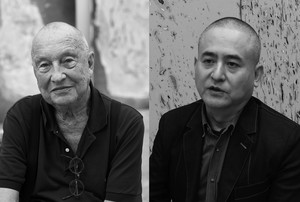
On the occasion of Georg Baselitz: Years later at Gagosian, Hong Kong, Zeng Fanzhi composed a written foreword for the exhibition’s catalogue and a video message to the German painter. Baselitz wrote a letter of thanks to the Chinese artist for his insightful thoughts.
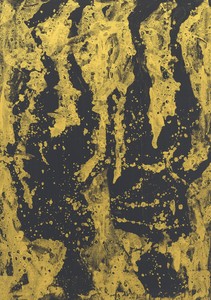
Richard Calvocoressi writes on the painter’s latest bodies of work, detailing the techniques employed and their historical precedents.
The Summer 2020 issue of Gagosian Quarterly is now available, featuring Joan Jonas’s Mirror Piece 1 (1969) on its cover.
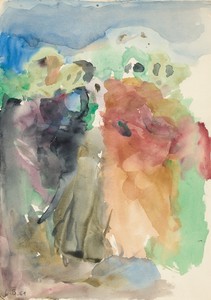
On the occasion of a career-spanning exhibition at the Gallerie dell’Accademia, Venice, Richard Calvocoressi tracks the evolution of Georg Baselitz’s development from his early education in East Germany to his revelatory trip to Florence, in 1965, and beyond.
Jenny Saville reveals the process behind her new self-portrait, painted in response to Rembrandt’s masterpiece Self-Portrait with Two Circles.
The Summer 2019 issue of Gagosian Quarterly is now available, featuring a detail from Afrylic by Ellen Gallagher on its cover.
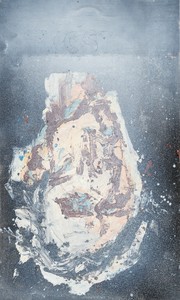
Georg Baselitz speaks with Sir Norman Rosenthal on the subject of his latest work. The two discuss these paintings, all depictions of self-portraits by artists from the past and present, and what it means to pay homage.
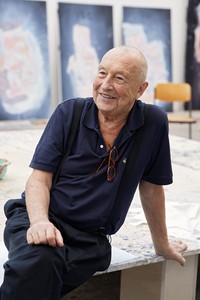
Morgan Falconer visits the artist’s studio outside Munich to learn more about his newest paintings, a series entitled Devotion.
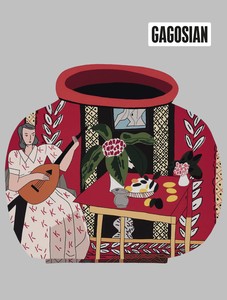
The Spring 2019 issue of Gagosian Quarterly is now available, featuring Red Pot with Lute Player #2 by Jonas Wood on its cover.