A Tremendous Generosity: Jeff Koons on Marcel Duchamp
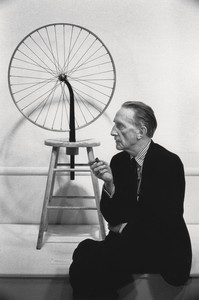
Jeff Koons tells Alison McDonald about his appreciation for the pioneering artist and thinker Marcel Duchamp.
For it is not possible to step twice into the same river, according to Heraclitus, nor to touch mortal substance twice in any condition: by the swiftness and speed of its change, it scatters and collects itself again—or rather, it is not again and later but simultaneously that comes together and departs, approaches and retires.
—Plutarch
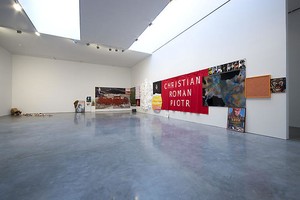
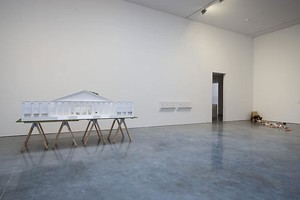
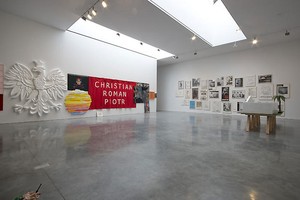
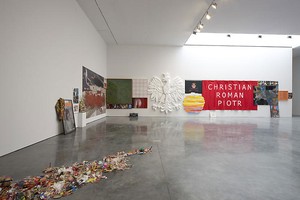
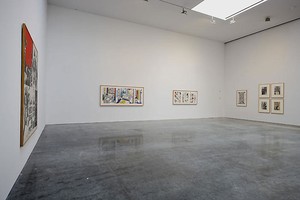
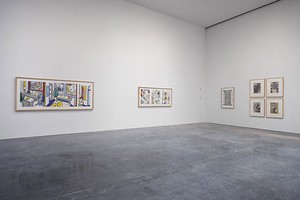
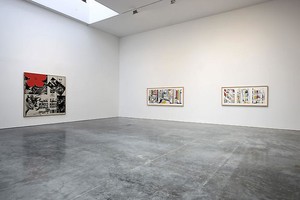
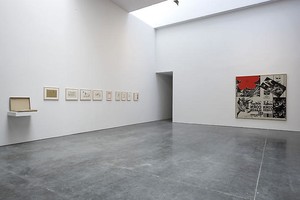
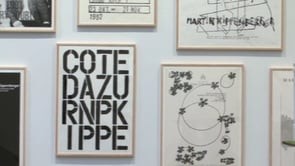
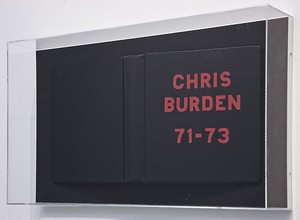
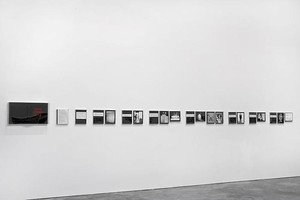
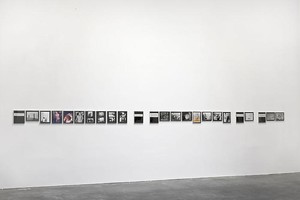
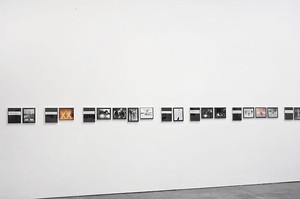
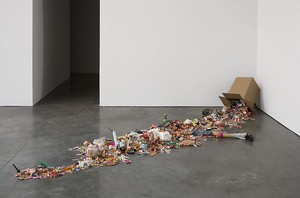
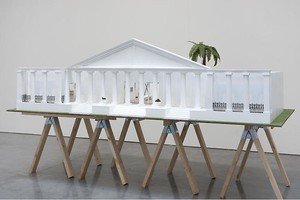
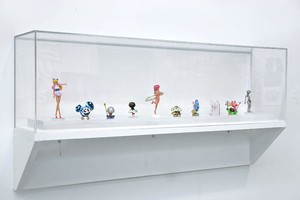
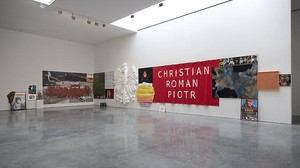
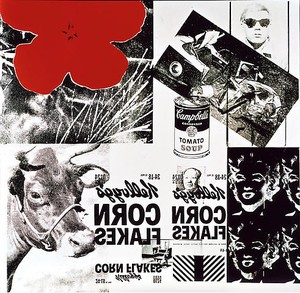
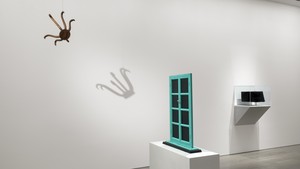
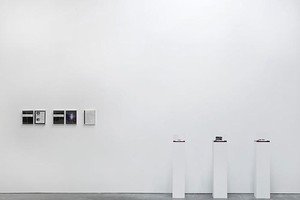
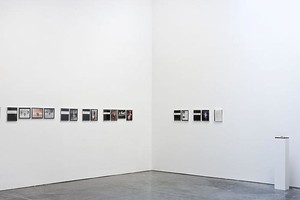
Gagosian is pleased to present Retrospective, including works by Chris Burden, Marcel Duchamp, Tom Friedman, Piero Golia, Douglas Gordon, Richard Hamilton, Jasper Johns, Roy Lichtenstein, Takashi Murakami, Piotr Uklański, and Andy Warhol. The retrospective exhibition, conceived and realized by a museum institution, is perceived as a watershed in any artist’s career. This exhibition looks at various ways in which contemporary artists mine their own histories to create their own defining moments—the retrospective gesture as a means of creating a perpetual present, as a process of physical recollection, as a strategy of circulation, or as a pure conceit.
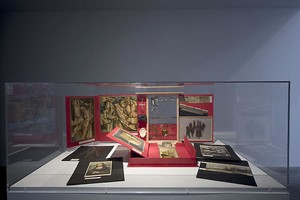
The exhibition begins with a famous twentieth-century example, Duchamp’s Boîte-en-valise. Between 1935 and 1941, Duchamp created an edition of twenty boxes, each in a brown leather carrying case containing a myriad of miniature works of art, each with slight variations in design and content. Duchamp was already thinking about producing a box containing his works—or rather, texts and a few sketches—in the 1910s. These early musings led to the edition La Boîte verte (The Green Box) in 1934. Following this, he started planning another box containing all the works he had created since the beginning of his career, from Nude Descending a Staircase, Chocolate Grinder, and Nine Malic Moulds to three-dimensional replicas of sculptures and readymades, including the notorious Fountain. The painting reproductions were black-and-white photographs that he hand-colored, thereby creating “new originals,” which he then certified. Following his invention of the readymade, Boite-en-valise further underscores the interdependence of object and context so central to Duchamp’s circular definition of the work of art.
Jeff Koons tells Alison McDonald about his appreciation for the pioneering artist and thinker Marcel Duchamp.

The Spring 2026 issue of Gagosian Quarterly is now available, featuring Marcel Duchamp’s L.H.O.O.Q. (1964) on the cover.

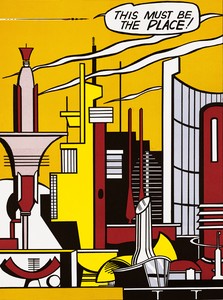
Avis Berman’s biography of Roy Lichtenstein, Becoming Roy Lichtenstein: The Path to Pop, will be published this fall by Abbeville Press, aligning with a major retrospective at the Whitney Museum of American Art, New York, in October. For the Quarterly she has adapted part of her text to focus on the artist’s formative experiences in New York in the 1920s and ’30s.

On January 22, Gagosian, in partnership with Castelli Gallery, opened an exhibition of historic works by Jasper Johns at the 980 Madison Avenue gallery in New York. A survey of the crosshatch paintings and drawings that dominated his practice from 1973 to 1983, the presentation united works that have rarely been seen with loans from sources including distinguished American museums. The exhibition commemorates the fiftieth anniversary of this body of work’s debut at Castelli Gallery in 1976. Here, Larry Gagosian speaks with the Quarterly’s Alison McDonald about the impetus for this project, his memories of seeing the exhibition in 1976, and the enduring impact of these paintings on artists and collectors.

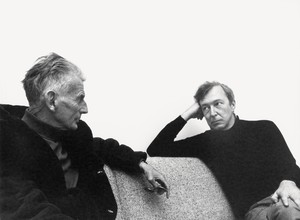
Nearly fifty years ago, Samuel Beckett and Jasper Johns met in Paris and began a collaboration on what would become Foirades/Fizzles, a deluxe limited-edition artist’s book published by Petersburg Press in 1976. Now, on the occasion of the Jasper Johns retrospective at the Philadelphia Museum of Art and New York’s Whitney Museum of American Art, Gagosian Quarterly looks back to the genesis of this project with a conversation between independent researcher Anthony Atlas and Gagosian director Bob Monk. Their discussion focuses on the creative encounter between the artist and the writer and on how the book and related works became a generative source in Johns’s art.

Don Quaintance’s new book Duchamp in California: Walter Hopps Curates a Retrospective (Menil Collection/König, 2025) details the rich history of the Pasadena Art Museum and the consequential Marcel Duchamp retrospective that Walter Hopps curated there in 1963. Here Quaintance gives the backstory to the monograph and shares an excerpt from the book’s fourth chapter.

Tracking works by Chris Burden, Bruce Nauman, Maria Nordman, and Eric Orr as outliers and outcroppings of the California Light and Space movement, Michael Auping argues that darkness—the absence of light and space—is a key element of the aesthetic.

The Fall 2025 issue of Gagosian Quarterly is now available, featuring Andy Warhol’s Blue Liz as Cleopatra (1962) on the cover.

Carlos Valladares tracks the artist’s engagements with Hollywood glamour, thinking through the ways in which the star system and its marketing engine informed his work.
In conjunction with the exhibition Japanese Art History à la Takashi Murakami at Gagosian, London, Takashi Murakami and Hans Ulrich Obrist, curator and artistic director of Serpentine, London, sit down to discuss the artist’s exploration and contemporizing of ancient Japanese artworks and movements. The two delve into Murakami’s investigation of Iwasa Matabei’s seventeenth-century masterwork Rakuchū-Rakugai-zu (Scenes in and around Kyoto) and the Kyoto-based style of Rinpa painting, among other examples.

Ed Schad, curator and publications manager at the Broad, Los Angeles, examines Takashi Murakami’s prolonged engagement with the practice and concept of the copy. An exhibition of new paintings by the artist, Japanese Art History à la Takashi Murakami, opened at Gagosian, London, on December 10, 2024; Schad reflects on Murakami’s recent works in the wake of his visit to the artist’s 2024 exhibition at Kyoto City Kyocera Museum of Art.

In the second part of a two-part essay, art historian John B. Ravenal considers Jasper Johns’s continued engagement with the motif of woodgrain.

As American identity once again comes into question during a politically charged election cycle, the Quarterly revisits the motif of the American flag in art. Here, John B. Ravenal contextualizes Robert Lazzarini’s new wall-based flag sculptures and elucidates the tensions they lay bare in the symbol of our nation.

In the first part of a two-part essay, art historian John B. Ravenal considers Jasper Johns’s continued engagement with the motif of woodgrain.

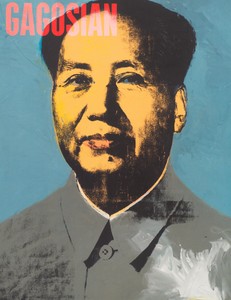
The Fall 2024 issue of Gagosian Quarterly is now available, featuring Andy Warhol’s Mao (1972) on the cover.

Jessica Beck examines Andy Warhol’s return to painting in the 1970s, focusing on the artist’s Mao series.

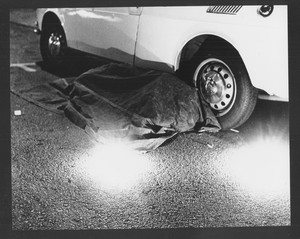
Sydney Stutterheim has published Artist, Audience, Accomplice: Ethics and Authorship in Art of the 1970s and 1980s (Duke University Press, 2024), a survey of performance art and related practices that involve, in various manners, the figure of the accomplice. To celebrate the publication, the Quarterly is publishing an excerpt that examines Chris Burden’s Deadman (1972).

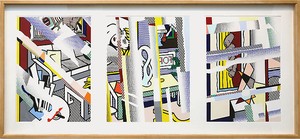
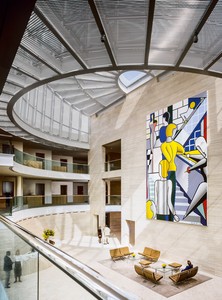
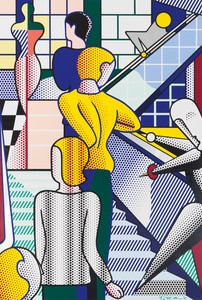
Michael Ovitz, cofounder of Creative Artists Agency (CAA), looks back to 1989, the year he and the architect I. M. Pei commissioned Roy Lichtenstein to create the Bauhaus Stairway Mural for the then new CAA Building in Los Angeles. Through the experience of working with Lichtenstein, Ovitz formed a meaningful friendship with the artist.

Alice Godwin and Alison McDonald explore the history of Roy Lichtenstein’s mural of 1989, contextualizing the work among the artist’s other mural projects and reaching back to its inspiration: the Bauhaus Stairway painting of 1932 by the German artist Oskar Schlemmer.

The Summer 2024 issue of Gagosian Quarterly is now available, featuring a detail of Roy Lichtenstein’s Bauhaus Stairway Mural (1989) on the cover.