Georg Baselitz and the Possibilities of Print
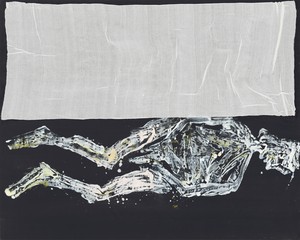
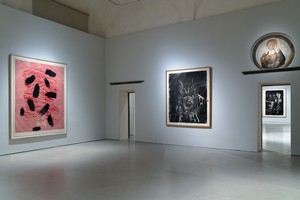
On the occasion of Baselitz: AVANTI! at the Museo Novecento in Florence, Italy, Holly EJ Black considers the roots and reverberations of Georg Baselitz’s printmaking.
Installation view
Artwork © Georg Baselitz. Photo: Mike Bruce
Installation view
Artwork © Georg Baselitz. Photo: Mike Bruce
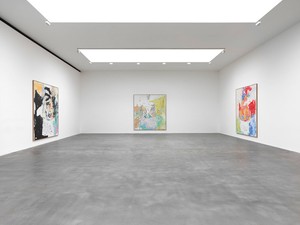
Installation view
Artwork © Georg Baselitz. Photo: Mike Bruce
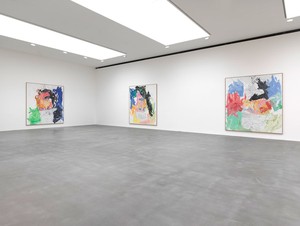
Installation view
Artwork © Georg Baselitz. Photo: Mike Bruce
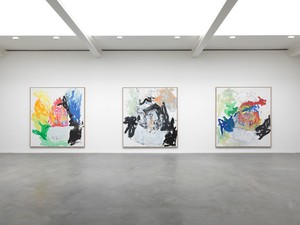
Installation view
Artwork © Georg Baselitz. Photo: Mike Bruce
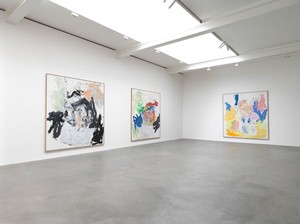
Installation view
Artwork © Georg Baselitz. Photo: Mike Bruce
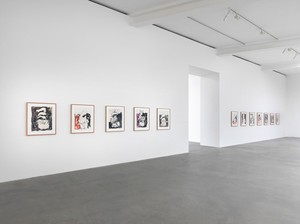
Installation view
Artwork © Georg Baselitz. Photo: Mike Bruce
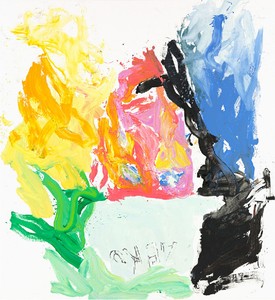
Georg Baselitz
Licht wil raum mecht hern (Lef el rial bel), 2013
Oil on canvas, 118 ⅛ × 108 ¼ inches (300 × 275 cm)
© Georg Baselitz. Photo: Jochen Littkemann
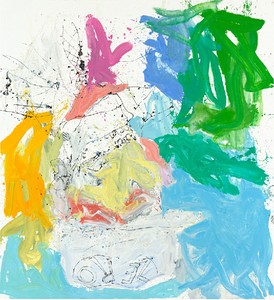
Georg Baselitz
Ill wam ruch nichtet mehr (Ill bar fe well), 2013
Oil on canvas, 118 ⅛ × 108 ¼ inches (300 × 275 cm)
© Georg Baselitz. Photo: Jochen Littkemann
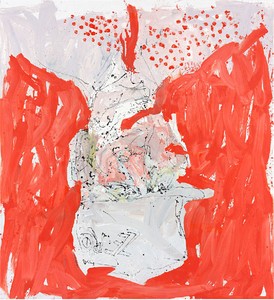
Georg Baselitz
Auch wirt lern helmt mich (Able fwill red), 2013
Oil on canvas, 118 ⅛ × 108 ¼ inches (300 × 275 cm)
© Georg Baselitz. Photo: Jochen Littkemann
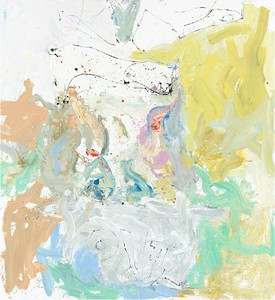
Georg Baselitz
mehr ich tut ach mer willn (Barle flel wil), 2013
Oil on canvas, 118 ⅛ × 108 ¼ inches (300 × 275 cm)
© Georg Baselitz. Photo: Jochen Littkemann
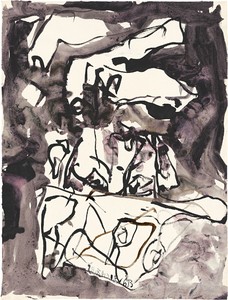
Georg Baselitz
Untitled, 2013
India ink and watercolor on paper, 26 × 19 ¾ inches (66.1 × 50.3 cm)
© Georg Baselitz. Photo: Jochen Littkemann
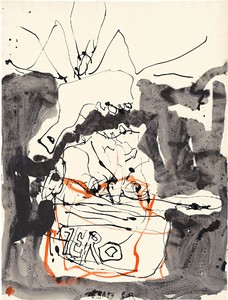
Georg Baselitz
Untitled, 2013
Pen and ink, watercolor and ink, wash on paper, 26 × 19 ¾ inches (66 × 50.2 cm)
© Georg Baselitz. Photo: Jochen Littkemann
Most of what you see as freedom is de Kooning.
—Georg Baselitz
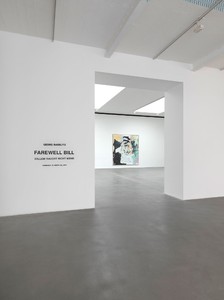
Gagosian London is pleased to present Farewell Bill, an exhibition of new paintings by Georg Baselitz.
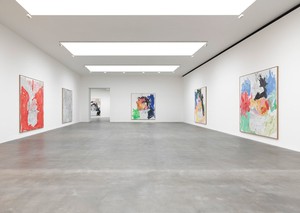
Seeking to expand the scope of traditional representation in art, Baselitz has constantly revisited and reimagined his chosen subjects over time. In this new series, he co-opts figuration as a vehicle for expression in energized, intuitively painted self-portraits—a new approach in his persistent subversion of the painted subject. Marking a clear departure from the retrospective impulses of the Remix paintings of the past decade, these vibrant new works focus afresh on the affirmative act of painting.
Baselitz intentionally deprived himself of any overview of the works while in progress, rapidly painting each section of the canvas on the floor, then moving over to the next. Impressions of paint cans and footprints are traces of this process while each brushstroke records a decisive action. Titled with variations on the phrase Willem raucht nicht mehr (which translates literally as “Willem’s no longer smoking” and figuratively as “Willem’s no more” or “Farewell Willem”), these color-rich, instinctively painted self-portraits pay direct homage to the gestural figures of Willem de Kooning, whose primal paintings Woman I and Woman II Baselitz encountered as a student in 1958. Bursts of pure red, yellow, blue, and green echo de Kooning’s abstract paintings of the 1970s, five of which were presented alongside Baselitz’s early work in the pivotal 1981 exhibition A New Spirit in Painting at the Royal Academy in London.
Like de Kooning’s paintings of the period, Baselitz’s new works are characterized by a watercolor-like fluidity, achieved through the thinning of oil paints with turpentine and their swift, loose application. Riffs on his own likeness transcend representation, imparting sublime moments of intuition and sheer physicality. Consistent with his established formal vocabulary that works to disrupt the painted subject both visually and symbolically, he repeatedly portrays himself upside down, wearing a cap marked “ZERO” (the name of his paint supplier). Silhouettes are conveyed in the thin, intertwining lines of a reed brush, while explosive color fields reveal new painterly atmospheres, echoing the combative dimensions of de Kooning’s paintings. By charging his own figurative investigations with the raw exuberance of Abstract Expressionism, Baselitz reinvigorates the august tradition of self-portraiture with bright, impulsive energies.
On the occasion of Baselitz: AVANTI! at the Museo Novecento in Florence, Italy, Holly EJ Black considers the roots and reverberations of Georg Baselitz’s printmaking.
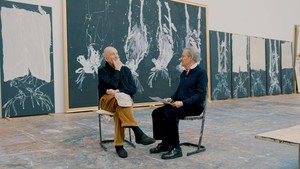
In conjunction with the exhibition The Painter in His Bed, at Gagosian, New York, Georg Baselitz and Richard Calvocoressi discuss the motif of the stag in the artist’s newest paintings.
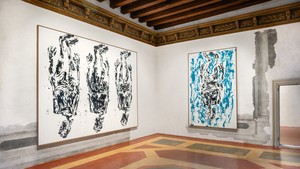
On the occasion of Georg Baselitz: Archinto at Museo di Palazzo Grimani, Venice, Artcore Films produced a short documentary featuring the artist. In the video, Baselitz details the origins of the project, how he approached the unique space, and his experiments in process and technique.
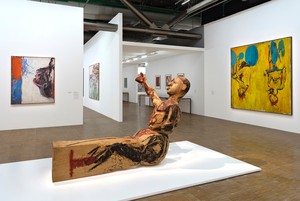
Richard Calvocoressi visits Georg Baselitz’s retrospective exhibition at the Centre Pompidou in Paris and reflects on both the historical specificity and timeless themes of the artist’s sixty-year career.
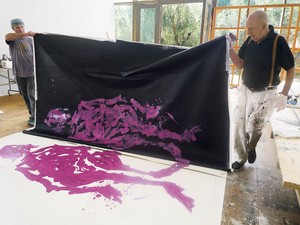
In celebration of five recent projects related to Georg Baselitz, Richard Calvocoressi, Max Hollein, and Katy Siegel speak with the artist and look at his prolific career.
The Fall 2021 issue of Gagosian Quarterly is now available, featuring Damien Hirst’s Reclining Woman (2011) on its cover.
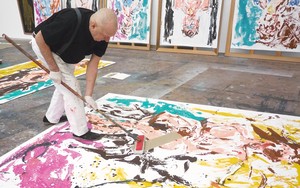
Richard Calvocoressi narrates a tour of an exhibition of new paintings by Georg Baselitz in San Francisco, describing the visual effect of these luminous compositions and explaining their relationship to earlier works by the artist.
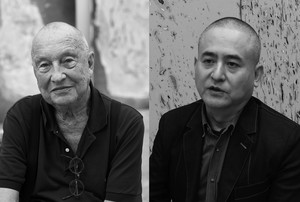
On the occasion of Georg Baselitz: Years later at Gagosian, Hong Kong, Zeng Fanzhi composed a written foreword for the exhibition’s catalogue and a video message to the German painter. Baselitz wrote a letter of thanks to the Chinese artist for his insightful thoughts.
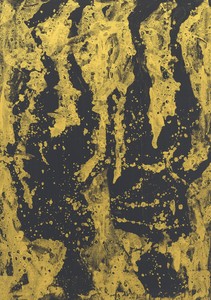
Richard Calvocoressi writes on the painter’s latest bodies of work, detailing the techniques employed and their historical precedents.
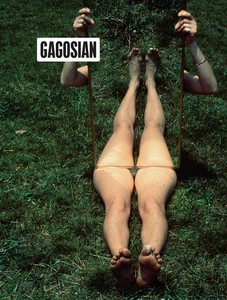
The Summer 2020 issue of Gagosian Quarterly is now available, featuring Joan Jonas’s Mirror Piece 1 (1969) on its cover.
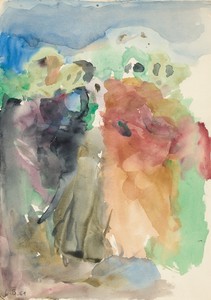
On the occasion of a career-spanning exhibition at the Gallerie dell’Accademia, Venice, Richard Calvocoressi tracks the evolution of Georg Baselitz’s development from his early education in East Germany to his revelatory trip to Florence, in 1965, and beyond.
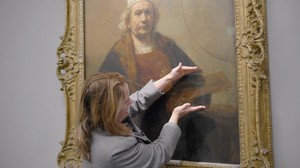
Jenny Saville reveals the process behind her new self-portrait, painted in response to Rembrandt’s masterpiece Self-Portrait with Two Circles.
The Summer 2019 issue of Gagosian Quarterly is now available, featuring a detail from Afrylic by Ellen Gallagher on its cover.
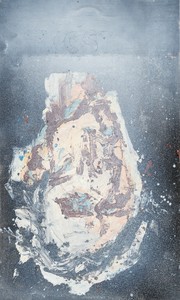
Georg Baselitz speaks with Sir Norman Rosenthal on the subject of his latest work. The two discuss these paintings, all depictions of self-portraits by artists from the past and present, and what it means to pay homage.
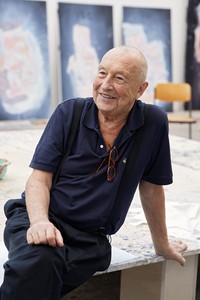
Morgan Falconer visits the artist’s studio outside Munich to learn more about his newest paintings, a series entitled Devotion.
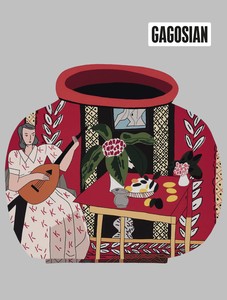
The Spring 2019 issue of Gagosian Quarterly is now available, featuring Red Pot with Lute Player #2 by Jonas Wood on its cover.