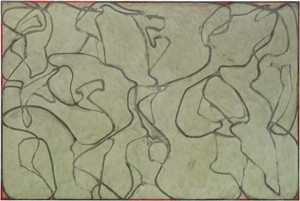
Divine Emanations: Nymphs, Poets, and the Painter’s Palette
Janne Sirén considers Anselm Kiefer’s new paintings, the subject of an exhibition at Gagosian, New York, entitled Seal My Ears Shut and I Shall Hear You Still.
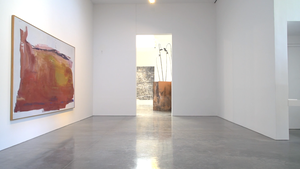
Installation video
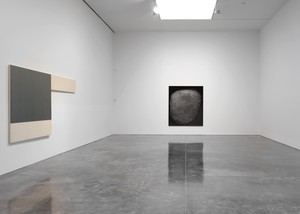
Installation view
Artwork © Michael Heizer. Photo: Rob McKeever
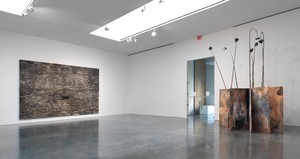
Installation view
Artwork © Anselm Kiefer. Photo: Rob McKeever
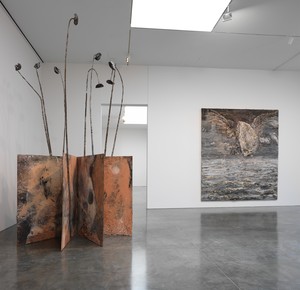
Installation view
Artwork © Anselm Kiefer. Photo: Rob McKeever
Janne Sirén considers Anselm Kiefer’s new paintings, the subject of an exhibition at Gagosian, New York, entitled Seal My Ears Shut and I Shall Hear You Still.

Across his nearly six-decade career, Michael Heizer has continued to probe the possibilities of sculptural form defined by its absence. His exhibition Negative Sculpture features Convoluted Line A and Convoluted Line B, among the artist’s most complex negative sculptures. Here, we consider a selection of works that have preceded the new sculptures.

Curator Michael Auping reflects on his time spent with John Chamberlain in Sarasota, Florida.

To mark the occasion of Michael Heizer’s eightieth birthday on November 4, 2024, and the designation of that day in his honor in the state of Nevada—the site of his monumental City (1970–2022), among other works—we revisit seventeen of his sculptures.
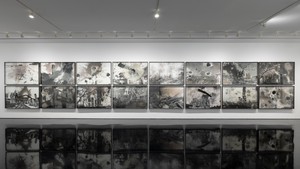
Sébastien Delot is director of conservation and collections at the Musée national Picasso–Paris and the organizer of the first retrospective to focus on Anselm Kiefer’s use of photography, which was held at Lille Métropole Musée d’art moderne, d’art contemporain et d’art brut (Musée LaM) in Villeneuve-d’Ascq, France. He recently sat down with Gagosian director of photography Joshua Chuang to discuss the exhibition Anselm Kiefer: Punctum at Gagosian, New York. Their conversation touched on Kiefer’s exploration of photography’s materials, processes, and expressive potentials, and on the alchemy of his art.
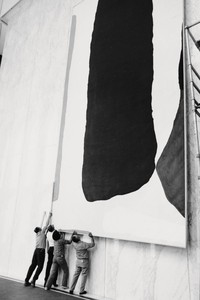
John Elderfield and Lauren Mahony of Gagosian speak with the National Gallery of Art’s Harry Cooper about the new and expanded version of Elderfield’s 1989 monograph on Helen Frankenthaler that Gagosian, in collaboration with the Helen Frankenthaler Foundation, will publish this summer. The conversation traces Elderfield’s long interest in Frankenthaler’s work—from his time as a young curator at the Museum of Modern Art, New York, to the present—and reveals some of the new perspectives and discoveries awaiting readers.
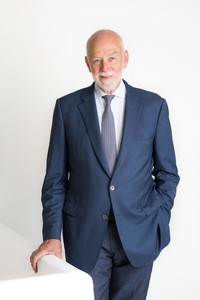
Richard Armstrong, director emeritus of the Solomon R. Guggenheim Museum and Foundation, joins the Quarterly’s Alison McDonald to discuss his election to the board of the Helen Frankenthaler Foundation, as well as the changing priorities and strategies of museums, foundations, and curators. He reflects on his various roles within museums and recounts his first meeting with Frankenthaler.
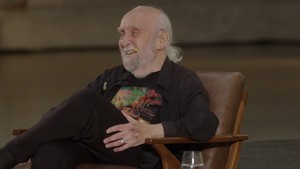
Gagosian and Beyond Baroque Literary | Arts Center hosted a conversation between poets Jerome Rothenberg and Charles Bernstein inside Anselm Kiefer’s exhibition Exodus at Gagosian at Marciano Art Foundation, Los Angeles. Rothenberg and Bernstein explored some of the themes that occupy Kiefer—Jewish mysticism, the poetry of Paul Celan, and the formulation of a global poetics in response to the Holocaust—in a discussion and readings of their poetry.
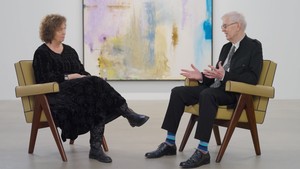
In conjunction with the exhibition Drawing within Nature: Paintings from the 1990s at Gagosian in New York, Carol Armstrong and John Elderfield discuss Helen Frankenthaler’s paintings and large-scale works on paper dating from 1990 to 1995.
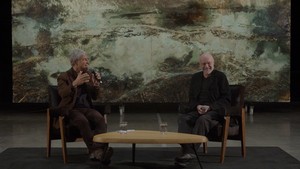
On the occasion of his exhibition Anselm Kiefer: Exodus at Gagosian at Marciano Art Foundation in Los Angeles, the artist spoke with Michael Govan about his works that elaborate on themes of loss, history, and redemption.
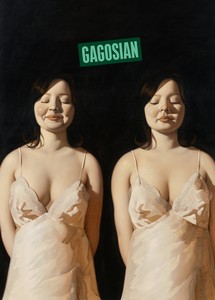
The Winter 2022 issue of Gagosian Quarterly is now available, featuring Anna Weyant’s Two Eileens (2022) on its cover.
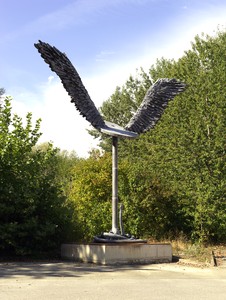
In this ongoing series, curator Hans Ulrich Obrist has devised a set of thirty-seven questions that invite artists, authors, musicians, and other visionaries to address key elements of their lives and creative practices. Respondents make a selection from the larger questionnaire and reply in as many or as few words as they desire. For the fourth installment, we are honored to present the artist Anselm Kiefer.
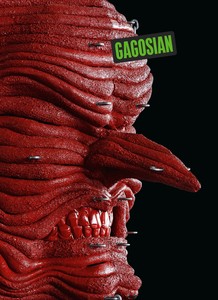
The Fall 2022 issue of Gagosian Quarterly is now available, featuring Jordan Wolfson’s House with Face (2017) on its cover.
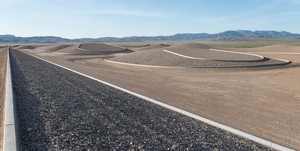
Michael Heizer’s City, an artwork over fifty years in the making, opened to the public this fall. To celebrate this momentous occasion, we are honored to publish the late Dave Hickey’s report on his visit to the City.
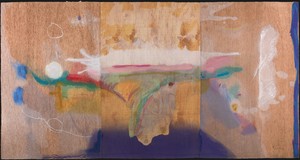
Inspired by the recent retrospective of Helen Frankenthaler’s woodcuts at the Dulwich Picture Gallery, London, William Davie writes about the artist’s innovative journey with printmaking. Davie illuminates Frankenthaler’s formative collaborations with master printers Tatyana Grosman and Kenneth Tyler.
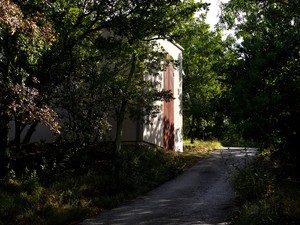
Jérôme Sans visits La Ribaute in Barjac, France, the vast studio-estate transformed by Anselm Kiefer over the course of decades. The labyrinthine site, now open to the public, stands as a total work of art, reflecting through its grounds, pavilions, and passageways major themes in Kiefer’s oeuvre: regeneration, mythology, memory, and more.
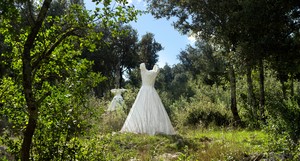
Camille Morineau writes of the triumph of the feminine at Anselm Kiefer’s former studio-estate in Barjac, France, describing the site and its installations as a demonstration of women’s power, a meditation on inversion and permeability, and a reversal of the long invisibility of women in history and myth.
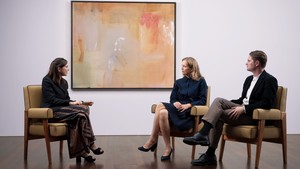
Broadcaster and art historian Katy Hessel; Matthew Holman, associate lecturer in English at University College London; and Eleanor Nairne, curator at the Barbican Art Gallery, London, discuss Helen Frankenthaler’s early training, the development of her signature soak-stain technique and subsequent shifts in style, and her connections to the London art world.
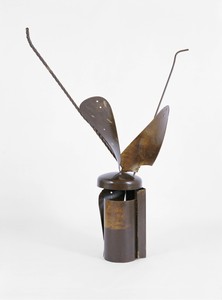
On the occasion of four exhibitions in London exploring different aspects of Helen Frankenthaler’s work, Lauren Mahony introduces texts by the sculptor Anthony Caro and by the artist herself on her relatively unfamiliar first body of sculpture, made in the summer of 1972 in Caro’s London studio.
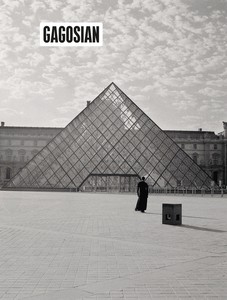
The Summer 2021 issue of Gagosian Quarterly is now available, featuring Carrie Mae Weems’s The Louvre (2006) on its cover.