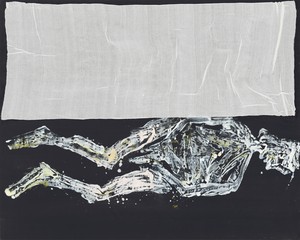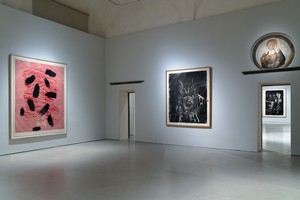
Georg Baselitz and the Possibilities of Print
On the occasion of Baselitz: AVANTI! at the Museo Novecento in Florence, Italy, Holly EJ Black considers the roots and reverberations of Georg Baselitz’s printmaking.
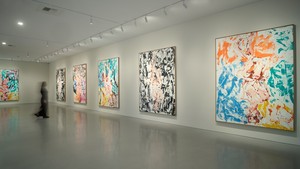
Installation view
Artwork © Georg Baselitz 2020. Photo: Robert Divers Herrick
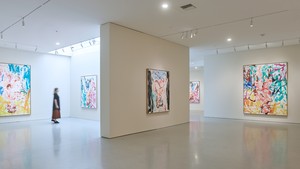
Installation view
Artwork © Georg Baselitz 2020. Photo: Robert Divers Herrick
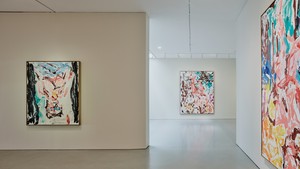
Installation view
Artwork © Georg Baselitz 2020. Photo: Robert Divers Herrick
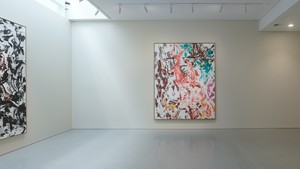
Installation view
Artwork © Georg Baselitz 2020. Photo: Robert Divers Herrick
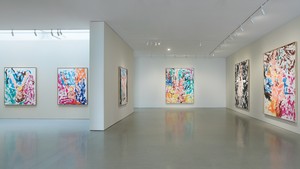
Installation view
Artwork © Georg Baselitz 2020. Photo: Robert Divers Herrick
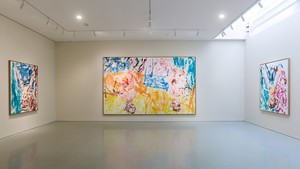
Installation view
Artwork © Georg Baselitz 2020. Photo: Robert Divers Herrick
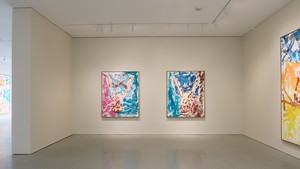
Installation view
Artwork © Georg Baselitz 2020. Photo: Robert Divers Herrick
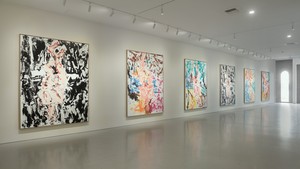
Installation view
Artwork © Georg Baselitz 2020. Photo: Robert Divers Herrick
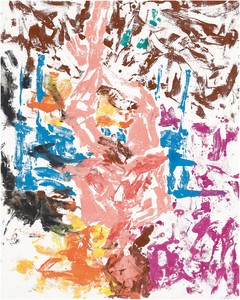
Georg Baselitz
Ist dem etwas entgangen? (Did he miss the moment?), 2019
Oil on canvas, 98 ½ × 78 ¾ inches (250 × 200 cm)
© Georg Baselitz 2019. Photo: Jochen Littkemann
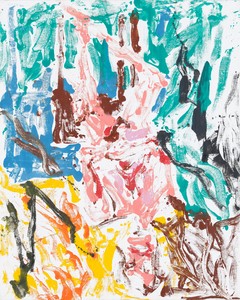
Georg Baselitz
German Kraut, paint Roy and Bill, 2019
Oil on canvas, 98 ½ × 78 ¾ inches (250 × 200 cm)
© Georg Baselitz 2019. Photo: Jochen Littkemann
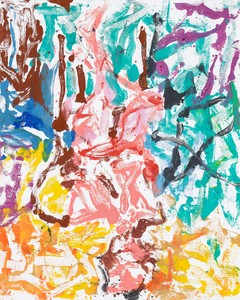
Georg Baselitz
Noch etwas aus alter Zeit (Another thing from the olden days), 2019
Oil on canvas, 98 ½ × 78 ¾ inches (250 × 200 cm)
© Georg Baselitz 2019. Photo: Jochen Littkemann
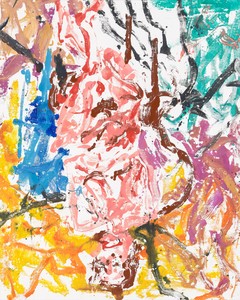
Georg Baselitz
Irgendwie habe ich das schon einmal gesehen (Somehow that looks familiar), 2019
Oil on canvas, 98 ½ × 78 ¾ inches (250 × 200 cm)
© Georg Baselitz 2019. Photo: Jochen Littkemann
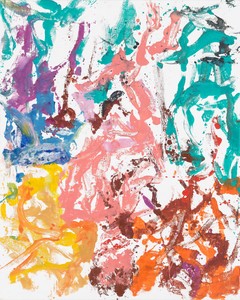
Georg Baselitz
War das schon einmal da? (Has that already been done?), 2019
Oil on canvas, 98 ½ × 78 ¾ inches (250 × 200 cm)
© Georg Baselitz 2019. Photo: Jochen Littkemann
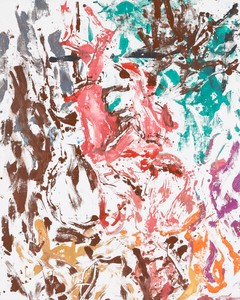
Georg Baselitz
Aus den 50iger Jahren etwas (Something from the fifties), 2019
Oil on canvas, 98 ½ × 78 ¾ inches (250 × 200 cm)
© Georg Baselitz 2019. Photo: Jochen Littkemann
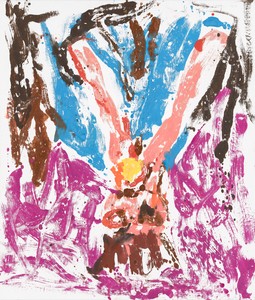
Georg Baselitz
Orangenesser 6 (Orange Eater 6), 2019
Oil on canvas, 66 ⅞ × 57 ⅛ inches (170 × 145 cm)
© Georg Baselitz 2019. Photo: Jochen Littkemann
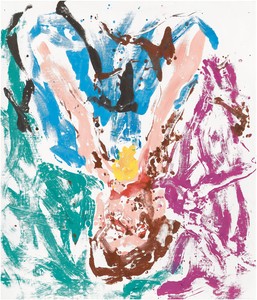
Georg Baselitz
Orangenesser 8 (Orange Eater 8), 2019
Oil on canvas, 67 × 57 ⅛ inches (170 × 145 cm)
© Georg Baselitz 2019. Photo: Jochen Littkemann
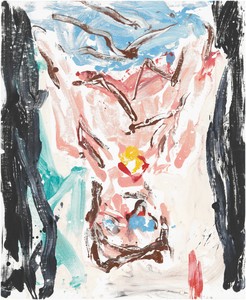
Georg Baselitz
Orangenesser 11 (Orange Eater 11), 2019
Oil on canvas, 65 × 53 ⅛ inches (165 × 135 cm)
© Georg Baselitz 2019. Photo: Jochen Littkemann
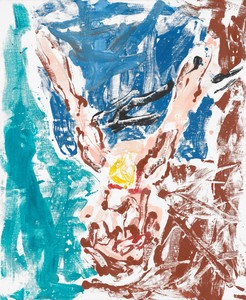
Georg Baselitz
Orangenesser 14 (Orange Eater 14), 2019
Oil on canvas, 64 ⅞ × 53 ⅛ inches (165 × 135 cm)
© Georg Baselitz 2019. Photo: Jochen Littkemann
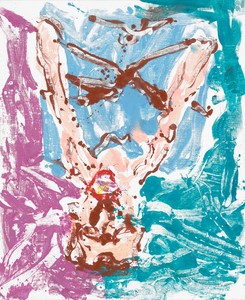
Georg Baselitz
Orangenesser 15 (Orange Eater 15), 2019
Oil on canvas, 64 ⅞ × 53 ⅛ inches (165 × 135 cm)
© Georg Baselitz 2019. Photo: Jochen Littkemann
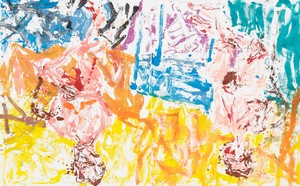
Georg Baselitz
Wenn das Wörtchen wenn nicht wär, wärs Lichtenstein gewesen (If if were not a word, it would have been Lichtenstein), 2019
Oil on canvas, 99 ⅝ × 161 inches (253 × 410 cm)
© Georg Baselitz 2019. Photo: Jochen Littkemann
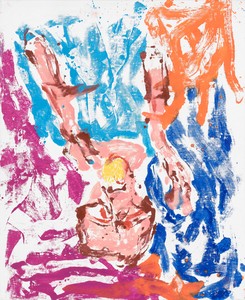
Georg Baselitz
Orangenesser 16 – Oslo (Orange Eater 16 – Oslo), 2019
Oil on canvas, 64 ⅞ × 53 ⅛ inches (165 × 135 cm)
© Georg Baselitz 2019. Photo: Jochen Littkemann
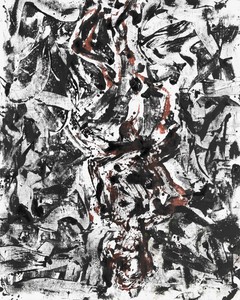
Georg Baselitz
Die Schlittschuhläuferin (The Skating Woman), 2019
Oil on canvas, 98 ½ × 78 ¾ inches (250 × 200 cm)
© Georg Baselitz 2019. Photo: Jochen Littkemann
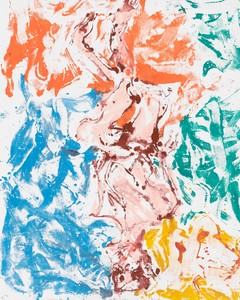
Georg Baselitz
Eisbahn (Ice Rink), 2019
Oil on canvas, 98 ½ × 78 ¾ inches (250 × 200 cm)
© Georg Baselitz 2019. Photo: Jochen Littkemann
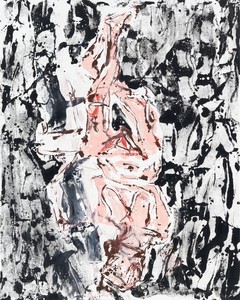
Georg Baselitz
Holiday on Ice, 2019
Oil on canvas, 98 ½ × 78 ¾ inches (250 × 200 cm)
© Georg Baselitz 2019. Photo: Jochen Littkemann
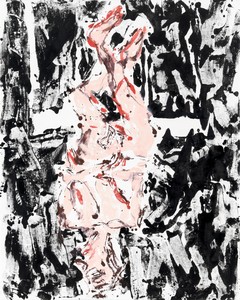
Georg Baselitz
auf der Eisbahn (On the Ice Rink), 2019
Oil on canvas, 98 ½ × 78 ¾ inches (250 × 200 cm)
© Georg Baselitz 2019. Photo: Jochen Littkemann
I don’t want to see what I am making. I don’t want to have an overview, to create any kind of order that can be controlled visually.
—Georg Baselitz
Gagosian is pleased to present What if…, an exhibition of new paintings by Georg Baselitz. This is his first solo exhibition in the San Francisco gallery.
A pioneer of Neo-Expressionism, Baselitz conjures new formal developments from art historical lineages—his own extensive oeuvre included. Although his paintings focus on the human figure, his raw, vigorous mark making creates new and emotionally charged routes within abstraction.
The oil-on-canvas compositions in What if… mark a significant development in Baselitz’s technique. The paintings are created with a transfer method: he paints on a piece of unstretched canvas and then presses a second canvas onto the first to make an impression in oils. Through this technique, Baselitz continues to expand his own practice of painting and mark making, finding new ways to treat established subjects.
On the occasion of Baselitz: AVANTI! at the Museo Novecento in Florence, Italy, Holly EJ Black considers the roots and reverberations of Georg Baselitz’s printmaking.
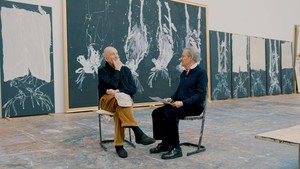
In conjunction with the exhibition The Painter in His Bed, at Gagosian, New York, Georg Baselitz and Richard Calvocoressi discuss the motif of the stag in the artist’s newest paintings.
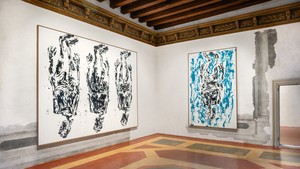
On the occasion of Georg Baselitz: Archinto at Museo di Palazzo Grimani, Venice, Artcore Films produced a short documentary featuring the artist. In the video, Baselitz details the origins of the project, how he approached the unique space, and his experiments in process and technique.
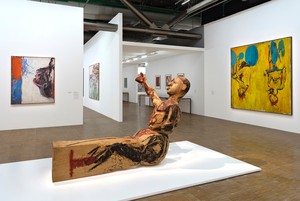
Richard Calvocoressi visits Georg Baselitz’s retrospective exhibition at the Centre Pompidou in Paris and reflects on both the historical specificity and timeless themes of the artist’s sixty-year career.
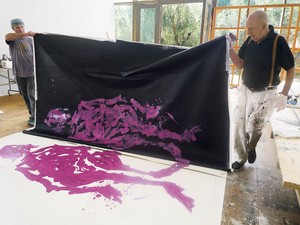
In celebration of five recent projects related to Georg Baselitz, Richard Calvocoressi, Max Hollein, and Katy Siegel speak with the artist and look at his prolific career.
The Fall 2021 issue of Gagosian Quarterly is now available, featuring Damien Hirst’s Reclining Woman (2011) on its cover.

Richard Calvocoressi narrates a tour of an exhibition of new paintings by Georg Baselitz in San Francisco, describing the visual effect of these luminous compositions and explaining their relationship to earlier works by the artist.
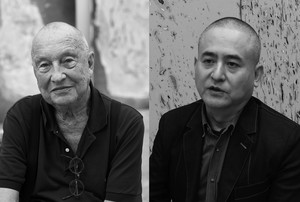
On the occasion of Georg Baselitz: Years later at Gagosian, Hong Kong, Zeng Fanzhi composed a written foreword for the exhibition’s catalogue and a video message to the German painter. Baselitz wrote a letter of thanks to the Chinese artist for his insightful thoughts.
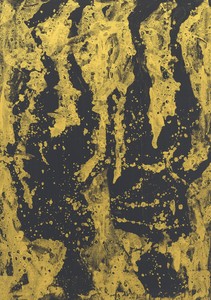
Richard Calvocoressi writes on the painter’s latest bodies of work, detailing the techniques employed and their historical precedents.
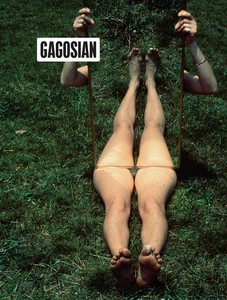
The Summer 2020 issue of Gagosian Quarterly is now available, featuring Joan Jonas’s Mirror Piece 1 (1969) on its cover.
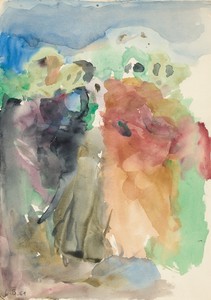
On the occasion of a career-spanning exhibition at the Gallerie dell’Accademia, Venice, Richard Calvocoressi tracks the evolution of Georg Baselitz’s development from his early education in East Germany to his revelatory trip to Florence, in 1965, and beyond.
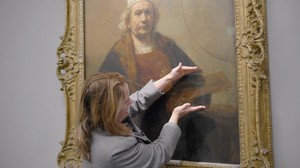
Jenny Saville reveals the process behind her new self-portrait, painted in response to Rembrandt’s masterpiece Self-Portrait with Two Circles.
The Summer 2019 issue of Gagosian Quarterly is now available, featuring a detail from Afrylic by Ellen Gallagher on its cover.
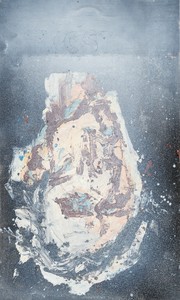
Georg Baselitz speaks with Sir Norman Rosenthal on the subject of his latest work. The two discuss these paintings, all depictions of self-portraits by artists from the past and present, and what it means to pay homage.
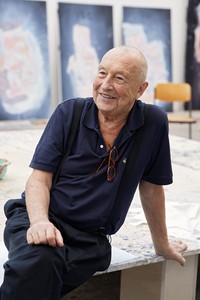
Morgan Falconer visits the artist’s studio outside Munich to learn more about his newest paintings, a series entitled Devotion.
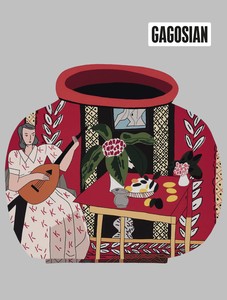
The Spring 2019 issue of Gagosian Quarterly is now available, featuring Red Pot with Lute Player #2 by Jonas Wood on its cover.