Theaster Gates: Dave, All My Relations
A conversation between Theaster Gates and Jessica Bell Brown, with an introduction by Sydney Stutterheim.
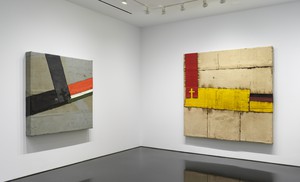
Installation view
Artwork © Theaster Gates. Photo: Rob McKeever
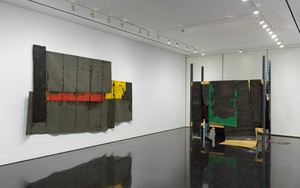
Installation view
Artwork © Theaster Gates. Photo: Rob McKeever
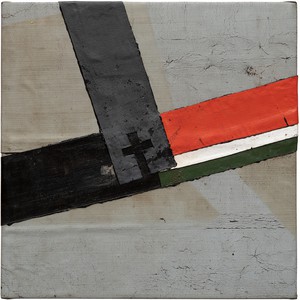
Theaster Gates
Gray Vestment, 2022
Industrial oil-based enamel, rubber torch down, bitumen, wood, and copper, 60 × 60 inches (152.4 × 152.4 cm)
© Theaster Gates
Theaster Gates
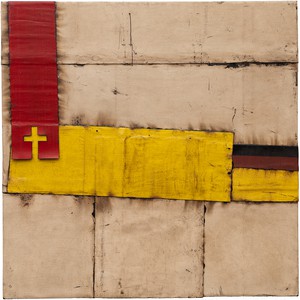
Chief Vestment in Red and Yellow, 2022
Industrial oil-based enamel, rubber torch down, bitumen, wood, and copper, 84 × 84 inches (213.4 × 213.4 cm)
© Theaster Gates
Theaster Gates
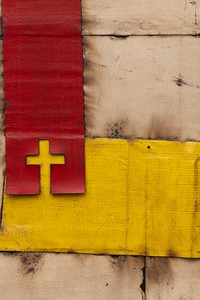
Chief Vestment in Red and Yellow, 2022 (detail)
Industrial oil-based enamel, rubber torch down, bitumen, wood, and copper, 84 × 84 inches (213.4 × 213.4 cm)
© Theaster Gates
Theaster Gates
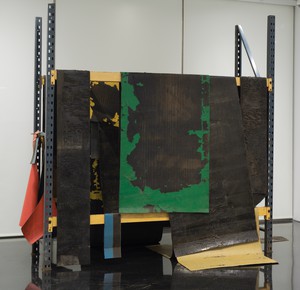
Roof Armature with Roof Deconstructed with the Christ, 2022
Industrial oil-based enamel, rubber torch down, bitumen, wood, copper, and metal rack, 108 ½ × 134 × 76 inches (275.6 × 340.4 × 193 cm)
© Theaster Gates. Photo: Rob McKeever
Theaster Gates
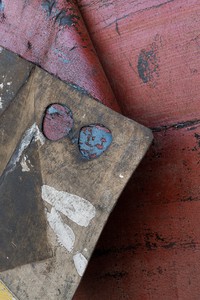
Roof Armature with Roof Deconstructed with the Christ, 2022 (detail)
Industrial oil-based enamel, rubber torch down, bitumen, wood, copper, and metal rack, 115 ¼ × 302 × 42 inches (292.7 × 767.1 × 106.7 cm)
© Theaster Gates
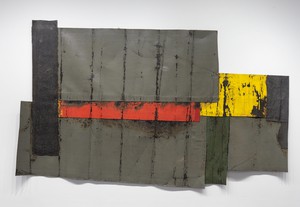
Theaster Gates
Gray Study, 2022
Industrial oil-based enamel, rubber torch down, bitumen, wood, and copper, 90 ¾ × 146 inches (230.5 × 370.8 cm)
© Theaster Gates. Photo: Rob McKeever
May your love be the vestment of my sorrows and the garment of our profound joy.
—Theaster Gates
Gagosian is pleased to announce Vestment, an exhibition of new works by Theaster Gates at 976 Madison Avenue, New York.
Vestment, a new series of tar paintings or “torch works” by Gates, continues the artist’s ongoing engagement with formalism and mark making at the scale of the roof. In this suite of paintings and a sculpture, Gates diverges from earlier monochromatic torch works and experiments with color as a formal device for exploring spiritual and stylistic hierarchies, religious garments and aggrandizement, and the symbolism and universalism of nationhood.
The new tar paintings serve as a distillate of some of the key intellectual musings with which Gates has grappled over the past year and throughout his practice. Invoking his recent meditations on the legacies of Russian Suprematism and Constructivism, along with the technical restraint and conceptual rigor of artists such as Josef Albers and Agnes Martin, Gates considers the cross as a politically galvanizing device and motif of religious social form. The ubiquity and iconography of the cross responds to the priestly vestments present throughout Russian filmmaker Andrei Tarkovsky’s Andrei Rublev (1966)—a seminal film that anchors Gates’s artistic study of the late scholar Robert Bird’s archive of Russian film, philosophy, and literature. Andrei Rublev, in this way, serves as a gateway for further investigations of ritual, sacred acts, ranking, and symbolism.
A conversation between Theaster Gates and Jessica Bell Brown, with an introduction by Sydney Stutterheim.

Writer and curator Olivia Anani met Theaster Gates in his exhibition Black Mystic at Gagosian, Le Bourget, to discuss the importance of translation and relocation, the ever-expanding horizons of his practice, and his use of tar.
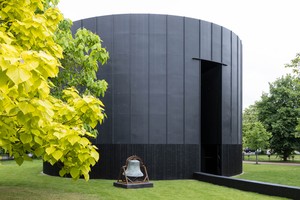
In this ongoing series, curator Hans Ulrich Obrist has devised a set of thirty-seven questions that invite artists, authors, musicians, and other visionaries to address key elements of their lives and creative practices. Respondents are invited to make a selection from the larger questionnaire and to reply in as many or as few words as they desire. For this installment, we are honored to present the artist Theaster Gates, whose Serpentine Pavilion 2022 Black Chapel opened in London on June 10.
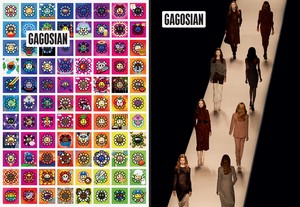
The Summer 2022 issue of Gagosian Quarterly is now available, with two different covers—featuring Takashi Murakami’s 108 Bonnō MURAKAMI.FLOWERS (2022) and Andreas Gursky’s V & R II (2022).
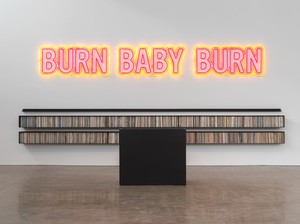
Theaster Gates, steward of the Frankie Knuckles record collection, is engaging with the late DJ and musician’s archive of records, ephemera, and personal effects. For the Quarterly’s “Social Works” supplement, guest edited by Antwaun Sargent, Gates presents a selection of Knuckles’s personal record collection. Chantala Kommanivanh, a Chicago-based artist, educator, and musician—and the records manager for Rebuild Foundation, Chicago—provides annotations, contextualizing these records’ importance and unique qualities. Ron Trent, a dear friend of Knuckles’s, speaks to the legacy evinced by these materials.

Join the artists for an extended conversation about their most recent exhibitions, their forebears in the world of ceramics, and the key role that history plays in their practices.
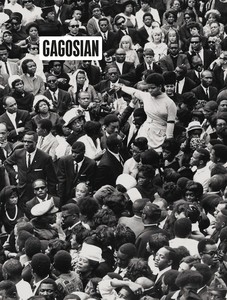
The Fall 2020 issue of Gagosian Quarterly is now available.

As a prelude to his first-ever solo exhibition in New York, Theaster Gates discusses his prescient work with the photographic archive of Chicago’s Johnson Publishing Company and his formation of Black Image Corporation as a conceptual project. In conversation with Louise Neri, he expands on his strategies as artist and social innovator in his quest to redeem and renew the sacred power of Black images and Black space.
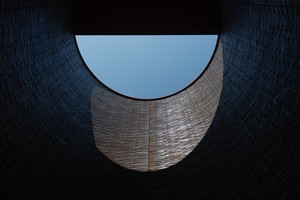
Social historian Chris Dingwall reflects on Theaster Gates’s engagement with the history of quotidian materials, focusing on the symbolic qualities and function of his brick-based sculpture.
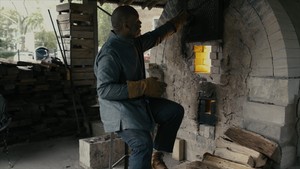
Join Theaster Gates in his studio as he prepares for an upcoming exhibition at Gagosian, New York. In this video, shot on location in Chicago during the tumultuous weeks of protest in late spring 2020, Gates reflects on the metaphorical power of materials and process, and on the redemptive potential of art.
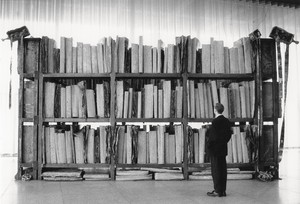
James Lawrence explores how contemporary artists have grappled with the subject of the library.
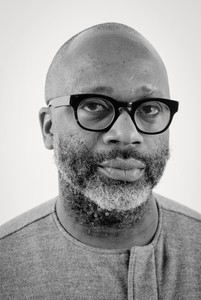
Theaster Gates’s exhibition Amalgam explores the social histories of migration and interracial relations by highlighting the specific history of the Maine island of Malaga. Here, William Whitney considers the exhibition in relation to Gates’s ongoing art practices and social commitments.
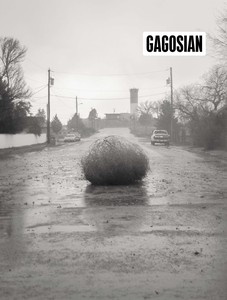
The Winter 2019 issue of Gagosian Quarterly is now available, featuring a selection from Christopher Wool’s Westtexaspsychosculpture series on its cover.
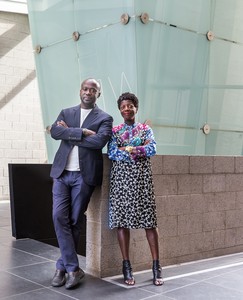
Established in 1968, the Studio Museum in Harlem has served as a crucial institution in the development, presentation, and promotion of artists of African descent. With the museum now preparing for the construction of a new home, Gagosian’s Mark Francis spoke with Thelma Golden, director and chief curator, and Sir David Adjaye OBE, the project’s principal architect, about the building plans and the centrality of artists in their collaboration.
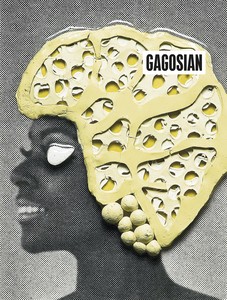
The Summer 2019 issue of Gagosian Quarterly is now available, featuring a detail from Afrylic by Ellen Gallagher on its cover.

Theaster Gates’s exhibition Amalgam at the Palais de Tokyo, Paris, features some of the artist’s slate wall drawings. Watch as Gates creates one of these works in this time-lapse video, featuring music by Theaster Gates and the Black Monks.

Theaster Gates and Sir David Adjaye join Bono to spearhead (RED)’s third auction of contemporary art and design, raising funds for the global fight against AIDS. As Gagosian prepares the preview exhibition, Gillian Pistell looks at the urgency of this vital cause.