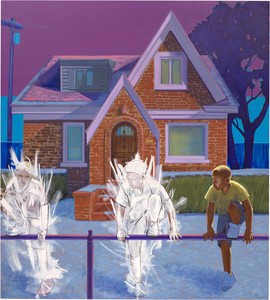
Titus Kaphar: The Fire This Time
On the occasion of his exhibition The Fire This Time at Gagosian, Paris, Titus Kaphar discusses themes of history, representation, and collective memory in his recent paintings and hand-carved wood sculptures.
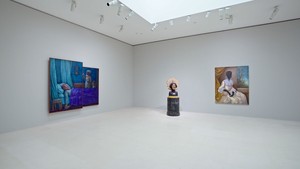
Installation video
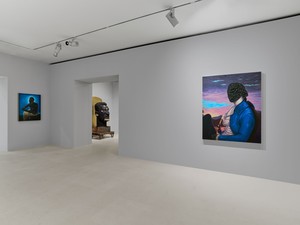
Installation view
Artwork © Titus Kaphar. Photo: Thomas Lannes
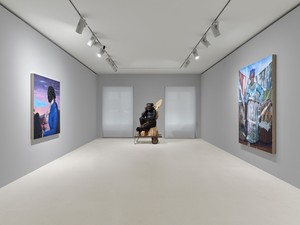
Installation view
Artwork © Titus Kaphar. Photo: Thomas Lannes
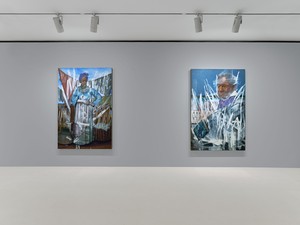
Installation view
Artwork © Titus Kaphar. Photo: Thomas Lannes
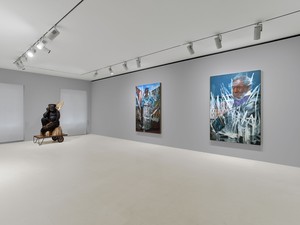
Installation view
Artwork © Titus Kaphar. Photo: Thomas Lannes
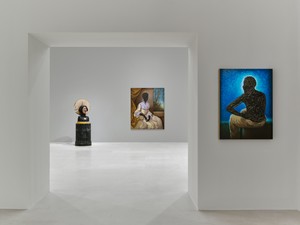
Installation view
Artwork © Titus Kaphar. Photo: Thomas Lannes
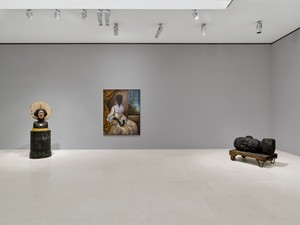
Installation view
Artwork © Titus Kaphar. Photo: Thomas Lannes
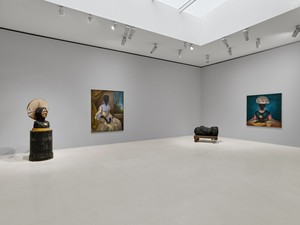
Installation view
Artwork © Titus Kaphar. Photo: Thomas Lannes
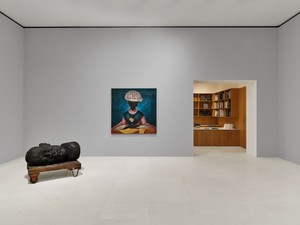
Installation view
Artwork © Titus Kaphar. Photo: Thomas Lannes
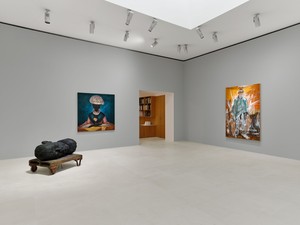
Installation view
Artwork © Titus Kaphar. Photo: Thomas Lannes
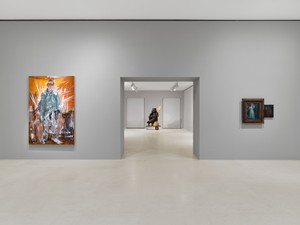
Installation view
Artwork © Titus Kaphar. Photo: Thomas Lannes
Installation view
Artwork © Titus Kaphar. Photo: Thomas Lannes
Installation view
Artwork © Titus Kaphar. Photo: Thomas Lannes
Installation view
Artwork © Titus Kaphar. Photo: Thomas Lannes
Titus Kaphar
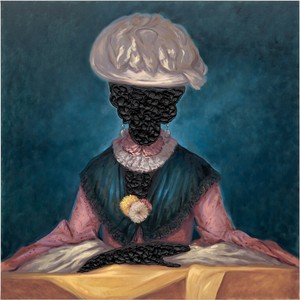
Kinfolk, Breath Is My Precious Inheritance (Harry Washington), 2025
Tar and oil on linen, 60 × 48 inches (152.4 × 121.9 cm)
© Titus Kaphar. Photo: Owen Conway
Titus Kaphar
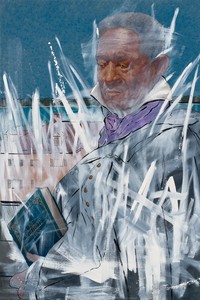
Kinfolk, Breath Is My Precious Inheritance (Sarah Johnson), 2025
Tar and oil on linen, 60 × 60 inches (152.4 × 152.4 cm)
© Titus Kaphar. Photo: Owen Conway
Titus Kaphar
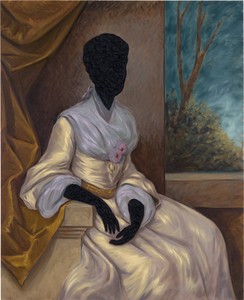
Forget Me Not (James Armistead Lafayette), 2025
Oil on linen, 84 × 56 inches (213.4 × 142.2 cm)
© Titus Kaphar. Photo: Chris Gardner
Titus Kaphar
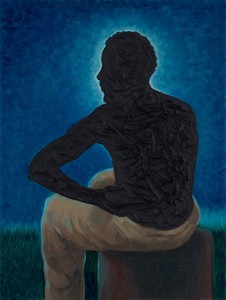
Kinfolk, Breath Is My Precious Inheritance (Elizabeth Keckley), 2025
Tar and oil on linen, 74 ⅛ × 60 inches (188.3 × 152.4 cm)
© Titus Kaphar. Photo: Chris Gardner
Titus Kaphar
Scourged, 2025
Tar and oil on linen, 40 ⅛ × 30 ¼ inches (101.9 × 76.8 cm)
© Titus Kaphar. Photo: Chris Gardner
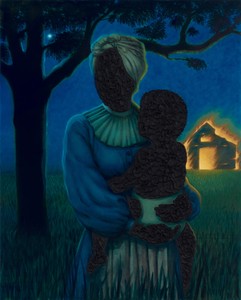
Titus Kaphar
The Fire of Self Definition, 2025
Tar and oil on linen, 60 × 48 inches (152.4 × 121.9 cm)
© Titus Kaphar. Photo: Chris Gardner
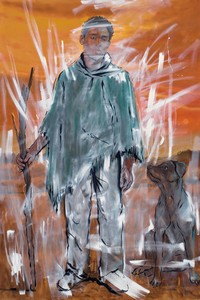
Titus Kaphar
Savage Escape (H.M.S. Savage 1781), 2025
Oil on linen, 84 ⅛ × 56 inches (213.7 × 142.2 cm)
© Titus Kaphar. Photo: Chris Gardner
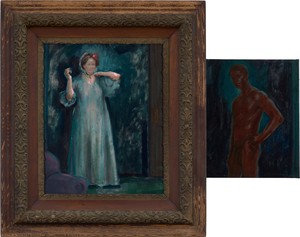
Titus Kaphar
As Close to Me as Memory (Irish Nell and Black Charles), 2025
Oil on linen, in 2 parts, in wood frame with sliding mechanism, open: 30 ¾ × 39 ½ × 3 inches (78.1 × 100.3 × 7.6 cm), closed: 30 ¾ × 26 × 3 inches (78.1 × 91.4 × 7.6 cm)
© Titus Kaphar. Photo: Chris Gardner
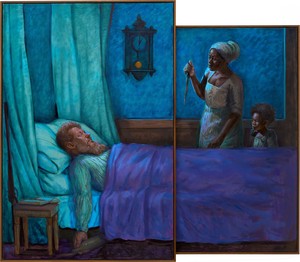
Titus Kaphar
Celia: Embers, Bone, and Ash, 2025
Oil on linen, in 2 parts, in wood frame with sliding mechanism, open: 85 ½ × 100 × 5 ½ inches (217.2 × 254 × 14 cm), closed: 85 ⅝ × 57 ⅝ × 5 ½ inches (217.5 × 146.4 × 14 cm)
© Titus Kaphar. Photo: Owen Conway
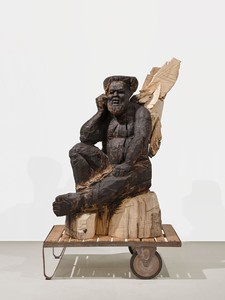
Titus Kaphar
Angel for Altadena, 2025
Charred wood and found industrial object, 78 ¾ × 47 ¼ × 31 ½ inches (200 × 120 × 80 cm)
© Titus Kaphar. Photo: Thomas Lannes
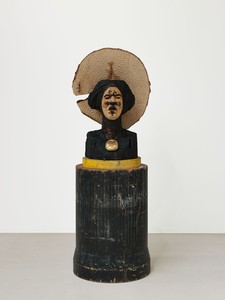
Titus Kaphar
While You Rest . . . (Sentinel 1), 2025
Charred wood, wood, gold leaf, and found industrial object, 76 × 38 ¾ × 38 ¾ inches (193 × 98.4 × 98.4 cm)
© Titus Kaphar. Photo: Thomas Lannes
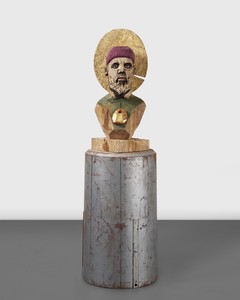
Titus Kaphar
While You Wake . . . (Sentinel 3), 2025
Wood, gold leaf, casein, and found industrial object, 75 ½ × 22 × 22 inches (191.8 × 55.9 × 55.9 cm)
© Titus Kaphar. Photo: Chris Gardner
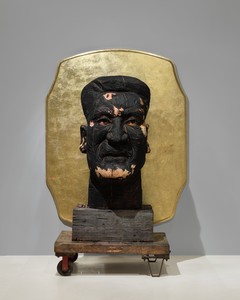
Titus Kaphar
His Vision Is Grace (Sentinel 2), 2025
Charred wood, gold leaf, and found industrial object, 84 × 60 × 39 inches (213.4 × 152.4 × 99.1 cm)
© Titus Kaphar. Photo: Thomas Lannes
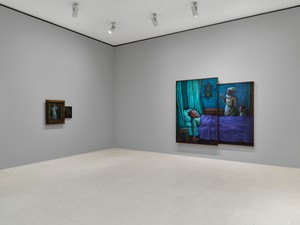
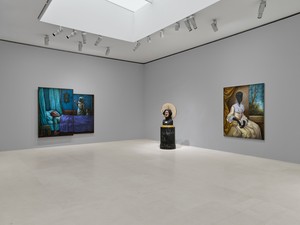
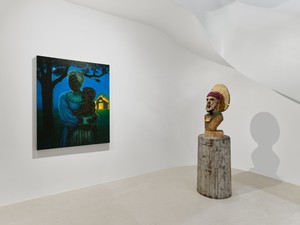
Gagosian is pleased to announce Titus Kaphar’s first exhibition in Paris, The Fire This Time, opening at the rue de Ponthieu gallery on January 29, 2026. The exhibition features new paintings and hand-carved wood sculptures that extend the artist’s engagement with how history and representation impact collective memory.
The exhibition title refers to James Baldwin’s civil-rights-era masterpiece, The Fire Next Time (1963), which charts the author’s struggle with—and ultimate rejection of—the racial politics of America. In relocating to Paris, Baldwin joined a community of American expatriate artists and thinkers, including Miles Davis, Nina Simone, and Richard Wright—figures who refused what Baldwin called “the American madness.” Jesmyn Ward’s anthology The Fire This Time (2017) carries those concerns into contemporary America, more than fifty years later.
Kaphar’s new paintings and sculptures reflect on the symbolic role of the American presidency at a moment when that “madness” is again at center stage. As the United States approaches the 250th anniversary of the Declaration of Independence—alongside national “No Kings” protests—Kaphar offers a form of homage and redress by foregrounding faces and voices that have long existed in the shadows of power.
Gagosian
press@gagosian.com
Toby Kidd
tkidd@gagosian.com
+44 7551 562067
Laura Callendar
lcallendar@gagosian.com
+44 7393 464636
Joonam Partners
gagosian@joonampartners.com
Roya Nasser
+33 6 20 26 33 28
Pierre-Édouard Moutin
+33 6 26 25 51 57
Request more information
about this exhibition
On the occasion of his exhibition The Fire This Time at Gagosian, Paris, Titus Kaphar discusses themes of history, representation, and collective memory in his recent paintings and hand-carved wood sculptures.

Jason Stanley, author of Erasing History: How Fascists Rewrite the Past to Control the Future (2024), considers Titus Kaphar’s new paintings, examining their potent refusals of jingoistic myth-building and their strident remembering of American history.
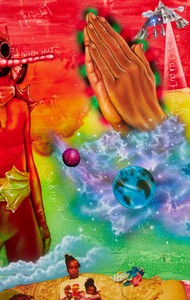
Jon Copes asks, What can Black History Month mean in the year 2024? He looks to a selection of scholars and artists for the answer.

Titus Kaphar and director Derek Cianfrance spoke on the opening night of Titus Kaphar Selects, a film program curated by the artist as part of a series copresented by Gagosian and Metrograph in the spring of 2023. The pair discussed their respective practices, including Cianfrance’s film Blue Valentine (2010) and Kaphar’s film Exhibiting Forgiveness, which premiered at the Sundance Film Festival on January 20, 2024.

Jamillah Hinson and Marissa Del Toro, recent curatorial fellows of Titus Kaphar’s nonprofit community arts hub NXTHVN, address their curatorial praxes.
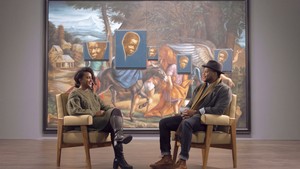
Join Titus Kaphar and Zoé Whitley as they discuss the artist’s recent exhibition New Alte̲rs: Reworking Devotion, featuring paintings and sculptures in which Kaphar examines the history of representation by altering the work’s supports to reveal oft unspoken social and political truths.
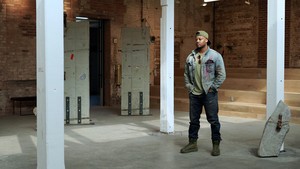
NXTHVN is a new national arts model that empowers emerging artists and curators of color through education and access. Through intergenerational mentorship, professional development, and cross-sector collaboration, NXTHVN accelerates professional careers in the arts. Join Titus Kaphar and Jason Price on a tour of the organization’s headquarters in New Haven, Connecticut. They discuss the founding and vision for this singular arts space.
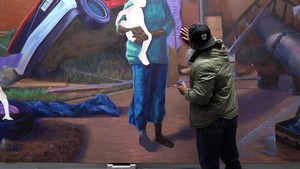
Join the artist in his studio in New Haven, Connecticut, where he speaks about his latest paintings.
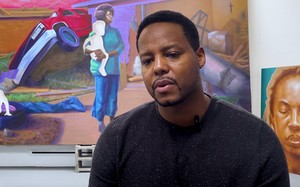
In this TED talk, presented during the sweeping protests against racism and police violence following the killing of George Floyd, Titus Kaphar describes how the beauty of a painting can draw the viewer in and allow difficult conversations to emerge. Kaphar discusses his own work and shares the idea behind NXTHVN, a new national arts model he founded to empower artists of color through education and access.
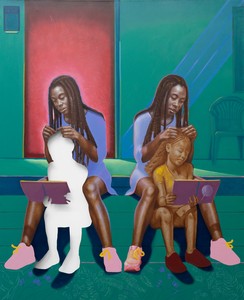
Titus Kaphar and Tochi Onyebuchi present an excerpt from their short story “Seeing the Child,” a poetic rumination on Kaphar’s latest body of work, From a Tropical Space (2019–).
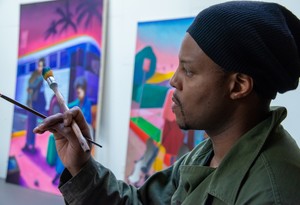
Jacoba Urist reports on a recent trip to the artist’s studio in New Haven, Connecticut, to see his new body of work, From a Tropical Space (2019–). She writes on the emotional and sensory impact of these paintings and considers their singular place in Titus Kaphar’s oeuvre.
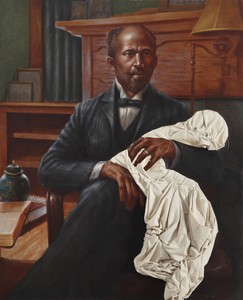
Bridget R. Cooks investigates the aesthetic and narrative conventions deployed by the artist, demonstrating how his paintings force provocative confrontations with history through complex modes of depiction.
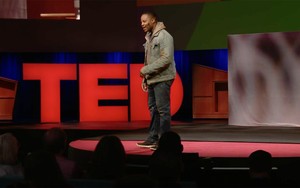
Join Titus Kaphar as he talks about making paintings and sculptures that wrestle with the struggles of the past while speaking to the diversity and advances of the present. Working onstage, he points to the narratives coded in the language of art history as he creates a new painting, demonstrating how shifting our focus can prompt us to ask questions and confront unspoken truths.