May 5, 2025

François Laffanour:
Galerie Downtown Paris

Since 1982, François Laffanour has been operating the Paris-based Galerie Downtown, a Left Bank outpost specializing in modern furniture and design. The gallery has played a key role in the exhibition and promotion of work by such midcentury greats as Charlotte Perriand, Jean Prouvé, Jean Royère, and Ettore Sottsass. Ahead of this year’s TEFAF New York, Laffanour met with Gagosian archivist Timothée Viale in Paris to speak about the fair, the gallery’s evolution, and the importance of embracing the future.

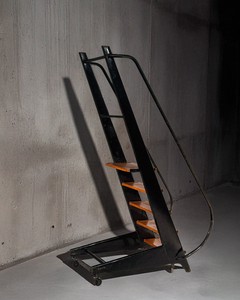
Jean Prouvé, Rolling Stepladder, c. 1950, lacquered steel structure, solid wood steps, and metal swivel casters. Model ordered by Société Générale, specifically designed for use in vaults to access overhead lockers

Jean Prouvé, rolling stepladder, c. 1950, lacquered steel structure, solid wood steps, and metal swivel casters. Model ordered by Société Générale, specifically designed for use in vaults to access overhead lockers

Jean Prouvé, rolling stepladder, c. 1950, lacquered steel structure, solid wood steps, and metal swivel casters. Model ordered by Société Générale, specifically designed for use in vaults to access overhead lockers

Timothée VialeSoon the next edition of TEFAF New York will be upon us. Can you give us some insight into what you’ll show in your booth?

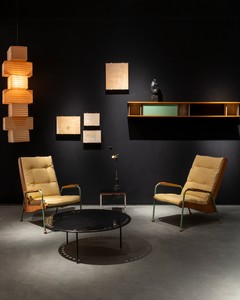
François LaffanourYes, I have chosen very specific pieces that match the level of that fair, which is top tier. I decided to bring mostly Jean Prouvé furniture. We will be showing his stepladder, for one, which is something unusual in the work of Prouvé. We will have a Présidence desk, which is already an iconic piece, of course, but this is a special one that has been beautifully utilized. The people who owned it used it so much, and I like it for that reason. You can see the passage of time in it. Also, the color: the top is black and the legs are green, which is an amazing combination. We’re also bringing two armchairs by Prouvé in the same green. Alongside those three, I decided to include some pieces by José Zanine Caldas, a Brazilian designer who offers an engaging alternative to the better-known French designs of the 1950s. His works have a powerful simplicity that goes perfectly with the Prouvé furniture.

TVCould you speak to the continuing relevance of midcentury design in the contemporary moment, seventy or so years after many of these pieces were produced?

FLIt’s been seventy years since they were made, but I’ve been showing them for forty years now, so it’s an era I’m familiar with. From the beginning, my interest in these architects and designers lay in their ability to reflect what the twentieth century was—namely a century of social revolution. It started with the Russian Revolution, and afterward continued in new ways across the globe. The furniture carries this history, and the effects of these changes continue to have huge relevance in our lives in the twenty-first century. The types of furniture, the types of production—the works of these architects and designers were democratic, in the sense that a piece could be mass produced for a school, for a president, for a university, for a minister. And I think that idea, in terms of furniture and decor, reflects an ideology that is different from all the types of objects produced and collected before.

To produce something that was beautiful and for everybody—as opposed to something precious, expensive, and limited—appealed to me from the beginning. For instance the Bauhaus, this line of people trying to make something as beautiful as they could for many people, has been a major focus. These were talented designers who chose to work in what could be considered simple materials, but they were doing something very original in terms of technology. The materials were not so rare or expensive, but the way the designers used them and treated them was extraordinary. When you see examples of Prouvé’s work at the University of Paris, for instance, where he designed bookcases, tables, or you look at the bedrooms he designed for students, they were absolutely magnificent. Everything was so elegant and original.

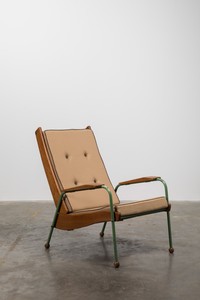
Jean Prouvé, Visiteur armchair no. 350, c. 1948, folded sheet steel and oak, Ateliers Jean Prouvé

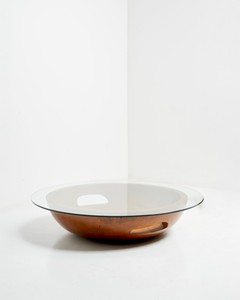
José Zanine Caldas, coffee table, 1978, circular pequi wood base with two recessed handles on either side, circular glass top

TVAre there are any interesting connections between the works you’re showing and New York?

FLWell, Jean Prouvé went to New York a few times, and Charlotte Perriand was celebrated there quite early in her career. But mainly we go to New York because a large portion of our clients are in the States. It’s been true since I started, that the people there are more sensible to the style of work we specialize in. They have a higher capability of understanding and collecting these pieces. I’ve often wondered if the Americans, especially in New York, are more open to these designers because New York shares an aesthetic lineage: big buildings, metal, glass, concrete. The industrial aesthetic fits very well with the look of the lofts, the buildings, the industrial production that is that city’s history. There is also the fact that so many contemporary art collectors are in New York. This furniture is humble, discreet, so you can mix it with a wide variety of artworks, for instance bold paintings and sculpture, without conflict. You can have a table by Prouvé or Perriand alongside a painting by Pablo Picasso or Andy Warhol without them competing for attention.

TVYou’ve spoken about the origins of your interest in these designers, but when did it truly begin?

FLI started a very long time ago. Unfortunately, I’ve become old. [laughter] My initial research and entry into this work began just a little before the 1980s. At that time, the work we’re speaking of wasn’t particularly commercial. It was only very top, top, top collectors coming to me with any interest. It took time, but I knew there was something interesting in the work and lives of Perriand, Pierre Jeanneret, Le Corbusier, and so on, and I had to stick with it. And in a way, I was lucky, because at that time it was easy to buy their works.

TVHow do you see the future—in terms of legacy, in terms of engagement with these designers—of midcentury design?

FLThe future? I think the future is already here, in a way, because it’s so well established all over the world. Works by these designers are in museums globally, so I feel it is safe to say that it isn’t simply a fashion. It’s become something firmly established in the history of our architecture, of our society, of our intelligence. What these designers created exists as a real testament to the importance of the twentieth century and the social evolutions that took place then.

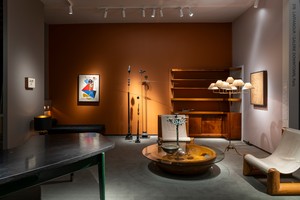
Installation view, Laffanour | Galerie Downtown booth, TEFAF New York, Park Avenue Armory, New York, May 9–13, 2025

Installation view, Laffanour | Galerie Downtown booth, TEFAF New York, Park Avenue Armory, New York, May 9–13, 2025

TVSo it won’t disappear anytime soon. I believe you’re also showing works by Richard Texier, a contemporary designer and artist, at TEFAF. Is that correct?

FLYes. I met Texier through a friend five or so years ago. It was perfect timing, as I had been thinking that we needed works in bronze in the gallery. He has created a very original world of animals, mysticism, surrealism, something a little different, which both pairs with our better-known pieces and provides contrast. His works, be they cups or lamps or fine art, are totally in opposition to the radical simplicity of the furniture of the midcentury milieu. This is good. I think if a designer today is doing the same thing that Prouvé or Le Corbusier did seventy years ago, it’s not interesting. That’s why I also like, and work with, Ron Arad and Choi Byung Hoon. They are taking a new route, trying to break the rules and break the commodity, with a facility that everybody can understand immediately. It’s important to mix those things, to look to the future, because we are not dead. We have to live with the future. We have to live with our city, with our world. It’s the same with literature or music; you can adore classical music while also appreciating rock ’n’ roll or hip-hop. Today you can like Mozart and Prince.

TVAnd these contemporary designers, they came to you organically, is that right? You didn’t set out to work with living designers; their work just caught your eye and a relationship developed.

FLExactly. It just happened. Honestly, I don’t have a “business plan”; I’m working with my feeling. And when I met those people, I felt it. That’s my life, and that’s my luck.
Photos: courtesy Laffanour | Galerie Downtown Paris

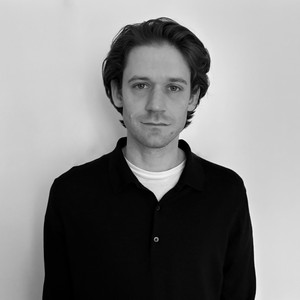
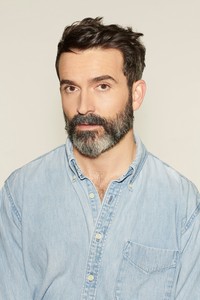
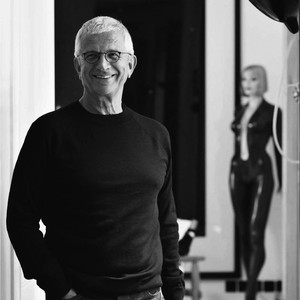
A portrait of François Laffanour

François Laffanour is a gallery owner, antique dealer, and art dealer. For 46 years, he has specialized in furniture by twentieth- and twenty-first-century architects and designers, notably Charlotte Perriand, Serge Mouille, Jean Prouvé, and Le Corbusier.

Portrait of Timothée Viale

Timothée Viale joined Gagosian in 2019 and is a senior archivist. He lives and works in Paris.

Gagosian quarterly weekend reads

Get the best of the Quarterly in your inbox twice a month.

By subscribing you agree to our Privacy Policy.

Derrick Adams: View Master

Derrick Adams: View Master

On April 16, the Institute of Contemporary Art, Boston, opened the first midcareer survey of Derrick Adams’s multidisciplinary practice. Covering over twenty years of work, the exhibition, titled View Master, brings together the artist’s painting, sculpture, collage, performance, and video, as well as a vibrant new commission created for the museum’s façade. Ahead of the opening, Adams met with Tessa Bachi Haas, cocurator of the survey, to discuss his formative experiences with television, the impact of his work in arts education on his practice, and the importance of taking a more complex, more joyful, and more expansive approach to Black American life and culture.

Engaging with the Past: An Interview with Jenny Saville

Engaging with the Past: An Interview with Jenny Saville

On March 28, a major exhibition of Jenny Saville’s work opened at Ca’ Pesaro–Galleria Internazionale d’Arte Moderna in Venice, bringing together nearly thirty paintings from the 1990s to the present. The exhibition is curated by Elisabetta Barisoni, head of the museums division at Venice’s Ca’ Pesaro, Museo Fortuny, and head of MUVE in Mestre. Saville’s monumental canvases are set in dialogue with the great Venetian artists of the past, creating a unique encounter between contemporary painting and the city’s artistic heritage. Here, the artist speaks with Stefania Ventra, professor with Ca’ Foscari University of Venice, about her early trips to Venice, the radicality of Titian’s painting, and depicting emotional truth.

A Tremendous Generosity: Jeff Koons on Marcel Duchamp

A Tremendous Generosity: Jeff Koons on Marcel Duchamp

Jeff Koons tells Alison McDonald about his appreciation for the pioneering artist and thinker Marcel Duchamp.

Peter Hujar & Paul Thek

The Art of Biography
Peter Hujar & Paul Thek

Andrew Durbin’s dual biography, The Wonderful World That Almost Was: A Life of Peter Hujar and Paul Thek, published by Farrar, Straus and Giroux, tracks the convergences and divergences in the lives of the two artists, from their first meeting in Coral Cables, Florida, in 1956 through their generative romantic and creative partnership in New York, Italy, Fire Island, and beyond. Ahead of the release, Durbin met with the Quarterly’s Wyatt Allgeier to speak about the development of the project, the sublime noncompliance of these two artists, and the motifs of love, death, and rebirth that weave through the telling of their story.

Tradition and Innovation: The 2026 Loewe Foundation Craft Prize

Tradition and Innovation: The 2026 Loewe Foundation Craft Prize

The Loewe Foundation Craft Prize celebrates its ninth edition with an exhibition at the National Gallery Singapore.

Fashion and Art: Daniel Roseberry

Fashion and Art: Daniel Roseberry

Daniel Roseberry, the creative director of Schiaparelli, met with the Quarterly’s Derek C. Blasberg at the maison’s historic headquarters at 21 place Vendôme, Paris, following the Schiaparelli Fall/Winter 2026–27 ready-to-wear show. Since taking the helm in 2019, Roseberry has been credited with advancing the heritage of the house through unpredictable sculptural designs that carry Elsa Schiaparelli’s Surrealist spirit into a new century. The pair discuss the much-anticipated exhibition Schiaparelli: Fashion Becomes Art, now on view at the Victoria & Albert Museum, London, as well as Roseberry’s early exposures to art, his continued dedication to drawing, and the enduring legacy of Elsa Schiaparelli’s daring vision.

Helter Skelter: Arthur Jafa and Richard Prince

Helter Skelter: Arthur Jafa and Richard Prince

Helter Skelter—an exhibition at Fondazione Prada’s Venetian venue, Ca’ Corner della Regina—marks the first creative dialogue between two visionaries of American art, Arthur Jafa and Richard Prince. The show explores the grit, grift, violence, and ingenuity of American culture through more than fifty works, including photography, video, and large-scale installations that interrogate themes of race, gender, media, and politics. In the interview below, Nancy Spector, the exhibition’s curator, speaks about the shared motifs—from apocalyptic sunsets to a fascination with “monstrosity”—that led her to pair these artists for the first time.

Theaster Gates: Dave, All My Relations

Theaster Gates: Dave, All My Relations

A conversation between Theaster Gates and Jessica Bell Brown, with an introduction by Sydney Stutterheim.

An Eye on the Market: Trading Beauty

An Eye on the Market: Trading Beauty

Valentina Castellani speaks with the Quarterly’s Alison McDonald about her new book, Trading Beauty: Art Market Histories from the Altar to the Gallery. The illustrated survey traces the evolution of the Western art market from the medieval era to the present day.

Art Work: Sally Mann and Amor Towles

Art Work: Sally Mann and Amor Towles

Sally Mann joined novelist Amor Towles in a conversation about her widely celebrated new book, Art Work: On the Creative Life (2025), at an event hosted by the New School and the Strand in New York. Published by Abrams, Art Work is about the challenges and pleasures of the creative process. Its mix of illuminating stories, practical advice, and life lessons, illustrated throughout with photographs, letters, and journal entries, offers insights into Mann’s own experience of making art. Here, Mann and Towles speak about the writing process, historical ghosts, and fortunate mistakes.

Mary Weatherford and Mark Lee: Persephone

In Conversation
Mary Weatherford and Mark Lee: Persephone

Ahead of Persephone, an exhibition of new paintings by Mary Weatherford inside Hong Kong’s historic Pedder Building, the Quarterly’s Wyatt Allgeier met with Weatherford and the architect Mark Lee to talk about their collaboration. Here, they discuss how custom architectural interventions—from mirrored columns to strategic light play—transform the gallery, evoking Persephone’s mythic journey through the underworld and back into the light of spring.

The Future of the Past

The Future of the Past

Ashley Overbeek tells the story behind the Art and Antiquities Blockchain Consortium (AABC), cofounded by Susan de Menil. The story begins with a famous pair of Byzantine frescoes once hosted by the Menil Foundation in Houston, passes through the repatriation of a group of Bura funerary objects to Niger, and explores how new technologies are helping to resolve the world’s oldest cultural disputes.