The photographer sat down with Derek Blasberg to talk about his process, his peeves, and his experiences with Jean Shrimpton, Anjelica Huston, Freddie Mercury, and more.
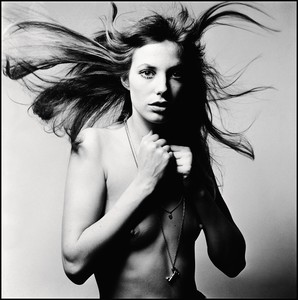
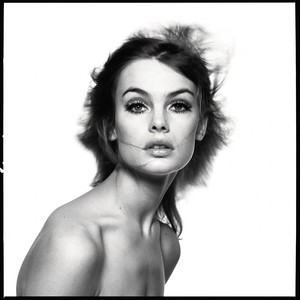
David Bailey, Jane Birkin, 1969, gelatin silver print, 48 × 50 inches (121.9 × 127 cm), edition of 10
David Bailey, Jane Birkin, 1969, gelatin silver print, 48 × 50 inches (121.9 × 127 cm), edition of 10
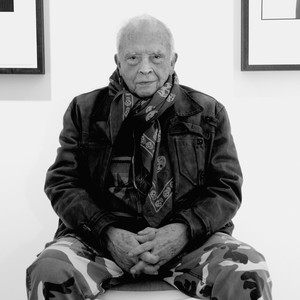
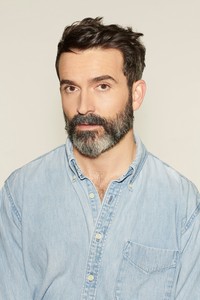
David Bailey’s technique of natural portraiture cast models not as stiff mannequins or mere vehicles for fashion, but as subjects in themselves, as people whose personalities could be drawn out through the process of photographing them. Photo: Fenton Bailey
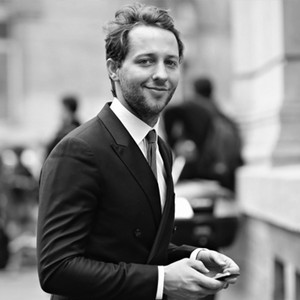
Derek C. Blasberg is a writer, fashion editor, and New York Times best-selling author. He has been with Gagosian since 2014, and is currently the executive editor of Gagosian Quarterly.
Derek BlasbergDo you remember the first time we met? It was years ago, and I was the stylist on a magazine shoot with Daphne Guinness. I was terrified because I’d been told you hated pushy Americans and stylists and I was there to be both.
David BaileyYes, I remember that shoot. You were all right, but it was her boyfriend who got on my nerves. I told him to disappear, I think.
DBlYes, you did! Which was a huge relief to me.
DBaI guess I didn’t take to him [laughs]. He was standing behind me and trying to direct her in the pictures, which was awful, but she was nice.
DBlDo you miss shooting for so many fashion magazines?
DBaI never see any of the magazines I used to shoot for anymore.
DBlThey’re all hurting with budgets nowadays.
DBaNone of them were ever really rich. English Vogue? Forget it, they never had big budgets. French Vogue? Nothing. Italy: nothing. It was only American Vogue that did. I remember once [former American Vogue editor Diana] Vreeland phoned me and said, “You’ll give me hell but we’ve got to watch the money.” She spoke for an hour on that call—a long-distance call, which in those days cost a fortune—and she was on for about an hour and a half rattling away. Then she phones me the next day and goes, “Will you go to India to photograph a white tiger?” [laughs] After telling me to cut budgets she sends me to India to photograph a white tiger! He was in a zoo anyway! Vreeland was one of the most extraordinary women I’ve ever met.
DBlIt’s fascinating how Diana Vreeland has remained such an icon in fashion.
DBaWell, she was really fantastic. She was clever, and one of the most interesting women I’ve ever met, in a funny sort of way.
DBlShe was the inspiration for Kay Thompson’s character in the film Funny Face [1957], which starred Audrey Hepburn.
DBaThat was a great film. I saw that film when I was an assistant to the photographer John French.
DBlIt’s got that great opening number, “Think Pink.”
DBaYeah, that Diana Vreeland statement. She was the one who said “Pink is the navy blue of India.” That’s as good as Andy Warhol’s line about everyone being famous for fifteen minutes. But I wonder if that media writer—
DBlMarshall McLuhan?
DBaYeah, the one who said the image is the message. He said all sorts of catchy things. I wonder if Warhol got a lot of quotes from him.
DBlI know you started taking pictures after you were called up for the National Service, the British equivalent of America’s military draft, but before that did you ever think you’d be in the fashion world? In magazines and media and photographs?
DBaNever gave it a thought. I liked photography but I didn’t think about fashion. In fact, it was an accident really: I used to play trumpet, I wanted to be Chet Baker, but, luckily, someone stole my trumpet [laughs].
DBlWhen?
DBaWhen I was in the Air Force. An officer took it and there was nothing I could do about it. He said, “Can I borrow your trumpet to draw?” I said, “Yeah,” and then he said, “Sorry to tell you this, but someone’s stolen it.” He was an officer and I was just a private, so I couldn’t do anything about it.
DBlThat might have been the best thing that ever happened to you.
DBaYeah, probably! I would have been a very bad Chet Baker [laughter].
DBlAnd that’s when you worked with John French, right?
DBaYes, for about eleven months. John was a great guy. And then I went to Vogue.
DBlYou were quite young and—how can I put this?—not the typical kind of photographer Vogue used at the time. At that point Vogue was looking for people who were quite polished.
DBaHonestly, I don’t know how I got into Vogue with my accent. Americans may not know this, but it wasn’t readily accepted in England to have an accent like mine. There were very beautiful girls in the 1960s with accents like mine and we weren’t allowed to work with them. I always thought, “Well, what’s her accent got to do with a photograph? We’re not making a movie!” But they wouldn’t have anything to do with anyone they thought was “common.” That was the way it was until the ’70s, really.
DBlWhy did they let you in?
DBaI don’t know why. I think the art director was an outsider and maybe he thought I was an outsider too. He was gay, and at that time being gay was actually against the law. I was an outsider in a different way, so we had something in common.
DBlYou were against society, and the magazines liked nice, upper-middle-class people like Cecil Beaton.
DBaCecil hated not being posh. He would have liked to have been a count or a lord or whatever bollocks. They made him a sir in the end, so at least he sort of got it.
DBlYou helped usher in a new era of photography that was very post–Cecil Beaton in style.
DBaHe had a way of making people comfortable. They were great pictures because he would shoot people in a fancy chair and make them look as if they’d always been in that fancy chair.
DBLYou took people out of fancy chairs, though. When you came to Vogue, were you aware that you were introducing a unique style?
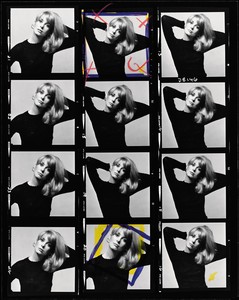
David Bailey, Catherine Deneuve, 1966, digital pigment print on Ilford Galerie, 53 ½ × 43 inches (136 × 109 cm), edition of 10
DBaNo. I never thought about it, to be honest. It just seemed like common sense. I don’t even think people realized the photographs were good back when I did them . . . but we didn’t know anything back then.
DBlThere’s this great quote of yours: “About 2,000 people had fun in the Swinging ’60s.”
DBaYeah, they weren’t much fun if you were a coal miner or a fisherman or something like that. It was only a few thousand people that had fun in the ’60s and it was a working-class thing. It was the first time they had a voice. I think the reason it happened was there were too many of us. There was Michael Caine, Terence Stamp, Albert Finney. If you watch English movies from the ’50s, they were all middle-class people playing cockneys. You can tell by their accent that they weren’t really from the East End. Finally, we were like, what’s this?
DBlDo you use a digital camera nowadays? Or an iPhone?
DBaNo, I don’t usually shoot digital because I still don’t like it. I usually use a 5-by-4 camera in the studio.
DBlWow, you’re probably one of the last photographers still using film.
DBaOne good thing about film is that I don’t have to take a lot of frames. I take about ten shots and I’m done [laughter]. But when I’m taking pictures in the street, I’ll use a digital Leica. That’s the best camera for street photography.
DBlI’ve noticed on shoots that you spend a few hours talking with someone and then you bang out the picture in a few minutes.
DBaYeah, I’ll talk with them for a couple of hours if I can before I shoot them. Then it only takes ten minutes. But think about it: how can you shoot someone you don’t know? It’s all right if I’ve already met and know them, if I’ve known them for years, like Jack [Nicholson] or somebody, but if some stranger comes in and I don’t know who they are, how do I know when I have the right shot?
DBlIf I could say that tomorrow you could shoot anybody you want, who would it be?
DBaNobody, really. Probably twenty years ago it would have been Fidel Castro. [Magazine editor] Tina Brown wanted to do that, and we tried a couple of times, but they’d say, “Can you go and spend six weeks there, but they’re not sure if you’ll get it.” So I said, “I can’t spend six weeks in Cuba!” Eventually they sent [Herb] Ritts, and he was there for two weeks and left. He got fed up as well. Honestly, I don’t think the Cubans were that interested.
DBlOne question I get a lot, especially with people who are into photography, is, How does one start a photography collection? What are you looking for when you’re taking pictures? What’s an important picture to you?
DBaI never talk to people about that shit! [laughter] Honestly, I don’t know. I’ve only collected two photographers in my life: one’s Irving Penn and the other is Manuel Álvarez Bravo. I’ve probably got about twenty pictures by each of them.
DBlDo you ever display your own pictures?
DBaNo, never. On my walls? No. I don’t want my pictures in my house.
DBlThere’s a picture of Georgia O’Keeffe in the loo.
DBaThat’s by Bruce Weber.
DBlOh, right.
DBaThey’re mostly Bruce in the loo. Ha! I bet he’d love that.
DBlDo you have a comradery with other photographers?
DBaNo. I did with Helmut [Newton] and with Bruce—I’m trying to think of who else. I knew Irving Penn quite well. He used to let me rent his studio.
David Bailey, Jean Shrimpton, 1965, gelatin silver print, 48 × 50 inches (121.9 × 127 cm), edition of 10
DBlTalk to me about models. Who do you like?
DBaEasy: I think the two greatest models are Jean Shrimpton and Kate Moss.
DBlSome of your most famous early pictures are with the Shrimp, but then she quit fashion entirely and moved off the grid. Right?
DBaWell, she didn’t like it. Jean hated it. Kate loves it. That’s the difference. Kate’s fantastic. She comes here sometimes and she’ll leave at about four in the morning. I just took a nice new picture of her. I’d do anything for Kate.
DBlI’m happy to hear you say that because I think oftentimes, photographers such as yourself have such little patience for fashion people.
DBaI stopped doing fashion years ago. It was too much. In 1971, I did 800 pages at Condé Nast all in one year, and it was just too much.
DBlWow, 800 of anything is too much.
DBaI thought, “Shit, I’ve got to stop working like this. I’ll turn into a frock if I’m not careful!” [Laughter] I never really liked fashion anyway. I like the girls but I was never really good for the business. I like Yves Saint Laurent, I suppose. In fact, I went to see his first collection and I was with Catherine Deneuve and I said, “Catherine, you’ve got to stop wearing whatever you’ve got on and you’ve got to get on this Yves Saint Laurent.”
DBlReally? YSL and Deneuve became lifelong friends and muses.
I like to do my own styling. I don’t want to do funny stuff. I want to take the picture and get on with it. Less is always more.
David Bailey
DBaI was the one who introduced her to Yves. After that, Pierre Bergé was my best friend for the rest of his life.
DBlDoes your process of taking pictures today differ at all from when you took the Michael Caine portraits in the 1960s?
DBaNo, I take them all the same way. I’ve never really changed. I’m lucky in a way, because my pictures don’t seem to date. If I did fashion pictures now, I’d avoid hair and shoes. I never did too much hair or shoes because those two things, the book stands of fashion, age more than anything else. I always crop stuff. I always got into trouble with Vogue, like “Oh, we can’t see the feet.” And I would say, “Well, you know what feet look like” [laughs]. I like to do my own styling. I don’t want to do funny stuff. I want to take the picture and get on with it. Less is always more.
DBlWhen you see the pictures of Mick Jagger, the pictures we had on view in the gallery, do they still feel fresh to you?
DBaAt first I wasn’t overwhelmed with doing an exhibition of the ’60s photographs—I thought, “Ugh, the 60s again.” And I hate that term “Swinging ’60s” and all that, it’s so cliché. But here they felt fresh.
DBlBut we’re all so drunk on nostalgia. I mean, Freddie Mercury is the hottest name in Hollywood and he’s been dead for decades.
DBaOh yeah, I saw that movie, Bohemian Rhapsody. It’s good, he’s good.
DBlDid you know Freddie?
DBaFreddie stuck his tongue down my throat!
DBlDidn’t you date Anjelica Huston?
DBaYes, I was with her before Nicholson. She was great, Anjelica. She’s a fantastic mimic. She can mimic anybody. I did a book on her.
DBlYou dated Shrimpton too.
DBaI did.
DBlI heard she runs a bed-and-breakfast down by the sea now.
DBaIt’s better than a bed-and-breakfast! It’s a bit like Fawlty Towers. Last time I stayed with her we both got locked out at 8 o’clock in the evening and couldn’t get back in because nobody knew where the fucking key was. There was nobody at reception. It’s a sweet hotel. There aren’t too many charming hotels in St. Ives.
DBlSo you’re still friends with her?
DBaYeah! I’m friends with all my ex-girlfriends except Marie Helvin. I never see her.
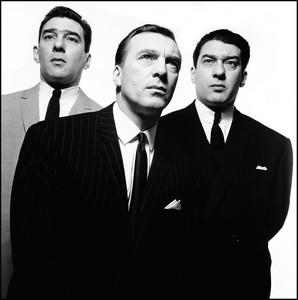
David Bailey, The Kray Brothers, 1965, platinum palladium print, 30 × 42 ½ inches (76.2 × 108 cm), edition of 10
DBlAre you friends with people you’ve worked with throughout the years?
DBaOh yeah. Everyone. I like working with the same women for fifteen years. Vogue got fed up with that but I’ve worked with [my wife] Catherine for forty years.
DBlIt must be validating to have people still turning out to see fifty-year-old pictures in a gallery, right?
DBaI think they’re older than that. How old am I? Eighty. Yeah, they’re older than that. They’re from the early ’60s.
DBlI was being polite and cut a few years off.
DBaNo, no, I’m very old [laughter].
DBlLast question: Who was the first person you were excited to take a picture of?
DBaSomerset Maugham. He wrote Of Human Bondage. They made a movie of it and it was about a girl gang. He did lots of good books and he understood women more than any straight guy.
DBlThat was the first celebrity portrait?
DBaFirst famous person, yeah. I thought, “Shit, if they’re all like this it’s going to be great.” He couldn’t have been nicer and he died a couple of years later. He told me, “Don’t give away everything.” My camera strap was a piece of string [laughs] and I didn’t have a lot of cash at the time, which he noticed. He said, “Oh good, you’re poor. Don’t give away anything. Keep something back.”
DBlThat’s sage advice.
DBaI got on great with him. He was very old—
DBlHow old?
DBaShit, he must have been seventy-three or something, which is younger than I am now. But don’t you ask me for any advice.
David Bailey’s technique of natural portraiture cast models not as stiff mannequins or mere vehicles for fashion, but as subjects in themselves, as people whose personalities could be drawn out through the process of photographing them. Photo: Fenton Bailey
Derek C. Blasberg is a writer, fashion editor, and New York Times best-selling author. He has been with Gagosian since 2014, and is currently the executive editor of Gagosian Quarterly.