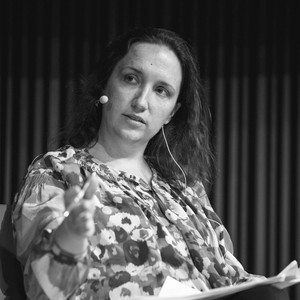
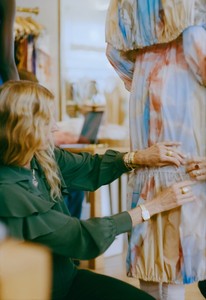
Valentina Castellanispeaks with the Quarterly’s Alison McDonald about her new book, Trading Beauty: Art Market Histories from the Altar to the Gallery. The illustrated survey traces the evolution of the Western art market from the medieval era to the present day.
Valentina Castellani has held leading roles at Sotheby’s and Gagosian and has worked as an independent dealer. She is an adjunct professor in NYU Steinhardt’s MA program in Visual Arts Administration.
Alison McDonald is the chief creative officer at Gagosian and has overseen marketing and publications at the gallery since 2002. During her tenure she has worked closely with Larry Gagosian to shape every aspect of the gallery’s extensive publishing program.
Alison McDonaldYou’ve written a book about the art market, specifically about how commissioning structures and patronage have evolved over time and helped shape art history. What started you down this path, and how did you develop this expertise?
Valentina CastellaniI grew up in Italy, so I visited museums throughout my childhood. Later, I studied art history in Turin, with a focus on ancient Greek art. Then I moved to London, worked briefly at a small gallery, and became a cataloguer at Sotheby’s, which was fantastic training. Once, when I was cataloguing works by Piero Manzoni, I found a name in the catalogue raisonné of a collector who was not known to the auction house, but lived in a small village just outside of Turin. I researched, found his address, and sent him a letter offering an appraisal of his Manzoni. When I visited him, he turned out to have a lovely collection, fifteen paintings, mostly by Italians, each more beautiful than the next, all fresh to the market. Before moving to London, I had never associated art history with the market; I had been taught the evolution of art as a succession of geniuses and masterpieces. There was no information about the economic context within which art was produced.
AMMany students learn about the lineage of art from one generation of artists to the next, but it’s rare to have someone share much about what’s happening in the world around those artists, which is really what shapes their practice. Context is everything!
VCYes, that’s why I focus on the market for the course I teach at New York University, and that’s what led me to writing this book. For example, when you look at a painting produced during the Renaissance, it’s important to understand that the artist needed a patron before he could produce it. The contemporary idea of an artist who creates something new because they’re feeling inspired, and only after it exists looks for a buyer, is unique to our current moment in history. Renaissance artists were considered artisans, and they only produced works on commission.
we tend to think that our values are absolute, but values evolve and are always the result of social circumstances. Art has always operated within a set of restrictions.
Valentina Castellani
AMYou and I first met while you were working at Gagosian. How was that different from your time at the auction house?
VCIt was a thrill to work with living artists and organize exhibitions at the gallery. It always felt as though the sky was the limit. You must remember that this was when the art world was truly becoming more global, and galleries like Gagosian were blurring traditional boundaries between galleries and museums. One of the chapters in my book is dedicated to the museum-quality exhibitions we hosted for Pablo Picasso, Lucio Fontana, Manzoni. . . .
AMAnd now you’re teaching at NYU!
VCYes! After leaving the gallery, I was unexpectedly offered to teach a course on the history of the art market. I was looking for a textbook to share with my students that included this perspective, and I couldn’t find one, so I started writing my own notes. And here we are! Back when I was preparing my course, I was forced to look through a different lens at how art was produced, traded, and sold, and how different market models determine criteria for how art is valued. For example, during the Middle Ages and the early Renaissance, the use of gold or ultramarine blue signified value. It was only later, with Raphael, Leonardo da Vinci, Michelangelo, and Giorgio Vasari’s 1550 publication of The Lives of the Most Excellent Painters, Sculptors, and Architects, that the idea of genius was introduced. Before that, the patrons commissioned the scenes: “Paint a kneeling Madonna with a blue cloak, surrounded by two angels.”
AMWhat surprised you along the way?
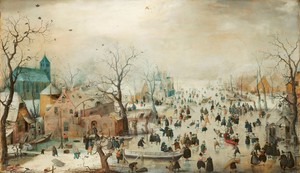
VCWe tend to associate the concept of the market and its influence with art that is modern and contemporary, but we’re not used to looking at ancient and historical works through that lens. For instance, when you look at a work produced during the Dutch Golden Age, which is Holland during the seventeenth century, the market model was very different. The first free market emerged from a combination of political, religious, and social circumstances. Holland became a Protestant republic, which meant the Church and the aristocracy (who were the biggest patrons of art everywhere else) weren’t commissioning art. Rich merchants and the emerging bourgeoisie adopted that role, which profoundly shifted the art system. Artists started making more still lifes and interior scenes because the collectors wanted art they could relate to. And even the working classes were art buyers, which prompted a huge production of art that was made not on commission but for an open market. Artists started to be highly specialized—producing only winter landscapes, for example. And they would sell works in taverns, from their studios, through guilds, et cetera. That was really the beginning of the market that exists today.
Hendrick Avercamp, Winter Landscape with Ice Skaters, c. 1608, Rijksmuseum, Amsterdam. Photo: Rijksmuseum/Oursana, 2021/Wikimedia Commons
AMThat moment also marked the emergence of art dealers and gallerists. What interesting variations on that model have occurred over time?
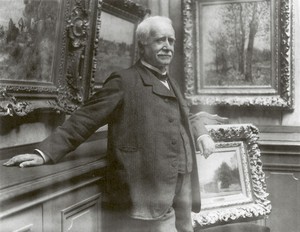
VCIn the nineteenth century, for instance, Paris was the center of the Western art world and its Academy of Fine Arts determined, through a strict set of rules, the content and styles of the day. It organized salons and exhibitions—artists had to submit their works to a jury and be accepted. That was the main path for artists to find buyers or commissions, so not being shown in the salons meant it was almost impossible to find a place in the market or have your work known by the public. Paul Durand-Ruel, who created a market for the Impressionists, broke that model. The Impressionists were not interested in the rules of the Academy, which favored historical themes, precise brushstrokes, and realist styles. They were a group of young artists who proposed a style that was radically different from the grand mythological and historical themes. They painted what they saw around them, in the countryside or the city, with loose brushstrokes and unexpected colors.
It’s important to note that Paris was undergoing profound changes at this time. Georges-Eugène Haussmann was redesigning the city, the bourgeoisie was rising, and they wanted art that felt fresh and modern. As with most shifts in taste, the Impressionists were rejected at first, and they struggled—for instance we have letters written by Claude Monet saying that he didn’t have money to buy food for his family. Then Camille Pissarro and Monet met Durand-Ruel in London in 1870, and when Durand-Ruel returned to Paris, he went to their studios and started buying paintings in bulk. He started creating strategies that we still use today—monographic exhibitions and publications, which were unprecedented. He wanted to educate the public and make them understand why these artists were significant. He also understood the importance of not only building a market for their work, but expanding it internationally. The turning point is in 1886, when he’s invited to exhibit in New York, and that really marks a period of success and acceptance for the Impressionists.
AMCan you touch on a few types of patrons from different time periods that you cover in the book? What about when the Church was the commissioner?
VCThe Church occupied the void created by the fall of the Roman Empire. It was culturally and spiritually a link across very different European populations. And there were two primary functions of art for the Church. The first was to create buildings where communities of worshipers could gather. So there was an explosion of cathedrals in the Middle Ages, like seven hundred of them throughout Europe. The second was to communicate the message of the gospel and of God to a population that did not know how to read. A very beautiful example of this is a scene depicting the Last Judgment in the Autun Cathedral in France. It’s above the entrance, and the message is clear: If you don’t behave, you’re going to Hell.
AMWhat about private patronage?
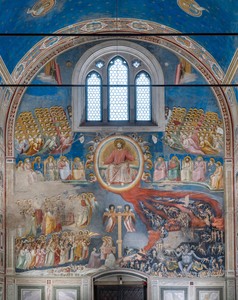
VCIn the High Middle Ages, the situation in Europe was stable, the economy was better, the population returned to the city from the countryside, and private patronage emerged. At the very beginning of the fourteenth century, Giotto was commissioned for a family chapel by Enrico Scrovegni. Reginaldo Scrovegni, Enrico’s father, was a usurer—he lent money for interest—something that was harshly condemned by the Church. In fact, Dante in his Divine Comedy placed Reginaldo in Hell. Of course, Enrico didn’t want to end up like his father, so he commissioned this beautiful chapel filled with frescoes of stories about the life of Christ and the Virgin Mary as atonement for his sins. In the Last Judgment scene, the artist depicted Enrico on the right side of Christ, along with those who are being saved.
Giotto, Last Judgment, 1303–05, Scrovegni Chapel, Padua, Italy. Photo: Manuel Cohen/Art Resource, New York
Then there are the Medicis, who in many ways set the prototype for private patronage during the Renaissance. They truly understood how art could be a potent tool for propaganda. At the time, Italy was divided into small states, and each of them was competing, not only militarily but also culturally—securing the best artists, creating the most beautiful monuments, et cetera. The influence of culture was an important diplomatic tool.
AMWhat about women patrons at that time?
VCThere weren’t many because, as we know, they were operating within a patriarchal society, but Isabella d’Este was a good example. She was in Mantua, a very small state, and she was passionate about art. She commissioned a lot of work, and she maintained a small studio that displayed her collection. She desperately wanted to be portrayed by Leonardo, but it didn’t happen.
AMIn your book you mention that one of the biggest patrons of the Renaissance was Pope Julius II.
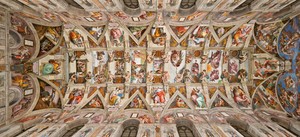
VCHe was pope from 1503 to 1513, and he called Raphael, Michelangelo, and Donato Bramante to Rome to start the reconstruction of Saint Peter’s Basilica. The commission of the Sistine Chapel is another very interesting story, because the pope lured Michelangelo to Rome with the project of creating the pope’s own tomb. It was quite common for kings and popes to commission their tombs while they were still alive. And that would have been a monument on an unprecedented scale, with forty sculptures on three levels.
Michelangelo was very excited—you must remember that he thought of himself as a sculptor, not a painter. He had already produced David (1501–04), the Vatican Pietà (1498–99), and so on. Michelangelo spends five months in the Carrara marble quarry selecting the right stones, but when he goes back to Rome, the pope has changed his mind. Instead, he commissions Michelangelo to repaint the ceiling of the Sistine Chapel, which is where the conclave takes place for the election of a new pope. Michelangelo is very reluctant, in part because he’s not familiar with the fresco technique. As you know, it’s quite complicated because the paint must be applied on wet plaster and then you cannot change it anymore. But of course he produced a masterpiece.
AMAre there any good stories about rejected commissions?
VCA very famous one is The Death of the Virgin by Caravaggio, which is now in the Louvre. It was commissioned by Laerzio Cherubini for his chapel in a church in Rome, Santa Maria della Scala. The painting depicts the Madonna surrounded by the apostles, but it’s not idealized at all. Caravaggio’s greatness was his ability to bring reality into art to depict the world as it was—not as a better version of it. Apparently, for the Madonna figure, he worked from the body of a prostitute who had drowned in the Tiber, so the figure is a swollen dead body. There’s nothing idealized, she doesn’t seem like the mother of Christ. The work was rejected, and instead the commission went to Carlo Saraceni, who painted the Madonna ascending into the sky.
AMThroughout the book, highlighted passages provide fascinating context outside of the main storyline. You write about religious relics, the market for women old masters now, important collectors and dealers, et cetera. How did you arrive at this format?
VCEach chapter corresponds to a specific model and moment in time. I wanted to describe how economic, social, and religious circumstances all play a role in art history. While I was writing, I noticed digressions that didn’t fit into the larger narrative but illuminated the context in fascinating ways. For instance, I talk about how churches were often built to host relics—a fragment of Christ’s cross or the crown of thorns. Of course, there would be economic benefits to the church hosting the relics, thanks to pilgrimages to see them.
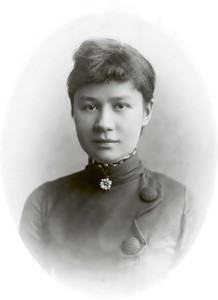
Another story is about Johanna van Gogh-Bonger, who was married to Vincent van Gogh’s brother Theo. She established the market for Van Gogh’s work. Theo was Vincent’s main patron, and he passed away six months after Vincent died, so Johanna inherited a bulk of works. She cleverly created alliances among several dealers to organize exhibitions, determined a set number of works to be sold so as to avoid flooding the market, and she understood that, for the public to truly grasp Vincent’s work, the more than eight hundred letters—mostly with Theo—were essential. She therefore undertook their publication—a meticulous and time-consuming process that required careful transcription followed by translation into English. She was only twenty-eight years old when this started, but she thoughtfully built a careful and intelligent strategy around Van Gogh’s legacy.
Johanna van Gogh-Bonger, 1889. Photo: Jan Arkesteijn, 2016/Geheugen van Nederland/Wikimedia Commons
AMWhat are some innovative moves in recent history that have shaped the way art is received by a younger generation? For instance, you describe the influx of buying from Sergei Shchukin and the Morozov brothers.
VCThose two Russian buyers put together fantastic collections and played a very important role in the market. For example, Shchukin opened his collection to the public one day a week, and this was how many young Russian artists first discovered the avant-garde. Gertrude Stein played a similar role in Paris. She wasn’t rich like other collectors, so she focused on younger artists. Of course, she was fundamental for Picasso before Daniel-Henry Kahnweiler became his dealer. Her apartment became a salon, open to the public by invitation one day a week. It was an important way of making connections among critics, dealers, artists, and the public.
AMAnd both were building important cultural bridges. You have such in-depth knowledge about the historical market; what lessons might apply to contemporary art markets?
VCIt’s important to acknowledge that a market has always existed. In his foreword to my book, Massimiliano Gioni says “the history of art is, and has always been, a history of trade.” And values evolve. We tend to think that our values are absolute, but values evolve and are always the result of social circumstances. Art has always operated within a set of restrictions.
AMThere’s a lot of privacy in the art market. Obviously auctions are a good indicator of the secondary market, but even many secondary transactions are handled privately. How can you tell the full story of the current market?
VCWell, I’ve done many transactions on the secondary market. And the globalization of the market has led to shorter time spans between primary- and secondary-market transactions for the same works—that cycle used to take longer. And why is that? Because everybody covets the same hot artists, which means it’s not easy for everyone to have access to primary works by certain artists. Even if those artists could meet the demand, it would diminish the works’ value. Plus, dealers want to place primary works with institutions, so sometimes auctions function as the only point of access. On the other hand, galleries are well positioned to control supply, and they have a validation function in the market.
AMWhat about art investment funds? When did that model emerge?
VCAt the beginning of the twentieth century, a businessman named André Level convinced a group of friends to buy works of art together over a period of ten years. In 1914 there was an incredibly successful auction of the works they acquired, and they quadrupled their investment. It was referred to as “The Skin of the Bear,” and it was the first example of an art investment fund.
amWhat changes do you anticipate in the market because of NFTs and blockchain?
VCI was shocked when Beeple sold an NFT for $69 million in March 2021. My initial conclusion was that our art and the market reflect social realities, so it affirmed that our lives have moved into a completely digital space and the market is creating products for virtual life. Five years earlier, Damien Hirst’s The Currency (2016) turned works of art that exist physically into NFTs, destroying the physical counterparts. That was a great conceptual work. But, for me, NFTs reflect financialization in art; it’s an asset class disconnected from objects. And they’re subject to more extreme fluctuations. It doesn’t feel like they’re the future.
AMEven though they can hold meaning, they’re detached from the physical world, so in some ways trading them is more akin to the trading of currency, which similarly relies on an abstract concept of assigned value.
VCExactly. They function as a pure asset.
AMWhat about fractional ownership?
VCThat has historical roots in “The Skin of the Bear.” Though blockchain offers far more complex scenarios of shared ownership.
AMIt certainly feels as though even in our current moment, which is vastly different from any historical time, there are lessons to be learned from the markets of the past.
Valentina Castellani has held leading roles at Sotheby’s and Gagosian and has worked as an independent dealer. She is an adjunct professor in NYU Steinhardt’s MA program in Visual Arts Administration.
Alison McDonald is the chief creative officer at Gagosian and has overseen marketing and publications at the gallery since 2002. During her tenure she has worked closely with Larry Gagosian to shape every aspect of the gallery’s extensive publishing program.