British-born, New York–based artist ANOHNI returned with her sixth studio album, My Back Was a Bridge for You to Cross, this past summer. Here she speaks with Michael Cuby about the genesis of the project and the value of life.
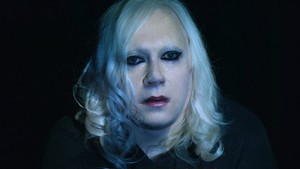
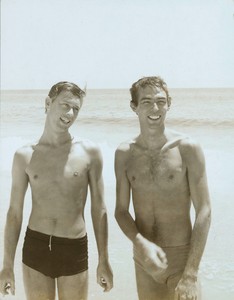
ANOHNI, self-portrait, 2023. Photo: ANOHNI with Nomi Ruiz
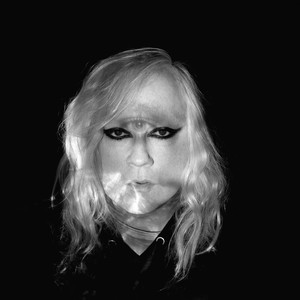
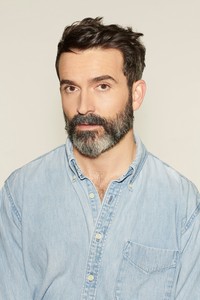
ANOHNI, self-portrait, 2023. Photo: ANOHNI with Nomi Ruiz
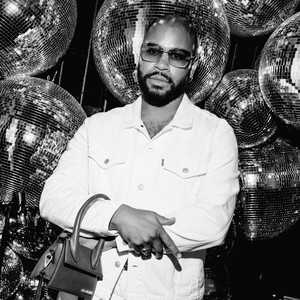
Michael Cuby is a writer, editor, and critic based in Brooklyn. He has served as the editor-at-large for Condé Nast’s LGBTQ+ vertical them since 2017. He also works as a freelance entertainment reporter and his work has appeared in Vogue, GQ, Nylon, Highsnobiety,and Vulture.
Michael CubyIt’s been about seven years since you last released new music. What have you been up to in the meantime?
anohniAfter Hopelessness [2016], I really poured myself into visual work. I did a series of exhibitions in Denmark, Germany, and New York. I did a play called She Who Saw Beautiful Things at the Kitchen. I wasn’t really sure if I was going to do another album after Hopelessness, so I had a fallow period on the music front. I just wanted to let things fall away and see what remained, see what emerged.
But one day I decided to call someone I work with in London and ask if they knew a producer who could help me make a soul record. They brought me to Jimmy Hogarth, and the work emerged very intuitively because we had a really great connection. I honestly hadn’t done much music with anyone for several years, but it came to pass that we made this record.
MCDid you start thinking you wouldn’t make another album while recording Hopelessness? Or was it that after it was done, you were like, I feel like I’ve said all I need to say in this medium?
AIt’s what you just said, the second thing. For a period, I couldn’t really see a path forward that was tenable or acceptable to me in continuing to make music. I wanted to address myself in a different way, with a different set of expectations, because I’d been on a cycle with public music-making. I mean, I don’t really consider the first twelve years of my adulthood making music—from the time I started performing at the Pyramid all the way up to being a backing singer for Lou Reed in my early thirties—as very public, as I was still a sort of unknown quantity. My life was still my own in a different way. But over a period of about ten or fifteen years, I had a very privileged and incredibly rare experience as a performer—well, “performer” isn’t really the right word, but as someone standing in front of thousands of other people, trying to hold space. In our language, a “performer” suggests something like an act. But the work I was doing really wasn’t an act; it’s always been a kind of centering, a kind of holding spacefor. But it’s work I wasn’t really groomed to do. So I had to figure out what was going on, because it was unprecedented for a person from my demographic to be in that situation. I was learning as I was going, but the situation was always transforming.
Then, when we got to Hopelessness, it was such a big leap, an attempt to sort of weaponize everything I’d accumulated to try to speak as clearly as I could about what I was seeing. I was trying to give people a sung soundtrack to the thoughts they were having. To hear someone sing a truth back to you can be a source of great relief. Like, I’m horrified by my complicity as a participant in a society that’s burning and razing Earth to the ground—this is a stress position for me. But it’s hard to articulate the extremity of that stress position, so I think I got a little bit electrocuted by the Hopelessness project, to be honest. I went from all this pastoral music into this really vivid, direct phase. I was saying the same things I’ve always been saying, but imbuing them with a lot more complicated energy than I typically brought to the table as a singer. People had grown to really trust my voice as a source of solace, so it was disarming for people to hear me singing more confrontationally. It was superempowering for me, but after that, I had to take a breather.
Then the whole world happened: Trump happened and all those things. Hopelessness came during the Obama administration, and I really do believe that album was only possible to make because it was the Obama administration. As much as it was biting the hand that fed it, it was also a by-product of a better moment.
Be brave. Know your graciousness. See each other. Be present. Reach further than you might imagine you can. Take a risk, but also take care of yourself.
ANOHNI
MCI also saw Hopelessness that way. Electing Obama into office was this moment that should have been incredibly hopeful, like we’d instituted real change. And yet we saw so many things stay the same. Whereas, when Trump was in office, there was this expectation that nothing would be right.
AOn the one hand, there was such a profound sense of disappointment, and yet, Obama also upheld an idea about a collective social contract. It was a government that allowed critique. It was a regime that allowed for freedom of speech, to some extent. Whereas the next iteration of government became so volatile and scary. Now we’re back in the Biden thing, but you sort of see it’s held together with tiny threads. Everything feels so tenuous—it’s reaching back to a social contract that’s already been shattered. Now it’s become this terrifying gun-wielding dystopia. Like, this whole thing that’s happening in Florida where health-insurance providers are now allowed to rescind healthcare and deny coverage to people based on their sexual orientation—that’s so prewar Holland. Medical care is a human right, so if there can be a witch hunt around whether a gay person can go to the doctor, then we’re really in a terrifying new phase of what we call America. Maybe it’s not a new phase, but it’s not the America we’ve seen for many decades.
MCIt’s definitely a regression.
AFirst, the pulling of women’s reproductive rights, and now this increasingly brutal bullying and torturing of gay people. There’s really no end in sight. They set their eyes on two things, and it’s all this weird smokescreen to keep everyone preoccupied while Rome burns and they pillage the stocks. It’s so calculated. They don’t give a shit about women and abortion and gay people and trans people. The only reason they’re resurrecting this is to say, “Hey! Look over there,” so that the other branches of the government and of these corporations can continue to raid the storehouse.
MCThe recording process for My Back Was a Bridge for You to Cross started with your decision to make a soul album. What was it about that genre?
AI’d say that 80 percent of the music I’ve ever listened to was soul or soul derived. The earliest music I listened to in the UK as a child was the early new wave of Boy George, Alison Moyet, Annie Lennox. I learned to sing from other white English people who were singing in a tradition of soul music that had been imported from the United States. There was just this boom of [Black American] singers who completely transformed people’s understanding of how they could express themselves. These brilliant singers modeled a technology of resilience and ecstatic response in the face of profound lived adversity. It expressed a vivid experience of living that was completely shocking to Europeans in that moment. I think that’s why the young people, especially, grabbed it like a life raft and started to copy it in an effort to experience a more full-throttled sense of self-expression. So there I was, a ten-year-old, listening to Boy George, a white Irish London queen, twenty years old, singing “Do You Really Want to Hurt Me?” I was sitting by the radio, crying, but not understanding the lineage of that musical technology.
Then I moved to America a few years later and started to understand these deeper lines. I started to listen to Billie Holiday, Ella Fitzgerald, Nat King Cole, Ray Charles, Louis Armstrong, Nina Simone, Donny Hathaway, and Otis Redding. The technology that all the singers I learned to sing from [used], that’s where it came from. It didn’t come from anywhere else.
So part of my wanting to make a “blue-eyed soul” recording was because I wanted to talk about this. I wanted to sit with it, honor it, and be clear about it—the boon of it, the gift of it, the lifesaving property within it. It’s a modeling of a kind of resilience that, moving forward, the world needs exponentially in order to hold space for the truth about what’s going on around us. It’s a lot easier to just fall back into cycles of denial and blame and despair, into more infantilized ways of seeing the world. But what’s being asked of us now is profound and very adult. Fortified resilience is a very adult form, and it’s something that’s really elusive to most of us because what’s being asked of us now is so unprecedented. So if we’re going to imagine that there’s a future other than the one everyone’s expecting, what will it require of us collectively? People have flipped in ten years from a denial about ecocollapse to a cancered resignation to its inevitability. That’s been astonishing to watch. It happened so quickly.
MCWhere do you see your work existing within that movement of change?
AI see it as a progression for me personally. In Hopelessness I was going full-on into a conversation about my own complicity. It was a brutal address. But I also learned from artists, writers, and thinkers I admire that actually there’s going to have to be an element of tenderness in that self-address if I expect to be able to hold that space and continue to be an effective agent for change. There’s going to have to be an element of self-forgiveness, a mercy with which I hold this history of brutality and my complicity in it. Otherwise I’m just going to collapse into despair, denial, and blame. So it’s a strategy, but it’s an earnestly presented one.
This record is very direct and plainspeaking. I’m giving everything I have, trying to be present and useful in the conversation moving forward. I’m trying to hold space for the best thoughts that I’ve heard. Also, to support people. That’s the thing I learned from Hopelessness. I thought I was waging a war, but actually the people who found that record the most useful were people who already thought those thoughts but wanted to hear them sung back to them with some of the same emotion they were feeling. So I realized, I’m singing for the team. I’m singing to support people already out there in their fields doing this work. I’m a singer, so that’s my currency. That’s how I’m best employed. That’s the thing I can give that will carry the furthest.
MCThe album cover is this beautiful portrait of Marsha P. Johnson, who I know you have a deep connection to. How does her memory speak through your work?
AI didn’t know Marsha. I was just an admirer. I was directed to admire her by my elders from my community in the Village. Older queens told me that she was the one, that she was “Jesus as a girl,” that she was somehow sacred, that she was a living bodhisattva. People called her the “Saint of Christopher Street” while she was alive—it’s not a posthumous mythology. Everyone knew she was particularly good. Most of the queens really loved her, and as a kid arriving in New York in the early ’90s, I was told that she was someone precious. I did get up the nerve to approach her and say I love her one time, but I didn’t know her. So her persistence in my work is just my love for her presence, really. The values that she espoused were deeply moving to me. There was something about Americanness that she seemed to embody; she seemed, to me, to be the most American of all.
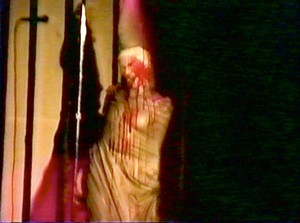
My generation was kind of lost at sea. But I, for some reason, attached myself to this dream. Honestly, I took shelter within it. It was a safe place for me. The work I was doing around environmental stuff emerged from that. We used to call [ourselves] “New Criteria for Hope in the Midst of Apocalypse,” and our cast was this super trans, underground, punk women group doing these plays about nuclear-waste disposal. People didn’t know what on Earth they were looking at. There was Page Reynolds, dressed as a giant dolphin, in a Plexiglass box, singing my song “River of Sorrow,” and then bashing her head against the window and blood squirting out. Then she dies, and that’s the end of the world.
I was grappling as a young person with how to create a mythology that seemed to hold space for what was really happening. Now, everyone will tell you the world’s about to end, but in the mid-’90s you were considered a harpy or a Cassandra if you even said it, even though the writing was all over the wall and already had been for, like, twenty-five, thirty, forty years. Marvin Gaye was singing about it in 1971. Buffy Sainte-Marie, Nina Simone, they’d been singing about it for decades. It was so clear already for artists or people who were feeling, for anyone open to porousness. I think the name of this album is also about this ancestry. It’s like, everything I have on my back, I learned from seeing before me. I don’t really believe in originality. Everything I’m carrying, everything that I’m giving, I learned from someone else.
MCYou’ve mentioned how you have to be careful with the “emotional pathways” that you create, particularly in this era of fake news. Knowing how much of your process is intuitive, I’m curious how you curate your message. Do you find yourself naturally saying the things you want to communicate? Are there things that get left on the cutting room floor?
AOne of my main skills is editing. More than anything, I’m an editor. It’s like being a photographer: you take 100 pictures, but there’s one that tells the story you want to tell. I tend to throw myself at the wall, see what comes out, and then choose the things I think are useful. At different points in my life, I’ve made better or worse choices.
I’m so profoundly influenced by this basic idea I heard in my early twenties called the Iroquois Law of Seven Generations, which is the idea that you can’t introduce a technology or an idea into your community that you can’t promise will have a beneficial impact on a child in seven generations’ time. That’s an innately sustainable idea about a time-based process of really assessing what’s in our collective best interest. That system, which is innately Indigenous, seems almost foreign to every structure that we employ in our societies today—and that’s been so necessary in order to make us more compliant as consumers. Look at AI now. They’re not even pretending that they don’t think it’s dangerous. The guys who are building it are scared shitless of it; they’re begging for a six-month moratorium on employing it commercially. It’s madness. But everyone’s just blindly walking like a sleeping ghost into this unknown cloud of gas. And I have a lot of theories about why we’re doing that. It’s a loathing of life and femaleness, of everything that reflects femaleness: intuition, emotion, instinct, gut reaction. The scientists are even saying, “My gut reaction is that this is dangerous.” But rational thought prevails: This is an empirical process. This is a forensic process. This isn’t a regulatory issue because pure science and development of technologies must march inexorably forward. There’s no vetting.
As a transgender person, I feel a keen sense of obligation to utilize the agency that I’ve been graciously afforded to speak as plainly as I can, because we’ve so rarely been afforded an opportunity to participate in the general thoroughfare of conversation about how we’re moving as a society. I think I’m one of the first maybe thirty transgender people who’s even been given a platform to talk within these American and European cultures. Of course, they’re clamping down on that now. They don’t want me to talk about a bigger picture. They want to reduce it and nail me down into a demographic conversation. But the truth is that the conversation I’m having isn’t really a demographic one as much as it is an infrastructural one. I’ve been really leaning on this idea of structural activism.
MCKnowing that you use music as your own form of activism, what do you hope this album inspires listeners to do?
ABe brave. Know your graciousness. See each other. Be present. Reach further than you might imagine you can. Take a risk, but also take care of yourself. Be prepared for cataclysm. Know that life on life’s terms can be brutal, but that doesn’t undermine or diminish the value of life.
Michael Cuby is a writer, editor, and critic based in Brooklyn. He has served as the editor-at-large for Condé Nast’s LGBTQ+ vertical them since 2017. He also works as a freelance entertainment reporter and his work has appeared in Vogue, GQ, Nylon, Highsnobiety,and Vulture.