In October, Phaidon published Thom Browne, a comprehensive monograph dedicated to the designer on the twentieth anniversary of his company’s founding. Esteemed since the business’s early days, when he worked only in menswear and boasted a signature approach to tailoring, Browne has grown the scope of his vision over two decades to include womenswear, accessories, and remarkable runway presentations. Here, Browne meets with Derek Blasberg to discuss the anniversary and the book.
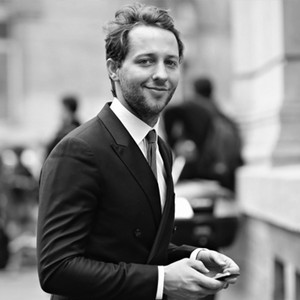
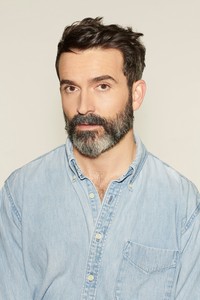
Thom Browne, 2023. Photo: Blaine Davis
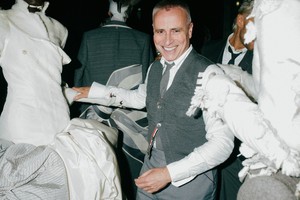
Thom Browne, 2023. Photo: Blaine Davis
Derek C. Blasberg is a writer, fashion editor, and New York Times best-selling author. He has been with Gagosian since 2014, and is currently the executive editor of Gagosian Quarterly.
Thom BrowneDo you know how Larry Gagosian refers to me?
Derek BlasbergNo. Uh-oh.
TB“That guy that wears shorts.”
DBHow do you know that? Is that how he addressed you in person?
TBOne of my friends was at a dinner party and mentioned to him that I was a fan of one of his artists and he said something to the effect of, “You mean that guy that wears shorts?”
DBHonestly, that’s impressive. That’s the power of your aesthetic.
TBTwenty years. It took twenty years but now he knows.
DBCan we start even earlier than that? As a child, were you an arty kid? Did you go to museums or galleries growing up?
TBIt was definitely something my mother wanted us to be involved in. With seven kids, my mother basically needed daycare and would put us in sports, but my sister and I took art and drawing classes and that sort of thing. It was always something that was around through my mom.
DBDid you also play sports? There’s definitely a sport angle to your design.
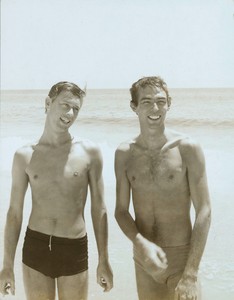
TBI swam. I played tennis when I was young but at Notre Dame, where I went to college, swimming was such a part of my life. My sister swam as well, and for our first twenty years that was such a big part of our lives.
DBAre you still involved with Notre Dame stuff?
TBGoing back to Notre Dame is so inspiring because you see how creative the young generation at universities is, they’re just so much more evolved now. I look back and I think, “I was so not this evolved when I was here.” I was so busy with other things. Maybe that’s why, after college, it took years to really figure out the more artistic and creative side of myself.
DBAt Notre Dame, you studied accounting, so yeah, I guess there was a whole world to discover after school.
TBI was speaking with somebody yesterday and they were trying to figure out how it happened. I think, up until school, it was just held back. And after I graduated it took time for it to develop.
DBWas there a single incident that propelled you to flesh that out more?
TBMeeting Flavio Albanese when I first graduated school. I think meeting Paul Fortune in LA.
Thom Browne’s Fall/Winter 2009 menswear presentation at Pitti Uomo, Florence. Photo: Dan and Corina Lecca
DBYou met these guys socially?
TBJust socially through other people. Seeing truly creative people proved to me that I should be this happy doing what I do. For these people, this happened; this is what you can do. I was always going through life thinking that if you’re not a doctor, an attorney, or an accountant, what else do you do? After graduating school, all of a sudden I started meeting people who were truly creative, and that’s when it really started.
DBI had a similar experience. When I wanted to work in the fashion and art worlds, my parents were sort of daunted. They knew accountants and lawyers and doctors, so they felt like they could give me guidance into those fields. But when you have a kid who has some creative perspective, they were like, “We don’t know any writers or fashion people. What’s a stylist?”
TBMy parents were always so encouraging. They never held any of us back. But I was the only one who wasn’t either a doctor or an attorney. I was the one they didn’t know what to do with but they were always like, “Well, we don’t know, but just try to be good at it and be true to yourself.”
DBIs your family more art or fashion or style or culturally minded now? I thought it was sweet when my mom told me, “I saw Tom Ford sold his company.” I knew my mom only keeps tabs on the ownership of Tom Ford’s fashion and beauty brands because it was part of my world, and I thought it was sweet of her.
TBHa, not really. It’s a typical family that will always bring me back to when I was twelve, when I was the middle kid who was shy and quiet. So they always know a little more than I do. My sister or brother will say, “What do you think I should do with this room?” And I’ll say, da-da da-da da-da, and they’ll think about it and then respond, “No, no, no.” I want to say, “I just want you to know, I actually do this for a living and people actually respect my opinions!”
DBYou’re the president of the Council of Fashion Designers of America! Show some respect!
TBNot at home, I guess.
DBHas the way you work changed since you started this company years ago, or is it pretty much the same?
TBI hope it’s the same! I think that’s the challenge as you grow. Evolve? Yes. And grow and mature. But not change. We have these conversations all the time: As you grow and get bigger and more people come in [to a company], the challenge is making sure that you don’t lose how it started. I approach things the exact same way I always have.
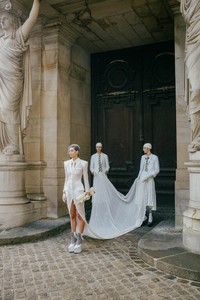
Backstage at Thom Browne Couture 2023, Paris. Photo: Corey Tenold
Backstage at Thom Browne Couture 2023, Paris. Photo: Corey Tenold
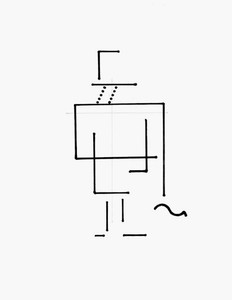
Thom Browne’s sketch for Fall/Winter 2015 menswear collection
DBWhat do you remember most about the early days of your company?
TBWhen I started, most people didn’t like it. They thought it was ridiculous. But I loved it! So I had to convince new people year after year after year, “This is what it is and you have to understand it.” I didn’t know anything about fashion when I started. Did I really care about being in fashion? I don’t know, but I knew I wanted to do what I was doing. That was one thing of taking tailoring and reintroducing it to people in different ways, and I always want to keep that, taking that entrepreneurial approach, which isn’t always easy.
DBThere’s an interesting parallel here to young artists. We know so many stories about artists who are laughed at or misunderstood and then, years later, their works are reconsidered—
TBI think if you do something important you have to expect a lot of people not to like what you’re doing at the beginning. Too many young artists and designers feel like success and acceptance should be immediate. They want immediate gratification and that’s their challenge. For me, it took five years for anything really to start happening, and I almost went out of business. It wasn’t until 2015–16 that it really started to kick into gear. That was fifteen years later! So, you have to commit, but you also have to love what you’re doing more than anybody else. And that’s how it’s easy.
DBDo you think that’s why you were able to stick with it, because you were so passionate and committed?
TBYes. I loved it more. I still do.
DBYoung people want success immediately now, but they’re also confronted with negativity much quicker too. It took you twenty years to find out Larry Gagosian thought you were just a guy in shorts, whereas now you can read the comments section and you’re told to “Fuck off and die” immediately.
TBYes, we did have the luxury that ignorance was bliss. In a way, you didn’t know what most people thought. Now you know what everybody thinks. But you know what? Who cares? Of course, you’re human, so it will affect you somehow, but you have to learn almost how not to care, how to not let it change how you do what you do. That’s easy to do when you love it.
Behind the scenes at Thom Browne Couture 2023, Paris. Photo: Corey Tenold
DBI remember a couple of years ago I saw some of your design sketches and they weren’t what we consider traditional design sketches. They were super abstract. Have you always drawn like that? And is that what your sketches still look like?
TBI can’t really fashion sketch so I don’t try to. For me, everything really starts from proportion and shape. So that more Bauhausian way of putting images on paper is how I start. And then I have really good sketchers on my team.
DBDo you do that on a computer?
TBNo.
DBYou actually draw the square and the triangle and the circles?
TBYes.
DBOh wow. Have you kept them for all of these years?
TBI have most of them.
DBI also know you’ve exhibited canvas works before too. When was that, how did that happen, and do you want to do more of it?
TBI used to do it a lot when I had more free time.
DBYou would paint on a canvas or you would sort of silk-screen off a sketch?
TBOh, no. I’d paint.
DBDo you want to be a painter on the side?
TBI loved it and loved it and then all of a sudden somebody wanted to do a show and it became another job and I loved it less. I don’t do it as much.
DBSomeone asked you to be in a show?
TBYes, and that’s when it got tricky. It was all just for fun and then it became not a hobby. I don’t really do it anymore. I mean, I sketch for work but I don’t paint anymore because it became another job. And I didn’t need another job.
DBWe have an ongoing conversation in this series about whether fashion can be art and vice versa. What are your thoughts on that?
TBI don’t like to answer that.
DBHonestly, no one does. That’s why we ask it!
TBIn regards to my work, I like people other than myself to say whether it’s art or not. I do feel like fashion is an artistic expression. I think art is sometimes just the simple way of making something. I always defer to Andrew for that.
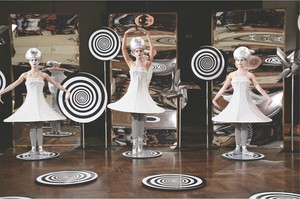
Thom Browne’s Spring/Summer 2013 womenswear presentation. Photo: Dan and Corina Lecca
DBAndrew is your partner, Andrew Bolton OBE, the head curator of the Anna Wintour Costume Center at New York’s Metropolitan Museum of Art. Should we call him now? Speaker phone?
TBI do feel like Andrew has elevated fashion, but he has elevated fashion to the level of being worthy of being at the Met. So, yes, it can be art. I’m not going to speak for him but I do respect his opinion because he truly does approach his shows from an artistic point of view.
DBSome people could suggest that your shows are performance art.
TBYeah, and I feel like, even our day-to-day I’d like to feel is almost a piece of living art. I feel like the image that I’ve created over the last twenty years—you recognize it out in the world, and that’s something I’ve been very conscious of. I wanted it to be more important than just clothes. Even when LeBron James and the Cavaliers bought my suits, I wanted it to be more than a fashion moment; I wanted it to be more of a cultural moment, so that kids would look at it and see, “Wow, it’s not really the clothing that I’m seeing, it’s all of them together.” It was more of a cultural moment than a fashion moment.
DBSpeaking of your shows: you do something that no one else does. How important is the spectacle or performance of the show?
TBI wouldn’t want to do a show if I couldn’t do that. Look, I love the business and I love the classic elements because that’s where it all started. But I love the show because I love the stories being told. I like putting ideas in front of people that start conversations.
DBHow long does it take to conceptualize an idea? Years or—?
TBIt can take five minutes.
DBBut I imagine you work further in advance. Just to build all the bird heads for your 2023 couture show must have taken some time.
TBActualizing it all takes at least a couple of months, but the idea could come in a minute.
DBHas there ever been an idea that you thought was too far-fetched?
TBNo, but there are things I’ve done that I probably couldn’t do now.
DBLike what? You mean because of the constraints of physicality?
TBNo, I mean culturally. It’s a different world now.
Thom Browne’s Spring/Summer 2007 menswear presentation. Photo: Dan and Corina Lecca
DBHave you ever been backstage and just felt like, “What the hell is going on? How did I get here?”
TBNo! I’m very organized throughout the whole thing. When I’m backstage I love the whole thing. All of it. Those are the moments that are the most exciting and what I love most is the excitement and the craziness of it. But it’s never that crazy. It’s always controlled, which is important to me.
DBYou have a book coming out this year, which is a tome devoted to your first twenty years, and there’s a quote that Andrew, who wrote the opening thesis, included from Gerhard Richter: “Gray has the capacity that no other color has to make ‘nothing’ visible.” Did you know that quote before the book?
TBNo, and this is why it was a luxury working with Andrew, because Andrew elevated everything to his level. Andrew always says that designers are the worst at curating their own shows or doing their own books. And I was like, “Okay, Andrew, you do it.” And he did. He did put together such an amazing thing.
DBI imagine it must have been a little therapeutic to go back to those early shows. Remember the ice-skater collection?
TBYes, February of 2006.
DBHow did you feel digging up some of these?
TBYou just realize there’s just so much work. The most important thing for me was seeing how the collection has evolved and the consistency through the collections. That’s what was really nice to see.
DBThere’s not a lot of text from you here. Are you ever going to write your memoirs?
TBIt would be two pages.
Photos: courtesy Thom Browne
Derek C. Blasberg is a writer, fashion editor, and New York Times best-selling author. He has been with Gagosian since 2014, and is currently the executive editor of Gagosian Quarterly.