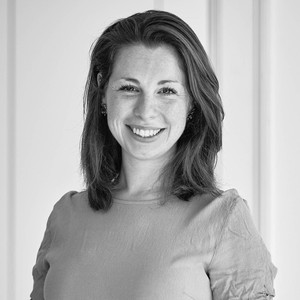
Alice Godwin is a British writer based in Copenhagen, whose focus is the Nordic contemporary art world. An art history graduate from the University of Oxford and the Courtauld Institute of Art, she contributes to publications such as ArtReview, Frieze, the New York Times, and Wallpaper.
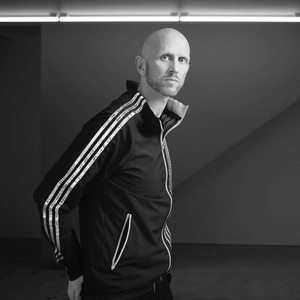
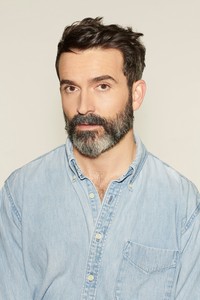
Wayne McGregor CBE is a multi-award-winning British choreographer and director renowned for innovations that have redefined dance in the modern era. His touring company, Company Wayne McGregor, celebrated its thirty-year anniversary in 2023. McGregor is also resident choreographer at the Royal Ballet, London, and director of dance for the Venice Biennale. He is regularly commissioned by dance companies around the world and his works are danced in their repertories. He choreographed ABBA Voyage, a concert that brought the ’70s pop group back onstage in a performance by virtual avatars. Photo: Pål Hansen
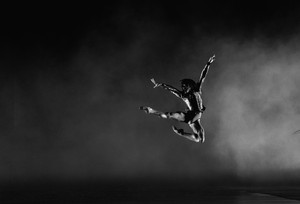
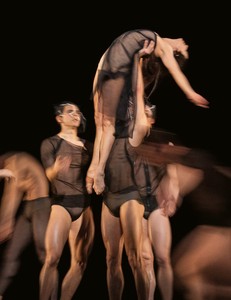
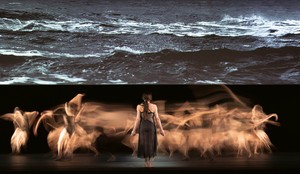
Over the past three decades, the British choreographer Wayne McGregor has dazzled audiences with a restless curiosity about the potential of the moving body. His dances explore the possibilities of human creativity, from Dante’s Divine Comedy to artificial intelligence. This spring, the Royal Ballet choreographer brought his acclaimed performance Woolf Works to the United States. In preparation for the US debut of the production, which is inspired by the writings of Virginia Woolf, Alice Godwin talks with McGregor about the enduring legacy of the British staging, the challenge of translating great literary works for the theater, and his vital collaborations with visual artists, from Carmen Herrera and Edmund de Waal to Tacita Dean.
—Alice Godwin
Alice GodwinWoolf Works is making its US debut with the American Ballet Theatre at the Segerstrom Center for the Arts, Costa Mesa, California, in April and will be traveling to New York’s Metropolitan Opera House in June. I saw the production when it premiered at the Royal Opera House in London in 2015 and I was completely blown away.
Wayne McGregorIt’s crazy that it’s almost a decade old.
AGIt was such a tremendous event at the time, winning a Laurence Olivier Award and a Critics’ Circle National Dance Award. I’m curious what effect the production had on your career?
WMGI don’t really think about it in relation to myself, but to where I thought audiences could go. I made a piece at Covent Garden called Raven Girl [2013], which was my first “narrative” piece that didn’t follow the conventions of a traditional story ballet, with the brilliant author Audrey Niffenegger. Without Raven Girl, audiences wouldn’t have come on the journey of Woolf Works, which I think gave them confidence to engage with works of great literary significance in an impressionistic, emotional way rather than a direct translation. More recently we’ve had The Dante Project [2021], inspired by Dante Alighieri’s poem The Divine Comedy [c. 1308–21] and MADDADDAM [2022], from Margaret Atwood’s trilogy of novels [2003–13].
AGMargaret Atwood and Virginia Woolf are both such incredible female writers who focus on female experience. I wonder if you considered that when devising your choreography?
WMGOf my four “narrative” ballets, two of the authors are alive and two are dead. That has a significance, but it’s not gender based. When I’m in the studio, I coauthor with other artists so it’s not simply the male gaze. There’s often this idea that dancers are just pieces of meat who are told by a choreographer to move and behave in a certain way, but that’s just not my experience, especially when it comes to the extraordinary women I’ve worked with.
In terms of the writing, I always think, What is the writing that speaks to me most? What is the energy or feeling that the writing gives me? The way Woolf writes is so multiple. That kind of refracted writing is rhythmic, it’s like music. I also like that the reader has to do some work and sometimes go back over a sentence or a paragraph to find its true meaning. That kind of approach is really analogous with dance. Dance is ephemeral, and all of the imprint happens in that first moment. When I’m watching dance, I want to go back and dive deeper because you can’t possibly get all of those inputs in one go. I tend to be attracted to writers who offer that as an opportunity, like Margaret Atwood. Apart from the incredible vividness of her speculative fiction, she is essentially an activist. The reason she calls it speculative fiction and not science fiction is because these are things that are actually happening now. She’s presenting them to us, saying, “You need to interact with this material. You need to make some conscious decisions about how you feel about it.” That’s part of the power of her writing, and I find that in Woolf as well.
AGIn an interview with yourself and Atwood, she said she wanted to be surprised and not to know too much about the production beforehand. She seemed so wonderfully open and collaborative. I wonder what you think Virginia Woolf would have made of Woolf Works?
WMGHonestly, when it’s a dead author it’s slightly easier, though of course we had the full support of the Charleston Trust and the Virginia Woolf Society. With Margaret Atwood it was very different. I’m not easily intimidated, but she is fierce. She has an amazing sense of humor, though, and she’s very practical about how her work is translated into other media. I think she’s interested to see what your lens is on her work. She was clearly moved at the premiere and I felt that she saw much more than anybody else because she has such intimate knowledge of those worlds, and that was really moving. I think it’s important with literary works for the stage that there’s a richness you can’t get from reading, that you have to experience through the body. And that’s why dance can be really powerful because it creates spaces where verbal or textual meaning gives way to the gut sense of something.
AGI’m in awe of all the artists you’ve worked with over the years, like Carmen Herrera, Edmund de Waal, Julian Opie, Olafur Eliasson, and Tacita Dean, to name a few. How do you view the contribution of an artist and what do you admire about the way they work?
WMGFor me, the most important thing about working with an artist is having time with them to develop our process. I try to engage with artists I love and whose work I respect, and think, How might we work together? The first time I went to Edmund de Waal’s studio he handed me a piece of porcelain and said, “Just warm that up in your hand.” It was such a physical experience, and a brilliant thing to do, because it allowed us to talk about this thing that we share, which is how we work with our bodies.
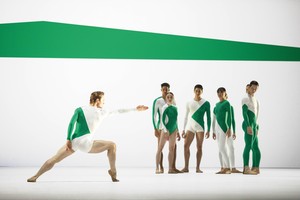
With Carmen, I visited her studio a few times and I was just fascinated. For me, her work is about what’s not there, and where the pressure points are on a page or a sculpture. I wondered how that mind would design something for the stage. In a way, when I’m working with artists, I’m curating the experience of the stage, because the environment is one of the biggest imprints when you watch a production. It gives you a visual hit even before the music starts.
I’d always been interested in the idea of how you can recognize a body, and Julian Opie does that really beautifully with his minimalist figures, which are still recognizable. We built this instrument where we could play with his figures in real time for the production Infra [2008].
It’s not always easy working with an artist. Someone like Tacita Dean, who designed the stage and costumes for The Dante Project, is used to working on her own, for example. This is an artist who spends hours and hours and hours in the studio. What a gift is that? Not only the hours that it took to actually make the works, but the time she invested in being at the theater.
AGEach of those artists is so different, it strikes me how exciting that open window of possibility must be.
WMGIt’s so true. When I was working with Tauba Auerbach, we started in one direction and then all of a sudden she made these incredible light glyphs. That kind of change keeps you alert and awake and surprised.
AGCollaboration comes so naturally to you. For Woolf Works you worked with the wonderful composer Max Richter, whom you’ve known for years.
WMGThe first time I met Max was in the 1990s, when he was part of a group called Piano Circus. I went to a brilliant concert at the Union Chapel in London a few years later to persuade him to write Infra.
AGDo you recall what the process was for Woolf Works?
WMGWell, we had nothing to start with, but we knew we were looking at a triptych structure of Mrs. Dalloway [1925], Orlando [1928], and The Waves [1931]. Typically Max built these little atoms of music, which he sent over and I might then use as I worked in the studio. I would also go to his studio and listen. I remember that I went over to hear some material for Orlando, which we knew would be a very kind of chopped-up, fractured narrative, and musically electronic and orchestral. At the end of it, I asked, as I always do because Max is superquiet and reflective, “What else have you got?” He said, “It’s not really anything.” And it was the whole of The Waves, beautifully rendered. We made some very small changes to it, like I wanted to include Woolf’s suicide note, recorded by Gillian Anderson. For me, what’s really extraordinary about music is the emotional rush. It’s like an immediate line through my body.
AGI still listen to the score, particularly The Waves and Mrs. Dalloway. They’re so heartbreaking, they really speak to the humanity in Woolf’s writing.
WMGThis is another thing about Max, he’s a great reader and because he’s so immersed in the novels, the words can’t help but emanate through him. There’s some way in which he channels this crystal-clear beauty.
AGI also wanted to ask you about your work with technology and artificial intelligence, which you’ve warmly embraced through your career. Woolf is this achingly human writer and I’m curious how you feel these two elements work together? I know you’re a firm believer in their intertwinedness. For visual artists, I think AI is something whose potential we’re still just beginning to discover.
WMGIt’s interesting, my experience has often been with the person who writes the code. So my experience is actually a human experience—it comes from human creativity and is an extension of humanity. I’ve talked a lot about this idea of bodies having a physical signature. For me to build an AI that recognizes my physical signature, I have to arm it in a way that makes me go back to the central tenets of dance-making itself. So rather than AI taking over your expertise, I think what it does is to make you drill down and learn more, just as technological imaging can help you understand what your body really does. I think there’s an absolute synergy between the two things. Body, time, and space are not separate. They’re totally connected.
AGIt leads me to think about the work you’re doing in the metaverse with Deepstaria [2024], which will have its world premiere at the Montpellier Danse festival this summer. It really feeds into this idea of exploring the body through the medium of technology.
WMGI’m working with a brilliant conceptual artist called Tobias Gremmler, and he sent me something the other day—a little hand dance that the AI takes and converts into an extraordinary jellyfishlike physicality. It takes motion from one idea and translates it into something else. I’m very interested in this idea of our own motion data being used to compose in different ways. So I guess the central tenet of Deepstaria is, rather than building a work for stage that’s then translated into a digital medium or the metaverse, how can you conceptualize these tentacles across various platforms? One of our questions has been, How might you make something that’s vividly rendered in one domain and not another? So one could see a hyperreal version of the world in the metaverse and imprint that onto the empty stage, or vice versa. And then there’s the space in-between—what happens between shows, or between objects? It’s the spaces in between that we’re trying to weave together.
AGThose spaces are so pertinent to the way Woolf writes, filled with transformation and possibility.
WMGI have a beautiful photograph of Virginia Woolf’s writing desk, which I love because she’s away but her writing is still with her. The creative process isn’t simply about going into the studio and making something and then the next day making something else. It’s as much about the transition between the two things that you’re making.
AGI imagine it’s the same with dance—just because you’re not in the studio doesn’t mean you’re not thinking and moving and playing with ideas.
WMGExactly.
AGWhat also strikes me in relation to the US premiere of Woolf Works is that Woolf is a formative English writer, though she speaks to the fundamental human experience. I’m curious how you feel a US audience will respond?
WMGI think that audiences are able to connect with Woolf Works on a deep emotional level without knowing the stories. You instinctively understand something of the “granite and rainbow” of Virginia Woolf’s world. I think there are enough human anchors to sweep you along. The body really does carry most of the meaning, especially when you have incredible performers like Alessandra Ferri or Natalia Osipova. You can’t help but be awestruck.
AGAlessandra Ferri has been so integral to Woolf Works. There’s a wonderful synergy between Woolf and Ferri, who at the time of the London premiere was the same age that Virginia was when she committed suicide. The two women had this soulful connection somehow. You sought Ferri out on purpose—was this because you wanted an older dancer who could express the complexities of life?
WMGIt was, partly. When I saw Alessandra in the early 2000s, I was blown away by her acting. It’s very difficult to dance at such a high level and have those kind of acting chops. She had stopped dancing by the time I asked her, so she was coming out of retirement. She taught me so much about how you can inflect and develop a role that can cross the orchestra pit and touch somebody in the back of the auditorium. One of her great gifts is eloquence in silence and stillness. I also wanted an older dancer because there are hardly any roles for older dancers other than character roles, which seems criminal to me given that these incredible women are still performing at the height of their capabilities. It’s analogous with older actors in Hollywood. We carry our body with us forever, until we don’t. And that body, that palimpsest, is something so beautiful and evocative—I want to see that. I met Carmen Herrera when she was 103 years-old and I’d never seen through skin, I’d never seen the vivacity of the brain, and that was really profound. I want to see that kind of range in dance.
AGIn the past we’ve seen this gap of time between the early years of a female artist’s career and later in life, as if the role of wife or mother casts a veil of invisibility. But women don’t stop being artists in those intervening years.
WMGThe amazing thing about Carmen for me is that she just kept working. She couldn’t not. And that’s the power of artmaking. We want that in dance.
AGI so agree.
Wayne McGregor’s Woolf Works, American Ballet Theatre, The Metropolitan Opera House, New York, June 25–29, 2024
Alice Godwin is a British writer based in Copenhagen, whose focus is the Nordic contemporary art world. An art history graduate from the University of Oxford and the Courtauld Institute of Art, she contributes to publications such as ArtReview, Frieze, the New York Times, and Wallpaper.
Wayne McGregor CBE is a multi-award-winning British choreographer and director renowned for innovations that have redefined dance in the modern era. His touring company, Company Wayne McGregor, celebrated its thirty-year anniversary in 2023. McGregor is also resident choreographer at the Royal Ballet, London, and director of dance for the Venice Biennale. He is regularly commissioned by dance companies around the world and his works are danced in their repertories. He choreographed ABBA Voyage, a concert that brought the ’70s pop group back onstage in a performance by virtual avatars. Photo: Pål Hansen