Multi-instrumentalist, singer, songwriter, and composer Lucinda Chua meets with writer Dhruva Balram to reflect on the response to her debut album YIAN (2023).
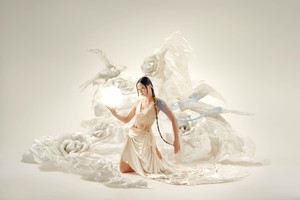
Lucinda Chua. Photo: Milo Van Giap
Lucinda Chua. Photo: Milo Van Giap
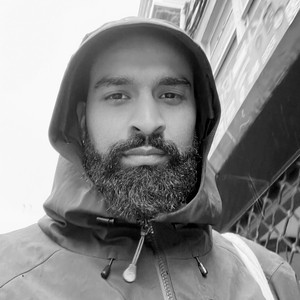
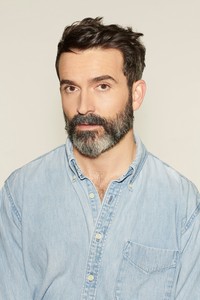
Dhruva Balram is a writer, editor, and creative producer. He is the cofounder of Dialled In, a South Asian–focused arts-and-culture grassroots organization. Balram coedited the book Haramacy and contributes to various online and print outlets.
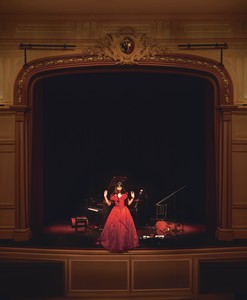
Lucinda Chua is a London-based multi-instrumentalist, singer, songwriter, and composer. Her critically acclaimed debut album YIAN came out in 2023 and she performed songs from it, accompanied by the London Contemporary Orchestra, at the Barbican, London, in May 2024.
Dhruva BalramI remember in the weeks leading up to the release of YIAN last year there was a nervousness you possessed.
Lucinda ChuaI was petrified.
DBYou mentioned you weren’t sure how the album would be received, or what live audiences would think of it.
LCIt’s the fear of when you do something that you believe to be authentic. I don’t think that’s a fear of being critiqued or rejected; it’s more a fear of being seen, because it’s very vulnerable. I always think of it like a little plant, you know, when a tiny seedling puts out its first leaf. It’s so tender. You have to be careful.
DBThat’s a beautiful way to frame it. The album itself is rooted in a collage of emotions and feelings. To me, it sounds like you were trying to make sense of a whirlwind of chaos, asking yourself questions rather than having the answers for them, leaving them to just kind of sit in the air around you. There’s the wistfulness of someone yearning for an answer but content if they never receive it. And as a listener, I felt that. I’m curious how the album’s been received by audiences in the year since it was released.
LCThe response has been mad. I don’t think I anticipated it would be like that. But it’s just mad how the music has taken me to different parts of the world. I got to play my music in China, Japan, America, all over Europe. What baffles me most is seeing that intense connection with people in the audience, where something in the music allows them to feel seen.
DBI’m curious how the reception was in China.
LCIt was pretty special. I’m understanding a part of myself that I wouldn’t have been able to understand without the music. It’s changed my perception of myself. My Chinese fans are a lot younger, some of them are still in school, they even call me “sister Yian” (燕姐), and they made a WeChat group they call “The Nest.” I’ve never been called by my Chinese name before, but my music has built this bridge between me and my ancestral homeland. I used to worry that when my father passed away I’d lose not only a parent but also the connection to my culture, to my roots, but this bond transcends my family. It’s a reminder that it will always be there for me, so long as I keep nurturing it.
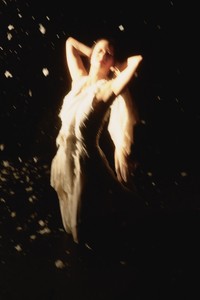
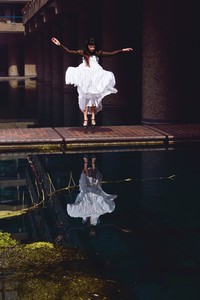
Lucinda Chua, 2022. Photo: Nhu Xuan Hua
DBYou once said to me that music is a language to you, a form of self-expression that transcends what can be classified as good and bad. Can you elaborate on that?
LCIt’s about authorship. For me, being an artist is being able to author work. Authoring music is different from playing music, and that’s what I’m interested in. I’ve been making music my whole life, but releasing an album is hard because you’re saying “This is me, this is my heart, my soul.” You’re handing it over to people and it’s scary to do that. But the thing that makes it worth it is connecting with other people and seeing their emotions; music gives us the permission to feel whatever it is we’re going through.
There are things I can say through music that I’m unable to say in words. I’m just trying to express it in the music, rather than thinking critically ahead of time, “Is this good? Or is this bad?” Because I feel like from an emotional perspective, everything is valuable and everything is valid. Music helps me accept those parts of myself.
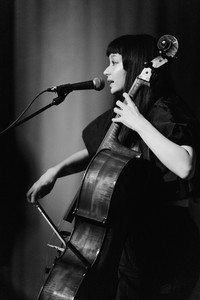
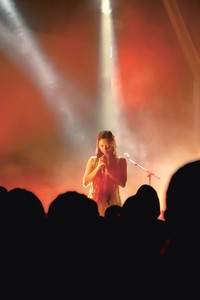
Lucinda Chua performing at Mucho Flow, Portugal, 2023. Photo: Tash Tung
The thing that makes it worth it is connecting with other people and seeing their emotions; music gives us the permission to feel whatever it is we’re going through.
Lucinda Chua
DBIt sits outside the binary. Is that what it felt like as well to create YIAN? Was it a way for you to express what’s been inside of you for so long, but you never had the right words to convey that hybridity of identity?
LCYeah—getting to invent and manifest, but then almost tangibly hold a world that for me makes so much sense, because it’s how I see myself and how I see life. The world I feel at home in exists outside of categorization, it’s an intersectional overlap of so many disparate things that don’t always fit. To me it feels specific, because it feels like me, but within myself there are so many different thoughts and ideas and cultures, and sometimes those narratives are at odds with each other, it’s not always harmonious. There can be internal dissonance, but rather than trying to whittle it down to a singular truth, I’m holding space for all of these realities to exist and merge and bleed together.
DBIt’s almost like creating your language within your own identity and then putting it out into the world to see how it resonates.
Lucinda Chua performing at Zebulon, Los Angeles, 2024. Photo: Evan Nischan
LCIs that how you feel about your work? Not just as a writer, but as someone who works within communities, curating events and bringing people together?
DbThe running joke I have is that I’m not from England. I only moved here six years ago after spending nearly thirty years living across five countries and four continents. I’ve never sat within the binary or the nationalist identity of saying “I am from this country,” or “I am a marker of these identities.” With my nonwriting work, I’ve been given an incredible opportunity to give something to a community my ancestors are from, but I’m a hybrid of many of the cultures I grew up in. My writing work is very much rooted in an understanding of what that means.
LCI feel the same, but I’ve only lived here [laughs].
DBA lot of the conversation we’ve had today and in the past has centered around identity and what it means to be a person of color today. Lately we’ve been exploring the tension that exists within the identity markers of classical music and contemporary musicians. Can you elaborate on that?
LCI don’t even know if I call myself a classical musician, to be honest.
DBWhy not?
LCI started piano when I was three and cello when I was ten. I learned via the Suzuki method, a Japanese philosophy about learning by ear. It’s a very different approach, I guess, from traditional Western classical training: I didn’t learn to read sheet music as a kid, and I didn’t do any exams or grades. Later, when my family moved out of London, I struggled in secondary school, adjusting from being a multiracial inner-city kid to growing up in a small village in a very rural neighborhood, where for the first time in my life I was confronted with racism and hostility just for existing. I got a scholarship at my local music center, I’d go there evenings and weekends, and it felt like an escape, somewhere I could be my own person.
My cello teacher, Jenny Brown, was so kind to me. For the one hour I spent with her a week playing the cello, I got to express my emotions through my instrument. Rather than hardcore drilling me on techniques and scales and sight-reading, she was gentle and let me play the bits that I was good at, she gave me space so I could be the melody. It probably made me a less adept cellist but it meant that I built a positive relationship with my instrument, and maybe that’s why I still play now. All of this is to say that I played a lot of classical music, but I didn’t necessarily have all of the techniques that someone else who’d play that classical music would have.
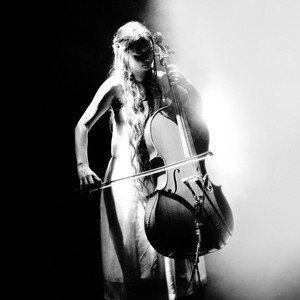
Lucinda Chua performing at Rewire Festival, the Netherlands, 2023. Photo: Joost Van Hoey
DBSo how does it feel, then, when you’re called a neoclassical musician, or boxed into the overarching term of “classical musician”?
LCIt’s a period of history that we’re looking back on and I do think there’s something special about reenacting music from that period. It’s interesting to go back in time, to listen to the sounds from that era. Classical music was the pop music of its day; it’s interesting to think about it in relation to the times we’re in now. But I think in terms of “neoclassical,” it’s like, why would we want to go back and reenact those values from that time? Because I don’t think those values would have been particularly kind to people like us.
DBYou and I wouldn’t be allowed to play the instruments.
LCThey wouldn’t have let us into their concert hall, that’s for sure, let alone touch the instrument. So it’s as if I have an autobiographical nostalgia for classical music because I loved playing it as a teenager, some of that music is so beautiful. But I don’t have any nostalgia for the era. I don’t have nostalgia for the values.
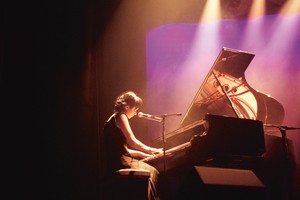
Lucinda Chua performing at Lost Music Festival, Fontanellato, Italy, 2023. Photo: courtesy the artist
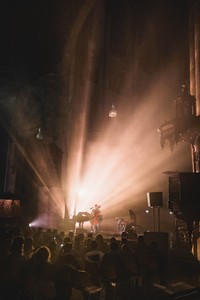
Lucinda Chua performing at La Bâtie-Festival de Genève, 2023. Photo: Tash Tung
DBHow would you decolonize classical music, then?
LCWhere I am at the moment in my practice is that I think of the cello as an interface in the same way a MIDI controller is an interface. The best feedback I get from people when I play a show is people coming up to me and saying, “I’ve never heard a cello before, and this totally changed my perception of music.” It’s an honor to be that person for someone. I think of these instruments [like a cello or a MIDI controller] as tools that people should have access to, to be able to express and innovate. Technique is a major part of that, but at the end of the day, these are tools to express yourself with. And I think it’s what you say with them that I’m interested in.
DBYou have a new confidence and self-assurance now, compared to a year ago. Do you know what you’re trying to say with your music now?
LCThe truth is, I’m always going to be learning, I don’t think I’m ever going to be done. I feel grateful I get to do this, like I feel so grateful I get to perform my music on stage with an orchestra—especially because I didn’t go to a music college or a conservatory, I didn’t grow up around professional musicians or people in the industry. I’m grateful to be the first artist with Chinese heritage to release music on 4AD, the first artist on that label to perform music in China, the first Asian solo artist in its forty-four-year history. I wake up and I’m grateful. But you know what—I long for the day when we don’t have to be grateful anymore, we can just be.
Dhruva Balram is a writer, editor, and creative producer. He is the cofounder of Dialled In, a South Asian–focused arts-and-culture grassroots organization. Balram coedited the book Haramacy and contributes to various online and print outlets.
Lucinda Chua is a London-based multi-instrumentalist, singer, songwriter, and composer. Her critically acclaimed debut album YIAN came out in 2023 and she performed songs from it, accompanied by the London Contemporary Orchestra, at the Barbican, London, in May 2024.